Stimulating Off-Season Mango Flowers with Microbial POC: Complete Guide
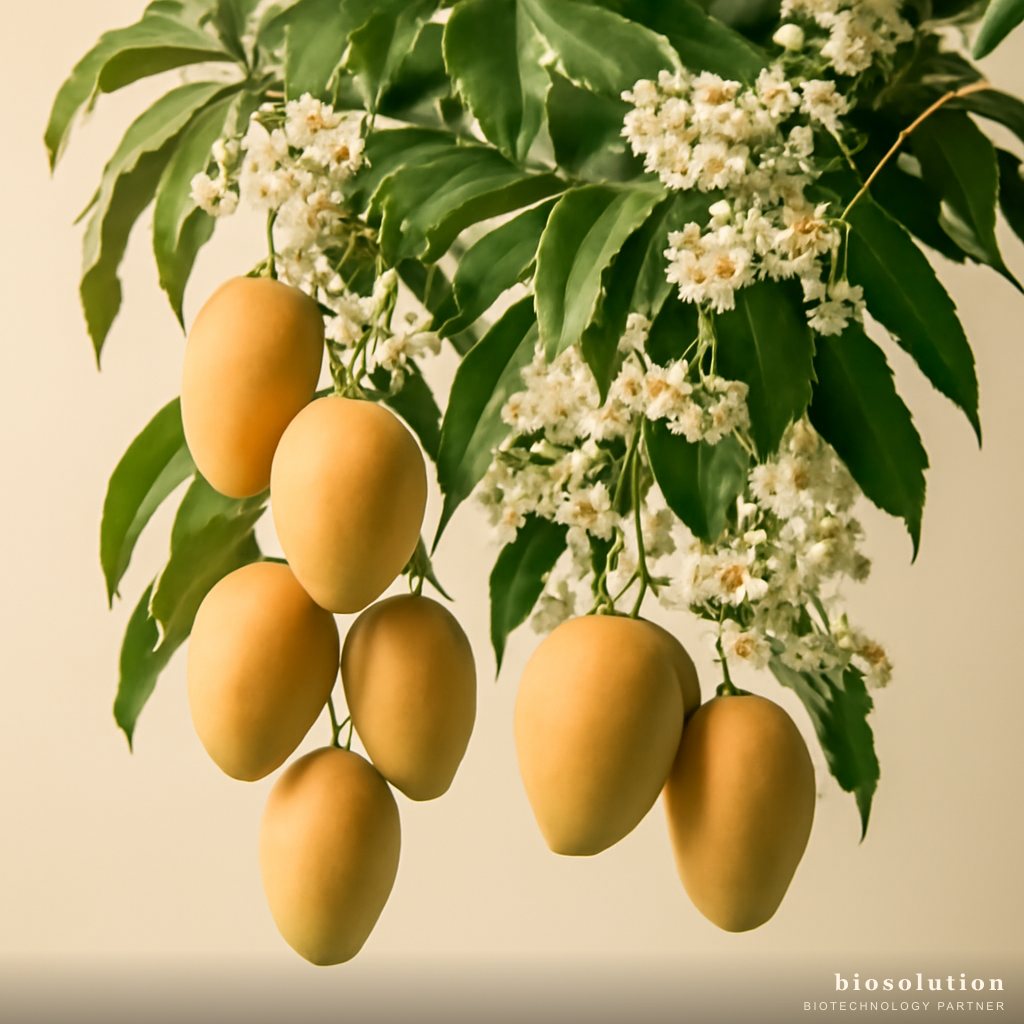
Mango farmers often face challenges when trying to advance harvest or obtain fruit out of season (off-season). The key to success lies in the ability to stimulate mango flowers precisely. This article will discuss the causes of difficult flowering, symptoms of generative nutrient deficiency, and solutions using Biosolution's microbe-based fruit flower trigger POC. With this approach, you can harvest earlier and achieve higher selling prices.
Why Mangoes Are Difficult to Flower Out of Season
Mango flowering is influenced by internal (hormonal) and external (environmental, nutritional) factors. Mango trees require water stress (drought stress) and low temperatures to trigger flower initiation. Out of season, these conditions do not occur naturally. As a result, vegetative growth dominates, leaf shoots continue to emerge, and flower buds do not form.
Additionally, nutrient imbalance—especially excess nitrogen and deficiency of phosphorus, potassium, and micronutrients—inhibits flowering. Beneficial soil microbes are also often reduced due to excessive use of chemical fertilizers. Yet, microbes such as PGPR (Plant Growth Promoting Rhizobacteria) play a role in producing flower-triggering hormones and increasing nutrient availability.
Symptoms of Mango Plants Unresponsive to Flowering
Before applying stimulants, recognize the symptoms of plants that are difficult to flower:
- Excessive vegetative growth: Dense leaves, rapidly elongating stems, but no signs of flower buds.
- Flower drop or failure to bloom: If flowers appear, many fall before fully blooming.
- Small and few fruits: Few fruits per bunch, uneven size.
- Yellowing leaves or chlorosis: Indicates deficiency of micronutrients such as zinc (Zn) or boron (B).
These symptoms indicate that the plant lacks generative-promoting hormones or specific nutrients. This is where the role of fruit flower trigger POC becomes crucial.
Microbial Solution: Biosolution's Flower & Fruit Trigger POC
Biosolution presents Formula Flower & Fruit Trigger POC, an organic product specially formulated to stimulate the generative phase of mango plants. This product contains three main components that work synergistically:
PGPR Consortium
PGPR are beneficial bacteria that live in the rhizosphere. They produce phytohormones such as auxins, gibberellins, and cytokinins. Cytokinins in particular play a role in flower bud initiation. Additionally, PGPR help solubilize phosphate and provide micronutrients, making it easier for plants to absorb essential nutrients for flowering.
Seaweed Extract
Seaweed extract is rich in natural cytokinins, betaine, and polysaccharides. Cytokinins from seaweed stimulate cell division in flower buds, while betaine helps plants cope with environmental stress. Application of seaweed extract has been shown to increase flower count and reduce drop.
Humic & Fulvic Acids
These two organic acids act as nutrient carriers. They bind nutrient ions in the soil and release them slowly to the roots. Humic acid also improves soil structure, increases cation exchange capacity, and stimulates root growth. Healthy roots support the supply of water and nutrients to the canopy, including flower buds.
How It Works and Benefits
This product is applied via foliar spray or soil drench at a dosage of 3–5 ml per liter of water, every 7–10 days, in the morning before 10 AM. Its mechanism of action:
- Stimulates generative hormones: PGPR and seaweed extract increase production of cytokinins and gibberellins, triggering the shift from vegetative to generative phase.
- Provides specific nutrients: Humic-fulvic acids ensure availability of phosphorus, potassium, zinc, and boron needed during flowering.
- Reduces stress: Betaine from seaweed and microbes help plants tolerate water stress or extreme temperatures.
Field trial results show:
- Increase in fruit weight per tree +15-25%
- Reduction in flower/fruit drop −30%
- Easy foliar application
- Organic product, safe for organic certification
Application Guide for Stimulating Off-Season Mango Flowers
Here are practical steps you can follow:
1. Prepare the Plant
Perform light pruning to remove water shoots and old leaves. Ensure the plant is free from pests and diseases. If necessary, apply a basal fertilizer with low nitrogen NPK (e.g., 10-20-20) one month before POC application.
2. Mix the POC
Use clean water (pH 6-7). Mix 3-5 ml of POC per liter of water (e.g., 15-25 ml for a 5-liter tank). Stir until evenly mixed. If using hard water, add a little citric acid to lower pH.
3. Foliar Application
Spray onto all leaf surfaces, especially the underside (more stomata). Apply in the morning (before 10 AM) for optimal absorption. Repeat every 7-10 days for 2-3 applications.
4. Soil Drench (Optional)
For maximum results, combine with a soil drench around the root zone. Same dosage (3-5 ml/L), apply 1-2 liters per mature tree every 10 days.
5. Monitor Plant Response
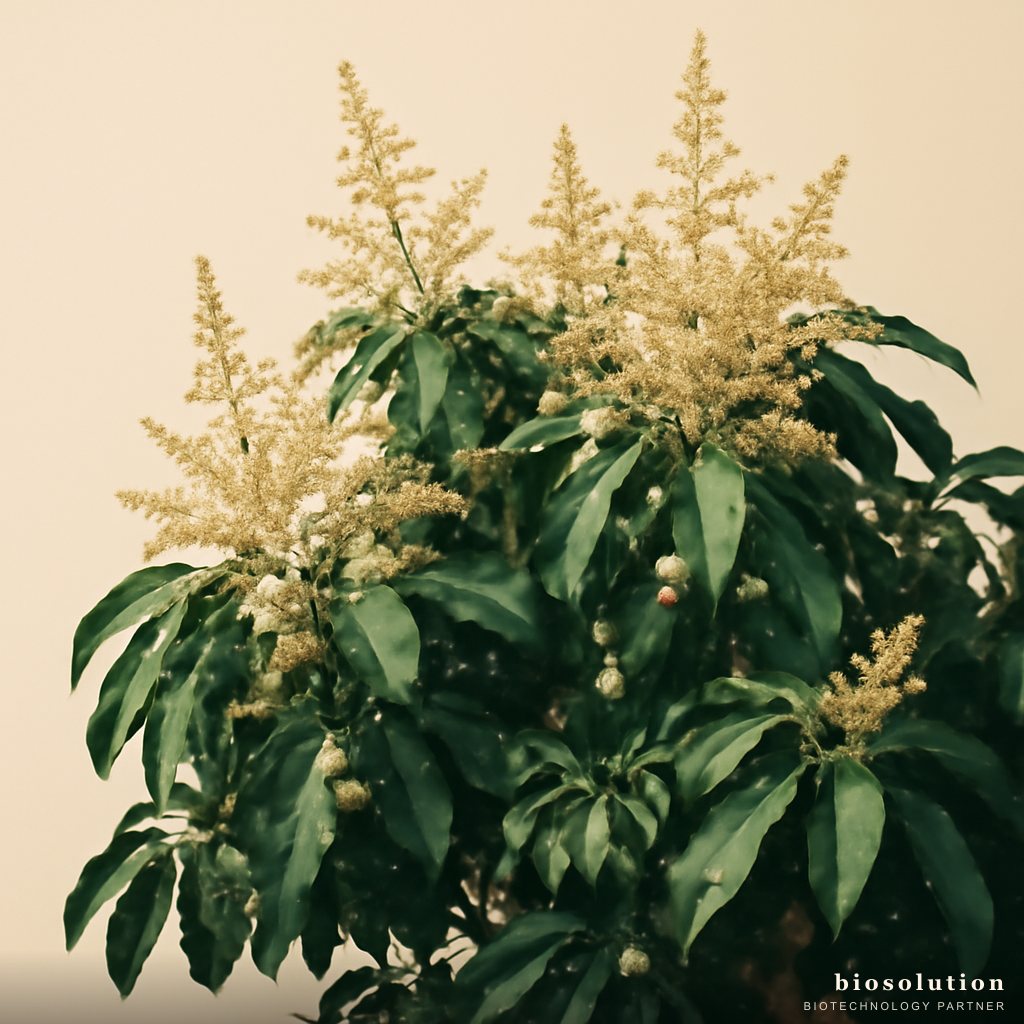
After 2-3 weeks, you will see flower buds emerging. If response is slow, check environmental factors (temperature, humidity) and ensure there is no extreme water deficiency.
Supporting Factors for Off-Season Success
In addition to POC application, several other factors need attention:
- Water management: Apply mild water stress (stop watering for 2-3 weeks) before POC application, then water again after flowers appear.
- Fertilization: Reduce nitrogen, increase phosphorus and potassium. Add micronutrient fertilizers (Zn, B, Mo) if necessary.
- Pest control: Aphids and thrips attack flower buds. Use botanical insecticides or natural predators.
- Sunlight: Ensure the plant receives full sunlight. Prune overly dense branches.
Case Study: Mango Farmer in Pasuruan
Mr. Ahmad, a mango farmer in Pasuruan, East Java, applied Flower & Fruit Trigger POC during the dry season (July-August) for an off-season harvest in December. He sprayed 5 ml/L every 10 days for 3 times. As a result, 80% of trees flowered simultaneously, fruits did not drop, and harvest was advanced by 1 month compared to the normal season. Fruit weight per tree increased by 20%. "Usually I only get 50 kg per tree, now 60 kg," he said.
Conclusion
Stimulating off-season mango flowers is not impossible. By using PGPR, seaweed extract, and humic-fulvic acid-based fruit flower trigger POC, you can force plants into the generative phase faster. This product not only triggers flowering but also reduces drop and increases harvest weight. For optimal results, combine with proper water and fertilizer management.
Interested in trying? See the Formula Flower & Fruit Trigger POC product or consult directly with the Biosolution team via WhatsApp.
FAQ
What causes mangoes not to flower?
The main cause is dominance of vegetative hormones (auxins, gibberellins) due to excess nitrogen or lack of environmental stress. Other factors: deficiency of phosphorus, potassium, and micronutrients such as zinc and boron. Imbalanced soil microbes also inhibit generative hormone production.
What is the dosage of Flower & Fruit Trigger POC for mangoes?
The recommended dosage is 3-5 ml per liter of water. For mature trees, spray 3-5 liters of solution per tree every 7-10 days. Start application 2-3 weeks before target flowering.
Is this product safe for fruit to be consumed?
Yes, this product is made from organic ingredients (PGPR, seaweed extract, humic acids) and is safe for humans and the environment. It leaves no harmful chemical residues. Suitable for organic farming.
When is the best time to apply flower trigger POC?
The best time is in the morning before 10 AM, when temperatures are not yet high and stomata are wide open. Avoid application during rain or cloudy weather as absorption is less optimal.
Can this POC be used for other fruit plants?
Yes, this product can be used for various fruit plants such as citrus, avocado, guava, and papaya. The working principle is the same: stimulating the generative phase through cytokinin hormones and micronutrients.