Sugarcane Biofertilizer: 5 Common Mistakes That Reduce Sugar Yield
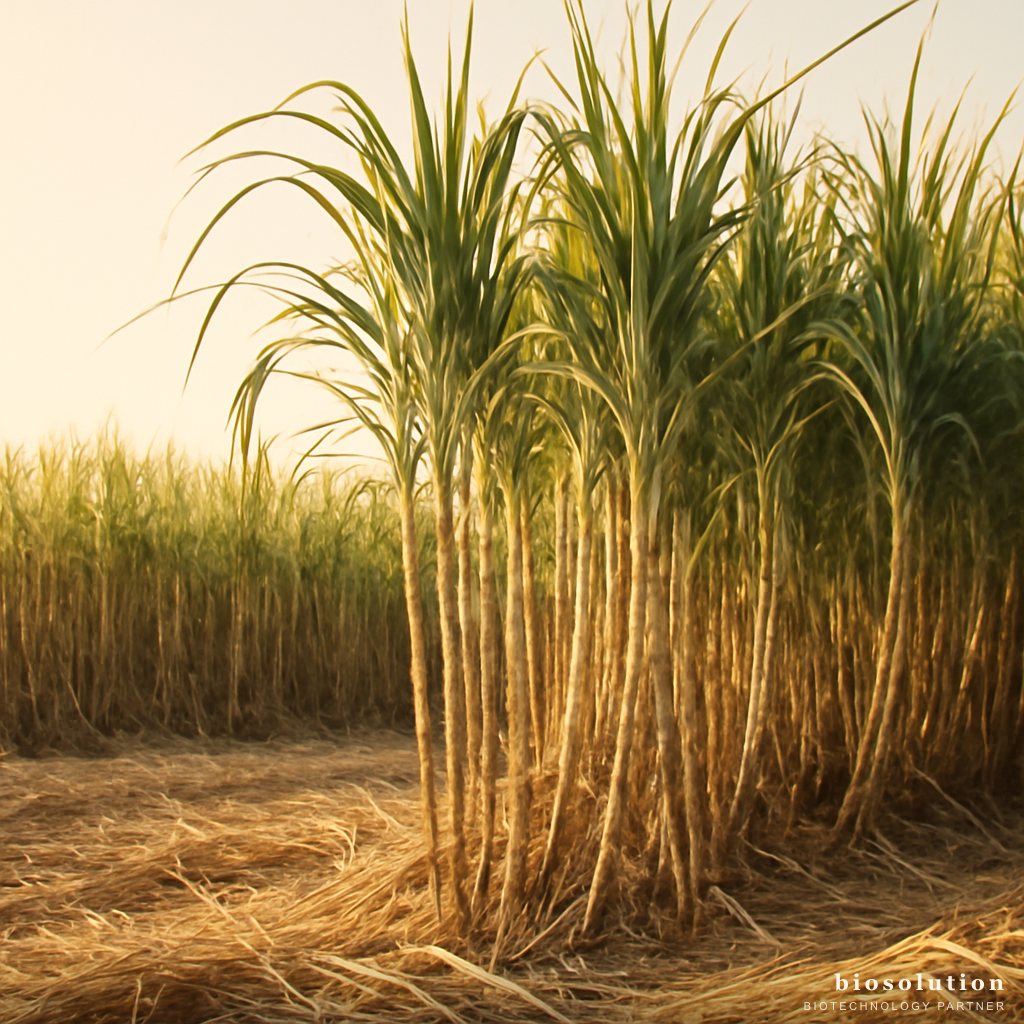
Sugarcane biofertilizer is a mainstay for sustainably increasing productivity and sugar yield. However, without proper understanding, biofertilizers can fail to deliver optimal results. Many B2B sugarcane plantations still fall into application mistakes that render biofertilizer investments ineffective. This article explores 5 common mistakes when using biofertilizer for sugarcane to increase sugar yield, plus practical solutions from Biosolution.
1. Choosing the Wrong Microbial Strain for Sugarcane Field Conditions
Not all biofertilizers are suitable for all plant types and soils. For sugarcane, the required microbes must be able to compete with the natural microflora of the land and tolerate acidic or saline conditions. A common mistake is using products containing a single strain or non-adaptive strains.
Why Specific Strains Matter?
Microbes such as Azospirillum sp. and Bacillus subtilis have proven effective for sugarcane due to their ability to fix associative nitrogen and solubilize phosphorus. Azospirillum sp. lives around the root zone and provides nitrogen directly available to the plant, while Bacillus subtilis solubilizes bound phosphate into available forms. Both contribute to healthy vegetative growth of sugarcane, leading to higher sugar accumulation.
Solution from Biosolution
Granule Biofertilizer Formula contains a consortium of 5 superior strains: Rhizobium sp., Bacillus subtilis, Azospirillum sp., Pseudomonas fluorescens, and Trichoderma sp.. This combination ensures synergy between N-fixers, P-solubilizers, and biological control agents. With a density of 10⁹ CFU/g granule, each granule contains billions of ready-to-work microbes.
2. Improper Application Method: Wrong Dosage and Timing
The second mistake is applying biofertilizer in an inappropriate manner, whether in terms of dosage, method, or timing. Granule biofertilizer is often considered the same as chemical fertilizer, so it is broadcast on the soil surface without incorporation or applied when the soil is dry.
Correct Application Rules
The recommended dosage for sugarcane fields is 100–250 kg per hectare, depending on soil conditions and variety. Application should be done during tillage or at the start of the rainy season, by broadcasting evenly around the root zone or along planting rows. If using a spreader, ensure the granule size (2–4 mm) matches the spreader holes for even distribution.
Why Timing Matters?
Microbes need sufficient moisture and oxygen to be active. Application during the rainy season ensures the soil is moist without being waterlogged, so Azospirillum sp. and Bacillus subtilis can colonize quickly. If applied during the dry season, microbes will become dormant and have no effect.
3. Ignoring Biofertilizer Quality: Low CFU and Short Shelf Life
Many biofertilizer products on the market have low microbial density (CFU/g) or short shelf life. Farmers often do not check expiration dates or storage conditions. As a result, the applied microbes are already dead or inactive.
Quality Standards to Meet
A quality product must have at least 10⁸ CFU/g and a shelf life of at least 12 months at room temperature. Granule Biofertilizer Formula has a density of 10⁹ CFU/g and a shelf life of 24 months, ensuring microbial viability until application. Storage in a dry and shaded place also maintains quality.
How to Check Products
Before purchasing, request a certificate of analysis or laboratory test results. Ensure the listed strains match the claims. Avoid products that do not state the CFU count or production date.
4. Not Integrating Biofertilizer with Chemical and Organic Fertilizers
Biofertilizer is not a total replacement for chemical fertilizer, but a complement. A common mistake is assuming that using only biofertilizer is sufficient without additional nutrients. Sugarcane requires large amounts of macro and micro elements, especially N, P, K, and Si.
Effective Integration Strategy
Use biofertilizer together with organic fertilizer (compost or manure) to increase soil organic C. Chemical fertilizer can be reduced by 25–50% due to the contribution of Rhizobium sp. and Azospirillum sp. in providing N, and Bacillus subtilis in solubilizing P. As a result, fertilization efficiency increases and production costs decrease.
Application Example
On sugarcane fields with granule biofertilizer at a dose of 150 kg/ha, farmers can reduce urea fertilizer by up to 30% without decreasing productivity. In fact, sugar yield often increases due to better nutrient balance.
5. Lack of Monitoring and Evaluation of Biofertilizer Impact
After application, many farmers do not monitor plant development or conduct soil analysis. In fact, the effectiveness of biofertilizer needs to be evaluated to adjust the dosage for the next growing season.
Parameters to Monitor
- Vegetative growth: plant height, stem diameter, number of tillers.
- Leaf chlorophyll content (using SPAD meter).
- Soil analysis: total N, available P, organic C, and microbial population.
- At harvest: sugar yield and stem weight.
Benefits of Evaluation
With monitoring data, farmers can optimize biofertilizer dosage and application timing. For example, if the population of Trichoderma sp. decreases, reapplication is needed to maintain biocontrol of soil pathogens.
Conclusion
Sugarcane biofertilizer is a smart solution for sustainably increasing sugar yield. However, its success depends on choosing the right product, proper application methods, and integration with other fertilization systems. Avoid the five mistakes above so that your biofertilizer investment yields maximum results.
For further consultation on biofertilizer for sugarcane, contact the Biosolution team via WhatsApp. We are ready to help you choose the right product for your land conditions and production targets.