Sugarcane Biofertilizer: How to Apply Granular Formula for Large Areas to Increase Sugar Yield
Sugarcane biofertilizer has become a mainstay for modern plantations aiming to increase sugar yield without relying on excessive chemical fertilizers. By utilizing superior microorganisms such as Rhizobium sp., Bacillus subtilis, Azospirillum sp., Pseudomonas fluorescens, and Trichoderma sp., Biosolution's Granular Biofertilizer Formula for Large Areas offers an easy application solution for vast fields. This article will thoroughly discuss the correct application method: dosage, frequency, and timing to ensure the sugarcane biofertilizer works optimally and produces high-quality sugarcane.
Why is Biofertilizer Important for Sugarcane?
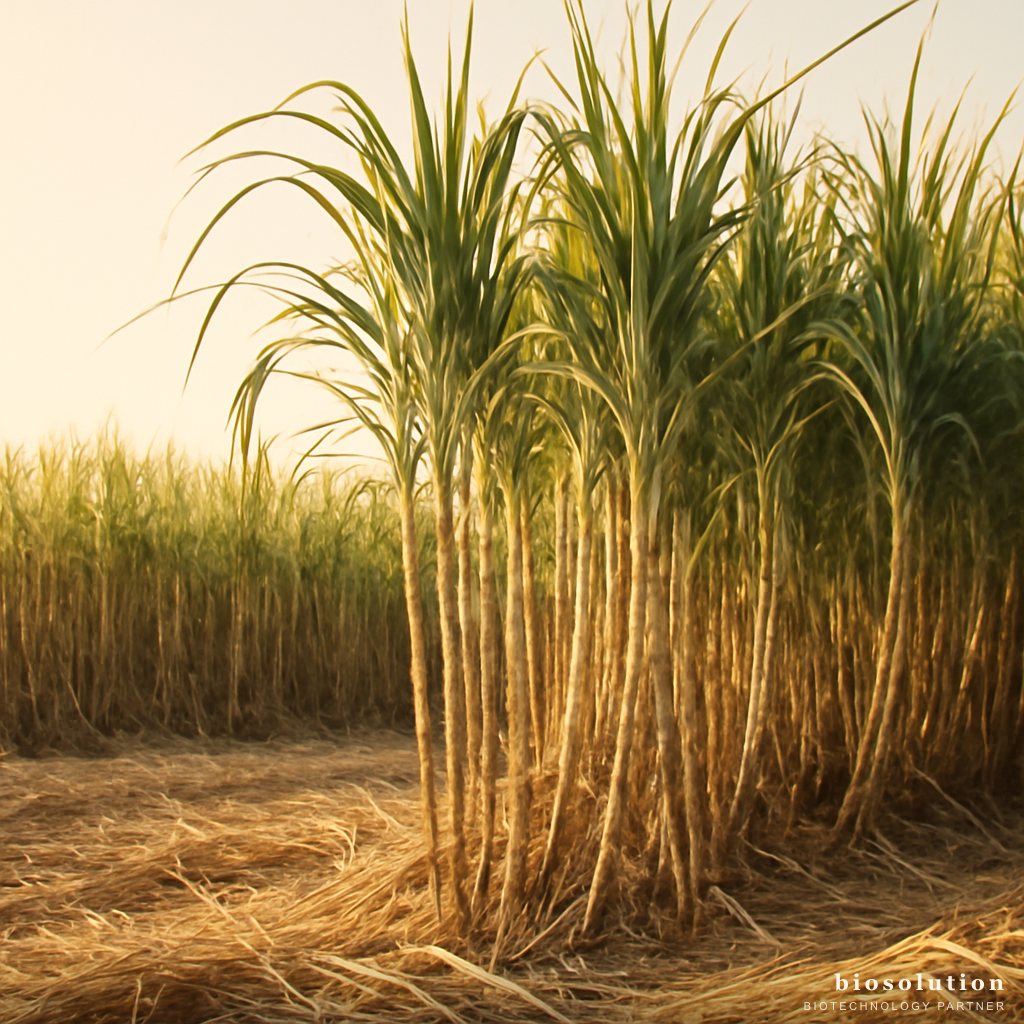
Sugarcane (Saccharum officinarum) is a C4 plant that requires large amounts of nutrients, especially nitrogen, phosphorus, and potassium. However, continuous use of synthetic chemical fertilizers can degrade soil health, reduce microbial activity, and ultimately lower sugar yield. Sugarcane biofertilizer emerges as a sustainable solution by providing nutrients biologically and improving soil structure.
Role of Microbes in Sugarcane Biofertilizer
The Granular Biofertilizer Formula for Large Areas contains five superior microbial strains:
- Rhizobium sp.: Although known as a nitrogen fixer in legumes, in sugarcane it can live as a rhizobacterium that assists associative N fixation.
- Bacillus subtilis: Solubilizes phosphate bound in soil, making it available to plants. It also produces antifungal compounds to suppress soil pathogens.
- Azospirillum sp.: An associative nitrogen fixer that lives around sugarcane roots, contributing up to 30% of the plant's nitrogen needs.
- Pseudomonas fluorescens: Produces siderophores that bind iron, thereby inhibiting the growth of pathogenic fungi such as Fusarium and Pythium.
- Trichoderma sp.: An antagonistic microbe that controls soil fungi causing root and stem base diseases.
This combination of microbes works synergistically to increase nutrient availability, suppress diseases, and improve soil aggregation, all of which contribute to increased sugar yield.
How to Apply Granular Biofertilizer Formula for Large Areas on Sugarcane
Proper application of sugarcane biofertilizer is crucial for its effectiveness. Here is a complete guide based on Biosolution's technical recommendations.
Sugarcane Biofertilizer Dosage per Hectare
The recommended dosage of Granular Biofertilizer Formula for Large Areas for sugarcane is 100–250 kg per hectare. The dosage depends on soil conditions, sugarcane variety, and production targets. For degraded soils or those low in organic matter, use a higher dosage (200-250 kg/ha). On fertile soils, a dosage of 100-150 kg/ha is sufficient.
Each granule contains 10⁹ CFU/g (colony forming units per gram), meaning with a dosage of 100 kg/ha, you apply 10¹⁴ CFU of microbes per hectare. This amount is adequate to colonize the sugarcane rhizosphere.
Application Frequency
The application frequency of sugarcane biofertilizer is 1–2 times per growing season. For sugarcane planted in large areas, a single application during tillage is effective enough. However, if the land has a history of soil diseases or very low organic matter content, a second application can be done during top dressing (4-6 weeks after planting).
Optimal Application Timing
The best time to apply granular biofertilizer is during tillage or at the start of the rainy season. The reasons:
- Tillage: The microbial granules can be evenly mixed with the soil and immediately interact with roots.
- Early rainy season: Soil moisture is optimal for microbial activity. Avoid application when the soil is dry or too wet (waterlogged).
Application Method for Large Areas
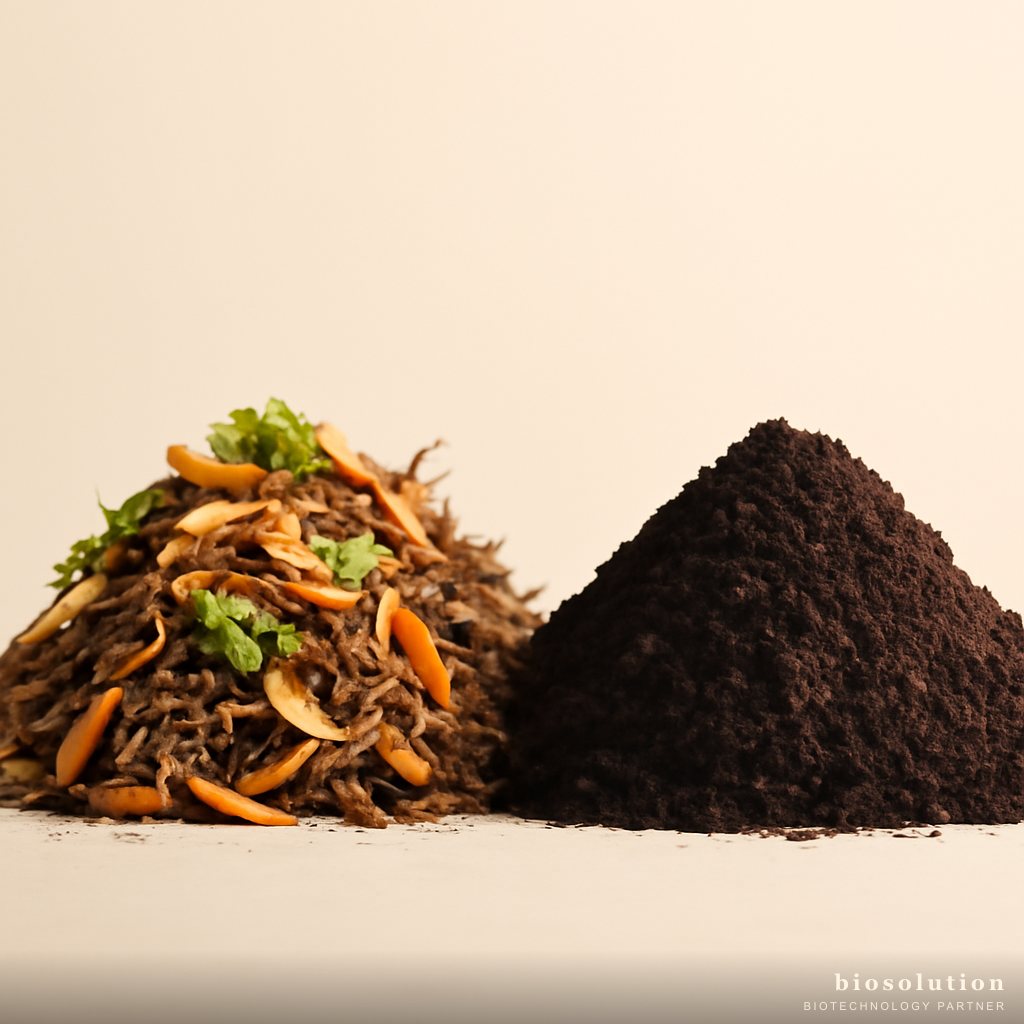
The Granular Biofertilizer Formula for Large Areas has a size of 2–4 mm, ideal for application using a spreader or manually by broadcasting evenly around the plant root zone or along planting rows. Ensure the granules contact the soil, not left on the surface. After broadcasting, light tillage or irrigation is recommended to help the granules penetrate the root zone.
Advantages of Granular Biofertilizer for Large-Scale Sugarcane Plantations
Compared to liquid biofertilizers, the Granular Biofertilizer Formula for Large Areas has several advantages that make it suitable for large-scale sugarcane plantations:
Easy Application with Spreader: The uniform granule size (2-4 mm) allows application using a tractor spreader, saving time and labor. In one pass, you can spread biofertilizer over tens of hectares.
Slow Nutrient Release: The granules release microbes gradually as soil moisture increases, reducing the risk of nutrient leaching. This is important for long-lived sugarcane (10-12 months).
Organic Content Improves Soil C-Organic: The granules contain organic matter that improves soil structure, increases water holding capacity, and provides a substrate for indigenous microbes.
Labor-Saving Application: With a dosage of only 100-250 kg/ha, one person can handle large areas in a short time. Compare this to liquid biofertilizers that require repeated spraying.
Impact of Biofertilizer on Sugar Yield
Sugar yield is determined by the sucrose content in sugarcane stalks. Sugarcane biofertilizer contributes through:
- Enhanced nutrient uptake: Balanced availability of N, P, and K increases photosynthesis and sucrose accumulation.
- Disease control: Trichoderma and Pseudomonas suppress diseases such as pokahbung (Fusarium) and smut (Ustilago), which can reduce yield.
- Improved root health: Healthy roots absorb water and nutrients more efficiently, reducing stress that can lower stalk quality.
Research shows that using biofertilizer on sugarcane can increase sugar yield by 0.5–1.5% (absolute) compared to controls without biofertilizer. For plantations covering thousands of hectares, this increase is economically significant.
Tips for Successful Sugarcane Biofertilizer Application
Here are some tips to ensure sugarcane biofertilizer works optimally:
- Store granules in a cool, dry place: Ensure granules are not exposed to direct sunlight or temperatures above 40°C. Shelf life is up to 24 months if stored properly.
- Do not mix directly with high-dose chemical fertilizers: If necessary, apply chemical fertilizers first, then biofertilizer a few days later to avoid toxic effects on microbes.
- Ensure adequate soil moisture: After application, perform light irrigation if there is no rain. Microbes need moisture to move and colonize roots.
- Use together with organic fertilizer: Combination with manure or compost will provide food for microbes, increasing effectiveness.
Conclusion
Sugarcane biofertilizer, especially Biosolution's Granular Biofertilizer Formula for Large Areas, offers a practical and effective solution to increase sugar yield in large-scale plantations. With a dosage of 100-250 kg/ha, frequency of 1-2 times per season, and application during tillage or early rainy season, farmers can experience benefits of soil improvement, disease control, and increased yields. For further consultation regarding your specific land needs, contact the Biosolution team via WhatsApp. See product details Granular Biofertilizer Formula for Large Areas or related product Liquid 5-in-1 Biofertilizer Formula.
This article is supported by technical data from Biosolution and references from agricultural microbiology research.