Sugarcane Biofertilizer: Increase Sugar Yield with Granule Formula
Sugarcane biofertilizer is now a favorite among growers who want to increase sugar yield without relying on excessive chemical fertilizers. Amid production cost pressures and demands for sustainable agriculture, using biofertilizer for sugarcane offers a smart solution: improving soil health, suppressing pathogen attacks, and ultimately enhancing sugar quality and quantity. This article thoroughly examines a case study of Javanese farmers who successfully applied the Large-Area Granule Biofertilizer Formula, a flagship product from Biosolution specifically designed for large plantation areas.
Why is Sugarcane Biofertilizer Increasingly Needed?
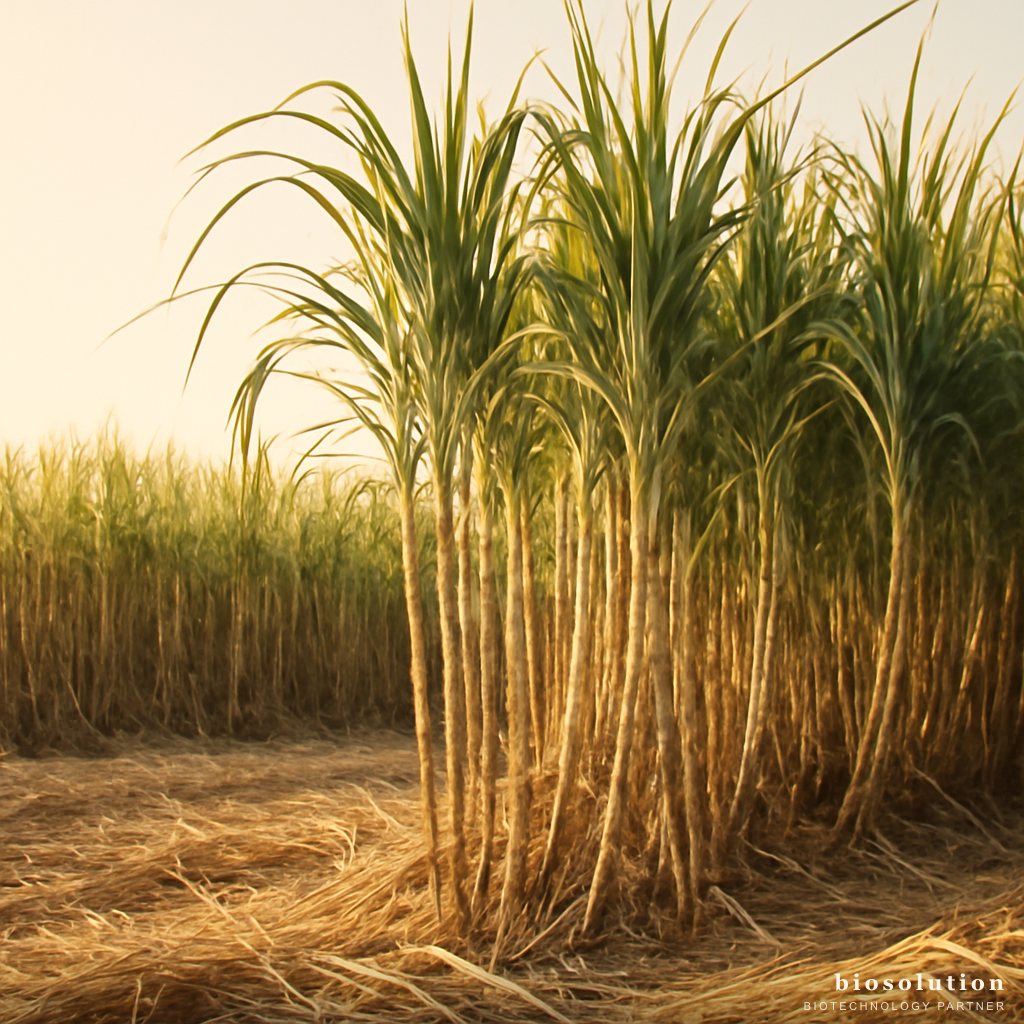
Sugarcane (Saccharum officinarum) is a crop with high nutrient requirements, especially nitrogen, phosphorus, and potassium. For decades, farmers relied on synthetic chemical fertilizers to meet these needs. However, negative impacts have begun to appear: soil becomes hard, organic matter content decreases, and beneficial microbial populations decline. As a result, nutrient uptake is inefficient, sugarcane growth is stunted, and sugar yield stagnates.
Sugarcane biofertilizer emerges as the answer. This product contains living microbes capable of fixing nitrogen, solubilizing phosphorus, and producing natural growth hormones. With regular application, soil structure improves, soil biological activity increases, and sugarcane plants become healthier. Data from the Ministry of Agriculture shows that using biofertilizer can increase sugar yield by 10-15% when combined with good cultivation practices.
Biosolution, as an Indonesian agricultural biotechnology company, developed the Large-Area Granule Biofertilizer Formula specifically formulated for sugarcane plantations. This product contains five superior microbial strains: Rhizobium sp., Bacillus subtilis, Azospirillum sp., Pseudomonas fluorescens, and Trichoderma sp.. Each has a specific role that supports the others.
Superior Microbial Composition in the Granule Biofertilizer Formula
Rhizobium sp.: Nitrogen Fixer for Legumes
Although sugarcane is not a legume, the presence of Rhizobium sp. in this formula is beneficial if sugarcane is grown in rotation with legumes or as an intercrop. Rhizobium can fix atmospheric nitrogen and provide it to legume host plants, thereby improving overall soil fertility.
Bacillus subtilis: Phosphate Solubilizer and Biocontrol
Bacillus subtilis is a Gram-positive bacterium well-known for its ability to solubilize bound phosphate in the soil into forms available to plants. Additionally, this bacterium produces antimicrobial compounds that suppress the growth of soil-borne pathogens such as Fusarium and Rhizoctonia. In sugarcane, Bacillus subtilis helps increase phosphorus uptake, which is essential for sugar formation.
Azospirillum sp.: Associative Nitrogen Fixer
Azospirillum sp. lives around sugarcane roots and fixes atmospheric nitrogen, releasing it in a form that plants can absorb. Research shows that Azospirillum inoculation in sugarcane can increase stem weight and sugar content by up to 12%.
Pseudomonas fluorescens: Antagonist of Soil-Borne Pathogens
Pseudomonas fluorescens produces siderophores that bind iron, depriving pathogens of this nutrient. This bacterium also produces natural antibiotics effective against Xanthomonas and Erwinia. In sugarcane, its use reduces the risk of stem rot and root rot diseases.
Trichoderma sp.: Fungal Biocontrol
Trichoderma sp. is an antagonistic fungus that colonizes roots and protects them from pathogenic fungi such as Sclerotium rolfsii and Pythium. Additionally, Trichoderma enhances organic matter decomposition, accelerating nutrient availability.
Case Study: Javanese Farmer Successfully Increases Sugar Yield
Mr. Sutrisno, a sugarcane farmer in Malang Regency, East Java, owns 50 hectares of land. Over the last three growing seasons, he complained of declining sugar yield, from 8.5% to 7.2%, despite increasing chemical fertilizer doses. The soil on his land began to harden, and chlorosis symptoms frequently appeared.
In the 2024/2025 growing season, Mr. Sutrisno decided to try the Large-Area Granule Biofertilizer Formula from Biosolution. He applied 200 kg per hectare during land preparation, mixed with 5 tons per hectare of manure. Chemical fertilizer was reduced by 30% from the usual dose.
The result? At harvest, sugar yield reached 9.1% — a 26% increase compared to the previous season. Stem weight also increased by 15%, and stem rot disease incidence dropped drastically. "The soil became loose, sugarcane roots were abundant, and the sugar produced was whiter and cleaner," said Mr. Sutrisno.
This success is attributed to the role of microbes in the granules. Azospirillum and Bacillus subtilis increased N and P availability, while Trichoderma and Pseudomonas kept roots healthy. The organic content of the granules also improved soil structure.
Application of Granule Biofertilizer on Large Areas: Practical and Efficient
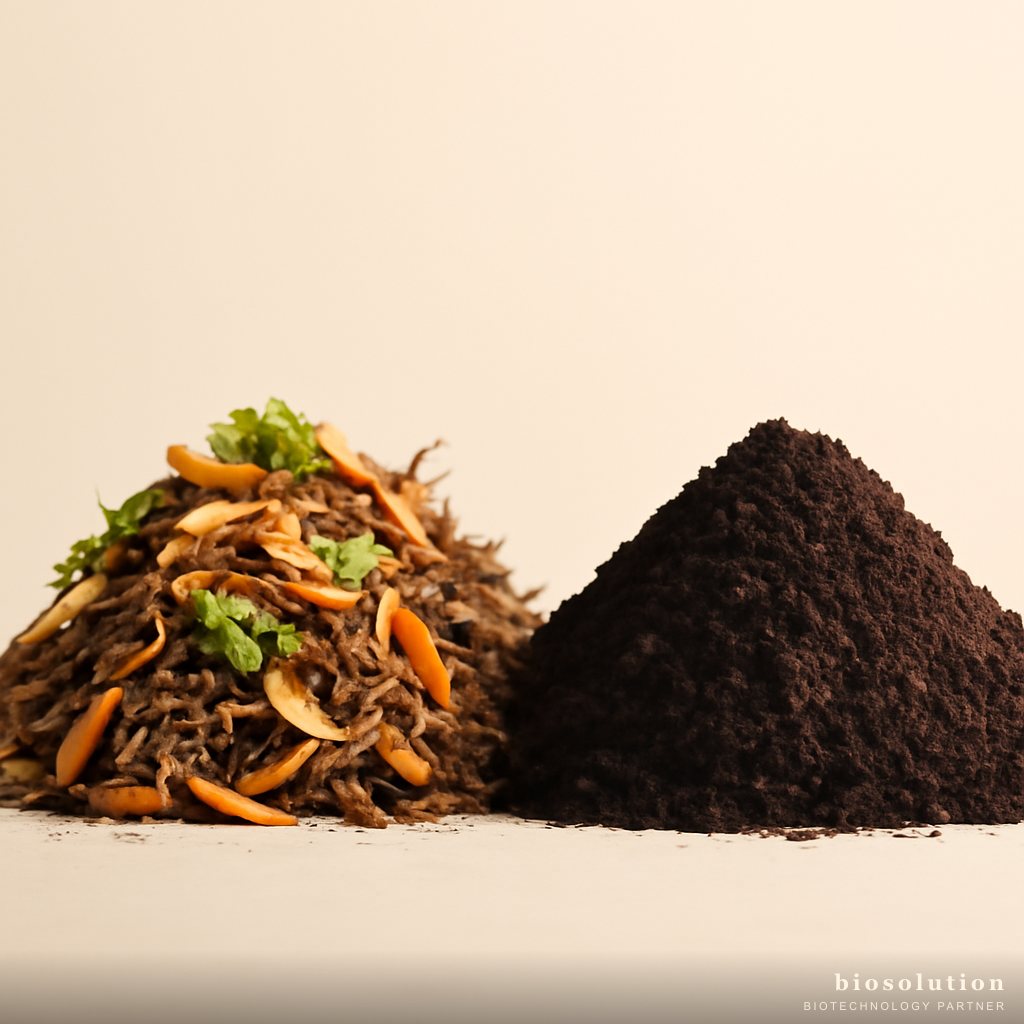
One advantage of the Large-Area Granule Biofertilizer Formula is ease of application. With a granule size of 2–4 mm, this product can be spread using a spreader on large areas. The recommended dose is 100–250 kg per hectare, applied 1–2 times per growing season. The best time is during land preparation or at the start of the rainy season.
Here are the recommended application steps:
- Land preparation: Till the soil as usual, create beds or planting rows.
- Biofertilizer application: Spread the granules evenly around the root zone or along the planting rows. If using a machine, adjust the dose according to the area.
- Covering: Cover the granules with a thin layer of soil (2–3 cm) to maintain moisture and contact with roots.
- Maintenance: Water if the soil is dry. Avoid using chemical fungicides that can kill the microbes.
Another advantage: the granules release nutrients gradually, reducing nutrient leaching and increasing soil organic carbon. For very large areas, this product is more labor-efficient than liquid biofertilizers that require repeated spraying.
Comparison with Liquid Biofertilizer
Many farmers ask which is better: granule or liquid biofertilizer? Both have their advantages. Liquid biofertilizer, such as 5-in-1 Liquid Biofertilizer Formula, is absorbed more quickly and suitable for foliar application or drip irrigation. However, on large areas with limited access, granules are more practical because they can be spread with a tractor.
The Large-Area Granule Biofertilizer Formula has a shelf life of up to 24 months at room temperature, longer than liquid forms which last only 6–12 months. Additionally, granules do not require special spray equipment and are not easily washed away by rain.
Combining both is actually optimal: use granules at planting for long-term nutrition, and spray liquid during critical growth phases (e.g., during stem formation). Consult with Biosolution experts for specific recommendations.
Conclusion
Sugarcane biofertilizer is a long-term investment to sustainably increase sugar yield. Mr. Sutrisno's case study proves that the Large-Area Granule Biofertilizer Formula can improve soil health, enhance nutrient uptake, and ultimately raise sugar quality and quantity. With superior microbial composition and practical application, this product is the right solution for large-scale sugarcane plantations.
Interested in trying? Contact the Biosolution team via WhatsApp for a free consultation and special offers. See product details Large-Area Granule Biofertilizer Formula or read related articles for more information.