Tilapia Pond Probiotics: Correct Application & Dosage for Maximum Results
High-density tilapia farming requires optimal water quality management. One proven effective solution is the use of tilapia pond probiotics. Probiotics contain beneficial bacteria that can break down organic waste, oxidize ammonia and nitrite, and maintain pond ecosystem balance. This article will technically discuss the application method, dosage per hectare, frequency, and best timing to obtain maximum benefits from probiotics, especially the Biosolution Tilapia Pond Probiotic Formula.
Why Probiotics Are Important for High-Density Tilapia Ponds?
High stocking density means more feed is given, so organic waste, ammonia, and nitrite increase drastically. If not managed, this condition can cause oxidative stress, decreased appetite, and even mass mortality. Probiotics work by:
- Oxidizing ammonia to nitrite, then nitrite to nitrate (nitrification process) by Nitrosomonas sp. and Nitrobacter sp.
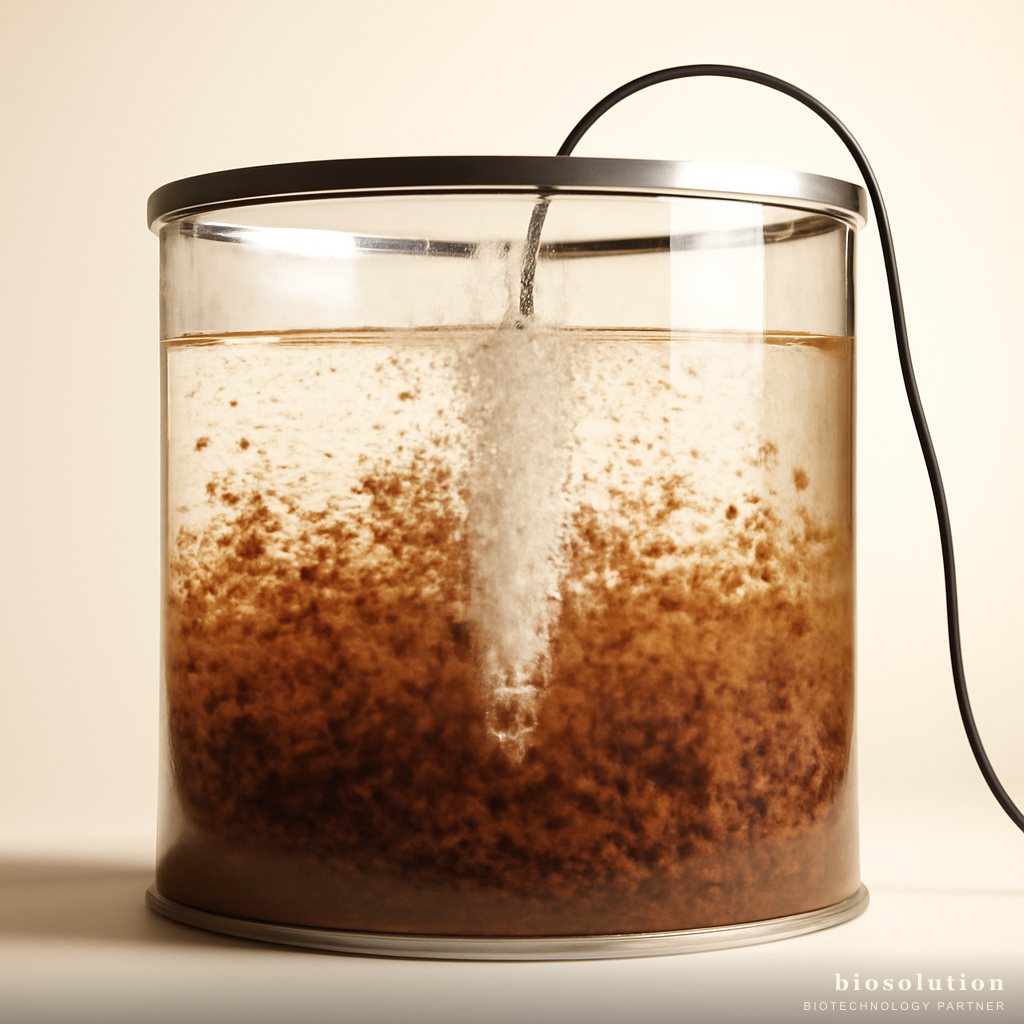
- Decomposing leftover feed and feces by Bacillus subtilis, thus reducing the organic load on the pond bottom.
- Suppressing pathogenic bacteria growth through competition and production of antimicrobial compounds.
Thus, water quality remains stable, dissolved oxygen is sufficient, and tilapia can grow more consistently.
Correct Application Method for Tilapia Pond Probiotics
Probiotic application cannot be done carelessly. Here is a technical guide based on Biosolution's recommendations:
Correct Dosage: 2 Liters per 1000 m³ of Water
The recommended dosage is 2 liters of Tilapia Pond Probiotic Formula for every 1000 cubic meters of pond water. For a pond with an area of 1 hectare and an average depth of 1 meter (volume 10,000 m³), the required dosage is 20 liters per application.
How to calculate pond volume:
- Volume (m³) = Length (m) × Width (m) × Average depth (m)
- Example: Pond 100 m × 50 m × 1 m = 5,000 m³, then dosage = 5,000/1,000 × 2 L = 10 L.
Frequency: Every 7 Days
Probiotics are applied routinely every 7 days. This frequency keeps the bacterial population active and stable in the pond. Under certain conditions (e.g., after heavy rain or large water changes), the frequency can be increased to every 5 days.
Best Timing: Morning
Application is done in the morning (around 07:00–09:00). At that time, water temperature is still relatively low so dissolved oxygen is higher, and probiotic bacteria are not immediately stressed by weak UV light. Avoid application at noon when water temperature is high and oxygen is low.
Application Method: Direct Spreading
Simply pour the probiotics evenly onto the pond surface. For optimal results, dilute first with pond water (1:10) then sprinkle at several points. Ensure aeration is running normally to help distribute the bacteria.
Dosage per Hectare: Practical Guide
For easy calculation, here is a dosage table based on pond volume:
| Pond Volume (m³) | Probiotic Dosage (L) | Equivalent Area (ha) if depth 1 m |
|---|---|---|
| 1,000 | 2 | 0.1 ha |
| 5,000 | 10 | 0.5 ha |
| 10,000 | 20 | 1 ha |
| 20,000 | 40 | 2 ha |
Note: If pond depth is more than 1 m, adjust total volume. Dosage is based on water volume, not surface area.
Benefits of Routine Application in Tilapia Ponds
With consistent probiotic application, farmers will experience several benefits:
- Stable water quality: Ammonia and nitrite are controlled, pH is more stable.
- More consistent tilapia growth: Fish are not stressed, appetite is good, so harvest weight is more uniform.
- Reduced mortality due to low oxygen: Decomposer bacteria reduce BOD, so dissolved oxygen is more sufficient.
- Higher stocking density possible: With managed waste load, stocking density can be increased by 20-30% without risk.
Case Study: Effectiveness at 50 fish/m³ Stocking Density
In a trial in a 500 m² pond (depth 1.2 m, volume 600 m³) with a stocking density of 50 fish/m³, application of 1.2 L of probiotics every 7 days showed:
- Ammonia decreased from 2.5 mg/L to 0.5 mg/L within 2 weeks.
- Nitrite stable below 0.1 mg/L.
- Survival rate (SR) reached 95%.
- Feed conversion ratio (FCR) 1.2.
This data shows that probiotics are effective in maintaining water quality despite high organic load.
Additional Tips for Optimal Results
- Aeration: Ensure adequate aeration (minimum 1 HP per 1000 m³) to help bacterial circulation and oxygen.
- Stop feeding 1 hour before application: So that fish do not consume probiotics directly (although not harmful, it is better for bacteria to work in the water).
- Do not mix with disinfectants: Chlorine or formalin can kill probiotic bacteria. Allow at least 48 hours after using disinfectants.
- Store in a shaded place: Probiotics are live bacteria, avoid direct sunlight and temperatures above 40°C.
Conclusion
Tilapia pond probiotics are an effective solution for maintaining water quality and increasing productivity, especially in high-density stocking systems. By following the correct application guidelines—dosage of 2 L per 1000 m³ of water, frequency of 7 days, morning timing—farmers can optimize tilapia growth, reduce mortality risk, and increase profits. For best results, use a product containing nitrifying and decomposer bacteria such as Tilapia Pond Probiotic Formula from Biosolution. If you need further consultation on specific dosage for your pond, contact our technical team via WhatsApp.