Tilapia Pond Probiotics: Key to Successful High-Density Farming
High-density tilapia farming is a popular choice for farmers to increase land productivity. However, high density brings serious challenges: declining water quality due to accumulation of ammonia, nitrite, and organic matter. This is where tilapia pond probiotics play a role as an effective biological solution. By utilizing beneficial bacteria such as Nitrosomonas sp., Nitrobacter sp., and Bacillus subtilis, probiotics help maintain stable water parameters, reduce mortality, and enable higher stocking densities without compromising fish health.
Why High Stocking Density Requires Probiotics?
In high-density tilapia farming, feed quantity and fish metabolism increase drastically. Feed residues and feces produce nitrogen waste in the form of ammonia (NH3), which is toxic to fish. Without proper management, ammonia can cause stress, reduced appetite, and even mass mortality. Tilapia pond probiotics work by oxidizing ammonia into nitrite, then nitrite into safer nitrate. This nitrification process is carried out by Nitrosomonas sp. and Nitrobacter sp. bacteria. Additionally, Bacillus subtilis decomposes organic matter, reducing the load of pond bottom sludge. Thus, probiotics create an environment that supports consistent tilapia growth.
Daily Water Parameter Monitoring: Ammonia, pH, Oxygen, Salinity
The success of probiotics highly depends on appropriate water parameters. Farmers need to monitor four main parameters daily:
Ammonia (NH3)
Ammonia is the main toxin in high-density ponds. Ideal ammonia levels for tilapia are below 0.02 mg/L. Measurement can be done with a test kit. If ammonia is high, immediately apply probiotics and reduce feeding. Nitrosomonas sp. will oxidize ammonia into nitrite, but this process requires sufficient dissolved oxygen.
pH
Ideal water pH for tilapia is 6.5–8.5. Low pH inhibits nitrifying bacteria activity, while high pH increases ammonia toxicity. Daily pH monitoring is important to adjust probiotic dosage and make corrections if necessary.
Dissolved Oxygen (DO)
Oxygen is essential for fish and aerobic bacteria like Nitrosomonas and Nitrobacter. A minimum DO of 4 mg/L is required for optimal nitrification. In high-density ponds, the use of aerators is mandatory. Oxygen deficiency can cause oxygen-related mortality and halt probiotic activity.
Salinity
Tilapia tolerates low salinity (0–10 ppt), but drastic changes can cause stress. Salinity monitoring helps maintain fish osmoregulation stability. Probiotics remain effective at moderate salinity.
Composition of Tilapia Pond Probiotic Formula
The Tilapia Pond Probiotic Formula product from Biosolution contains three superior bacterial strains that work synergistically:
- Nitrosomonas sp.: Chemoautotrophic bacteria that oxidize ammonia (NH3) into nitrite (NO2-). This process is the first step in the nitrogen cycle.
- Nitrobacter sp.: Bacteria that oxidize nitrite into nitrate (NO3-), which is much less toxic and can be utilized by aquatic plants.
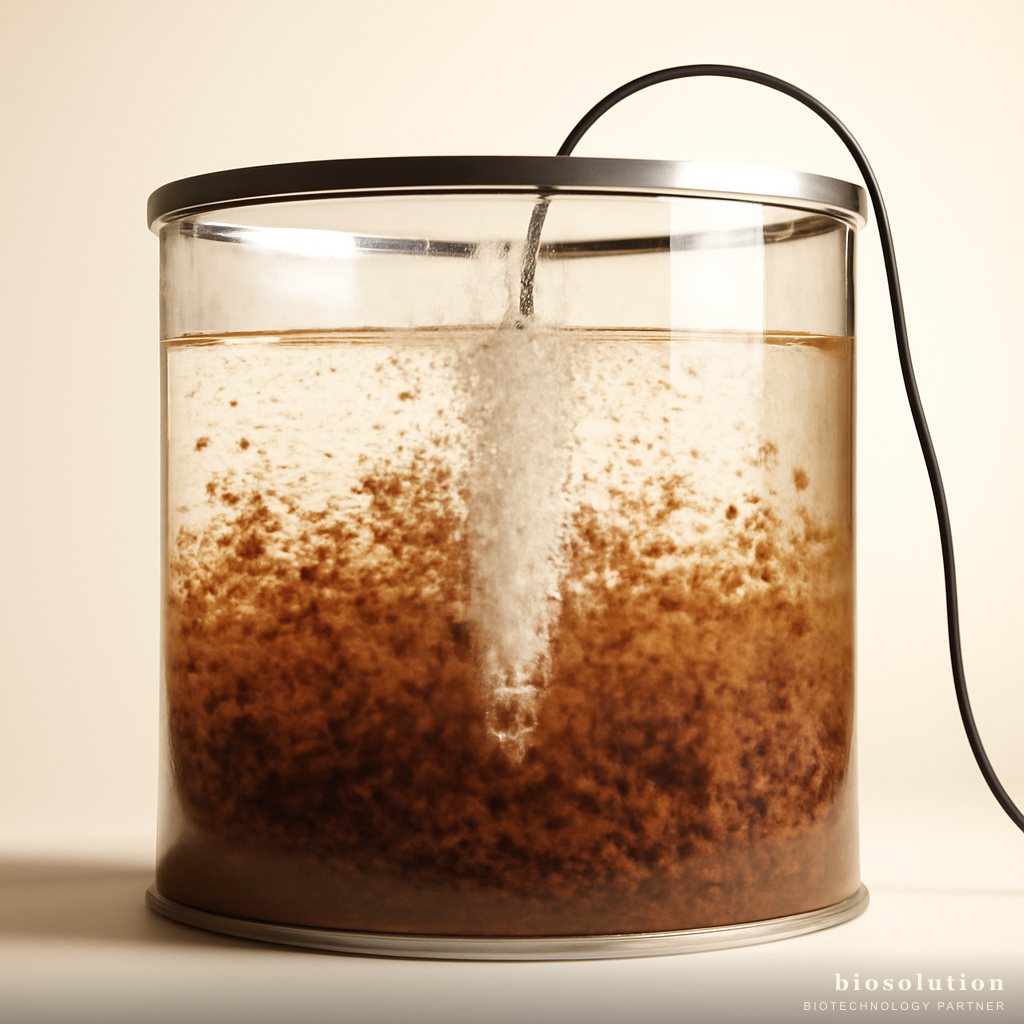
- Bacillus subtilis: Heterotrophic bacteria that decompose organic matter such as feed residues and feces, reducing sludge accumulation and preventing toxic gas formation.
This combination ensures a complete nitrogen cycle, maintains stable water quality, and supports higher stocking densities.
Proper Probiotic Application Method
Application of tilapia pond probiotics must be done regularly for optimal results. Here is the guide from Biosolution:
- Method: Broadcast evenly directly into the pond.
- Dosage: 2 L per 1000 m³ of water.
- Frequency: Every 7 days.
- Time: Morning, when water temperature starts to rise and oxygen levels are sufficient.
Before application, ensure water parameters are within ideal ranges. If ammonia or nitrite is high, re-measure after 2-3 days. For ponds with high organic load, dosage can be increased according to technical recommendations.
Benefits of Probiotics for High-Density Tilapia Farming
Consistent use of probiotics provides many advantages:
- Stable water quality: Ammonia and nitrite controlled, pH more stable, oxygen maintained.
- More consistent tilapia growth: Fish are not stressed, appetite is good, feed conversion is efficient.
- Reduces oxygen-related mortality: Aerobic bacteria help maintain DO by decomposing organic matter that consumes oxygen.
- Enables higher stocking density: With a controlled environment, farmers can increase density without risk of mass mortality.
Research from FAO shows that probiotic application in tilapia farming can increase survival rate by up to 15% and accelerate growth. Additionally, probiotics are environmentally friendly as they reduce nitrogen waste discharged into waters.
Case Study: Daily Monitoring and Probiotic Response
A farmer in West Java implemented a stocking density of 50 fish/m³ in a 1000 m³ pond. Every morning, he measured ammonia, pH, DO, and salinity. In the first week, ammonia reached 0.5 mg/L. He immediately applied probiotics according to dosage. Three days later, ammonia dropped to 0.1 mg/L, and nitrite temporarily increased then decreased. After regular application, water parameters stabilized below threshold levels. Tilapia grew uniformly, and harvest reached 500 grams in 4 months. Without probiotics, he could only stock 30 fish/m³ with high mortality risk.
Conclusion
Tilapia pond probiotics are an effective solution for high-density farming. By monitoring daily water parameters—ammonia, pH, oxygen, and salinity—and applying probiotics regularly, farmers can create a healthy environment for fish. The Tilapia Pond Probiotic Formula product from Biosolution, containing Nitrosomonas sp., Nitrobacter sp., and Bacillus subtilis, helps maintain water quality, reduce mortality, and increase productivity. For further consultation, contact our technical team via WhatsApp. Achieve maximum harvest yields with smart pond management.