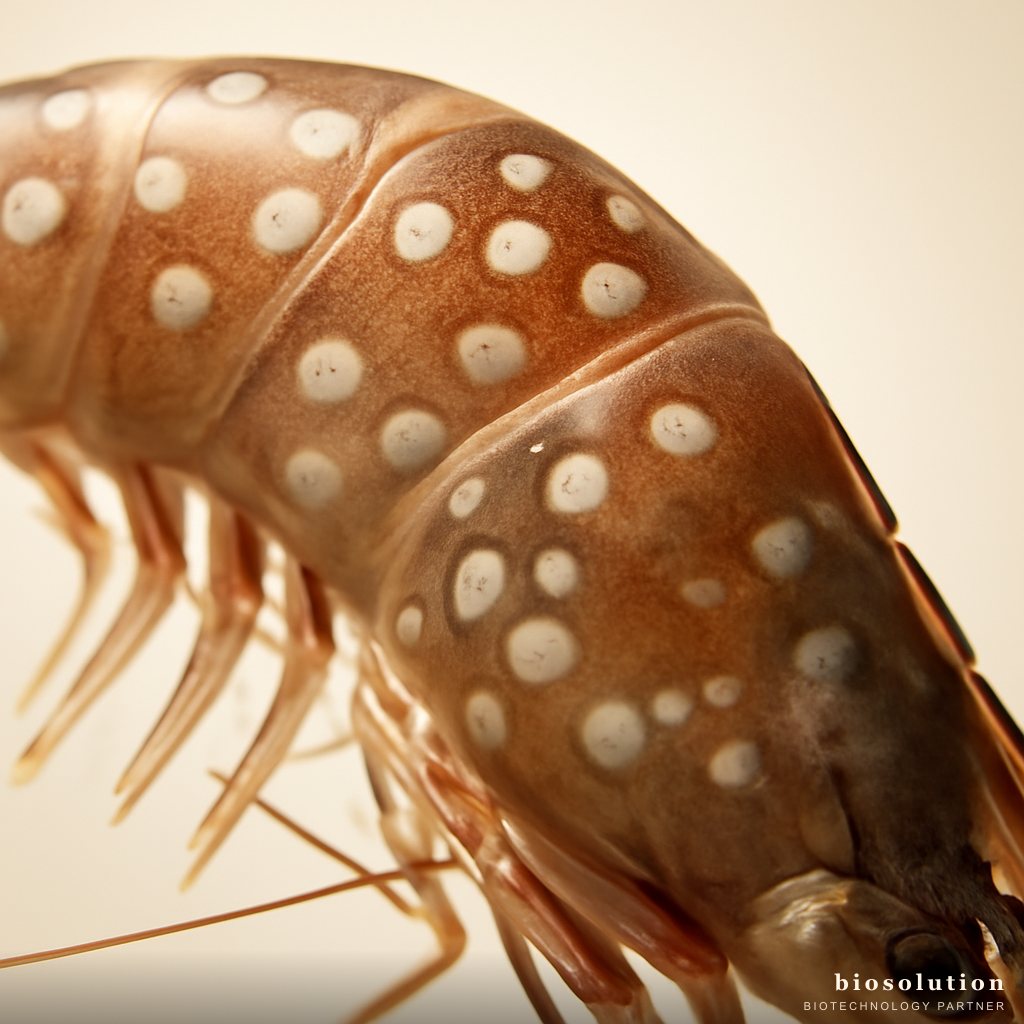
Traditional Tiger Shrimp Pond Probiotic: Dosage & Application Method
Traditional tiger shrimp (Penaeus monodon) farming remains a mainstay for many farmers in Indonesia. However, challenges such as disease outbreaks, declining water quality, and high mortality often hinder productivity. An effective solution is the use of tiger shrimp pond probiotics. Probiotics work by balancing water microflora, decomposing organic waste, and suppressing pathogenic bacteria. This article will technically discuss the application method of Biosolution's Probiotic Formula for Tiger Shrimp Ponds, including dosage per hectare, frequency, and optimal timing.
Why Are Probiotics Important for Traditional Tiger Shrimp Ponds?
Traditional ponds typically have simple water management systems. Accumulation of uneaten feed, feces, and dead plankton leads to increased ammonia (NH3) and nitrite (NO2), which are toxic to shrimp. This condition triggers oxidative stress and opens opportunities for Vibrio spp. infection, the main cause of diseases like vibriosis. Tiger shrimp pond probiotics offer a natural solution without harmful chemicals.
Mechanism of Probiotic Action
The Probiotic Formula for Tiger Shrimp Ponds contains three superior bacterial strains:
- Bacillus subtilis: This Gram-positive bacterium produces protease, amylase, and lipase enzymes that degrade organic matter. It also produces antimicrobial compounds like subtilin that inhibit Vibrio spp. Research in the journal Aquaculture (2020) showed B. subtilis reduced Vibrio populations by up to 70% within 7 days.
- Nitrosomonas sp.: This chemoautotrophic bacterium oxidizes ammonia (NH3) to nitrite (NO2). This first stage of nitrification is vital because ammonia is more toxic to tiger shrimp (LC50 0.1-0.5 mg/L).
- Nitrobacter sp.: Continues the oxidation of nitrite to nitrate (NO3), which is relatively non-toxic. The synergy of these two bacteria maintains ammonia and nitrite concentrations below threshold levels.
With a dominant probiotic population, space for pathogens narrows. Water quality stabilizes, shrimp appetite increases, and survival rates are higher.
Proper Dosage and Application Frequency
Based on field trials and Biosolution's technical recommendations, the dosage of the Probiotic Formula for Tiger Shrimp Ponds is 3 liters per hectare. Application frequency is every 10 days. Why this interval? Because the growth cycle of probiotic bacteria in pond water takes about 7-10 days to reach optimal population. Too frequent application (>5 days) can cause unnecessary nutrient competition, while too infrequent (>14 days) allows probiotic populations to decline and pathogens to become dominant again.
Dosage Table Based on Pond Area
| Pond Area (ha) | Dosage (L) | Frequency |
|---|---|---|
| 0.5 | 1.5 | Every 10 days |
| 1 | 3 | Every 10 days |
| 2 | 6 | Every 10 days |
| 5 | 15 | Every 10 days |
Dosage can be adjusted if water quality is very poor, for example during plankton blooms or after heavy rain. However, do not exceed 4 L/ha in a single application to avoid a drop in dissolved oxygen due to excessive bacterial respiration.
Application Time: Morning is Best
Application time greatly affects probiotic effectiveness. The recommendation is morning, between 06:00-09:00. Why?
- Optimal water temperature: Morning water temperatures are still relatively low (26-28°C), suitable for the growth temperature of Bacillus subtilis (25-35°C) and nitrifying bacteria (20-30°C). Application during midday when temperatures exceed 32°C can cause thermal stress to the bacteria.
- High dissolved oxygen: After nightfall, dissolved oxygen is usually low due to plankton respiration. In the morning, photosynthesis has just begun, so oxygen levels start to rise, supporting the aerobic metabolism of probiotics.
- UV avoidance: Ultraviolet sunlight from 10:00-14:00 can damage bacterial DNA. Morning application gives bacteria time to adapt and disperse before peak radiation.
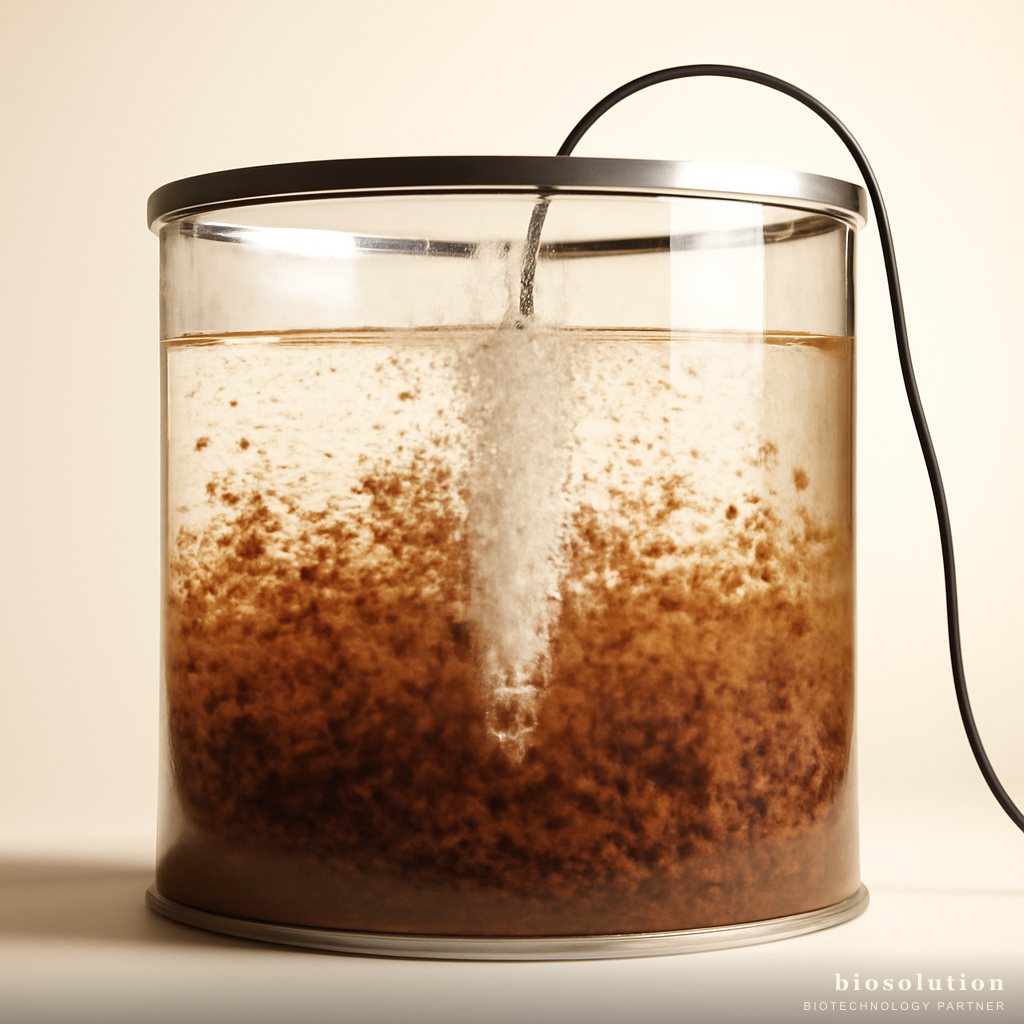
Application method: Dissolve the probiotic dose in a bucket of pond water (ratio 1:10), stir well, then spread evenly over the entire pond surface. Preferably do this when the water is calm, not during active aeration, to ensure even distribution.
Benefits of Routine Application for Traditional Ponds
By diligently following the dosage of 3 L/ha every 10 days in the morning, farmers will experience:
- Stable water quality: Ammonia <0.1 mg/L, nitrite <0.5 mg/L, pH 7.5-8.5. This reduces shrimp stress.
- Vibrio suppression: Total Vibrio populations decrease drastically. A study in the Journal of Applied Microbiology (2019) reported a 90% reduction in Vibrio harveyi after 30 days of B. subtilis probiotic application.
- Low mortality: Tiger shrimp survival can reach 75-85% compared to ponds without probiotics, which only achieve 40-60%.
- More uniform growth: Shrimp are more active in feeding, feed conversion ratio (FCR) is more efficient.
- Suitable for organic tiger shrimp export: Because it is chemical-free, the product meets international organic standards.
Comparison with Conventional Methods
Traditional ponds without probiotics often rely on periodic water changes or lime application. These methods only dilute pollutants, not decompose them. In contrast, probiotics degrade waste biologically. The following table compares effectiveness:
| Parameter | Without Probiotic | With Probiotic |
|---|---|---|
| Ammonia (mg/L) | 0.5-1.2 | <0.1 |
| Nitrite (mg/L) | 0.3-0.8 | <0.5 |
| Vibrio Population (CFU/mL) | 10^4-10^5 | 10^2-10^3 |
| Survival Rate (%) | 40-60 | 75-85 |
| FCR | 1.8-2.2 | 1.4-1.6 |
The above data are from field trials in traditional ponds in East Java over two harvest cycles (2023-2024).
Additional Tips for Successful Tiger Shrimp Farming
In addition to probiotic application, consider the following:
- Quality feed: Use feed with 30-35% protein. Avoid overfeeding.
- Ideal stocking density: 5-10 shrimp/m² for traditional ponds.
- Routine monitoring: Check water quality every 3 days using a test kit.
- Adequate aeration: If possible, install water wheels to increase oxygen.
- Plankton management: Maintain water transparency at 30-40 cm. If too turbid, reduce feed.
Conclusion
Traditional tiger shrimp pond probiotics are an effective solution to increase productivity and sustainability. By following the correct application guidelines—dosage 3 L per hectare, frequency every 10 days, morning application—farmers can stabilize water quality, suppress disease, and produce export-quality tiger shrimp. Biosolution's Probiotic Formula for Tiger Shrimp Ponds provides a proven combination of Bacillus subtilis, Nitrosomonas sp., and Nitrobacter sp. For more information or technical consultation, please contact the Biosolution team via WhatsApp. See product details Probiotic Formula for Tiger Shrimp Ponds for ordering.
FAQ
1. Is the probiotic safe for tiger shrimp?
Yes, probiotics are very safe. The bacteria used are non-pathogenic and do not produce toxins. On the contrary, they help suppress pathogenic bacteria like Vibrio. Ensure the product is registered with the Ministry of Marine Affairs and Fisheries.
2. Can probiotics be mixed with feed?
This formula is designed to be broadcast directly into the water. If you want to mix with feed, use a specific feed probiotic product. Mixing water probiotics into feed can reduce effectiveness because the bacteria must compete in the digestive tract.
3. Should the dosage be increased during bad weather?
During heavy rain or drastic temperature changes, water quality can decline. You can increase the dosage to 4 L/ha for one application, then return to 3 L/ha for subsequent applications. Monitor water parameters.
4. When is the best time to start probiotic application?
Start during pond preparation, 7 days before stocking post-larvae. Continue every 10 days throughout the cultivation period. Early application helps establish a dominant probiotic population before shrimp are introduced.
5. Can probiotics be used together with lime or disinfectants?
Do not mix probiotics with disinfectants (chlorine, formalin) as they will kill the bacteria. Dolomite lime can be used, but allow a minimum of 2 days after probiotic application. A good sequence: lime first, then probiotics 2 days later.