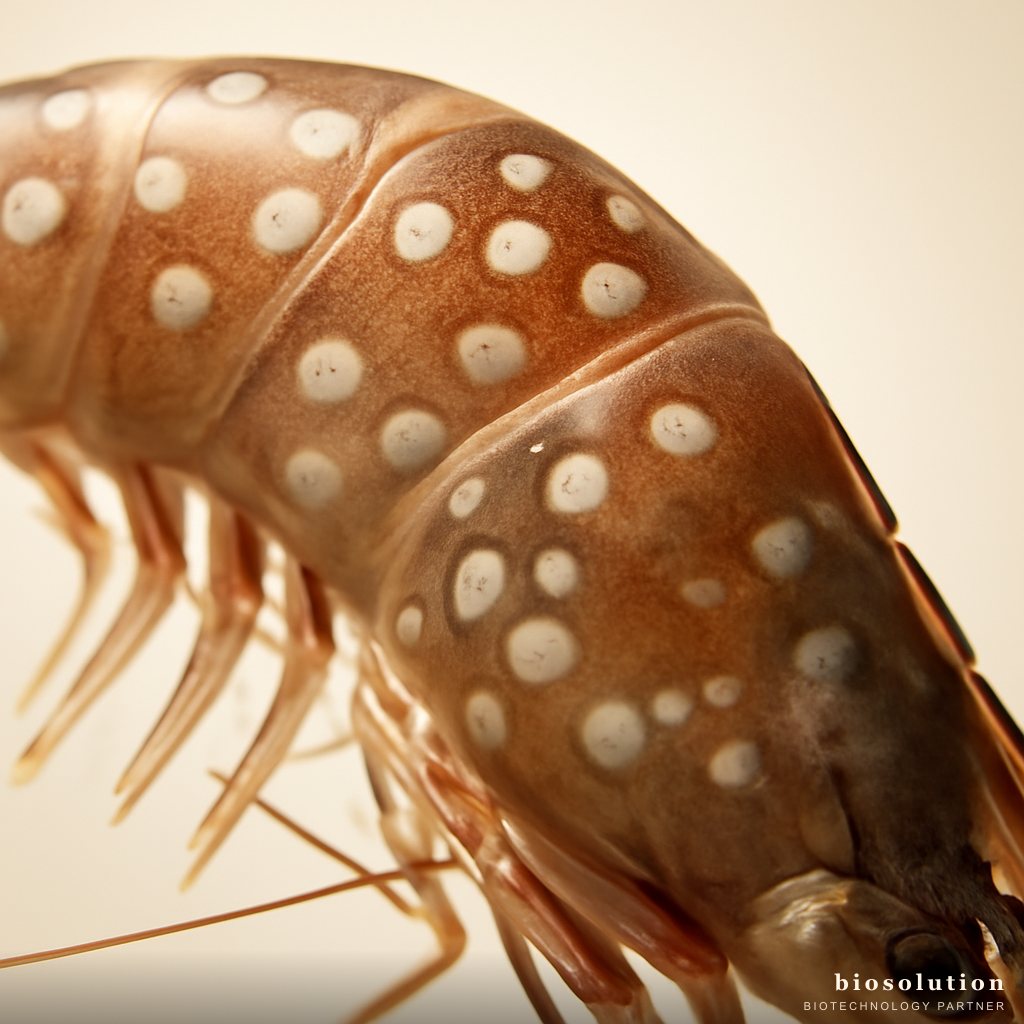
Traditional Tiger Shrimp Pond Probiotics: Microbial Strategy for Optimal Harvest
Traditional tiger shrimp (Penaeus monodon) farming remains the backbone of aquaculture in Indonesia. However, its productivity is often hampered by declining water quality and disease outbreaks, especially vibriosis. This is where traditional tiger shrimp pond probiotics play a crucial role. By utilizing beneficial bacteria, we can create a stable pond ecosystem, reduce mortality, and produce export-quality tiger shrimp. This article discusses the right microbial probiotic application strategy for traditional tiger shrimp ponds, based on microbiological principles and Biosolution product data.
Why Are Probiotics Important for Traditional Tiger Shrimp Ponds?
Traditional ponds generally have simple water management, without intensive aeration or large water exchanges. Consequently, accumulation of organic matter from leftover feed and feces is high, triggering outbreaks of pathogenic bacteria such as Vibrio spp. and increasing toxic ammonia and nitrite levels for shrimp. Probiotics offer a natural solution by:
- Decomposing organic matter: Bacteria like Bacillus subtilis produce protease, amylase, and lipase enzymes that break down leftover feed and feces, reducing the organic load on the pond bottom.
- Oxidizing ammonia and nitrite: Chemosynthetic bacteria Nitrosomonas sp. oxidize ammonia to nitrite, then Nitrobacter sp. oxidize nitrite to less toxic nitrate. This process keeps ammonia and nitrite concentrations safe.
- Suppressing pathogens competitively: Bacillus subtilis produces antimicrobial compounds like subtilisin and competes for space and nutrients, reducing Vibrio populations.
Traditional Tiger Shrimp Pond Probiotic Formula: Composition and Mechanism
Biosolution's Traditional Tiger Shrimp Pond Probiotic Formula is specially designed for traditional tiger shrimp ponds. It contains three superior bacteria that work synergistically:
Bacillus subtilis: Organic Decomposer and Anti-Vibrio
Bacillus subtilis is a gram-positive aerobic bacterium capable of forming spores, making it resistant to fluctuating pond conditions. Its roles include:
- Organic decomposition: Hydrolyzes proteins, carbohydrates, and fats into simple compounds that can be utilized by phytoplankton as natural fertilizer.
- Vibrio antagonism: Produces biosurfactants and lytic enzymes that damage the cell walls of Vibrio harveyi and V. parahaemolyticus, the main causes of disease in tiger shrimp.
Nitrosomonas sp.: Ammonia Oxidizer
This bacterium oxidizes ammonia (NH₃) to nitrite (NO₂⁻) via the enzyme ammonia monooxygenase. Ammonia is a toxic compound arising from shrimp excretion and organic decomposition. By converting it to nitrite, toxicity is reduced, although nitrite also needs to be further oxidized.
Nitrobacter sp.: Nitrite Oxidizer
Nitrobacter sp. oxidizes nitrite to nitrate (NO₃⁻) via the enzyme nitrite oxidoreductase. Nitrate is much safer for shrimp and can be utilized by phytoplankton for growth. The presence of both bacteria ensures an efficient nitrogen cycle, keeping ammonia and nitrite levels low.
Proper Probiotic Application Method in Traditional Ponds
For probiotics to work optimally, application must be done correctly. Here is a guide based on the Traditional Tiger Shrimp Pond Probiotic Formula product:
- Dosage: 3 liters per hectare of pond area.
- Frequency: Every 10 days during the cultivation period.
- Application time: Morning (07:00–09:00) when water temperature is still low and dissolved oxygen is sufficiently high.
- Method: Spread the probiotic evenly over the entire pond surface. It is advisable to dilute the probiotic with pond water before spreading for more homogeneous distribution.
Tips: Before application, measure water quality parameters such as temperature, pH, salinity, and dissolved oxygen. Optimal conditions for probiotic bacterial activity are temperature 28–32°C, pH 7.5–8.5, and dissolved oxygen >4 mg/L.
Positive Impacts of Probiotics on Water Quality and Shrimp Health
Regular probiotic application provides measurable benefits:
- More stable water quality: Ammonia and nitrite concentrations decrease drastically, reducing stress on shrimp. pH fluctuations are also better controlled as bacterial activity suppresses excessive algae growth.
- Reduced mortality: By suppressing Vibrio populations, the risk of diseases such as myonecrosis and white feces syndrome decreases. Survival rate of tiger shrimp can increase by 20–30% compared to ponds without probiotics.
- Better harvest: Shrimp grow more uniformly, harvest size is larger, and meat is firmer. This increases market value, especially for the organic tiger shrimp export market that requires antibiotic-free residues.
- Environmentally friendly: Probiotics reduce the accumulation of organic sludge on the pond bottom, extending the pond's lifespan without the need for complete drying.
Case Study: Probiotic Success in Traditional Ponds
In Tambakrejo Village, East Java, a traditional tiger shrimp farmer with a 2-hectare pond applied the Traditional Tiger Shrimp Pond Probiotic Formula for one cycle (120 days). Results:
- Initial ammonia of 2.5 mg/L dropped to 0.3 mg/L within the first 10 days.
- Total Vibrio population decreased from 10⁴ CFU/mL to 10² CFU/mL after 30 days.
- Shrimp survival reached 78%, higher than the surrounding pond average of only 55%.
- Production increased from 500 kg/ha to 800 kg/ha.
Although not controlled research data, this testimony shows the great potential of probiotics when applied consistently.
Conclusion
Traditional tiger shrimp pond probiotics are an effective strategy to overcome water quality and disease problems without harmful chemicals. The formula containing Bacillus subtilis, Nitrosomonas sp., and Nitrobacter sp. works synergistically to decompose organic matter, oxidize ammonia and nitrite, and suppress Vibrio. With routine application of 3 L/ha every 10 days, farmers can enjoy stable water quality, low mortality, and better tiger shrimp harvests, even meeting organic export standards.
For further consultation on Traditional Tiger Shrimp Pond Probiotic Formula or your pond probiotic needs, contact the Biosolution team via WhatsApp. Also get the latest information on sustainable aquaculture solutions from us.
FAQ
What are traditional tiger shrimp pond probiotics?
Traditional tiger shrimp pond probiotics are products containing beneficial bacteria added to pond water to improve water quality, suppress pathogens, and enhance the health of tiger shrimp (Penaeus monodon). They usually contain Bacillus subtilis, Nitrosomonas sp., and Nitrobacter sp. that work to decompose organic matter and oxidize toxic compounds like ammonia and nitrite.
How to properly apply probiotics in tiger shrimp ponds?
Probiotic application is done by spreading 3 liters of product per hectare evenly over the pond surface, preferably in the morning. Repeat every 10 days. Ensure water temperature 28–32°C, pH 7.5–8.5, and dissolved oxygen >4 mg/L for optimal results. Dilute the probiotic with pond water before spreading for even distribution.
Are probiotics safe for tiger shrimp and the environment?
Very safe. Probiotic bacteria such as Bacillus subtilis and nitrifying bacteria are natural microorganisms that are not pathogenic to shrimp or humans. Probiotics leave no harmful residues, making them suitable for organic tiger shrimp farming and environmentally friendly.
How long does it take to see probiotic effects on water quality?
Water quality improvement usually starts to be seen within 3–7 days after the first application. Ammonia and nitrite concentrations decrease gradually, and Vibrio populations reduce within 1–2 weeks. For maximum results, routine application every 10 days is highly recommended.
Can probiotics be used together with antibiotics or disinfectants?
It is best not to. Antibiotics and disinfectants can kill probiotic bacteria, reducing their effectiveness. If antibiotics must be used, allow a minimum 3-day gap after probiotic application, then reapply probiotics to restore their population.