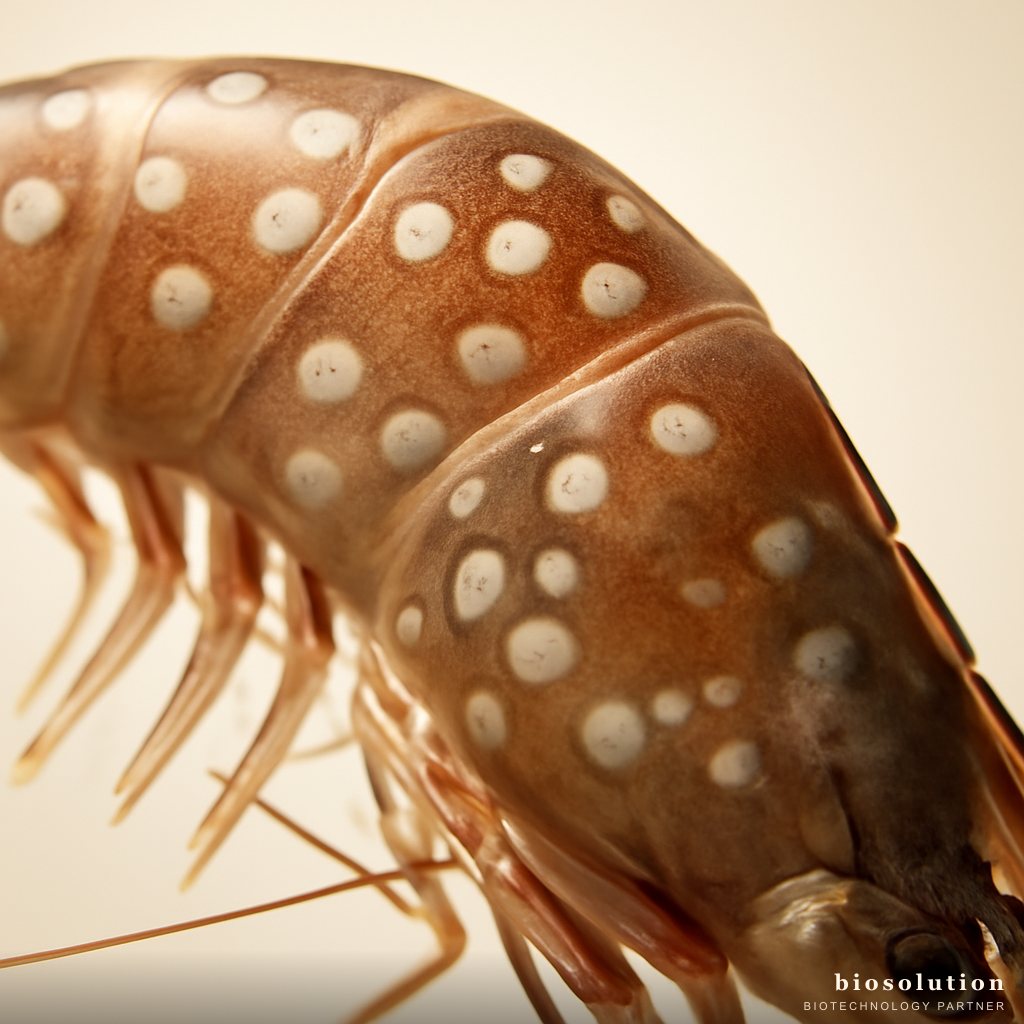
Traditional vs Chemical Probiotics for Tiger Shrimp Ponds: Lower Cost?
Cultivating tiger shrimp (Penaeus monodon) in traditional ponds faces classic challenges: rising operational costs, unstable water quality, and disease outbreaks like vibriosis. So far, many farmers rely on chemicals to address these issues. However, did you know that traditional probiotics for tiger shrimp ponds can be a more economical and sustainable alternative? This article will explore the cost comparison between microbial probiotics and chemical methods, and how Biosolution's solutions can help you reduce expenses without sacrificing harvest yields.
Why Are Traditional Probiotics for Tiger Shrimp Ponds More Cost-Efficient?
Production costs in tiger shrimp farming include feed, medicines, fertilizers, and water management. Using microbial probiotics directly reduces the need for chemical water quality controllers and antibiotics. Based on field data, farmers who switched to probiotics reported savings of up to 30% on water management costs. This is because probiotics naturally decompose leftover feed and feces, oxidize ammonia and nitrite, thus maintaining water quality without requiring large amounts of chlorine or zeolite.
Direct Cost Comparison: Probiotics vs Chemicals
Let's do a simple calculation. For a 1-hectare pond, using probiotics like Biosolution's Tiger Shrimp Pond Probiotic Formula requires a dose of 3 liters per application every 10 days. The price per liter of probiotic ranges from IDR 50,000 to IDR 100,000, depending on concentration. Meanwhile, the cost of chemicals such as chlorine, formalin, and antibiotics for the same pond size can reach IDR 500,000 to IDR 1,000,000 per week. Over one cultivation cycle (90-120 days), the cost difference can reach millions of rupiah. Moreover, chemical residues can harm shrimp health and lower selling prices due to failure to meet organic export standards.
Long-Term Efficiency: Survival Rate (SR) and Feed Conversion Ratio (FCR)
Probiotics are not only cheap but also improve Survival Rate (SR) and Feed Conversion Ratio (FCR). With stable water quality, tiger shrimp are more resistant to stress and disease, so SR can increase from 60% to 80% or more. FCR also improves because shrimp utilize feed more efficiently. A decrease in FCR from 1.8 to 1.5 means feed savings of about 15-20%. If feed costs IDR 15,000 per kg, for a harvest of 1 ton of shrimp, savings could reach IDR 4.5 million. With probiotics, a small initial investment yields multiplied profits.
How Do Microbial Probiotics Replace Chemicals?
Traditional probiotics for tiger shrimp ponds contain beneficial bacteria that naturally clean the pond. Biosolution uses three superior strains: Bacillus subtilis as an organic decomposer and anti-Vibrio, Nitrosomonas sp. to oxidize ammonia into nitrite, and Nitrobacter sp. to oxidize nitrite into non-toxic nitrate. This process is called biological nitrification, which replaces the role of chemicals like chlorine or zeolite. With routine application every 10 days, probiotic bacterial populations dominate, suppressing the growth of pathogenic bacteria like Vibrio harveyi without needing antibiotics.
Organic Decomposition Mechanism
Bacillus subtilis produces protease, amylase, and lipase enzymes that break down leftover feed and feces into simple compounds. This prevents the accumulation of organic sludge that becomes a source of ammonia. Unlike lime or zeolite which only temporarily bind waste, probiotics actually decompose waste so that frequent water changes are unnecessary. This saves pumping and labor costs.
Ammonia and Nitrite Control
Ammonia and nitrite are major toxins for shrimp. Nitrosomonas and Nitrobacter work synergistically to convert ammonia into safe nitrate. Without probiotics, farmers often use formalin or chlorine to suppress ammonia, but these chemicals can kill plankton and disrupt the pond ecosystem. With probiotics, the nitrogen cycle runs naturally, water quality is more stable, and water management costs drop drastically.
Case Study: Traditional Ponds in East Java
A study in traditional ponds in Sidoarjo Regency showed that using probiotics for two consecutive cycles resulted in a 25% reduction in operational costs compared to ponds using chemicals. Survival Rate increased from 65% to 82%, and harvest size was more uniform. Farmers also reported that the tiger shrimp produced had a more natural taste and no muddy odor, making them more attractive to exporters. This data aligns with research from Bogor Agricultural University stating that probiotics can reduce production costs by 20-30%.
Tips for Choosing the Right Probiotics for Tiger Shrimp Ponds
Not all probiotics are equally effective. Choose probiotics containing specific bacteria for shrimp ponds, such as Bacillus subtilis, Nitrosomonas, and Nitrobacter. Ensure the product has a minimum bacterial concentration of 10^8 CFU/mL and comes with clear application instructions. Biosolution provides a special formula with a dose of 3 liters per hectare every 10 days, applied in the morning when water temperature is still low. Avoid probiotics mixed with chemicals or preservatives, as they can reduce bacterial effectiveness.
Effective Application Method
Probiotics should be applied after water changes or when water quality begins to decline. Dissolve the probiotic in a bucket of pond water, then spread evenly over the entire surface. Ensure sufficient aeration to help distribute the bacteria. For optimal results, use probiotics regularly from the start of the cycle until just before harvest. Do not mix probiotics with chlorine or other disinfectants at the same time, as this can kill beneficial bacteria.
Conclusion
The cost comparison between traditional probiotics for tiger shrimp ponds and chemicals clearly shows that probiotics are more economical in the long run. Besides reducing direct costs of chemical purchases, probiotics also improve SR and FCR, and produce organic tiger shrimp with high market value. By using the right probiotic formula like Biosolution's, farmers can save millions of rupiah per cycle while preserving the environment. If you are interested in trying, consult your pond needs with our expert team via WhatsApp or see the product Tiger Shrimp Pond Probiotic Formula for more information.
FAQ
Are probiotics safe for tiger shrimp?
Yes, probiotics containing bacteria like Bacillus subtilis, Nitrosomonas, and Nitrobacter are safe because they are natural microbes that are not pathogenic. In fact, probiotics help boost shrimp immunity and reduce disease risk. Ensure the product used is registered and has a distribution permit from the Ministry of Marine Affairs and Fisheries.
How much does probiotic application cost per cycle?
For a 1-hectare pond, probiotic costs around IDR 1,500,000 to IDR 3,000,000 per cycle (10-12 applications). Compare this to chemical costs that can reach IDR 5,000,000 to IDR 10,000,000 per cycle. Additionally, probiotics reduce feed and labor costs, so total savings can be even greater.
Can probiotics be used together with fertilizers?
Yes, it is even recommended. Probiotics help decompose organic fertilizers into nutrients available for plankton, thus optimizing natural feed growth. However, avoid mixing probiotics with chemical fertilizers or lime at the same time. Allow a minimum interval of 24 hours.
How do I know the correct probiotic dosage?
Dosage depends on pond area and water conditions. Generally, for traditional ponds, a dose of 3 liters per hectare every 10 days is sufficient. If water quality is poor, the dose can be increased to 5 liters. Consult with Biosolution technicians for dosage adjustments according to field conditions.
Do probiotics help reduce muddy odor in shrimp?
Yes, probiotics containing Bacillus subtilis can decompose compounds that cause muddy odor (geosmin and MIB), so shrimp have a fresher and more natural aroma. This increases market value, especially for export markets demanding high quality.