5 Entomopathogen Application Mistakes for Cocoa Pod Borer Biocontrol
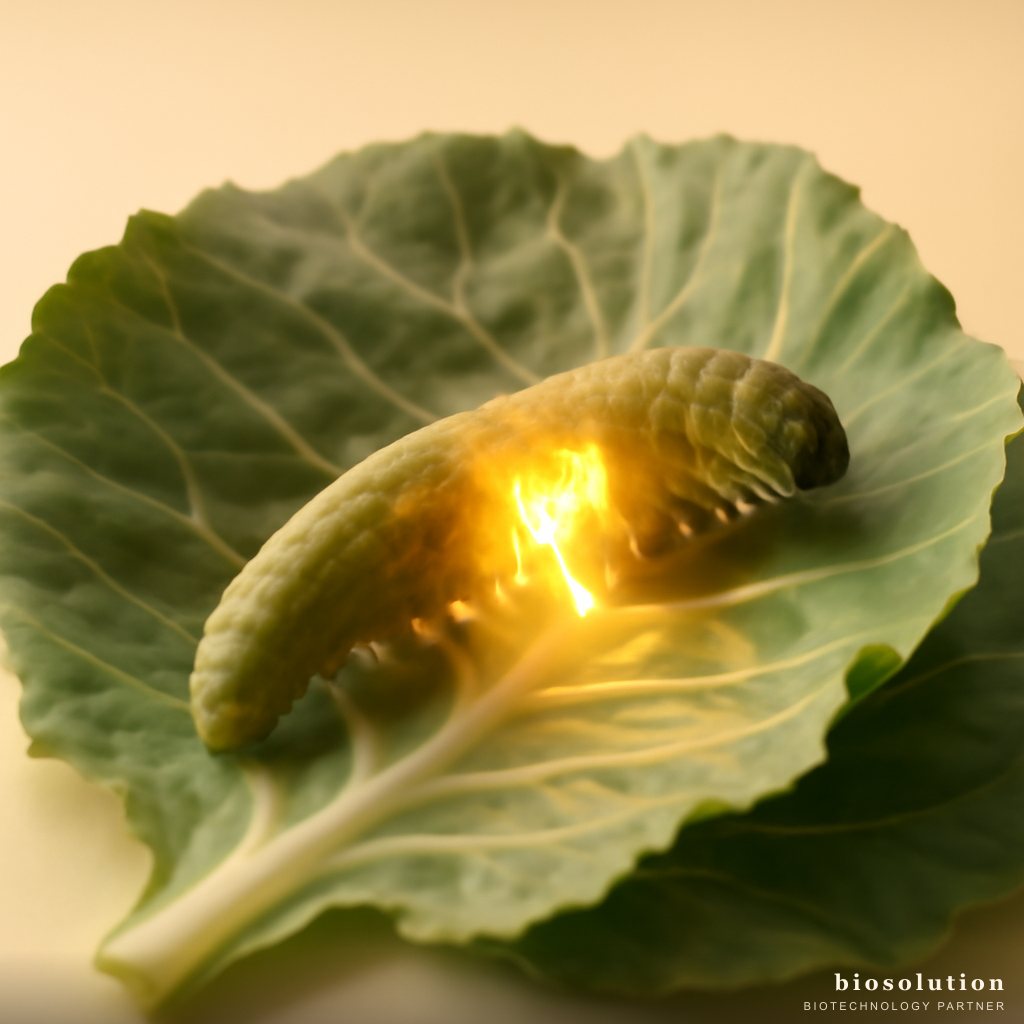
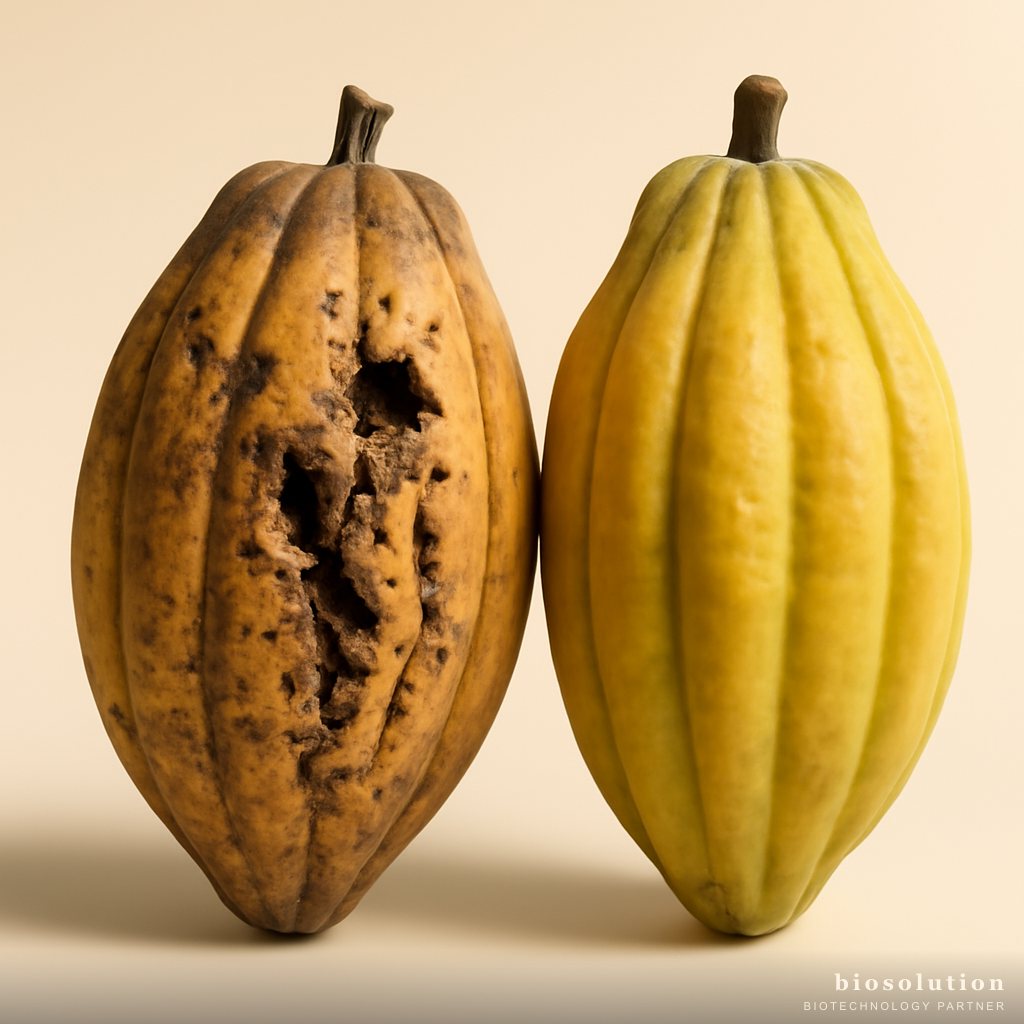
Cocoa pod borer (Conopomorpha cramerella, CPB) is a major pest causing up to 80% yield loss in Indonesian cocoa. Biocontrol using entomopathogens such as Beauveria bassiana and Metarhizium anisopliae is an effective, eco-friendly solution. However, many farmers fail to achieve optimal results due to technical application errors. This article discusses five most common mistakes and how to avoid them.
1. Incorrect Application Timing
The first mistake is spraying entomopathogens during the day. Beauveria bassiana and Metarhizium anisopliae are microorganisms sensitive to UV light. Spores die quickly if exposed to direct sunlight. The best application time is late afternoon (3:00-5:00 PM) when light intensity decreases and humidity rises. This gives spores time to germinate and infect CPB larvae.
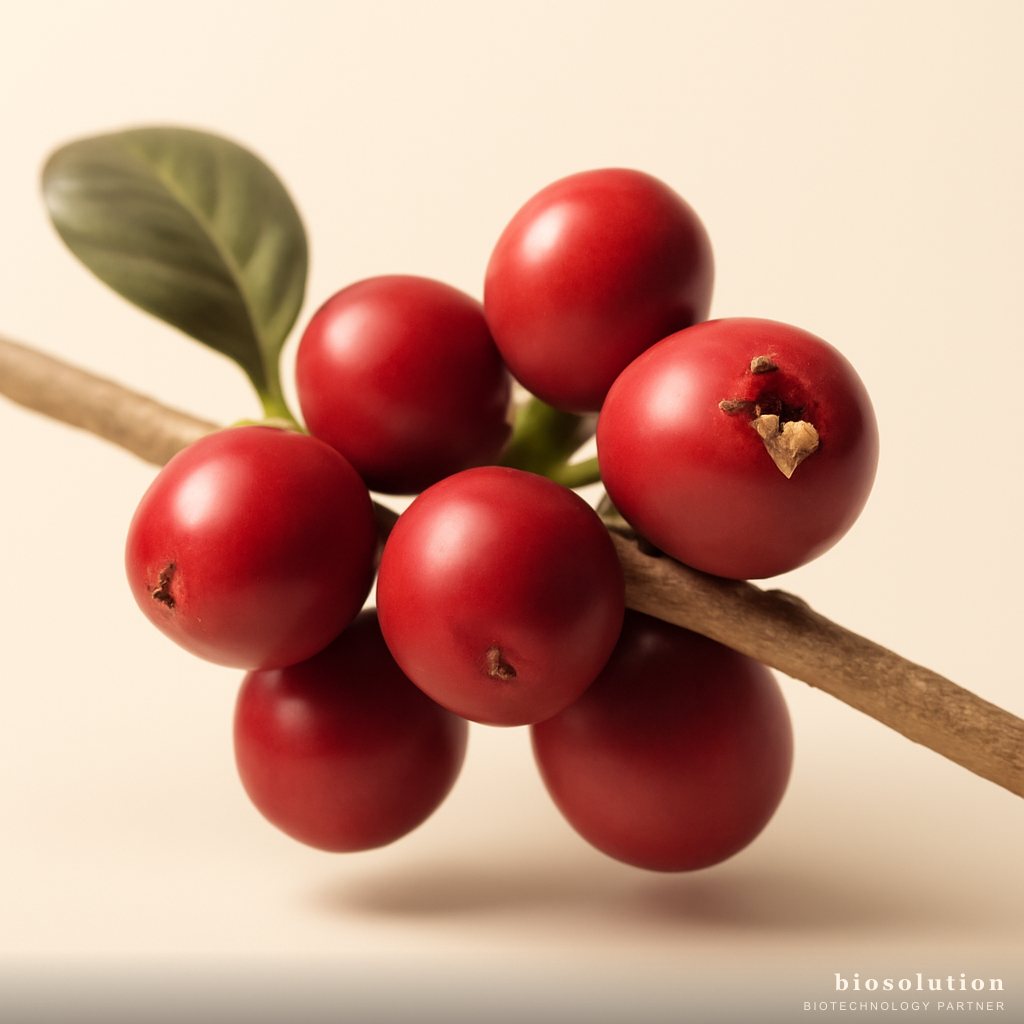
Additionally, application should be done during the cherelle stage (3-5 cm size) because CPB larvae penetrate the pod skin at this stage. If too late, larvae are already inside the pod and hard to reach. Spraying every 7 days during the critical phase is highly recommended, as per the product Cocoa Pod Borer Control Formula from Biosolution.
2. Wrong Dosage and Concentration
The second mistake is using too low or too high dosage. The correct dosage for Beauveria bassiana and Metarhizium anisopliae is 3 ml per liter of water. If too low, spore concentration is insufficient to infect larvae. Conversely, excessive dosage does not significantly improve efficacy and wastes product.
Using uncalibrated sprayers often causes uneven dosage. Ensure the sprayer produces fine droplets and reaches all pod surfaces. The solution must be stirred well before and during application to prevent spore settling. Biosolution products are formulated with carriers that facilitate spore suspension.
3. Unsupportive Environment
Entomopathogens require high humidity (70-90%) to germinate. Application during the dry season without irrigation or shade reduces effectiveness. Conversely, application during heavy rain washes spores off pods. Ideally, apply on a clear day with no rain expected for 4-6 hours.
Also, the optimal temperature for Beauveria bassiana is 25-30°C. Temperatures above 35°C inhibit growth. If the plantation is in hot lowlands, choose a cooler afternoon or use temporary shade.
4. Poor Spraying Technique
The fourth mistake is spraying only the top of pods. CPB larvae usually enter from the bottom or between pods. Spray evenly over the entire pod surface, including protected areas. Use a cone nozzle to produce fine droplets that adhere better.
Spray volume should be sufficient until the solution drips from pods. Avoid excessive spraying that causes runoff. For mature cocoa trees, spray volume is about 5-10 liters per tree depending on canopy size. Ensure all cherelles are covered.
5. Not Integrating with Other Cultivation Practices
Biocontrol is not a standalone solution. The biggest mistake is relying solely on entomopathogens without improving plantation sanitation. Rotten or infested pods must be picked and destroyed to reduce pest population. Canopy pruning is also important to improve air circulation and spray penetration.
Additionally, non-selective synthetic insecticides can kill entomopathogens. If chemical pesticides are unavoidable, choose ones compatible with entomopathogenic fungi. Consulting with Biosolution experts can help design an integrated control strategy.
Solution: Cocoa Pod Borer Control Formula from Biosolution
Biosolution presents Cocoa Pod Borer Control Formula containing Beauveria bassiana and Metarhizium anisopliae with high spore concentration. This product is formulated for easy application at a dosage of 3 ml/L water every 7 days during the cherelle stage. Its advantages: saves cocoa bean yield, reduces synthetic insecticide use, safe for harvest workers, and supports sustainable cocoa programs.
For maximum results, follow the application guidelines correctly. Avoid the five mistakes above and combine with good cultivation practices. With proper biocontrol, your cocoa production can increase by up to 50% with better bean quality.
Conclusion
Biocontrol of cocoa pod borer (Conopomorpha cramerella) using Beauveria bassiana and Metarhizium anisopliae is highly effective when applied correctly. Mistakes in timing, dosage, environment, spraying technique, and lack of integration are main failure factors. By applying the tips above and using Biosolution products, you can control pests in an eco-friendly way and increase cocoa productivity. For further consultation, contact our team via WhatsApp.