5 Mistakes in Applying Biocontrol for Oil Palm Ganoderma BSR
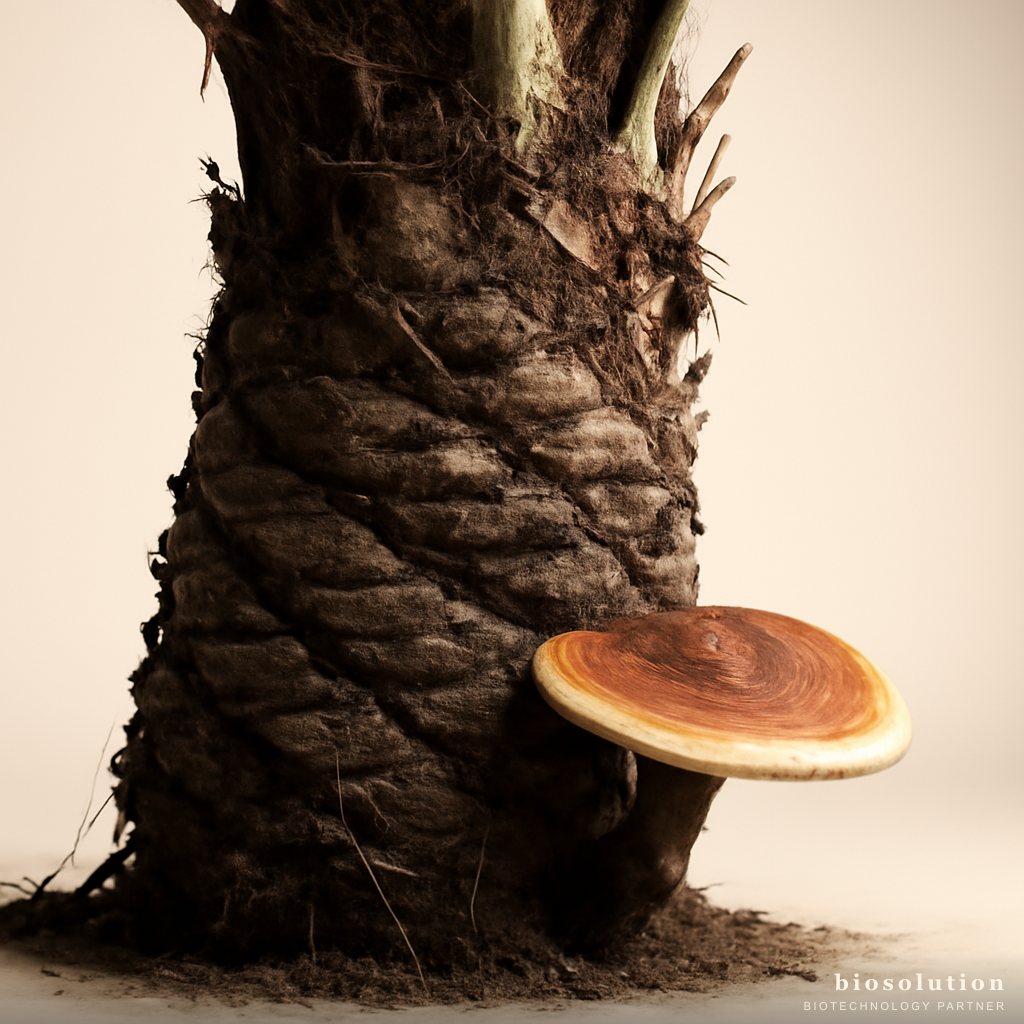
Basal stem rot (BSR) caused by the fungus Ganoderma boninense is one of the most damaging diseases in oil palm plantations. Amid the limitations of effective chemical fungicides, biocontrol using biological agents has become a mainstay. However, many growers still make mistakes during application, resulting in suboptimal outcomes. This article discusses five common mistakes in applying biocontrol for anti-ganoderma oil palm BSR and how to correct them based on microbiological principles and field experience.
1. Incorrect Application Timing
One of the key factors in biocontrol success is application timing. Many growers apply biological agents when environmental conditions are unfavorable, such as during the hot midday sun or heavy rain.
Why is timing important?
Biological agents like Trichoderma harzianum and Bacillus subtilis are living organisms sensitive to temperature and humidity. Temperatures above 35°C can reduce Trichoderma spore viability, while heavy rain can wash biological agents away from the root zone. The best time is in the morning before 10 AM, when temperatures are still cool and humidity is high. Avoid application during strong winds, as this can cause drift and uneven distribution.
Impact of the mistake
If application is done at the wrong time, the population of biological agents in the rhizosphere will be low, making them unable to compete effectively with Ganoderma. As a result, biocontrol fails to suppress BSR progression.
Solution
Implement a regular application schedule every 3 months as per product recommendations. For Biosolution products, a drench dose of 50 ml per tree should be given in the morning. Ensure clear weather and no rain for 4–6 hours after application.
2. Incorrect Dosage and Application Method
The second mistake is using an inappropriate dosage or application method. Many growers reduce the dosage to save costs, or conversely use excessive doses that are ineffective.
Correct dosage
Biocontrol products like Formula Anti-Ganoderma Kelapa Sawit from Biosolution are formulated with specific dosages: 50 ml per tree for the plate drench method, and 20 ml per tree for trunk injection. These dosages are based on optimal spore and bacterial cell concentrations for root colonization.
Application method
The plate drench method aims to wet the root zone, while trunk injection is for already infected trees. A common mistake is using the same method for all conditions. For example, in trees with early BSR symptoms, trunk injection is more effective because biological agents are delivered directly to the vascular tissue. Conversely, for prevention, plate drenching is sufficient.
Impact
Too low a dosage results in an insufficient population of biological agents to suppress Ganoderma. Too high a dosage provides no additional benefit and wastes product. An incorrect method also reduces effectiveness.
Solution
Follow the application instructions on the packaging. For large-scale plantations, conduct trials on a few trees to ensure the most effective method for your field conditions.
3. Ignoring Rhizosphere Conditions
The rhizosphere is the root zone where interactions between biological agents, pathogens, and plants occur. Poor rhizosphere conditions can hinder the colonization of biological agents.
Important factors
- Soil pH: Trichoderma and Bacillus grow optimally at pH 5.5–6.5. Acidic soil (pH < 4.5) or alkaline soil (pH > 7.5) reduces their activity.
- Moisture: Soil that is too dry or waterlogged is not ideal. Moisture at 60–80% field capacity is best.
- Organic matter: Biological agents need organic matter as a nutrient source. Soil with low organic carbon (<1%) is less supportive.
Common mistake
Growers often neglect soil analysis before application. As a result, biological agents cannot survive long in the rhizosphere. For example, in highly acidic peat soil, the viability of Bacillus subtilis drops drastically.
Solution
Conduct periodic soil analysis. If pH is too low, apply dolomite lime. Increase organic matter by applying compost or mulch. Ensure good drainage to prevent waterlogging.
4. Neglecting Sanitation and Cultural Practices
Biocontrol is not a standalone solution. Its success heavily depends on good cultural practices. Unfortunately, many growers neglect field sanitation.
Important practices
- Sanitation of plant residues: Oil palm trunks and roots infected with Ganoderma must be immediately destroyed. If left, they become inoculum sources.
- Balanced fertilization: Plants stressed by nutrient deficiency are more susceptible to BSR. Potassium and silica fertilization can enhance resistance.
- Weed control: Weeds in the plate can serve as alternative hosts for Ganoderma.
Impact
Without sanitation, Ganoderma inoculum persists in the field, forcing biological agents to work harder. Biocontrol can only suppress, not completely eradicate the pathogen. If inoculum pressure is high, effectiveness decreases.
Solution
Integrate biocontrol with strict sanitation. Eradicate dead trees, destroy root residues, and implement crop rotation if possible. Use organic fertilizers to strengthen soil microflora.
5. Choosing the Wrong Biocontrol Product
Not all biocontrol products are the same. Many products on the market contain only a single strain of biological agent, or strains that are not specific to Ganoderma boninense.
Criteria for an ideal product
An effective biocontrol product should have:
- Multi-strain consortium: A combination of several biological agents with different mechanisms increases effectiveness. For example, Trichoderma harzianum as a mycoparasite, Gliocladium virens for antibiosis, and Bacillus subtilis for Induced Systemic Resistance (ISR).
- High viability: The product must have sufficient and stable spore/CFU counts during storage.
- Proper formulation: Liquid or powder forms should be easy to apply and resistant to field conditions.
Common mistake
Growers buy cheap products without checking the composition or certification. As a result, the biological agents cannot survive in the rhizosphere or are not specific to Ganoderma.
Solution
Choose products that have been tested and have supporting data. Formula Anti-Ganoderma Kelapa Sawit from Biosolution contains three superior synergistic strains, with efficacy in suppressing BSR progression by 40–60% and extending the economic life of oil palm by 5–8 years. This product is specifically designed for B2B-scale oil palm plantations.
Conclusion
The success of biocontrol for Ganoderma boninense causing oil palm BSR depends heavily on application accuracy. Avoid the five mistakes above: incorrect application timing, wrong dosage and method, ignoring rhizosphere conditions, poor sanitation, and haphazard product selection. By applying correct microbiological principles, biocontrol can be a powerful weapon against BSR.
For optimal results, consult with the Biosolution technical team. Contact us via WhatsApp for specific recommendations based on your field conditions. Together, let's save Indonesian oil palm plantations from the threat of Ganoderma.
FAQ
1. What is the difference between plate drenching and trunk injection? Plate drenching is done by pouring the biological agent solution onto the root zone (plate) for prevention or early infection. Trunk injection is done by injecting the product into the trunk of trees already showing BSR symptoms, so the biological agents enter the vascular tissue directly to fight the pathogen from within.
2. How long does the biocontrol effect last? The biocontrol effect lasts about 3 months, depending on environmental conditions and pathogen pressure. Therefore, reapplication every 3 months is recommended to maintain a high population of biological agents in the rhizosphere.
3. Is biocontrol safe for plants and the environment? Yes, biological agents such as Trichoderma, Gliocladium, and Bacillus are natural microorganisms that are non-toxic to plants, animals, or humans. They also leave no harmful residues and do not disrupt beneficial soil microflora.
4. Can biocontrol be used together with chemical fungicides? It is best not to mix them directly, as chemical fungicides can kill biological agents. If you must use fungicides, allow a minimum interval of 7 days before or after biocontrol application. Consult an expert for specific recommendations.
5. How should biocontrol products be stored? Store the product in a cool, dry place, away from direct sunlight. The ideal storage temperature is 4–10°C to maintain spore viability. Do not expose the product to extreme temperatures or freezing.