5 Mistakes in Applying Biocontrol for Phytophthora Rot in Chili and Cocoa
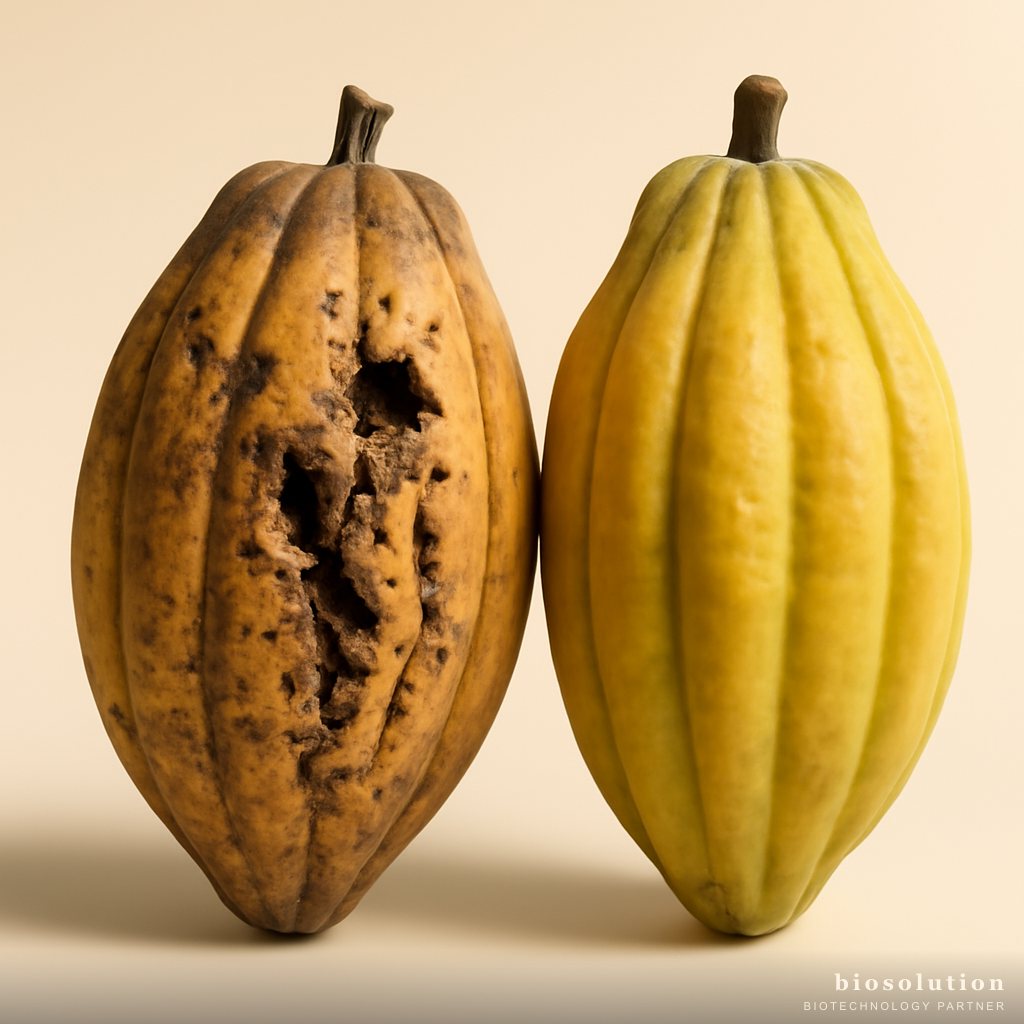
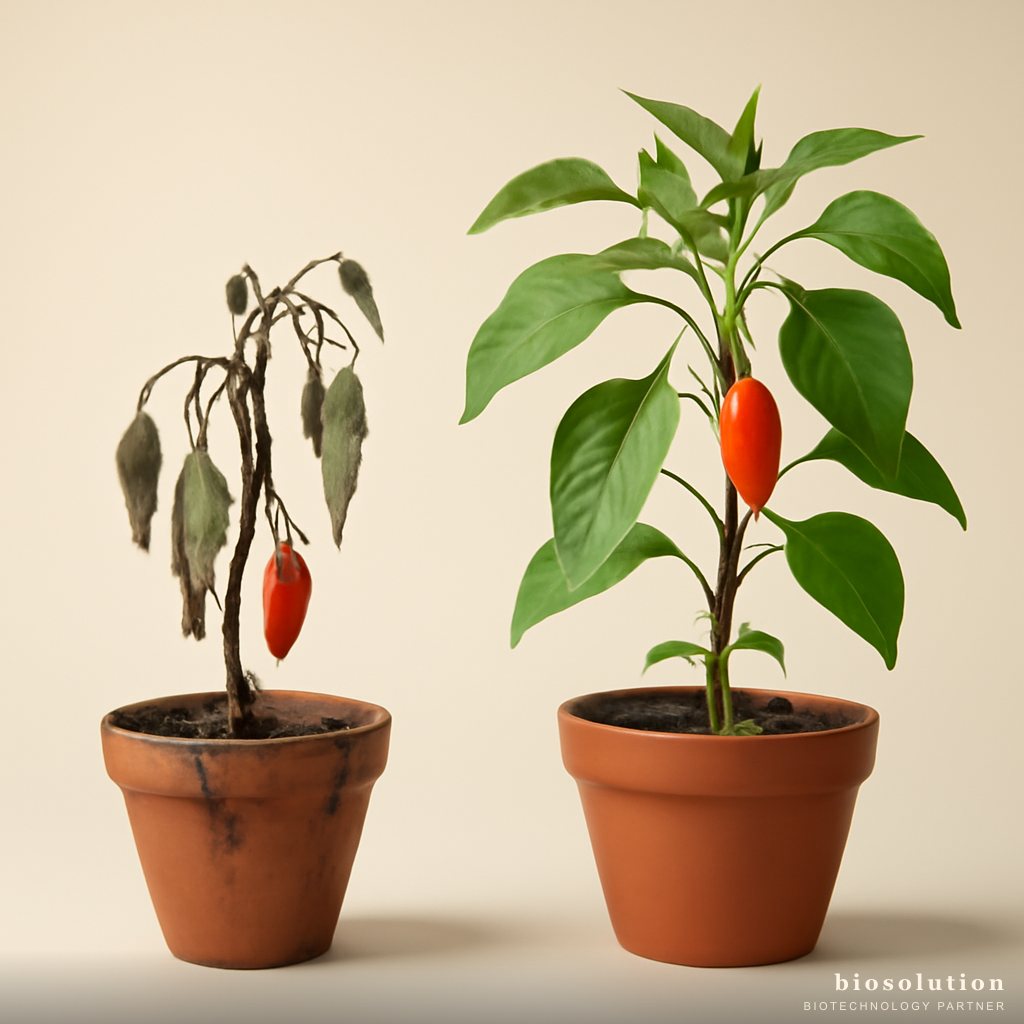
Phytophthora rot caused by Phytophthora capsici is a scourge for chili and cocoa farmers. This disease attacks roots, stem bases, and fruits, causing losses of up to 50% if not managed. Biocontrol using biological agents such as Trichoderma harzianum, Pseudomonas fluorescens, and Bacillus subtilis has proven effective in naturally suppressing the pathogen. However, many farmers fail to achieve optimal results due to application errors. This article identifies the 5 most common mistakes and their solutions based on microbiological principles and field practices.
1. Incorrect Application Timing
The first mistake is applying biological agents during the day when temperatures are high and UV rays are strong. Microbes such as Trichoderma harzianum, Pseudomonas fluorescens, and Bacillus subtilis are very sensitive to ultraviolet radiation and extreme temperatures. Direct sunlight can kill up to 90% of the microbial population within 30 minutes. As a result, biocontrol becomes ineffective even if the dosage is correct.
Solution: Apply in the morning (before 09:00) or late afternoon (after 16:00). These conditions allow microbes to survive longer on the soil surface or roots. Also, ensure the soil is moist so microbes can move and colonize well. For shaded cocoa plants, morning application is still recommended to avoid excessive heat.
2. Incorrect Dosage and Frequency
Many farmers treat biocontrol like chemical pesticides, thus reducing dosage or application frequency. In fact, biological agents require a sufficient population to compete with and suppress the pathogen. Trichoderma harzianum works as a mycoparasite, Pseudomonas fluorescens produces antagonistic compounds, and Bacillus subtilis forms a protective biofilm. All three require an ideal dosage of 5 ml per liter of water (for the Formula Anti-Busuk Phytophthora product) and repeated every 14 days.
Solution: Follow the recommended dosage on the packaging. Do not reduce the dosage for fear of waste. Application every 14 days is important to maintain microbial populations in the rhizosphere. If environmental conditions are extreme (heavy rain or prolonged drought), increase frequency to every 10 days. Ensure the solution is mixed homogeneously before application.
3. Application Method Not Targeting the Right Area
The third mistake is spraying biocontrol on leaves or fruits, when the target is roots and stem bases. Phytophthora rot attacks the root system, so application should focus on the root zone. Pseudomonas fluorescens and Bacillus subtilis work in the rhizosphere, while Trichoderma harzianum requires direct contact with the pathogen in the soil. Foliar spraying only wastes the product.
Solution: Use the soil drench method. Dissolve 5 ml of Formula Anti-Busuk Phytophthora per liter of water, then pour 200-300 ml per plant around the stem base. Apply when the soil is moist so the solution penetrates the root zone. For cocoa plants, drench around the canopy according to root spread. Avoid overwatering that causes the solution to flow into drainage channels.
4. Ignoring Soil Conditions
Dry, compacted, or low organic matter soil inhibits the activity of biological agents. Trichoderma harzianum requires good aeration, Pseudomonas fluorescens prefers neutral to slightly acidic pH, and Bacillus subtilis tolerates various conditions but still needs moisture. Soil that is too dry causes microbes to become dormant or die. Waterlogged soil is also not ideal due to limited oxygen.
Solution: Before application, ensure the soil is moist (not waterlogged). If the soil is dry, water it with clean water the day before. Add organic matter such as compost or manure to increase natural microbial populations. Improve drainage if the soil is prone to waterlogging. Liming can be done if pH is too low (<5.5). A healthy environment will support the colonization of biological agents.
5. Carelessly Mixing with Chemical Fungicides
The fifth mistake is mixing biocontrol with chemical fungicides without considering compatibility. Many fungicides, especially benzimidazoles and strobilurins, are toxic to Trichoderma harzianum, Pseudomonas fluorescens, and Bacillus subtilis. As a result, microbial populations drop drastically and biocontrol fails. Conversely, if both methods are to be used, a sufficient time interval is needed.
Solution: If forced to use chemical fungicides, apply them alternately with a minimum interval of 7 days. For example, week one fungicide, week two biocontrol. Alternatively, choose selective fungicides that do not kill biological agents. Consult an expert or read the product label. Ideally, biocontrol is used as prevention, while fungicides are only for acute attacks. The Formula Anti-Busuk Phytophthora product from Biosolution is formulated to be compatible with most fungicides, but a small-scale compatibility test is still recommended.
Additional Mistake: Inconsistency and Lack of Monitoring
Besides the five mistakes above, inconsistency in application is also common. Biocontrol requires routine application because microbes do not last forever. Populations decline over time, so they need to be recharged every 14 days. Monitoring is also important: observe symptoms of Phytophthora rot on roots and stem bases. If symptoms persist, evaluate dosage, timing, or environmental conditions. Use tools like a pH meter or soil thermometer to ensure optimal conditions.
Correct Application Method: Practical Guide
Here are the correct steps for applying biocontrol to control Phytophthora rot in chili and cocoa:
- Preparation: Prepare a clean sprayer or watering can. Fill with clean water (pH 6-7, temperature 25-30°C).
- Dosage: Mix 5 ml of Formula Anti-Busuk Phytophthora per liter of water. Stir until homogeneous.
- Timing: Apply in the morning (06:00-09:00) or late afternoon (16:00-18:00) when it is not raining.
- Method: Drench 200-300 ml of solution around the stem base of each plant. For mature cocoa, 500 ml per plant.
- Frequency: Repeat every 14 days, or every 10 days during the rainy season.
- Post-Application: Avoid overwatering for 24 hours. Avoid applying chemical fungicides within 7 days.
By following this guide, biocontrol effectiveness can increase to 70-80% in suppressing Phytophthora rot. The Formula Anti-Busuk Phytophthora product contains three superior biological agents that work synergistically: Trichoderma harzianum as a mycoparasite, Pseudomonas fluorescens as an inducer of systemic resistance (ISR), and Bacillus subtilis which forms a protective root biofilm. The three complement each other to naturally control Phytophthora capsici.
Conclusion
Biocontrol of Phytophthora rot in chili and cocoa is very effective if applied correctly. Avoid the five main mistakes: incorrect application timing, wrong dosage and frequency, application method not targeting the right area, ignoring soil conditions, and carelessly mixing with chemical fungicides. By improving application techniques, you can optimize the potential of biological agents such as Trichoderma harzianum, Pseudomonas fluorescens, and Bacillus subtilis. For best results, use Formula Anti-Busuk Phytophthora from Biosolution and follow the correct application guide. If you have further questions, feel free to consult via WhatsApp.
This article is based on technical data from the Agency for Agricultural Research and Development and IRRI for plant disease control references.