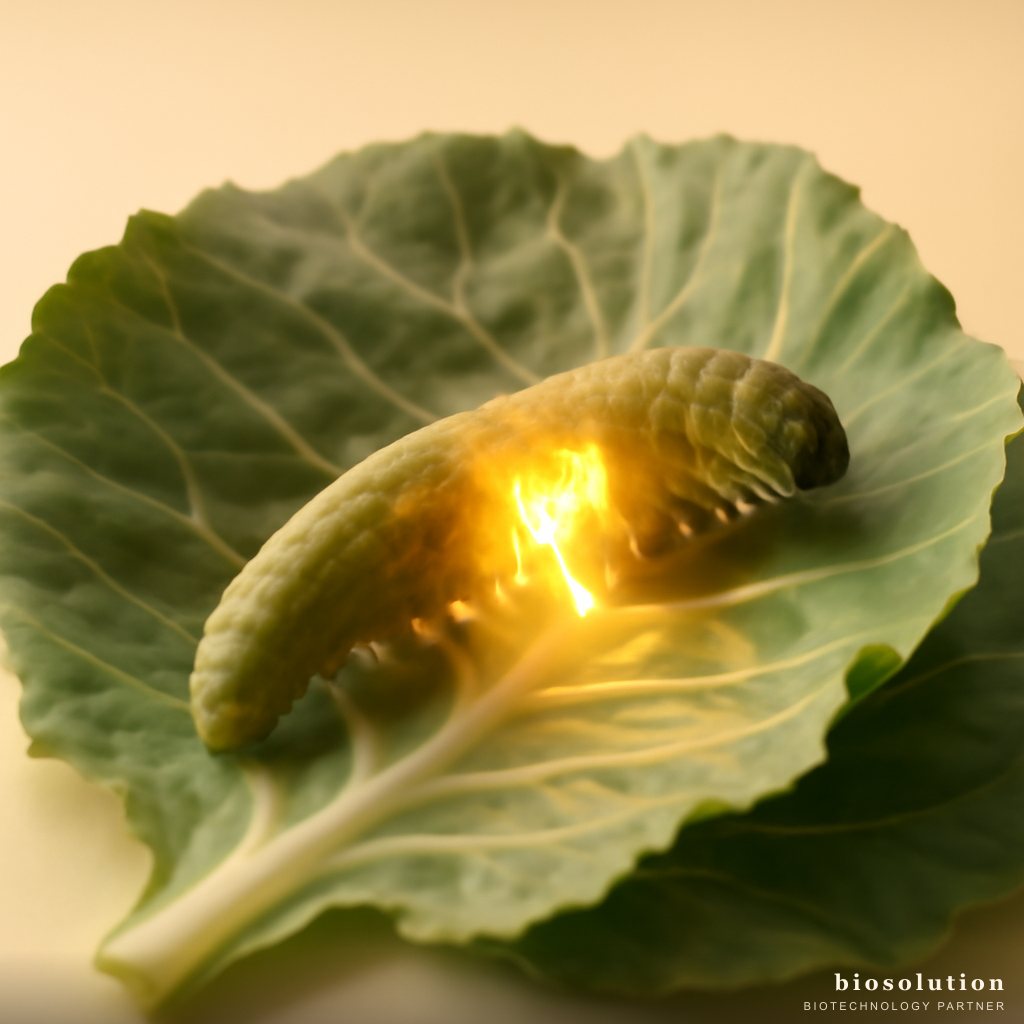
Anti Aphid and Whitefly: 5 Biocontrol Formulas Suppress Pests by 80%
Aphids and whiteflies are major pests in horticultural crops, not only directly damaging plant tissue but also acting as vectors for plant viruses. Farmers often rely on chemical insecticides, but resistance and environmental impacts are serious issues. This article presents a plantation case study that successfully suppressed aphid and whitefly populations by 80% using an anti-aphid and whitefly formula based on entomopathogenic microbes. Discover how this biocontrol approach becomes an effective and environmentally friendly solution.
Why Are Aphids and Whiteflies a Serious Threat?
Aphids (Aphididae) and whiteflies (Aleyrodidae) are small, soft-bodied insects that attack various horticultural crops such as chili, tomato, cucumber, and leafy vegetables. Both have rapid life cycles and high reproductive capacity, so populations can explode in a short time.
Direct and Indirect Damage
Direct damage occurs when the insects pierce plant tissue and suck cell sap, causing leaves to yellow, curl, and stunt growth. Whiteflies produce honeydew that triggers sooty mold growth, inhibiting photosynthesis. Indirect damage is more dangerous: aphids and whiteflies are major vectors of plant viruses, such as geminiviruses (begomoviruses) in chili and tomato. Virus infection can cause total crop failure.
Resistance to Chemical Insecticides
Intensive use of chemical insecticides has triggered resistance in pest populations. Additionally, non-selective insecticides kill natural enemies such as predators and parasitoids, causing pest populations to actually increase after application. Therefore, a sustainable control strategy is needed, namely biocontrol using biological agents.
Anti-Aphid and Whitefly Formula: Microbe-Based Biocontrol Solution
Biosolution has developed an anti-aphid and whitefly formula containing two superior entomopathogenic microbes: Verticillium lecani and Cordyceps spp. Both fungi have been proven effective in infecting and killing soft-bodied insects like aphids and whiteflies.
Verticillium lecani: Specialist for Soft-Bodied Insects
Verticillium lecani (now known as Lecanicillium lecani) is an entomopathogenic fungus that naturally infects aphids, whiteflies, and thrips. Fungal spores attach to the insect cuticle, germinate, and penetrate the host's body. Inside the body, the fungus grows and produces toxins that kill the host within 3-7 days. The advantage of V. lecani is its ability to survive in humid environments and infect various insect stages.
Cordyceps spp.: Soft-Bodied Insect Pathogen
Cordyceps spp. is a fungal genus known for its ability to infect insects. The strain used in this formula has been selected for high effectiveness against whiteflies. The fungus works similarly: spores attach, germinate, and penetrate the insect's body. Cordyceps also produces bioactive compounds that accelerate host death.
Synergy of Both Microbes
The combination of V. lecani and Cordyceps spp. provides a synergistic effect because they attack insects through different but complementary mechanisms. V. lecani is more effective in humid conditions and moderate temperatures, while Cordyceps spp. tolerates a wider temperature range. Thus, this formula is effective in various field conditions.
Case Study: Horticultural Plantation Successfully Suppresses Population by 80%
A chili plantation in the highlands of West Java experienced a severe whitefly infestation, causing a 40% yield reduction. Farmers previously used chemical insecticides but resistance began to appear. Then, they switched to the anti-pest formula from Biosolution. Here are the details of application and results.
Proper Application Method
Application was done using the under-leaf spray method because whiteflies and aphids are generally found on the underside of leaves. The dosage used was 3 ml per liter of water, sprayed evenly on all lower leaf surfaces. Spraying was done in the afternoon when relative humidity (RH) > 70% to maximize fungal infection. Application frequency was every 5 days during high population, then reduced to 7-10 days after the population declined.
Observation Results
After 3 applications (15 days), the whitefly population dropped drastically. Observations using direct counting methods showed an 80% population reduction compared to before application. Plants that previously showed leaf curling symptoms began to recover, and fruit production increased. More importantly, the incidence of geminivirus decreased significantly because the vector was successfully controlled.
Additional Benefits
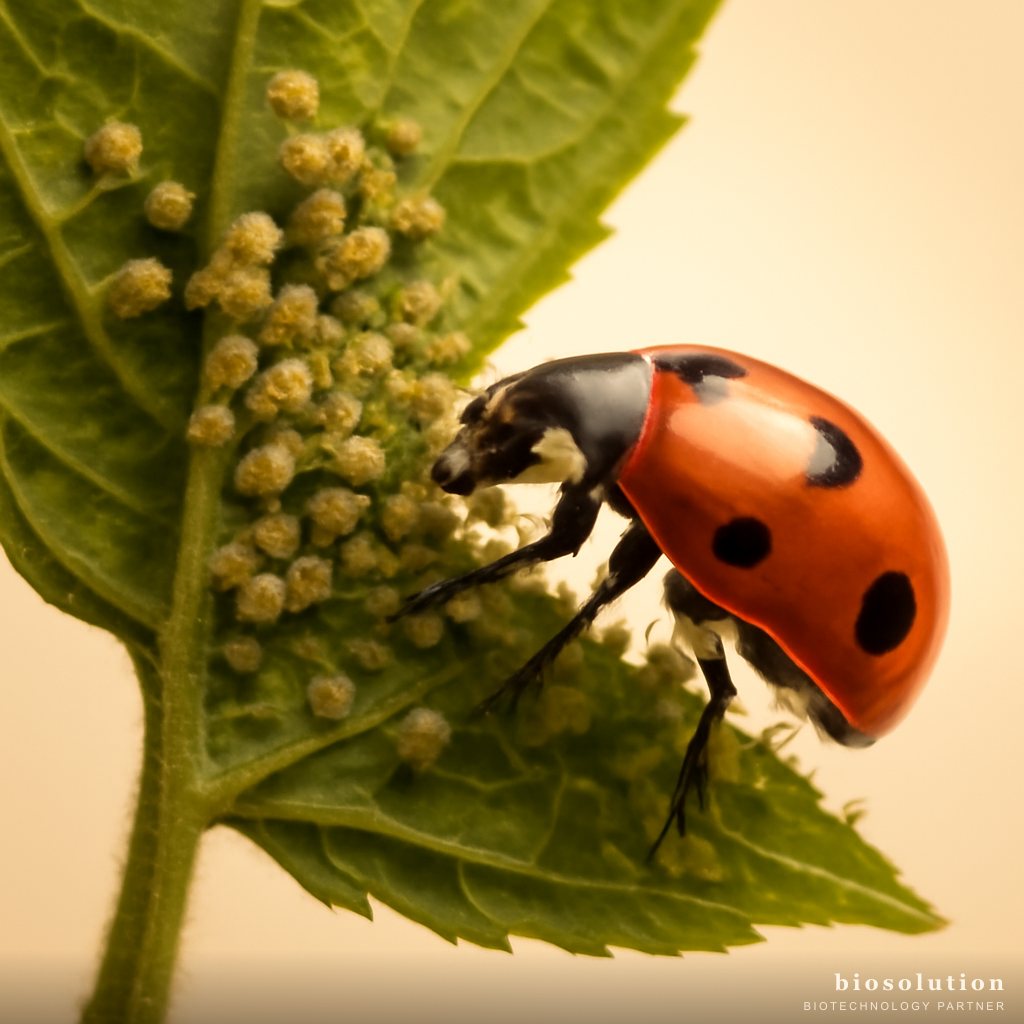
Besides controlling pests, this formula is also safe for natural enemies such as Coccinellidae beetles (ladybugs) and parasitoids. No phytotoxicity symptoms were observed on plants. Farmers reported that plants were healthier and the economic lifespan of plants was longer due to the absence of stress from pest and virus attacks.
How the Biocontrol Formula Works in the Field
Infection Mechanism of Entomopathogenic Fungi
- Spore Attachment: Fungal spores attach to the insect cuticle through physical and chemical adhesion.
- Germination: In humid conditions, spores germinate and form germ tubes that penetrate the cuticle.
- Penetration: The fungus produces chitinase and protease enzymes that dissolve the cuticle, allowing penetration into the insect's body.
- Colonization in Hemolymph: The fungus grows in the hemolymph (insect blood) and produces toxins such as beauvericin and bassianolide that cause paralysis and death.
- Emergence of Mycelium: After the host dies, mycelium emerges from the body and produces new spores ready to infect other insects.
Supporting Environmental Factors
The success of biocontrol highly depends on environmental conditions. High humidity (>70%) and temperatures of 20-30°C are optimal for fungal infection. Therefore, afternoon application is recommended so that spores are not exposed to direct sunlight and nighttime humidity supports germination. The use of adjuvants (stickers) can also increase spore adhesion to leaves.
Complete Guide to Applying the Anti-Pest Formula
Preparation of Tools and Materials
- Sprayer with fine nozzle
- Clean water (pH 6-7)
- Anti-pest formula (3 ml/liter)
- Personal protective equipment (mask, gloves)
Application Steps
- Mix 3 ml of formula into 1 liter of water, stir well.
- Fill the sprayer with the solution, ensure no sediment.
- Spray onto the underside of leaves (under leaf) evenly.
- Do this in the afternoon (4:00-6:00 PM) when RH > 70%.
- Repeat every 5 days if population is high, or 7-10 days for prevention.
Success Tips
- Do not spray during rain or if rain is expected within 2 hours.
- Avoid spraying at temperatures >35°C.
- For optimal results, combine with cultural control practices such as field sanitation and use of plastic mulch.
- Monitor pest populations regularly using yellow sticky traps.
Why Choose Biocontrol? Comparison with Chemical Insecticides
| Aspect | Chemical Insecticides | Biocontrol (Entomopathogenic Fungi) |
|---|---|---|
| Selectivity | Non-selective, kills natural enemies | Selective, only on target insects |
| Resistance | Resistance develops quickly | Resistance rare due to multi-mechanism |
| Environmental Impact | Contaminates soil and water | Environmentally friendly, naturally degrades |
| Safety | Harmful to humans and livestock | Safe for humans, animals, and plants |
| Long-term Effectiveness | Declines due to resistance | Sustainable, can infect subsequent generations |
Biocontrol not only effectively suppresses pest populations but also maintains the balance of the agricultural ecosystem. In the long run, pest control costs can be reduced because repeated applications with high doses are not needed.
Conclusion
Aphids and whiteflies are serious pests that can cause significant losses in horticultural crops. The anti-aphid and whitefly formula from Biosolution, containing Verticillium lecani and Cordyceps spp., has been proven to suppress pest populations by up to 80% in a plantation case study. With proper application—under-leaf spraying in the afternoon at a dose of 3 ml/liter—farmers can effectively control pests, reduce virus risk, and increase crop yields. This biocontrol is also environmentally safe and supports sustainable agriculture. For more information about this product, visit the product page for anti-aphid and whitefly formula.
If you are interested in applying biocontrol on your land, consult with the Biosolution expert team via WhatsApp: Consult Now.