Anti Aphid and Whitefly: Biocontrol for Horticultural Export
Aphids and whiteflies are major pests in horticultural crops, causing direct damage and acting as virus vectors that reduce harvest quality. To meet strict export standards on pesticide residues, farmers need to switch to environmentally friendly control methods. Anti aphid and whitefly biocontrol is the right solution. Biosolution presents the Anti-Aphid & Whitefly Formula containing two superior entomopathogens: Verticillium lecani and Cordyceps spp. This article thoroughly discusses the mechanism of action, application methods, and the role of biocontrol in export programs.
Why Are Aphids and Whiteflies a Serious Problem?
Aphids (Aphididae) and whiteflies (Aleyrodidae) are cosmopolitan pests that attack various horticultural crops such as chili, tomato, cucumber, and leafy vegetables. Both have fast life cycles and high reproductive capacity, so populations can explode in a short time. Direct damage occurs through stylet punctures on plant tissue to suck cell sap, causing leaves to yellow, curl, and stunt growth. More dangerously, these pests act as vectors for plant viruses, such as Begomovirus transmitted by whiteflies on chili and tomato, and Potyvirus by aphids on potato and squash. As a result, yield losses can reach 50-80% if not controlled. On the other hand, continuous use of synthetic chemical pesticides leads to pest resistance, residues on products, and negative impacts on the environment and farmer health. Therefore, biocontrol is a strategic choice, especially for farmers aiming to penetrate export markets with zero or very low residue requirements.
Anti-Aphid & Whitefly Formula: Composition and Mechanism of Action
Verticillium lecani: Entomopathogen for Soft-Bodied Insects
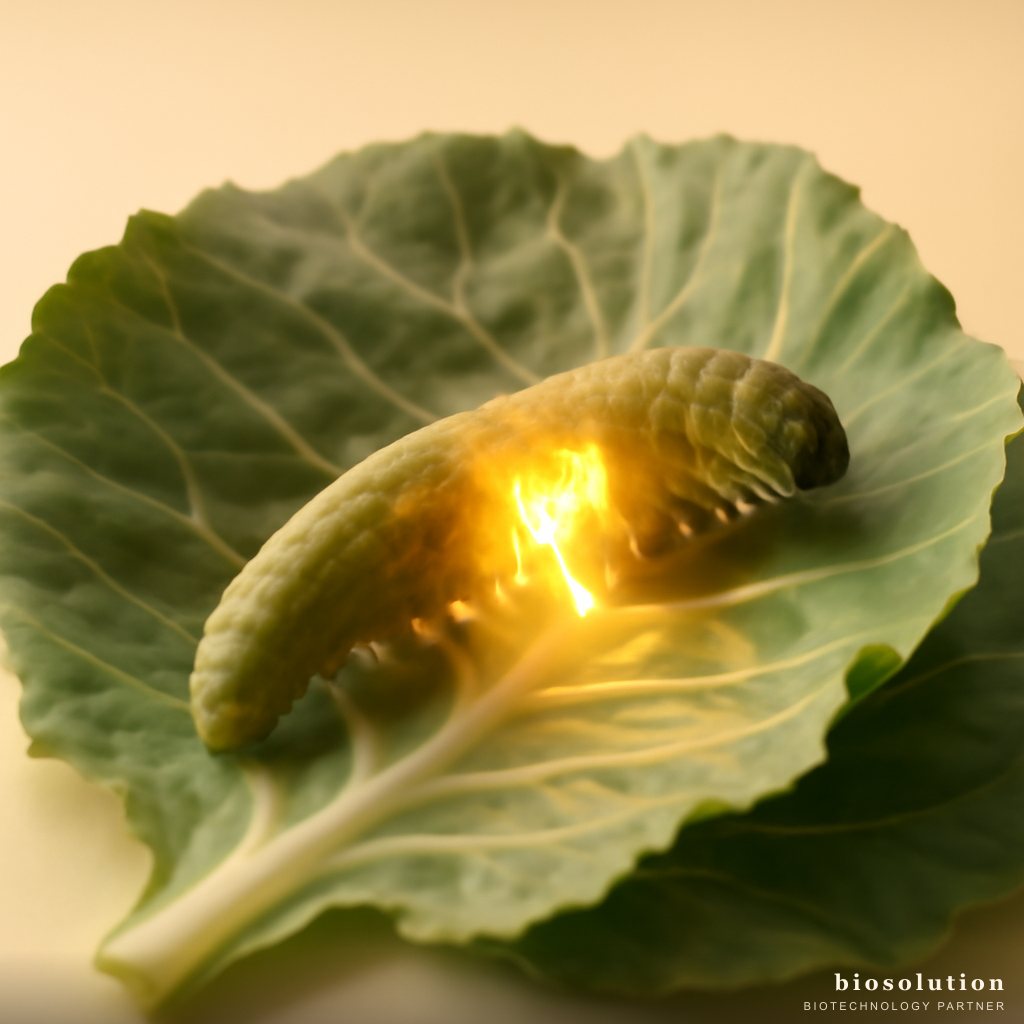
Verticillium lecani (synonym Lecanicillium lecanii) is an entomopathogenic fungus that naturally infects aphids, whiteflies, and other soft-bodied insects. Fungal spores attach to the insect cuticle, then germinate and penetrate the host body with the help of chitinase and protease enzymes. Inside the hemolymph, the fungus grows and produces toxins that kill the host within 3-7 days. Mycelium then emerges on the body surface, producing new spores ready to infect healthy insects. The advantage of V. lecani is its ability to control aphids at various stages, including nymphs and adults, and it is effective at relative humidity >70%.
Cordyceps spp.: Pathogen of Soft-Bodied Insects
Cordyceps spp. is a fungal genus known for its ability to infect insects. The strain used in this formula is entomopathogenic to aphids and whiteflies. Similar to V. lecani, Cordyceps infects through direct contact, penetrates the cuticle, and uses host nutrients to multiply. Cordyceps infection is often marked by a color change of the insect body to blackish or reddish, followed by death. Both fungi work synergistically, increasing control efficacy to 80-90% under suitable field conditions.
Proper Application Methods for Maximum Results
Application of the Anti-Aphid & Whitefly Formula must be done correctly so that fungal spores can reach the target and germinate optimally. Here are technical guidelines based on Biosolution's recommendations:
- Method: Spray on the underside of leaves (under leaf spray), because aphids and whiteflies are generally found on the lower leaf surface to avoid direct sunlight.
- Dosage: Mix 3 ml of formula per liter of water (3 ml/L). Use clean water with neutral pH (6-7) to maintain spore viability.
- Application Time: Apply in the afternoon (3:00-5:00 PM) when temperature drops and humidity increases. Relative humidity >70% strongly supports spore germination.
- Frequency: At high pest populations, apply every 5 days for 2-3 consecutive times. For prevention, apply every 10-14 days.
- Mixing: Avoid mixing with chemical fungicides as they can kill fungal spores. If other pesticides are needed, allow at least a 3-day interval.
Ensure the sprayer is clean and nozzles produce fine droplets for even coverage. Spray volume should be adjusted to plant size, generally 200-400 liters per hectare for horticultural crops.
Benefits of Biocontrol in Horticultural Export Programs
Export markets for horticultural products, especially to the European Union, Japan, and the United States, enforce very strict pesticide residue standards (Maximum Residue Limits/MRLs). Many chemical pesticides commonly used in Indonesia are not registered or have very low MRLs in destination countries. Biocontrol with the Anti-Aphid & Whitefly Formula offers a solution because:
- Chemical residue-free: Entomopathogenic fungi are living organisms that do not leave harmful residues on harvested products. Products treated with biocontrol can meet organic and MRL requirements.
- Reduces resistance risk: The complex mechanism of fungal action makes it difficult for pests to develop resistance, unlike chemical pesticides that often fail after a few seasons.
- Supports sustainable agriculture: Biocontrol maintains ecosystem balance, does not kill natural enemies such as predators and parasitoids, and is safe for pollinators.
- Increases product competitiveness: Organic certification or eco-friendly labels add value in the global market. Consumers are increasingly aware of food safety and environmental sustainability.
Integration with Integrated Pest Management (IPM)
Biocontrol does not stand alone. For optimal results, the Anti-Aphid & Whitefly Formula should be integrated into an Integrated Pest Management (IPM) program. Steps that can be taken:
- Regular monitoring: Observe aphid populations weekly using scouting methods on young leaves and shoots. Use yellow traps or sticky traps to detect early infestations.
- Field sanitation: Clean weeds and plant residues that serve as alternative hosts for aphids. Crop rotation with different families also helps break the life cycle.
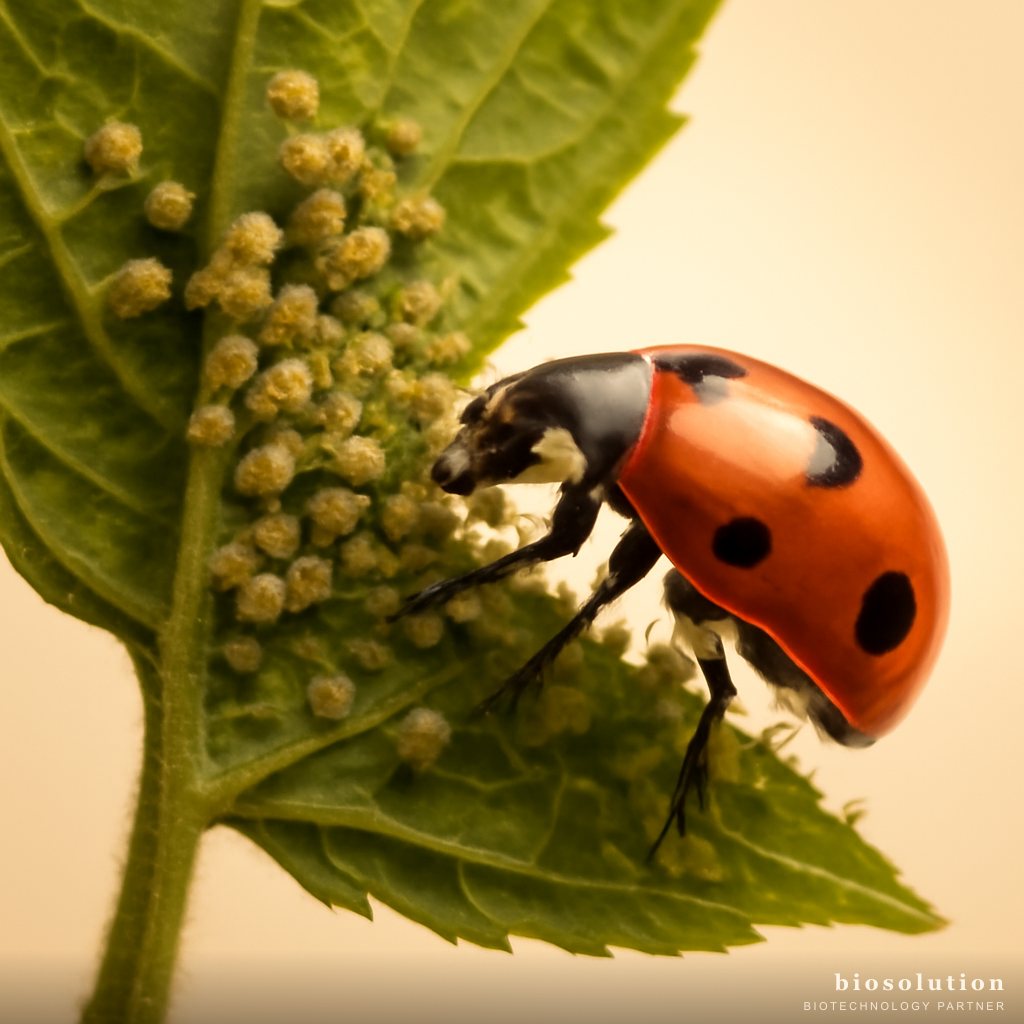
- Use of natural enemies: In addition to fungi, predators like Coccinella beetles (ladybugs) and parasitoids like Aphidius can be released to naturally suppress populations.
- Timely biocontrol application: Spray the formula when populations are still low (control threshold: 5-10 aphids per leaf) to prevent outbreaks.
- Evaluation and recording: Document application results to improve strategies for the next season.
Case Study: Success of Organic Chili Farmers
In Bumiaji Village, Batu, East Java, a group of organic chili farmers faced a severe whitefly attack in the dry season of 2023. They previously used botanical pesticides but with unsatisfactory results. After adopting Biosolution's Anti-Aphid & Whitefly Formula with regular applications every 5 days, the whitefly population dropped drastically within two weeks. Plants that initially showed virus symptoms began to recover, and fruit production increased by 40%. The chili produced passed residue tests for export to Singapore. These farmers now routinely use biocontrol as part of their IPM program.
Conclusion
Aphids and whiteflies are serious threats to horticulture, especially for export markets. Biocontrol using the Anti-Aphid & Whitefly Formula containing Verticillium lecani and Cordyceps spp. offers an effective, safe, and environmentally friendly solution. With proper application (afternoon, high humidity, under-leaf spraying), farmers can control pests while meeting residue-free export standards. Integrate biocontrol into an IPM program for maximum results. For more information or consultation, contact the Biosolution team via WhatsApp at 0811-XXXX-XXXX or visit the Anti-Aphid & Whitefly Formula product page.