Anti Aphid and Whitefly: Population Monitoring with Trap & Scout for Targeted Biocontrol
Aphids and whiteflies are major horticultural pests that not only directly damage plants by sucking sap but also act as virus vectors. To control them effectively with biocontrol, accurate population monitoring is key. Trap and scout methods help farmers determine when and where to apply anti-aphid and whitefly products, making biocontrol more efficient and targeted.
Why is Population Monitoring Important in Biocontrol?
Biocontrol uses natural enemies or insect pathogens such as Verticillium lecani and Cordyceps spp., which are contained in the Anti-Aphid & Whitefly Formula. However, its effectiveness depends heavily on application timing. If pest populations are already very high, biocontrol may not suppress outbreaks quickly enough. Conversely, applying too early or without population data can waste costs. Routine monitoring allows farmers to:
- Detect infestations early
- Determine economic thresholds
- Choose appropriate control methods (biocontrol, mechanical, or chemical in emergencies)
- Evaluate the effectiveness of previous applications
Yellow Trap Method: Simple Traps for Early Detection
Yellow sticky traps are the most common monitoring tool for whiteflies and winged aphids. These insects are attracted to yellow and get stuck on the adhesive. How to use them:
- Place traps at canopy height, about 1-2 traps per 100 m² of land.
- Replace traps weekly or when full.
- Count the number of trapped insects per trap per day.
The action threshold for whiteflies on tomato, for example, is 10-15 adults per trap per week. If exceeded, it's time for biocontrol action. Yellow traps also help monitor population fluctuations over time.
Direct Scouting: Checking the Undersides of Leaves
Scouting involves direct observation of plants to count pest populations in the field. Aphids and whiteflies often hide on the undersides of leaves. Scouting steps:
- Randomly select 10-20 plants per location.
- Check 3-5 lower leaves per plant.
- Record the number of whitefly nymphs and adults, as well as aphid colonies.
- Calculate the percentage of infested plants.
For whiteflies, the action threshold on chili plants is 5-10 nymphs per leaf. For aphids, if colonies are found on 20% of plants, intervention is needed. Scouting should be done every 3-5 days during the dry season when populations tend to increase.
Action Thresholds and Biocontrol Application Timing
Based on monitoring results, farmers can determine when to apply the Anti-Aphid & Whitefly Formula. This product contains Verticillium lecani and Cordyceps spp., which act as entomopathogens. Verticillium lecani effectively infects soft-bodied insects like aphids and whiteflies through contact, while Cordyceps spp. attacks host insects from within. Application is done using the under-leaf spray method because pests are on the underside of leaves. Dosage: 3 ml per liter of water, repeated every 5 days when populations are high. The best time is late afternoon when relative humidity (RH) is >70% to keep pathogen spores viable.
Integrated Monitoring and Biocontrol Strategy
Monitoring does not stand alone. Trap and scout results are used to:
- Schedule biocontrol applications
- Identify focus areas (hotspots)
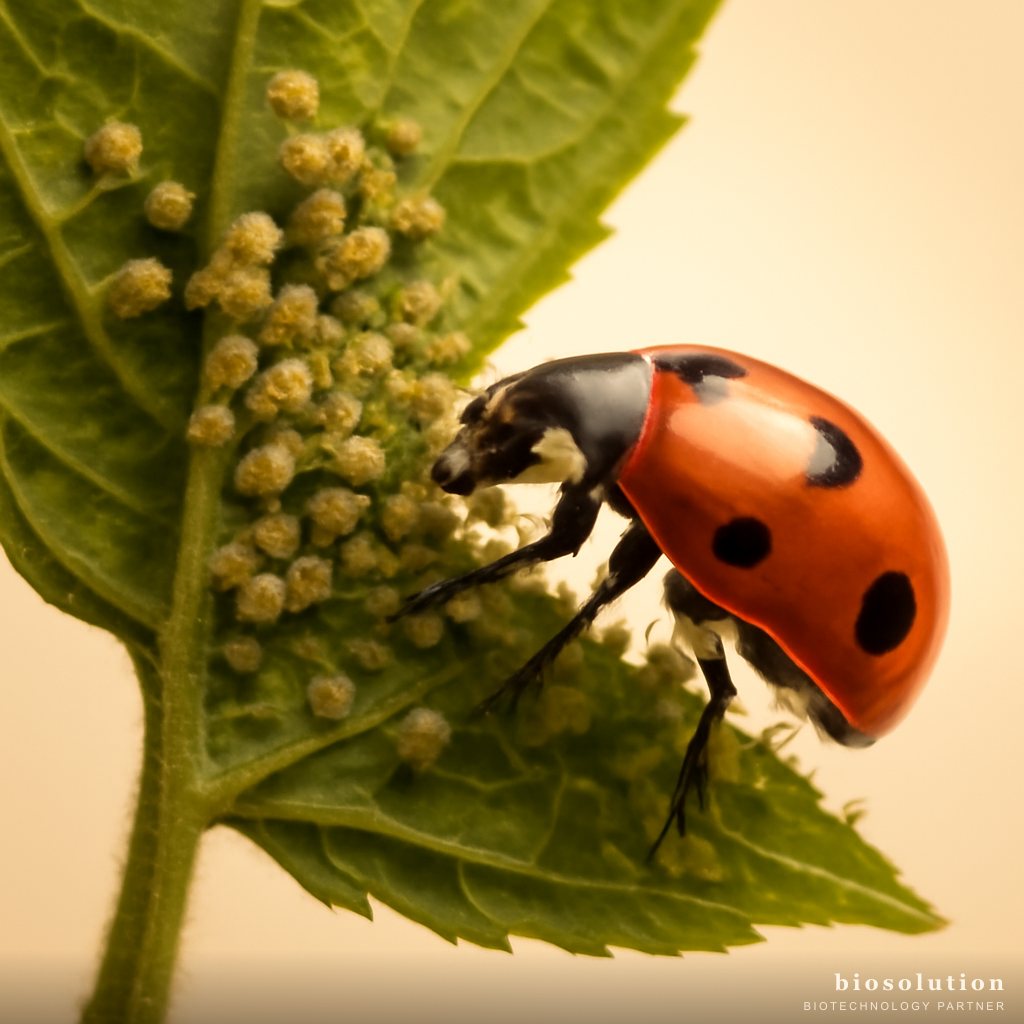
- Combine with other biological controls such as predators (Coccinellidae beetles) or parasitoids (Encarsia formosa)
- Evaluate product effectiveness: if populations do not decline after 2 applications, check spray technique or environmental conditions
Case example: In lowland tomato cultivation, after 2 weeks of routine application with the Anti-Aphid & Whitefly Formula, whitefly populations dropped by 70% based on scouting counts. This shows that monitoring helps measure success.
Advantages of Biosolution's Anti-Aphid & Whitefly Formula
This product is specifically designed to control aphids and whiteflies biologically. Its advantages:
- Contains two superior entomopathogenic strains: Verticillium lecani and Cordyceps spp.
- Controls insect-borne viruses (such as geminiviruses) by suppressing vector populations
- Reduces plant damage and extends economic lifespan
- Safe for organic farming and leaves no harmful residues
Mode of action: Pathogen spores attach to the insect's cuticle, germinate, and penetrate the body. Within a few days, the insect dies and new spores spread to other individuals.
Conclusion
Monitoring aphid and whitefly populations using yellow traps and direct scouting is a crucial first step in biocontrol. By knowing action thresholds, farmers can apply the Anti-Aphid & Whitefly Formula in a timely and targeted manner. This Biosolution product is an effective solution for suppressing pests while reducing virus risk. For further consultation, contact the Biosolution technical team via WhatsApp.
FAQ
1. What is the dosage and frequency of application for the Anti-Aphid & Whitefly Formula?
The recommended dosage is 3 ml per liter of water. Spray evenly on the underside of leaves. Application frequency is every 5 days when pest populations are high, or every 7-10 days for prevention. Ensure application is done in the late afternoon when humidity is above 70%.
2. Is this product safe for fruit and vegetable plants?
Yes, this product is safe for horticultural crops such as tomatoes, chili peppers, eggplants, cucumbers, and leafy vegetables. It leaves no harmful residues and is suitable for organic farming. However, avoid application during heavy flowering to protect pollinators.
3. How do I know if the biocontrol application was successful?
Conduct scouting 3-5 days after application. If nymph and adult populations decrease, and dead insects covered in white mycelium (signs of Verticillium infection) are found, the application was successful. Routine monitoring helps ensure effectiveness.
4. Can this product be combined with chemical pesticides?
It is best not to mix with chemical fungicides or insecticides as they can kill pathogen spores. If chemicals are necessary, allow a minimum interval of 3-5 days. This product is more optimal when used in an integrated pest management (IPM) system that prioritizes biocontrol.
5. Where can I buy the Anti-Aphid & Whitefly Formula?
This product is available at Biosolution partner agricultural stores or can be ordered directly via WhatsApp. For stock and pricing information, contact our team.