Anti Bactrocera Fruit Fly: Control Pests on Mango and Guava
Fruit fly Bactrocera spp. is one of the most damaging pests on tropical fruit plants, especially mango and guava. Its attack not only reduces harvest quantity but also fruit quality, making it difficult to meet export standards. Therefore, effective and environmentally friendly control strategies are essential. This article will discuss the fruit fly life cycle, attack symptoms, economic threshold, and biotechnological solutions from Biosolution that can help farmers overcome this problem.
Life Cycle of Bactrocera Fruit Fly
Understanding the pest's life cycle is the first step in control. Bactrocera undergoes complete metamorphosis: egg, larva, pupa, and imago (adult).
Eggs
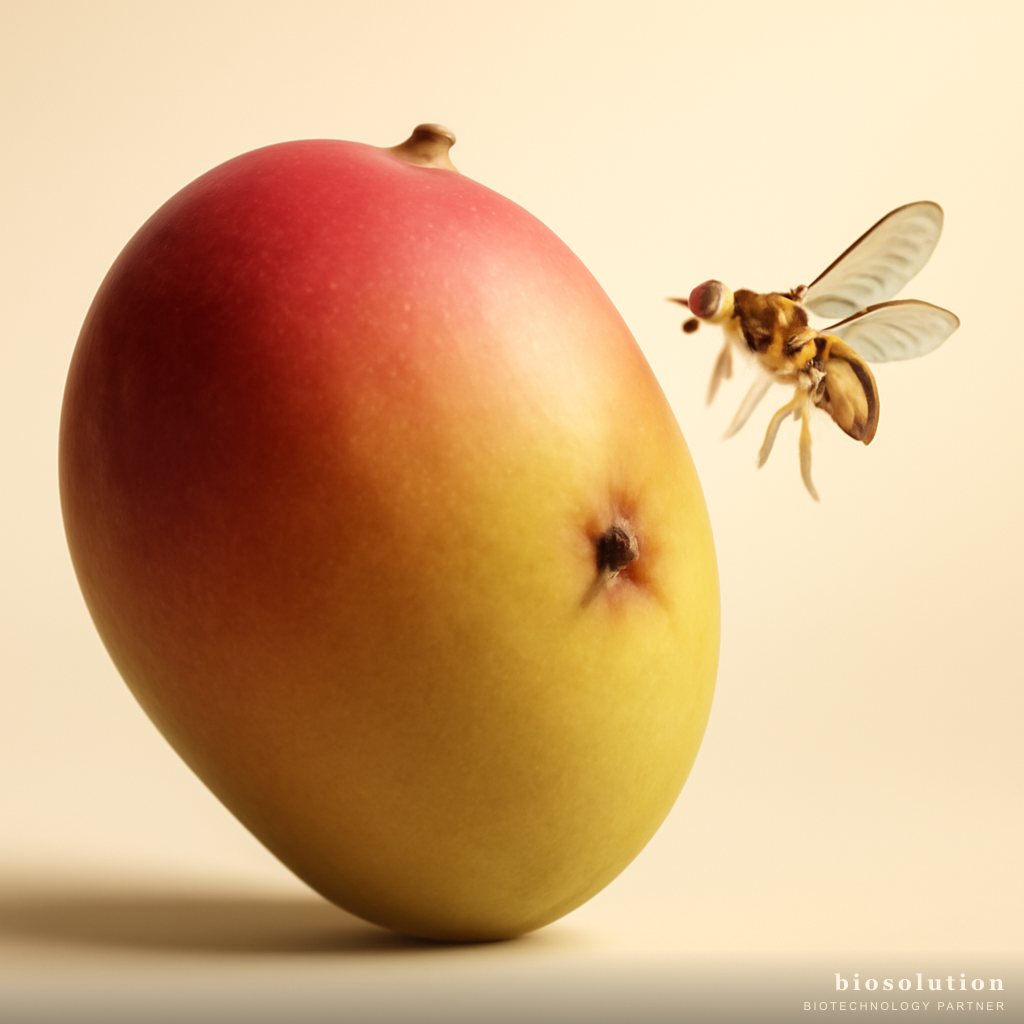
Adult females pierce the skin of green or ripening fruits to lay eggs. A single female can produce 300-800 eggs during her lifetime. Eggs are small, white, and oval-shaped. The incubation period is about 1-3 days depending on temperature and humidity.
Larvae
After hatching, larvae (maggots) immediately feed on the fruit flesh. Larvae go through three instars over 5-10 days. At this stage, the fruit becomes rotten, develops holes, and oozes fluid. Mature larvae exit the fruit and drop to the ground to pupate.
Pupae
Pupae form in the soil at a depth of 2-5 cm. The pupal stage lasts 7-14 days. This is the stage where control with Anti-Fruit Fly Formula works optimally, as Metarhizium anisopliae infects pupae in the soil.
Imago (Adult)
Adult flies emerge from the soil, usually in the morning. Female flies require protein for egg maturation, so they are often attracted to protein baits. The complete life cycle can be completed in 21-35 days depending on temperature. Populations typically increase during the rainy season.
Attack Symptoms on Mango and Guava
Fruit fly attacks are often unnoticed in the early stages. Here are symptoms to watch for:
On Mango
- Sting marks: Small black spots on the fruit skin from the female's ovipositor puncture. Around the sting mark, the fruit tissue becomes soft.
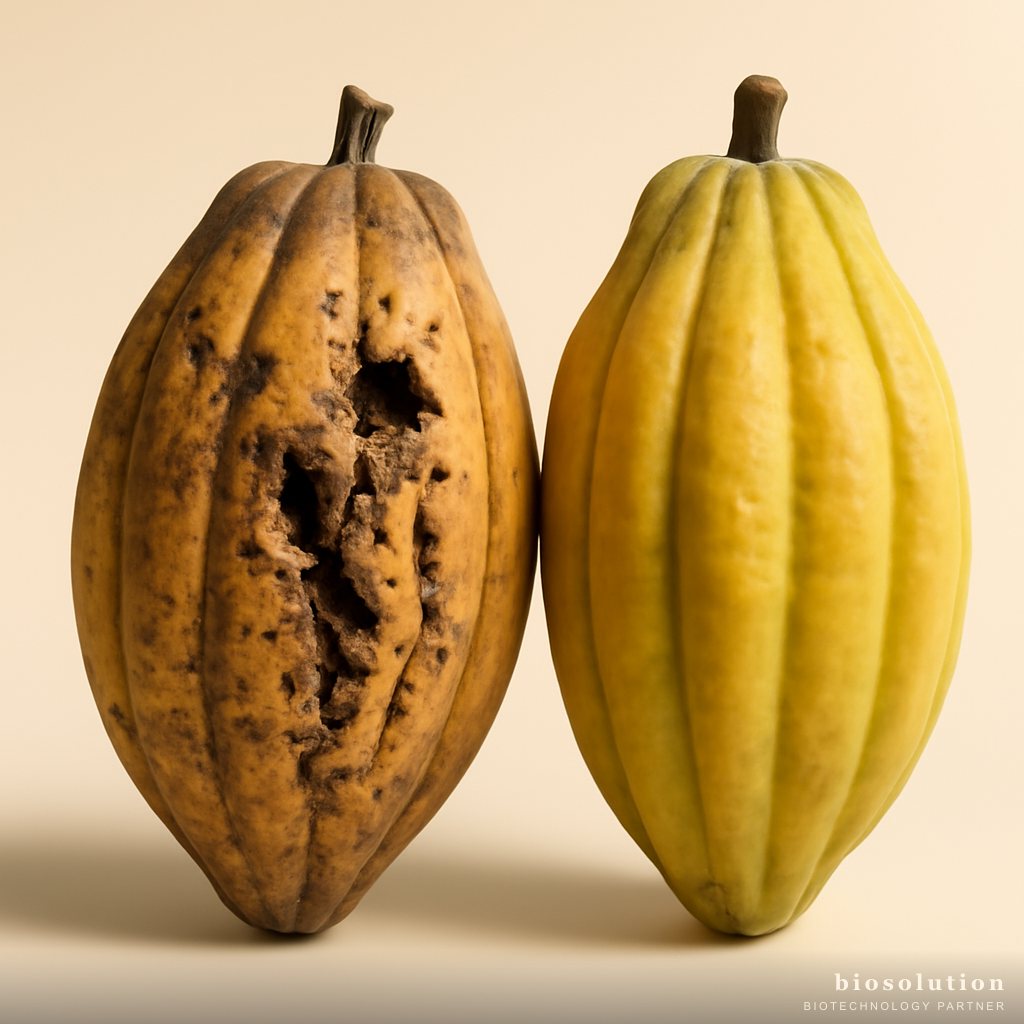
- Wet rot: Larvae feed on the fruit flesh, causing the inside of the fruit to rot and become watery. Affected fruits often drop before ripening.
- Exit holes: Late instar larvae create exit holes from the fruit, leaving scars.
- Sap oozing: In some varieties, punctures cause sap to ooze.
On Guava
- Early symptoms: Affected guava fruits appear normal externally, but when cut open, larvae and feeding tunnels are present.
- Color change: The fruit skin around the puncture turns yellow or brownish.
- Fruit drop: Severe attacks cause premature fruit drop.
- Fermentation smell: Rotten fruit flesh emits a sour odor.
Economic Threshold and When to Act
The economic threshold is the pest population level at which control measures must be taken to prevent economic loss. For Bactrocera fruit fly on mango and guava, the economic threshold is typically based on:
- Percentage of infested fruit: If more than 5% of fruits show sting marks or contain larvae, control measures are needed.
- Trap catches: Using attractant traps (e.g., methyl eugenol or protein hydrolysate) with a threshold of 2-3 flies/trap/day.
Regular monitoring is crucial. Farmers can install attractant traps at least 4-5 per hectare and check them weekly. If the threshold is exceeded, immediately implement control.
Environmentally Friendly Control Methods
Fruit fly control does not always require chemical insecticides. An integrated approach (IPM) is more sustainable. Here are the main components:
Orchard Sanitation
Collect and destroy infested fruits by deep burial (at least 50 cm) or soaking in water for 1 week. This breaks the life cycle from larva to pupa.
Attractant Traps
Use methyl eugenol traps for male flies or protein traps for females. Install before fruit ripens.
Biological Control with Anti-Fruit Fly Formula
Biosolution presents Anti-Fruit Fly Formula containing Metarhizium anisopliae, an entomopathogenic fungus that infects fruit fly pupae in the soil. Application method:
- Dosage: 5 ml per liter of water, apply 1 liter per tree.
- Frequency: Every 30 days, especially at the start of the fruiting season.
- Timing: Morning or late afternoon to avoid direct UV light.
This fungus will grow and kill pupae, so adult flies do not emerge. With regular use, fruit fly populations decrease significantly. This product also helps fruits meet export standards due to minimal chemical residues and is safe for organic farming.
Natural Enemies
Some parasitoids such as Fopius arisanus and Diachasmimorpha longicaudata can prey on fruit fly eggs or larvae. However, their effectiveness needs to be supported by habitat management.
Role of Microbes in Fruit Fly Control
Metarhizium anisopliae is a fungus that naturally infects soil insects. Its mechanism:
- Contact: Fungal conidia attach to the pupal cuticle.
- Penetration: The fungus secretes chitinase and protease enzymes that dissolve the cuticle.
- Colonization: Mycelium grows inside the pupal body, absorbing nutrients.
- Death: The pupa dies within 3-7 days, then the fungus produces new conidia that spread to other pupae.
The advantage of Metarhizium anisopliae is that it is specific to target insects, harmless to humans, livestock, or beneficial insects like bees. Regular use every 30 days can suppress fruit fly populations below the economic threshold.
Integration with Cultivation Techniques
For optimal control, combine with the following cultivation practices:
- Pruning: Trees that are not too dense allow sunlight penetration and reduce humidity, which fruit flies dislike.
- Fruit bagging: For high-value fruits, wrap with paper or plastic when fruits are still small.
- Drip irrigation: Avoid waterlogging which becomes a breeding ground for pupae.
- Crop rotation: Do not plant mango or guava continuously in the same field.
Case Study: Field Effectiveness
A trial in an Arumanis mango orchard in East Java showed that applying Anti-Fruit Fly Formula for 3 consecutive months reduced the percentage of infested fruits from 25% to 8%. Additionally, the number of adult flies caught in traps dropped drastically. Farmers reported improved fruit quality suitable for export.
Conclusion
Bactrocera fruit fly is a serious threat to mango and guava production. By understanding the life cycle, symptoms, and economic threshold, farmers can take timely action. Biological control using Metarhizium anisopliae in Anti-Fruit Fly Formula from Biosolution offers an effective, environmentally friendly, and safe solution for organic products. Combine with sanitation and traps for maximum results. For further consultation, contact the Biosolution team via WhatsApp.
FAQ
How to properly apply Anti-Fruit Fly Formula?
Mix 5 ml of product per liter of water, then apply 1 liter of solution to the soil around the tree's root zone. Do this every 30 days, especially at the start of the fruiting season. Best time is morning or late afternoon to avoid UV light that can damage the fungus.
Is Anti-Fruit Fly Formula safe for plants and the environment?
Yes, this product is based on Metarhizium anisopliae, a natural fungus. It leaves no chemical residues, is safe for humans, animals, and beneficial insects. Suitable for organic farming and helps fruits meet export standards.
How long does it take to see the effect of Anti-Fruit Fly Formula?
After application, the fungus begins infecting pupae within 3-7 days. A decrease in adult fly populations is usually seen after 2-3 months of regular application. For optimal results, monitor with traps.
Can this product be combined with chemical pesticides?
It is best to avoid using chemical pesticides simultaneously as they can kill the fungus. If necessary, allow a minimum interval of 7 days. This product is designed to be part of integrated biological control.
Where can I buy Anti-Fruit Fly Formula?
The product is available at Biosolution partner agricultural stores or can be ordered directly through the website. For more information, contact the Biosolution team via WhatsApp.