Anti Bactrocera Fruit Fly on Mango and Guava: Biocontrol for Export
Bactrocera fruit fly is a major pest on mango and guava, causing significant losses and hindering exports. Fruit fly attacks not only reduce fruit quality but also lead to rejection in international markets due to pesticide residues. To address this, an effective, safe, and export-standard-compliant control strategy is needed. One solution now widely adopted is biocontrol using the entomopathogenic fungus Metarhizium anisopliae, which is the active ingredient in Anti-Fruit Fly Formula. This article will thoroughly discuss its mechanism, application, and benefits in Indonesia's fruit export program.
Why is Bactrocera Fruit Fly Difficult to Control?
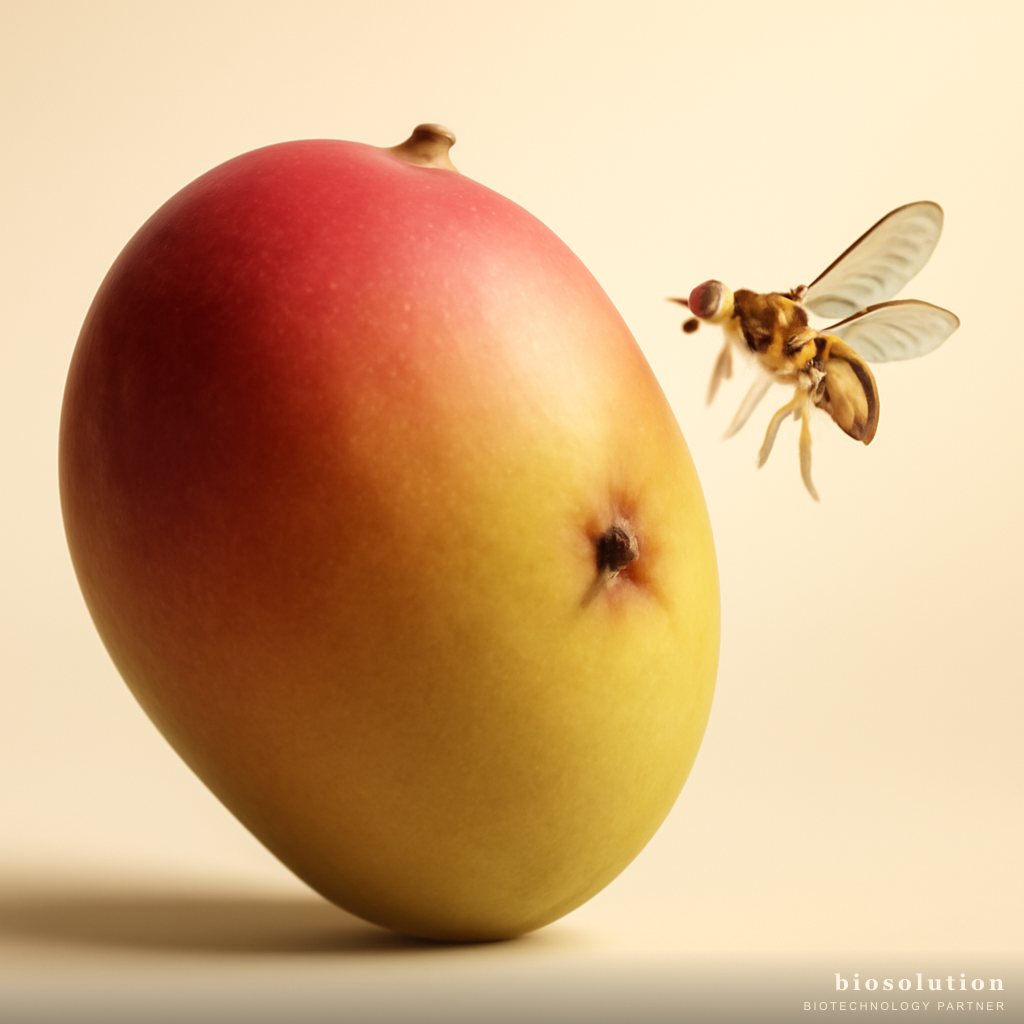
Bactrocera fruit fly has a complex life cycle. Females attack fruit by piercing the skin and laying eggs inside the flesh. The eggs hatch into larvae that feed on the fruit from within, causing rot and fruit drop. The larvae then fall to the ground, pupate in the soil, and emerge as adult flies. This cycle is rapid (about 2-3 weeks) and can occur several times a year.
Chemical control often fails because larvae are protected inside the fruit, and adult flies are highly mobile. Moreover, synthetic insecticides leave unwanted residues on fruit, failing to meet export requirements to countries like Japan, the European Union, or the United States. Therefore, a biocontrol approach targeting pupae in the soil is highly relevant.
Biocontrol with Metarhizium anisopliae: Mechanism of Action
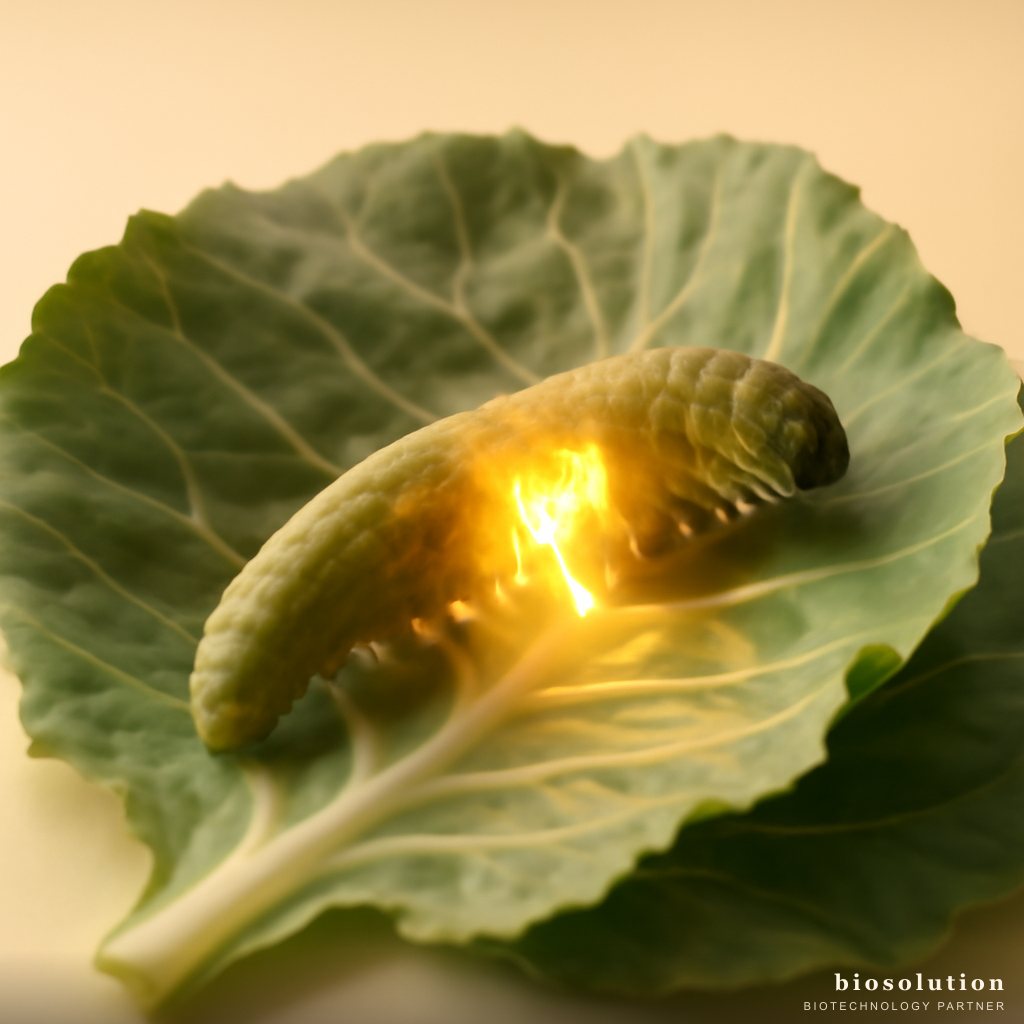
Metarhizium anisopliae is an entomopathogenic fungus that infects insects through contact. When fungal spores contact the cuticle of fruit fly pupae in the soil, they germinate and penetrate the insect's body, then proliferate in the hemolymph, causing death within a few days. This fungus is specific to insects and safe for plants, humans, animals, and natural enemies.
The product Anti-Fruit Fly Formula contains Metarhizium anisopliae formulated for soil drench application. The recommended dosage is 5 ml per liter of water, applied at 1 liter per tree on the tree basin. Application is done every 30 days, in the morning or evening to avoid UV light that can damage spores. In this way, pupae in the soil become infected and do not develop into adult flies, drastically reducing the fruit fly population.
Soil Drench Application: The Right Way to Suppress Population
The soil drench technique on the tree basin is highly effective because it targets pupae in the topsoil layer. Here are the correct application steps:
- Preparation: Mix 5 ml of Anti-Fruit Fly Formula into 1 liter of water, stir well.
- Application Time: Apply in the morning (before 9 AM) or evening (after 4 PM) to avoid direct sunlight.
- How to Drench: Pour the solution evenly over the tree basin area (about 1 meter from the trunk), ensuring the soil is moist.
- Frequency: Repeat every 30 days to maintain effectiveness.
- Combination: For optimal results, combine with orchard sanitation, i.e., removing rotten fruit and pruning alternative host plants.
With regular application, the fruit fly population can be gradually controlled. Farmers in mango and guava centers report a reduction in attacks of up to 70% after 2-3 months of use.
Benefits for Fruit Export Programs
Indonesia's fruit exports, especially mango and guava, are often hindered by fruit fly attacks and pesticide residues. Destination countries like Japan and South Korea enforce strict standards on chemical residues and pest presence. By using biocontrol, farmers can:
- Reduce or eliminate the use of chemical insecticides, resulting in residue-free fruit.
- Meet Sanitary and Phytosanitary (SPS) requirements set by importing countries.
- Increase market value as organic or environmentally friendly fruit is more in demand.
- Extend fruit shelf life due to no larval damage.
Furthermore, the use of Metarhizium anisopliae has been recognized by the Ministry of Agriculture as a safe biological agent. Thus, farmers can participate in export programs without fear of rejection.
Case Study: Success in the Field
In several mango centers in East Java and guava centers in Central Java, farmers who switched to biocontrol reported positive results. Previously, fruit fly attacks reached 40-60%, causing many rejected fruits. After using Anti-Fruit Fly Formula for 4 months, attacks dropped to below 10%. The resulting fruits passed residue tests for export to the Middle East and Europe.
One farmer in Probolinggo, Mr. Slamet, said, "I used to spray insecticides every week, now I just drench the soil once a month. My mangoes are cleaner and fetch a higher price." This success story shows that biocontrol is not only effective but also economical.
FAQ: Common Questions about Anti Bactrocera Fruit Fly
Is Anti-Fruit Fly Formula safe for plants and the environment?
Yes, Metarhizium anisopliae is an entomopathogenic fungus that only infects target insects. There are no negative effects on plants, soil, or non-target organisms such as earthworms and bees. This product is also registered with the Ministry of Agriculture and is safe for use in organic farming.
How long does it take to see results?
Effects begin to appear after 2-3 weeks of the first application, namely a decrease in the number of trapped adult flies and reduced fruit damage. Optimal results are achieved after 2-3 months of regular application every 30 days.
Should it be combined with fruit fly traps?
It is advisable to combine with orchard sanitation and fruit fly traps (e.g., methyl eugenol traps) to monitor the population. However, chemical traps can be reduced because the Anti-Fruit Fly Formula naturally suppresses the population.
How should the product be stored?
Store in a cool, dry place away from direct sunlight. Ideal storage temperature is 4-10°C, for example in a refrigerator. Do not freeze. The product in a sealed package can last up to 6 months.
Can it be used on fruits other than mango and guava?
Yes, this formula is effective against all types of Bactrocera fruit flies that attack various fruit crops such as citrus, starfruit, and chili. The mechanism is the same: targeting pupae in the soil.
Conclusion
Bactrocera fruit fly is a serious threat to mango and guava productivity, especially for the export market. Biocontrol with Metarhizium anisopliae offers an effective, safe, and sustainable solution. With regular soil drench application, farmers can significantly reduce attacks, meet export standards, and improve their welfare. For best results, apply Anti-Fruit Fly Formula according to the recommended dosage and frequency. For further consultation, contact us via WhatsApp to get technical guidance tailored to your orchard conditions.