Anti Fusarium Wilt in Tomatoes: Control with Biological Formula
Fusarium wilt caused by the fungus Fusarium oxysporum is one of the most damaging diseases in tomato and chili plants. This pathogen can survive in soil for years and attacks roots, causing plants to wilt suddenly and die. Biological control with antagonistic agents such as Trichoderma harzianum, Gliocladium virens, and Pseudomonas fluorescens offers an effective and environmentally friendly solution. This article thoroughly discusses the strategy of anti fusarium wilt in tomatoes using Biosolution's Anti-Fusarium Wilt Formula.
Understanding Fusarium Wilt in Tomatoes and Chili Peppers
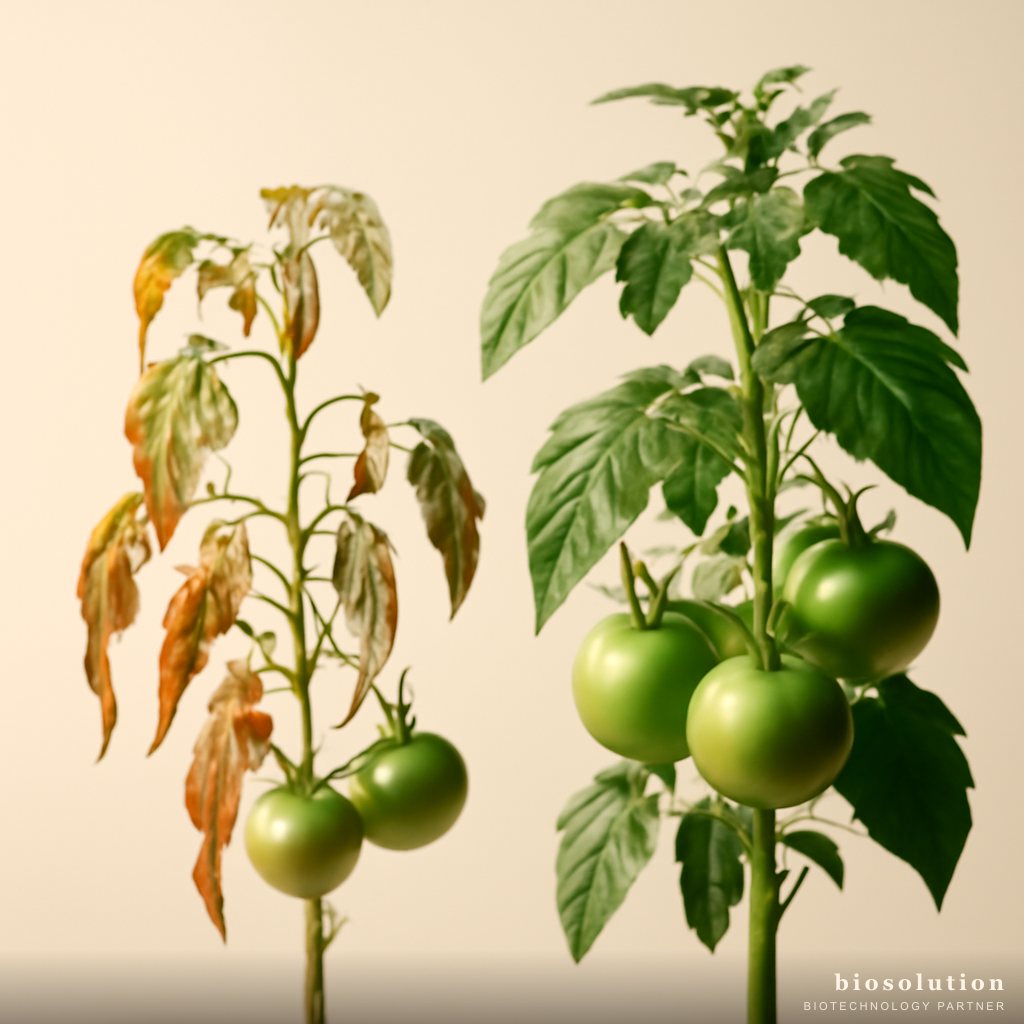
Fusarium wilt is caused by Fusarium oxysporum f. sp. lycopersici in tomatoes and f. sp. capsici in chili peppers. This fungus enters through roots and clogs xylem vessels, inhibiting water and nutrient transport. Initial symptoms include yellowing leaves and wilting during the day, followed by plant death. The pathogen can survive as chlamydospores in soil and plant debris, making even long-term crop rotation ineffective. The use of resistant varieties and chemical fungicides is often suboptimal due to the pathogen's adaptability. Therefore, biological control becomes a strategic choice.
Biological Control Strategy with Anti-Fusarium Wilt Formula
Biosolution's Anti-Fusarium Wilt Formula is a biological product specifically formulated to suppress Fusarium oxysporum. This product contains three superior antagonistic microorganisms: Trichoderma harzianum, Gliocladium virens, and Pseudomonas fluorescens. They work synergistically through mechanisms of mycoparasitism, antibiosis, competition, and induced plant resistance. Application is done by drenching the roots or mixing with soil at planting at a dose of 5 ml per liter of water, repeated every 14 days during the vegetative phase. This method ensures optimal rhizosphere colonization.
Mechanism of Action of Trichoderma harzianum
Trichoderma harzianum is a mycoparasitic fungus that can directly infect Fusarium hyphae. It produces chitinase and glucanase enzymes that degrade the pathogen's cell wall. Additionally, Trichoderma competes for space and nutrients in the rhizosphere. In the Anti-Fusarium Wilt Formula, the T. harzianum strain used has been selected for high virulence against F. oxysporum. Research shows that Trichoderma application can reduce disease severity by up to 70%.
Role of Gliocladium virens in Antibiosis
Gliocladium virens (synonym Trichoderma virens) produces antibiotic compounds such as gliotoxin and viridin that are toxic to Fusarium. These compounds inhibit spore germination and mycelial growth of the pathogen. Additionally, G. virens triggers plant defense mechanisms through the production of resistance-inducing compounds. The combination with Trichoderma harzianum enhances synergistic effects.
Pseudomonas fluorescens: Siderophore Producer
Pseudomonas fluorescens is a rhizosphere bacterium that produces siderophores—iron-chelating compounds—making it difficult for Fusarium to obtain essential iron for growth. Additionally, this bacterium produces antibiotics such as 2,4-diacetylphloroglucinol (DAPG) that inhibit the pathogen. Induced systemic resistance in plants is also an important contribution of P. fluorescens. Its presence in the Anti-Fusarium Wilt Formula complements the control mechanisms in terms of competition and biocontrol.
Advantages of Anti-Fusarium Wilt Formula for Farmers
This product offers several advantages over chemical fungicides. First, it is environmentally friendly and safe for non-target organisms. Second, it can be used in organic farming. Third, it reduces the need for crop rotation because the pathogen is biologically suppressed. Fourth, it improves plant natural resistance. With regular application, Fusarium populations in the soil can be sustainably suppressed. Tomato and chili farmers who have applied this formula report reduced disease intensity and increased yields.
Proper Application Method
Application of the Anti-Fusarium Wilt Formula should start from early planting. Mix 5 ml of product per liter of water, then drench the soil around the roots (root drench) with 200-300 ml per plant. Repeat every 14 days during the vegetative phase. For already infected fields, apply one week before planting to suppress pathogen inoculum. Ensure the soil is moist so that microorganisms can develop optimally. Avoid mixing with chemical fungicides that can inhibit the growth of biological agents.
Case Studies and Supporting Data
Research at the Vegetable Research Institute showed that application of Trichoderma harzianum and Pseudomonas fluorescens on tomatoes could reduce the incidence of Fusarium wilt by up to 65% compared to controls. The combination of the three agents in the Anti-Fusarium Wilt Formula is expected to provide higher efficacy due to synergism. IRRI and FAO also recommend biological control as a key strategy in managing soil-borne diseases. Read FAO's biological control guide for further reference.
Conclusion
Fusarium wilt in tomatoes and chili peppers can be effectively controlled with a biological approach. Biosolution's Anti-Fusarium Wilt Formula containing Trichoderma harzianum, Gliocladium virens, and Pseudomonas fluorescens is the right solution to suppress pathogens, improve plant resistance, and support sustainable agriculture. Regular application using the root drench method yields optimal results. For further consultation, contact us via WhatsApp or see the product Anti-Fusarium Wilt Formula and other biological products.