Anti Fusarium Wilt in Tomatoes: Why Chemicals Fail and Biological Solutions with 3 Superior Formulas
Fusarium wilt caused by Fusarium oxysporum is one of the most damaging diseases in tomato and chili plants. Farmers often rely on chemical pesticides to control it, but in recent years, complaints about control failures have become more frequent. This phenomenon is not a coincidence but rather a result of pathogen resistance to active chemical ingredients. This article will thoroughly explore why chemicals fail and how biological solutions such as Anti-Fusarium Wilt Formula from Biosolution can be an effective and sustainable answer.
Why Do Chemical Pesticides Fail to Control Fusarium Wilt?
Chemical pesticides have long been a mainstay for farmers. However, in the case of Fusarium oxysporum, their effectiveness is declining. Several main factors causing this failure include:
Pathogen Resistance
Fusarium oxysporum has a high adaptability. Continuous use of chemical fungicides with the same active ingredients causes the pathogen to develop resistance mechanisms, such as target gene mutations or increased detoxification enzymes. As a result, the same dose is no longer able to kill the pathogen.
Disrupted Soil Microbiome
Chemical pesticides not only kill pathogens but also beneficial microorganisms in the soil. In fact, soil microbes such as Trichoderma and Pseudomonas act as natural controllers of Fusarium. When these microbes are lost, the pathogen thrives even more freely.
Pathogen Persistence in Soil
Fusarium oxysporum forms chlamydospores that can survive for years in the soil without a host. Chemical pesticides are only effective when the pathogen is active but cannot reach these dormant structures. Consequently, the disease reappears every growing season.
Mechanism of Fusarium oxysporum Attack on Tomatoes and Chili
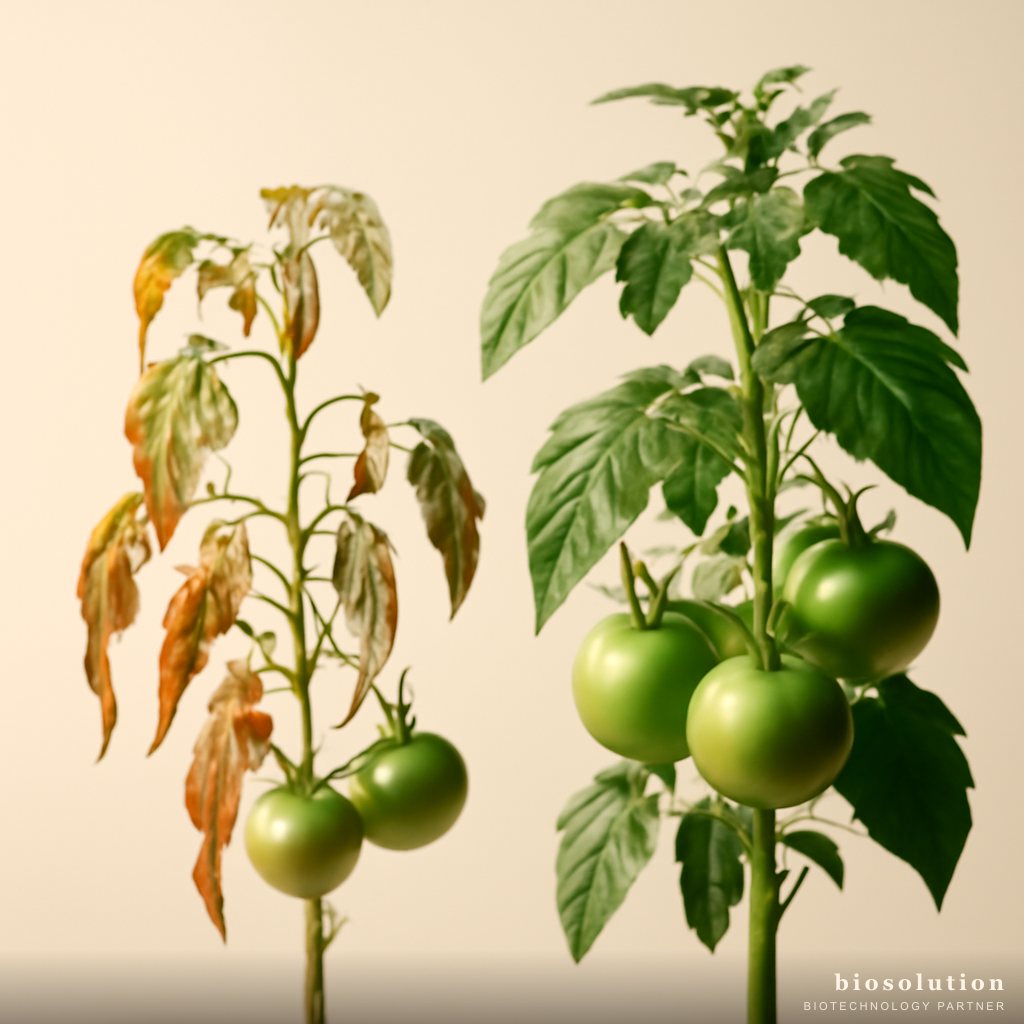
Understanding how the pathogen attacks helps us choose the right control strategy. Fusarium oxysporum infects plants through the roots, then spreads to the xylem vessels. The pathogen produces pectinase enzymes and fusaric acid toxins that clog the vessels, causing sudden wilting. Early symptoms include yellowing of lower leaves, then permanent wilting, and eventually death.
In tomatoes and chili, this disease is very damaging because it attacks when plants start fruiting. Yield loss can reach 50-80% if not handled early. This is why prevention is more important than treatment.
Biological Solution: Biosolution Anti-Fusarium Wilt Formula
Biosolution presents the Anti-Fusarium Wilt Formula, a combination of three superior microorganisms that work synergistically to suppress Fusarium oxysporum. This product is specifically designed to overcome chemical failure with an environmentally friendly biocontrol approach.
Composition and Role of Each Strain
- Trichoderma harzianum: Acts as a mycoparasite, directly infecting and destroying Fusarium hyphae. This fungus also produces chitinase enzymes that degrade the pathogen's cell wall.
- Gliocladium virens: Produces antibiotic compounds such as gliotoxin that inhibit Fusarium growth. Additionally, Gliocladium competes for space and nutrients in the rhizosphere.
- Pseudomonas fluorescens: This bacterium produces siderophores that bind iron ions around the roots. Since Fusarium requires iron for growth, iron deficiency due to siderophores inhibits pathogen development. Pseudomonas also induces systemic resistance in plants.
How the Anti-Fusarium Wilt Formula Works
These three microbes work through three main mechanisms:
- Direct antagonism: Trichoderma and Gliocladium attack and destroy Fusarium hyphae.
- Competition: All strains compete for nutrients and space, preventing Fusarium from developing.
- Induced resistance: Pseudomonas triggers plant defense responses, making plants more resistant to infection.
Proper Application
This product is applied using the root drench method and mixed with soil at planting. The recommended dose is 5 ml per liter of water, applied every 14 days from planting through the vegetative phase. Consistency of application is crucial to establish a stable microbial population in the rhizosphere.
Advantages of Anti-Fusarium Wilt Formula Over Chemicals
No Resistance Development
The combination of three microbes with different mechanisms makes it difficult for the pathogen to develop resistance. Unlike chemicals that have a single target, this biocontrol attacks from multiple sides.
Improves Soil Health
The microbes in this formula actually enrich soil biodiversity. After application, the soil becomes more fertile due to increased beneficial microbial activity.
Safe for Organic Farming
This product is certified safe for organic agriculture. It leaves no harmful residues on fruit, making it safe for consumption.
Case Study: Farmer Success in Overcoming Fusarium Wilt
In the field, farmers who switched to this biological formula reported a 70% reduction in disease intensity after two growing seasons. One tomato farmer in West Java previously lost 60% of his plants to Fusarium wilt. After regularly using the Anti-Fusarium Wilt Formula, plants remained healthy until harvest. Productivity increased from 8 tons per hectare to 15 tons per hectare.
How to Get the Anti-Fusarium Wilt Formula
For those who want to overcome Fusarium wilt problems in tomatoes and chili, the Anti-Fusarium Wilt Formula is available at nearby agricultural stores or can be ordered directly through the Anti-Fusarium Wilt Formula product page. For further consultation on dosage and application methods, contact our technical team via WhatsApp.
Conclusion
Fusarium wilt caused by Fusarium oxysporum in tomatoes and chili can no longer be relied upon with chemical pesticides due to pathogen resistance and soil microbiome damage. The biological solution with Anti-Fusarium Wilt Formula from Biosolution offers a more effective, safe, and sustainable approach. With a combination of Trichoderma harzianum, Gliocladium virens, and Pseudomonas fluorescens, this product can suppress the disease while improving soil fertility. Switch to biocontrol now for healthier and more abundant harvests.
FAQ
1. Is the Anti-Fusarium Wilt Formula safe for other plants?
Yes, this product is safe for all horticultural crops. The microbes contained are specific to Fusarium pathogens and do not harm host plants. In fact, some strains like Trichoderma are also beneficial for promoting root growth.
2. How long does the effect of the Anti-Fusarium Wilt Formula last in the soil?
The microbial population will persist for 2-4 weeks after application, depending on soil conditions. Reapplication every 14 days is recommended to maintain effectiveness. In soils with high organic matter, microbes can survive longer.
3. Can this product be mixed with chemical fertilizers?
It is best not to mix directly with chemical fertilizers or synthetic pesticides as they can kill the microbes. Allow a minimum of 3 days between chemical fertilizer application and biological formula application. For optimal results, use organic fertilizers.
4. How should this product be stored?
Store in a cool, dry place, away from direct sunlight. Ideal storage temperature is between 10-30°C. Do not freeze. The product in sealed packaging can last up to 12 months.
5. Can the Anti-Fusarium Wilt Formula cure already infected plants?
This product is more effective as a preventive measure. For mildly infected plants, root drench application can help slow disease progression. However, for severely wilted plants, it is best to remove and destroy them to prevent spread.