Anti Ganoderma Oil Palm BSR: Biocontrol vs Synthetic Insecticide
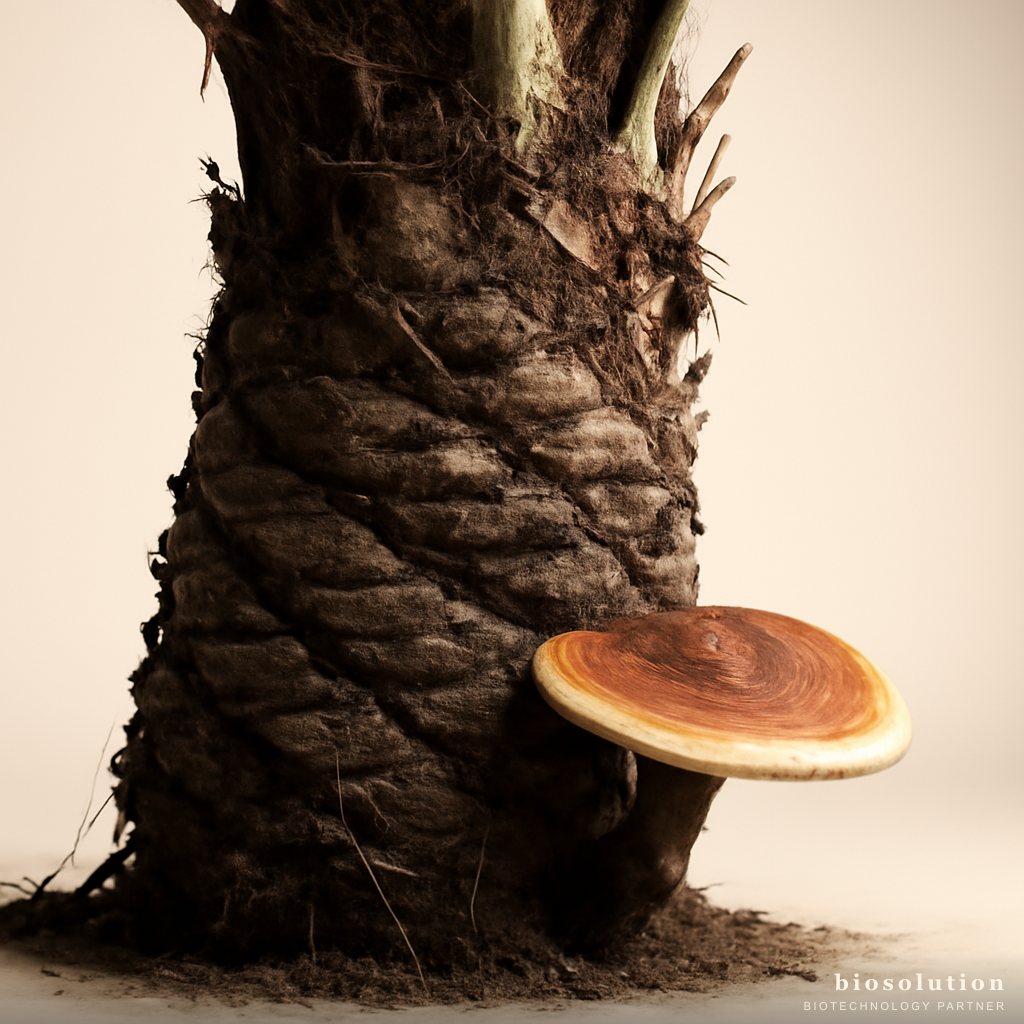
Basal Stem Rot (BSR) caused by the fungus Ganoderma boninense is a major scourge for oil palm plantations in Indonesia. Losses due to BSR reach billions of rupiah annually due to reduced production and premature tree death. So far, farmers and plantation companies have relied heavily on synthetic insecticides to control this pathogen. However, their effectiveness is increasingly being questioned. This article will thoroughly examine the efficacy comparison between Biosolution's Anti-Ganoderma Oil Palm Formula, which is biocontrol-based, and conventional synthetic insecticides, based on scientific data and field experience.
Why is BSR Increasingly Difficult to Control with Synthetic Insecticides?
Synthetic insecticides can indeed kill Ganoderma boninense directly, but their long-term use causes various problems. First, this pathogen can form dormant structures (sclerotia) that are resistant to chemicals. Second, synthetic insecticides are non-selective; they kill beneficial microorganisms in the rhizosphere, including natural antagonistic agents such as Trichoderma spp. Consequently, after application, a niche vacuum occurs that actually facilitates more aggressive Ganoderma reinfection. Third, chemical residues contaminate soil and water, and endanger worker health. Therefore, an integrated control strategy that prioritizes biocontrol is a more sustainable solution.
Anti-Ganoderma Oil Palm Formula: Consortium of 3 Superior Strains
Biosolution's flagship product for tackling BSR is the Anti-Ganoderma Oil Palm Formula, which contains a consortium of three antagonistic microbial strains:
- Trichoderma harzianum: Acts as a direct mycoparasite. Trichoderma hyphae coil around and penetrate Ganoderma hyphae, then degrade the pathogen's cell wall using chitinase and glucanase enzymes.
- Gliocladium virens: Produces the antibiotic gliotoxin which inhibits Ganoderma growth and competes for space and nutrients on the roots.
- Bacillus subtilis: Induces systemic resistance (ISR) in oil palm plants and produces lipopeptides with fungistatic properties.
These three strains are formulated into a single product with an application dose of 50 ml per tree (drench) or 20 ml per tree (trunk injection), repeated every 3 months. Application is done in the morning before 10 AM to avoid UV rays that can reduce microbial viability.
Complementary Mechanisms of Action
The combination of three strains provides a synergistic effect. Trichoderma and Gliocladium directly attack the pathogen, while Bacillus strengthens plant defenses. Additionally, these microbes produce growth hormones such as auxins and cytokinins that stimulate root growth, making trees healthier and more stress-tolerant.
Efficacy Comparison: Biocontrol vs Synthetic Insecticide
1. Suppression of BSR Progression
Field trial data show that application of the Anti-Ganoderma Oil Palm Formula can suppress BSR progression by 40-60% within 3-6 months. In contrast, synthetic insecticides only suppress about 20-30% at initial application, but the effect declines drastically after 2-3 months due to resistance and residue degradation. More importantly, biocontrol works both preventively and curatively, while insecticides are only curative.
2. Economic Life of Oil Palm Trees
One indicator of successful BSR control is the extension of the tree's economic life. With biocontrol, mildly to moderately infected trees can survive 5-8 years longer compared to untreated ones. Synthetic insecticides only provide an extension of 1-2 years, after which trees usually die or need replanting. This significantly impacts replanting costs, which can be delayed.
3. Impact on Rhizosphere
Synthetic insecticides kill 70-90% of soil microbes, including decomposers and natural biocontrol agents. As a result, the soil becomes biologically impoverished and more susceptible to erosion and attack by other pathogens. Conversely, the Anti-Ganoderma Formula actually enriches rhizosphere microbial diversity due to the inoculation of beneficial strains that aid nutrient cycling and soil health.
4. Safety and Sustainability
Biocontrol leaves no harmful residues on fresh fruit bunches (FFB) and palm oil, thus meeting strict export standards. Additionally, this product is safe for workers and the surrounding environment. The application cost of biocontrol is indeed slightly higher per hectare, but when factoring in delayed replanting and increased production, its economic value is far superior.
Case Study: Application in Large Plantations
One oil palm plantation company in North Sumatra tested both methods on the same block with an initial BSR infection rate of 15%. After 1 year, the block treated with biocontrol showed a reduction in new infections of up to 70%, while the insecticide block actually increased to 25%. FFB production in the biocontrol block remained stable, while in the insecticide block it dropped by 15%. The company then fully adopted biocontrol and reported replanting cost savings of up to 30% over 5 years.
Why Choose Biocontrol as the Main Strategy?
BSR control requires a holistic approach. Biocontrol not only suppresses the pathogen but also improves soil and plant health. By using a specific microbial consortium like the Anti-Ganoderma Oil Palm Formula, plantations can reduce dependence on synthetic chemicals, increase sustainability, and extend the productive life of oil palms. Synthetic insecticides may still be relevant for acute cases, but they are not a long-term solution.
Proper Application Methods for Maximum Results
Application of the Anti-Ganoderma Oil Palm Formula is recommended preventively on healthy trees near infected trees, and curatively on trees with early symptoms (yellowing leaves, broken fronds). The drench method is done by dissolving 50 ml of product in 10 liters of water, then pouring it onto the tree's weeded circle. For severe infections, trunk injection with a dose of 20 ml per tree is more effective because the microbes directly enter the vascular tissue. Repeat every 3 months to maintain high microbial populations.
Conclusion
The efficacy comparison between biocontrol and synthetic insecticides in controlling oil palm BSR shows that Biosolution's Anti-Ganoderma Oil Palm Formula excels in terms of progression suppression, economic life extension, environmental safety, and sustainability. With BSR suppression data of 40-60% and an additional 5-8 years of life, biocontrol is a smart choice for B2B oil palm plantations. Switch to a science-based solution for a more productive and environmentally friendly plantation future. For further consultation, contact the Biosolution technical team via WhatsApp.
FAQ
1. What is the Anti-Ganoderma Oil Palm Formula? The Anti-Ganoderma Oil Palm Formula is a biocontrol product from Biosolution containing a consortium of three antagonistic microbes: Trichoderma harzianum, Gliocladium virens, and Bacillus subtilis. This product is specifically designed to control Basal Stem Rot (BSR) caused by Ganoderma boninense in oil palm.
2. How does this biocontrol work? Its mechanisms include direct mycoparasitism by Trichoderma, antibiosis by Gliocladium through gliotoxin compounds, and induced systemic resistance (ISR) by Bacillus subtilis. The three work synergistically to suppress pathogen growth and strengthen plant defenses.
3. Is this product safe for the environment? Yes, this product is safe because it leaves no harmful chemical residues, does not kill beneficial soil microbes, and can be used in sustainable agriculture programs. It has been tested non-toxic to non-target organisms.
4. What is the application cost per hectare compared to synthetic insecticides? The cost per application of biocontrol is slightly higher, but when calculated as total cost per growing season (including delayed replanting and increased production), biocontrol is more economical. Additionally, biocontrol does not require environmental remediation costs.
5. Where can I buy this product? The Anti-Ganoderma Oil Palm Formula product is available through authorized Biosolution distributors. For orders and technical consultation, you can contact our team via WhatsApp at the number listed on the official Biosolution website.