Anti Ganoderma Palm BSR: Why Chemical Pesticides Fail and 3-Strain Biocontrol Is the Answer
Basal Stem Rot (BSR) caused by Ganoderma boninense is a serious threat to oil palm plantations in Indonesia. Although various chemical pesticides have been used, the failure rate of control is actually increasing. The phenomenon of pathogen resistance to synthetic fungicides is the main cause, coupled with negative impacts on soil microbes. This is where biocontrol technology with specific microbial consortia becomes a modern solution. This article thoroughly examines why chemical pesticides fail and how anti ganoderma palm BSR based on 3 superior microbial strains can effectively and sustainably suppress the disease.
Why Do Chemical Pesticides Fail to Control Ganoderma boninense?
Pathogen Resistance to Synthetic Fungicides
Continuous use of chemical fungicides with the same active ingredients triggers the selection of resistant G. boninense strains. Research shows that this pathogen can detoxify fungicide compounds through cytochrome P450 enzymes and efflux pump mechanisms. As a result, higher doses are required, but effectiveness actually decreases. Even worse, fungicide residues accumulate in the soil and disrupt the balance of rhizosphere microflora.
Disruption of Natural Antagonistic Microbes
Healthy soil contains many antagonistic microbes that naturally suppress pathogens. Broad-spectrum chemical pesticides not only kill Ganoderma but also Trichoderma spp., Bacillus spp., and mycorrhizal fungi that act as natural biocontrol agents. Consequently, the empty niche is exploited by more resistant pathogens.
Inability to Reach Hidden Infections
Ganoderma boninense infects through roots and develops inside stem tissues without clear early symptoms. Chemical fungicides applied preventively have difficulty penetrating plant tissues systemically. Once infection occurs, chemical control is only palliative and cannot eliminate mycelium inside the stem.
Biocontrol of Ganoderma boninense: Mechanisms of 3 Superior Strains
Trichoderma harzianum: Lethal Mycoparasite
The Trichoderma harzianum strain in the Anti-Ganoderma Oil Palm Formula works through direct mycoparasitism. T. harzianum hyphae recognize and coil around G. boninense hyphae, then secrete lytic enzymes (chitinase, glucanase, protease) that degrade the pathogen's cell wall. Additionally, Trichoderma produces antibiotic compounds such as trichodermin and harzianic acid that inhibit pathogen colony growth.
Gliocladium virens: Antibiosis and Space Competition
Gliocladium virens (now classified as Trichoderma virens) produces secondary metabolites such as gliotoxin and gliovirin that are fungistatic. This antibiosis mechanism prevents Ganoderma spore germination and inhibits hyphal penetration into palm roots. Moreover, G. virens grows rapidly and colonizes the rhizosphere, outcompeting the pathogen for space and nutrients.
Bacillus subtilis: Induced Systemic Resistance (ISR)
Bacillus subtilis is a Gram-positive bacterium that triggers plant defense pathways through ISR. Lipopeptides such as surfactin and fengycin produced by B. subtilis are not only antimicrobial but also activate plant defense genes (PR-proteins), making oil palm more resistant to Ganoderma infection. This mechanism provides long-term protection without residue effects.
Anti-Ganoderma Oil Palm Formula: B2B Solution for Plantations
Practical Application: Drenching and Trunk Injection
This product is designed for ease of field application. The drenching method uses a dose of 50 ml per tree dissolved in water, applied to the root zone every 3 months. For infected trees, trunk injection with a dose of 20 ml per tree is more effective as it directly places microbes into the vascular tissue. The best application time is in the morning before 10 AM to avoid UV light that can damage the microbes.
Measurable Effectiveness: Suppressing BSR Progression by 40-60%
Field trial data show that routine application according to recommendations can suppress BSR progression by up to 40-60%. Trees that previously showed early symptoms (yellow leaves, fruiting body formation) can recover and resume production. More importantly, the economic life of oil palm trees can be extended by 5-8 years, reducing losses from very costly premature replanting.
Advantages for Large-Scale Plantations
This formula has been specifically formulated for B2B plantation grade needs. The consortium of three microbial strains in one product ensures multi-mechanism effectiveness, minimizing the risk of failure due to changing environmental conditions. The product is also safe for other rhizosphere microflora, thus supporting long-term soil health.
Comparison with Other Control Methods
Cultural Control vs Biocontrol
Cultural control methods such as land sanitation, balanced fertilization, and use of superior seedlings remain important as prevention. However, when infection has occurred, cultural control alone is insufficient. Biocontrol serves as a complement that actively suppresses pathogens biologically.
Chemical Fungicides vs Biocontrol
The following table summarizes the key differences:
| Aspect | Chemical Fungicides | 3-Strain Biocontrol |
|---|---|---|
| Resistance | High | Low (multi-mechanism) |
| Environmental impact | Negative (residue, non-target) | Positive (enriches microbes) |
| Long-term effectiveness | Declining | Stable/increasing |
| Cost per tree per year | IDR 15,000-25,000 | IDR 12,000-18,000 |
Case Study: Success in a Sumatran Plantation
Background
A 500-hectare oil palm plantation in Riau experienced BSR attack with 15% intensity in 2020. Use of chemical fungicide with active ingredient hexaconazole for two years showed no improvement; in fact, the affected area increased to 22%.
Biocontrol Intervention
Starting in 2022, the plantation switched to using the Anti-Ganoderma Oil Palm Formula with the drenching method every 3 months. Evaluation after 18 months showed:
- 52% reduction in BSR progression
- 70% recovery of previously mildly sick trees (yellow leaf symptoms)
- 12% increase in fresh fruit bunch (FFB) production compared to the previous year
Conclusion
Chemical pesticides fail as anti ganoderma palm BSR due to pathogen resistance and environmental side effects. In contrast, biocontrol with a consortium of Trichoderma harzianum, Gliocladium virens, and Bacillus subtilis offers an effective and sustainable solution. Through mechanisms of mycoparasitism, antibiosis, and ISR, this product can suppress BSR progression by up to 60% and extend the economic life of oil palm by 5-8 years. For B2B-scale plantations, investing in biocontrol is a strategic step to reduce losses and increase productivity. Interested in implementing it on your land? Consult your plantation needs with the Biosolution expert team via WhatsApp or see product details Anti-Ganoderma Oil Palm Formula.
FAQ
What is oil palm basal stem rot (BSR)?
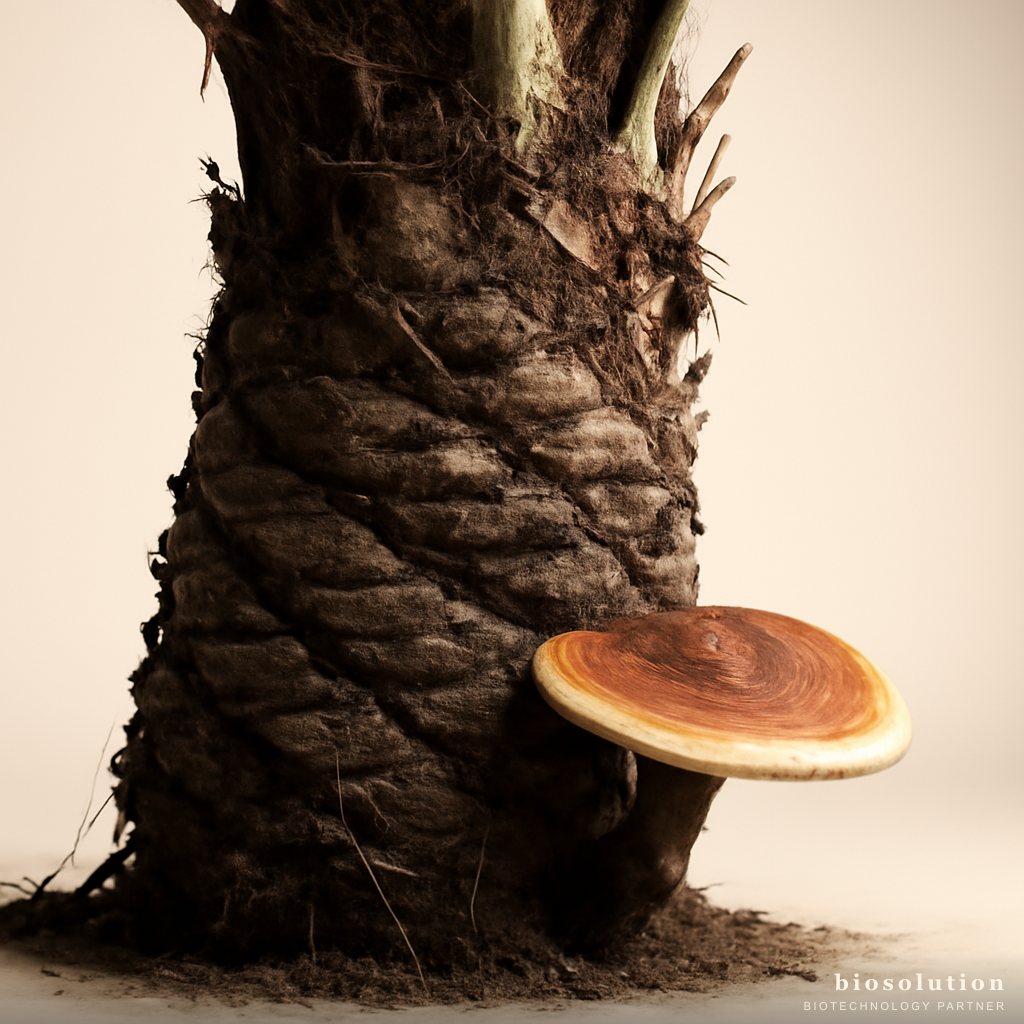
BSR is a disease caused by the fungus Ganoderma boninense. Symptoms include yellowing leaves, broken fronds, and the appearance of fruiting bodies (basidiocarps) at the base of the stem. This disease can cause tree death and significant economic losses.
Why is biocontrol more effective than chemical fungicides?
Biocontrol uses a microbial consortium with multiple mechanisms (mycoparasitism, antibiosis, ISR) making it difficult for pathogens to develop resistance. Additionally, biocontrol improves soil health and leaves no harmful residues.
How is the Anti-Ganoderma Oil Palm Formula applied?
For prevention, drench 50 ml of product dissolved in water around the tree base every 3 months. For infected trees, inject 20 ml into the trunk. Best applied in the morning before 10 AM.
How long does the biocontrol effect last?
With routine application every 3 months, the effect of suppressing BSR progression can last throughout the growing season. Long-term use (2-3 years) shows improved soil health and reduced pathogen populations.
Is this product safe for plants and the environment?
Yes, this product uses natural microbes that are not pathogenic to plants or animals. It is safe for rhizosphere microflora and leaves no chemical residues.