Anti Ganoderma Palm BSR: Biocontrol for Oil Palm Basal Stem Rot
Basal stem rot (BSR) caused by the fungus Ganoderma boninense is a serious threat to oil palm productivity in Indonesia. This pathogen infection can reduce fresh fruit bunch (FFB) yield by up to 50% and force costly premature replanting. An effective anti-ganoderma palm BSR strategy is urgently needed, especially one based on biocontrol. This article thoroughly examines the life cycle of Ganoderma boninense, infection symptoms, economic threshold, and biocontrol solutions using a superior microbial consortium for B2B oil palm plantations.
Life Cycle of Ganoderma boninense in Oil Palm
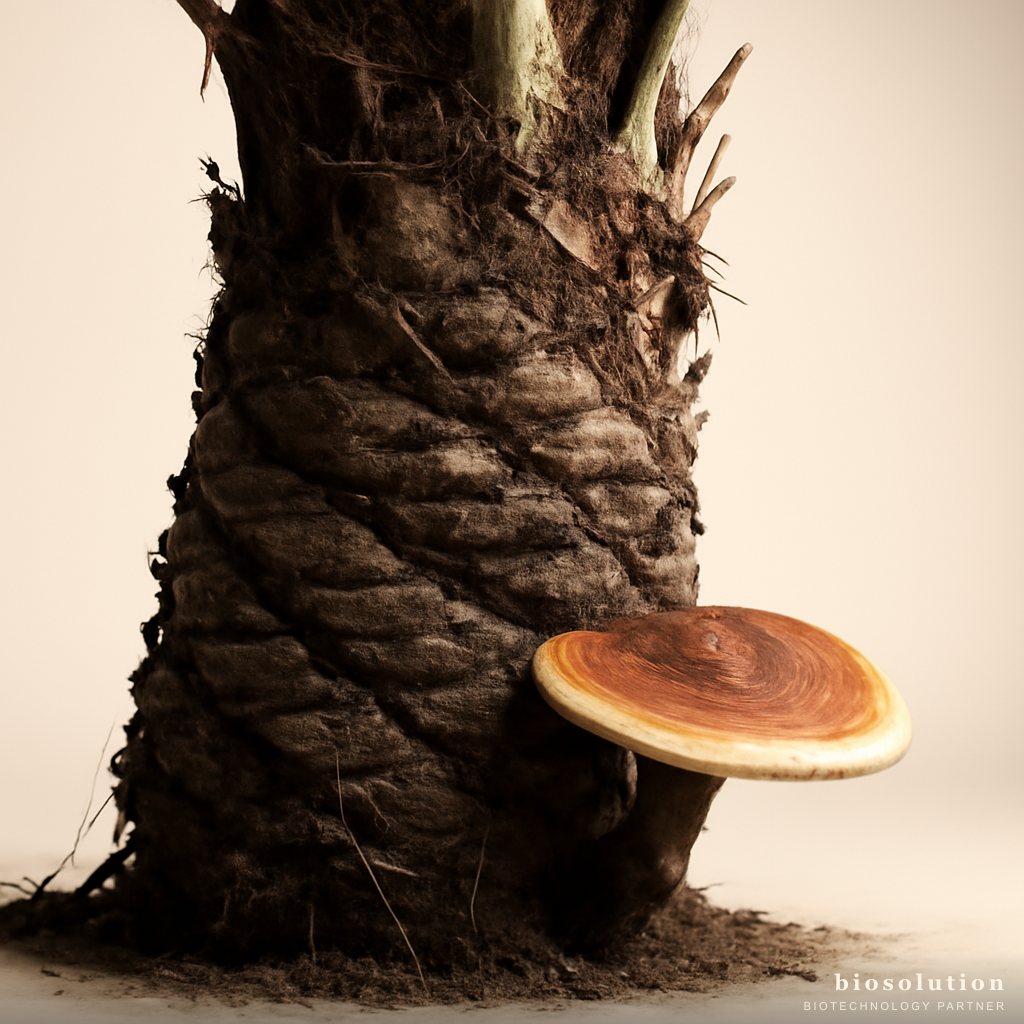
Ganoderma boninense is a soil-borne pathogenic fungus belonging to the Basidiomycota group. Its life cycle begins with basidiospores produced by fruiting bodies (basidiocarps) on the base of infected palm trunks. These spores spread via wind and water, infecting wounds on roots or the base of healthy palm trunks. Inside plant tissues, the fungal mycelium grows inter- and intracellularly, degrading lignin and cellulose, causing basal rot. The pathogen can also survive in plant debris in the soil as mycelium or sclerotia for years. This cycle continues indefinitely without control intervention.
Risk Factors and Epidemiology
Several factors increase the risk of Ganoderma boninense infection, including: poorly drained soil, acidic pH, high organic matter content, and monoculture practices. High planting density and a history of replanting on former oil palm land also accelerate spread. Epidemiological studies show that BSR incidence can reach 20-30% in second and third generation plantings.
Symptoms of Basal Stem Rot (BSR) Infection
BSR symptoms are often non-specific in the early stages, making early detection difficult. Infection begins in the roots, causing yellowing, wilting, and frond breakage. In advanced stages, the basal stem rots, turning dark brown to black, and reddish-brown fruiting bodies of Ganoderma with white margins appear. FFB production drops drastically, and trees are prone to falling. Symptoms develop slowly, taking 1-3 years from initial infection to tree death.
Diagnosis and Monitoring
Diagnosis can be done through visual inspection, trunk tapping test (hollow sound), and laboratory analysis using PCR. Routine monitoring every 3 months is highly recommended to detect early infection. BSR severity scores range from 0 (healthy) to 4 (dead).
Economic Threshold of BSR in Oil Palm Plantations
The economic threshold for BSR control is calculated based on FFB yield loss and control costs. Generally, if BSR incidence reaches 10% of the tree population, control measures are mandatory. Losses due to BSR include up to 50% production decline, premature replanting costs (around IDR 20-30 million per hectare), and income loss during the immature period (2-3 years). Biocontrol with routine application every 3 months can suppress BSR progression by 40-60%, making control investment economically viable.
Biocontrol of Ganoderma boninense with Microbial Consortium
The biocontrol approach using biological agents is a sustainable anti-ganoderma palm BSR solution. Anti-Ganoderma Oil Palm Formula from Biosolution contains a consortium of three superior microbial strains:
- Trichoderma harzianum: Acts as a direct mycoparasite, infecting Ganoderma mycelium and degrading its cell wall.
- Gliocladium virens: Produces antibiotic compounds (gliotoxin) that inhibit pathogen growth and compete for space and nutrients in the rhizosphere.
- Bacillus subtilis: Induces systemic resistance (ISR) in oil palm plants and produces antimicrobial lipopeptides.
These three strains work synergistically to suppress Ganoderma populations in soil and plant tissues. Application is done through drenching (50 ml per tree) or trunk injection (20 ml per tree) every 3 months, in the morning before 10 AM to avoid UV light.
Biocontrol Mechanisms
The main mechanisms include mycoparasitism, antibiosis, competition, and induced plant resistance. Trichoderma and Gliocladium directly attack Ganoderma hyphae, while Bacillus triggers production of plant defense compounds. As a result, BSR progression decreases by 40-60%, and the economic lifespan of oil palm trees can be extended by 5-8 years compared to untreated trees.
Integrating Biocontrol into Plantation Management
Biocontrol is not a standalone solution but part of integrated pest management (IPM). Best practice recommendations include:
- Land sanitation: removing and destroying old palm stumps from previous replanting.
- Use of tolerant seedlings.
- Routine biocontrol application from the mature stage onwards.
- Regular monitoring and recording of BSR incidence.
With this integration, the risk of BSR losses can be minimized. For further consultation, contact the Biosolution team via WhatsApp or see product details at Anti-Ganoderma Oil Palm Formula.
Conclusion
Basal stem rot caused by Ganoderma boninense is a serious threat to oil palm plantations. Understanding the life cycle, symptoms, and economic threshold is crucial for control decisions. Biocontrol using a consortium of Trichoderma harzianum, Gliocladium virens, and Bacillus subtilis has proven effective in suppressing BSR progression by 40-60% and extending tree economic lifespan. With routine application every 3 months, B2B oil palm plantations can protect their investment and increase productivity sustainably.
FAQ
1. What is oil palm basal stem rot? Basal stem rot (BSR) is a fungal infection caused by Ganoderma boninense that attacks the base and roots of oil palm, causing rot, yield decline, and tree death. This disease is highly detrimental to oil palm plantations in Southeast Asia.
2. How does anti-ganoderma palm BSR biocontrol work? Biocontrol uses antagonistic microbes such as Trichoderma harzianum, Gliocladium virens, and Bacillus subtilis that directly parasitize, produce antibiotics, and induce plant resistance against Ganoderma. This consortium is applied routinely to suppress pathogen populations.
3. What is the application dosage of Anti-Ganoderma Oil Palm Formula? The application dosage is 50 ml per tree for drenching and 20 ml per tree for trunk injection. Application is done every 3 months in the morning before 10 AM for optimal results.
4. How long is the effectiveness of biocontrol against BSR? With routine application every 3 months, biocontrol can suppress BSR progression by 40-60% and extend the economic lifespan of oil palm trees by 5-8 years compared to untreated trees.
5. Is biocontrol safe for the environment? Yes. The microbes used are natural biological agents that leave no harmful residues, do not damage rhizosphere microflora, and are environmentally friendly. Biocontrol is a sustainable solution aligned with eco-friendly agriculture principles.