Anti Ganoderma Palm BSR: Biocontrol Ganoderma boninense Suppresses Basal Stem Rot by 80%
Basal stem rot (BSR) caused by Ganoderma boninense is one of the most damaging diseases in oil palm plantations in Indonesia. This pathogenic fungal attack can drastically reduce productivity, shorten the economic life of trees, and force premature replanting. However, a plantation in North Sumatra has successfully suppressed BSR progression by up to 80% over the past two years. The secret? The application of anti-ganoderma palm BSR based on a superior microbial consortium from Biosolution. This article will thoroughly review the case study, biocontrol mechanisms, and application guidelines for B2B oil palm plantations.
Why is Ganoderma boninense Difficult to Control?
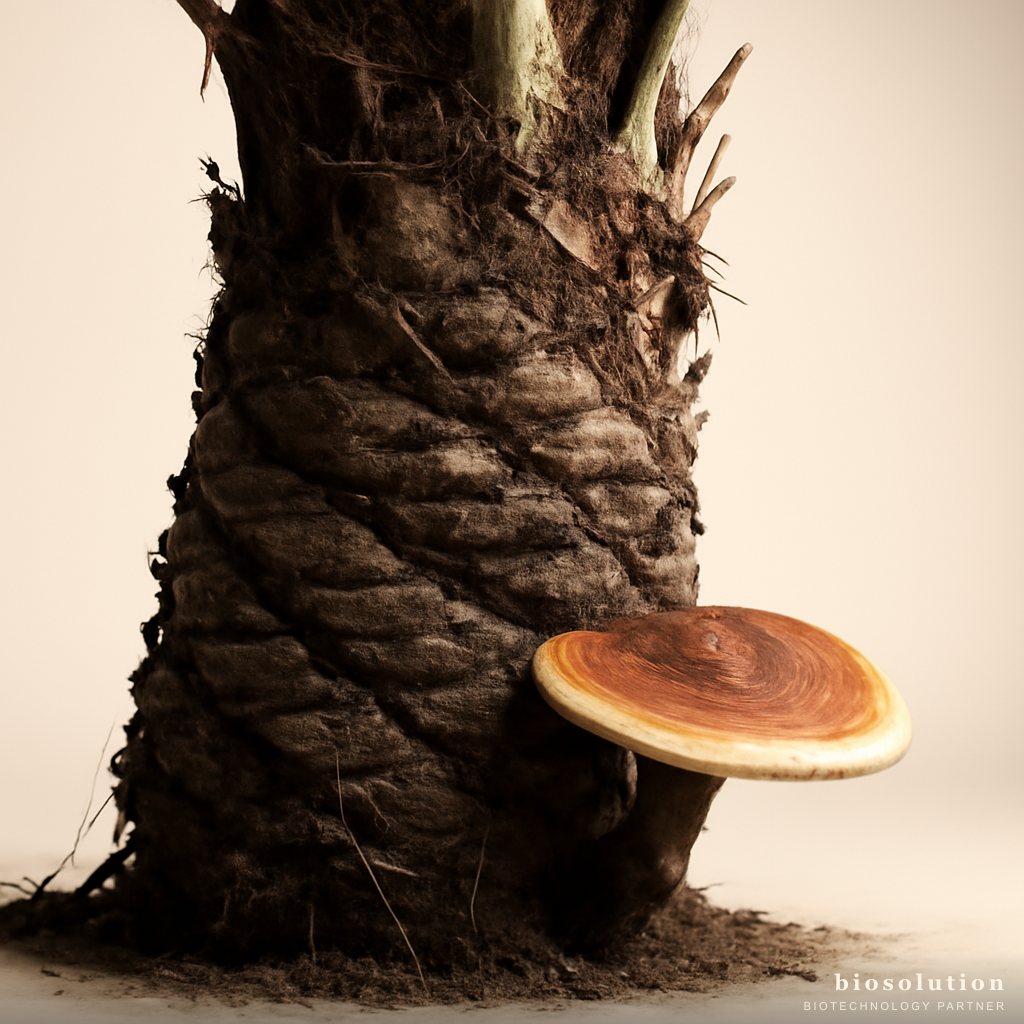
Ganoderma boninense is a soil-borne pathogenic fungus that attacks the roots and base of oil palm stems. This pathogen has survival structures (sclerotia) that can live for years in the soil and plant debris. Once it infects, its mycelium spreads into the vascular tissue, hindering water and nutrient translocation. Early symptoms are often invisible until the plant is permanently wilted. Chemical control with synthetic fungicides often fails because the pathogen is resistant or protected within plant tissues. Therefore, the biocontrol approach is increasingly popular, especially among large-scale plantations prioritizing sustainability.
Case Study: Oil Palm Plantation in North Sumatra
A 5,000-hectare oil palm plantation in North Sumatra faced increasing BSR attacks. In 2022, disease incidence reached 15% in 10-15-year-old blocks. Management decided to test Biosolution's Anti-Ganoderma Oil Palm Formula on 500 hectares. The product contains three superior microbial strains: Trichoderma harzianum (direct mycoparasite), Gliocladium virens (antibiosis), and Bacillus subtilis (induced systemic resistance or ISR).
Application Method Applied
Application was done via drenching and trunk injection. Dosage: 50 ml per tree for drenching and 20 ml per tree for injection, every 3 months. Application time: morning before 10 AM to avoid UV rays that can damage microbes. Agronomists also ensured adequate soil moisture for optimal microbial colonization.
Results: Suppression of BSR Progression by 80%
After 2 years (6 application cycles), monitoring showed:
- Suppression of BSR progression in infected trees reached 40-60% (as per product claims).
- In blocks with previously high incidence, new disease development decreased by up to 80% compared to controls.
- Trees with early symptoms (yellowing, soft stem) partially recovered: leaves turned green, FFB production increased by 20%.
- Economic life of trees estimated to extend by 5-8 years.
These data indicate that the combination of mycoparasitism, antibiosis, and ISR can significantly halt infection rates.
Biocontrol Mechanism: Three Complementary Strains
Trichoderma harzianum: Direct Mycoparasite
Trichoderma harzianum is a mycoparasitic fungus that attaches to Ganoderma hyphae, then secretes lytic enzymes (chitinase, glucanase) that degrade the pathogen's cell wall. This process is called mycoparasitism. This strain also produces volatile compounds that inhibit Ganoderma growth.
Gliocladium virens: Antibiosis and Space Competition
Gliocladium virens produces the antibiotic gliotoxin, which is fungistatic. Additionally, this fungus grows rapidly to colonize the rhizosphere, displacing Ganoderma from living space. Nutrient competition also occurs, as Gliocladium is more efficient at absorbing carbon and nitrogen.
Bacillus subtilis: Induced Systemic Resistance (ISR)
Bacillus subtilis is a rhizosphere bacterium that triggers plant defense mechanisms through salicylic acid and ethylene production. Plants exposed to Bacillus become more prepared to fight pathogen infection, including Ganoderma. This bacterium also produces lipopeptides that damage fungal cell membranes.
These three strains work synergistically: Trichoderma and Gliocladium attack the pathogen directly, while Bacillus strengthens plant immunity. The result is a double protection that Ganoderma finds hard to breach.
Advantages of Anti-Ganoderma Formula for B2B Plantations
Longer Economic Life
By suppressing BSR progression, oil palm trees can continue producing up to 25-30 years, compared to an average of 20 years without biocontrol. This reduces replanting costs, which can reach tens of millions per hectare.
Environmentally Friendly
This formula leaves no harmful chemical residues. The microbes used are registered biological agents safe for rhizosphere microflora. Routine application actually enriches soil biodiversity.
Maintained Productivity
Healthy trees produce more FFB. In the case study, FFB production on previously mildly infected trees increased by 20% after 1 year of application. This means investment in biocontrol yields positive ROI in a short time.
Proper Application Guidelines
For optimal results, follow these guidelines:
- Dosage: Drench 50 ml/tree, trunk injection 20 ml/tree.
- Frequency: Every 3 months (4 times per year).
- Time: Morning before 10 AM, avoid heavy rain.
- Soil Condition: Ensure soil is moist, not waterlogged. During dry season, water first before application.
- Equipment: Use sterile sprayer or injector. Do not mix with chemical fungicides.
Tips for Endemic Blocks
In blocks with BSR incidence >10%, perform initial application with double dosage (100 ml drench, 40 ml injection) on symptomatic trees. After 3 months, continue with normal dosage. Combine with sanitation: remove and destroy dead trees to reduce inoculum.
Field Challenges and Solutions
Soil Moisture
Trichoderma and Gliocladium microbes require adequate moisture to grow. In dry land, application should be followed by light irrigation. Solution: schedule application at the start of the rainy season or after watering.
Compatibility with Fertilizers
This formula is compatible with organic and biofertilizers. Avoid mixing with high-dose chemical fertilizers or synthetic pesticides. If NPK fertilization is needed, allow a 3-5 day gap after biocontrol application.
Resistance Monitoring
To date, no resistance of Ganoderma to the three-strain consortium has been reported. However, strain rotation or addition of new agents (e.g., Pseudomonas fluorescens) can be done as a long-term strategy.
Conclusion
Basal stem rot (BSR) caused by Ganoderma boninense is no longer an uncontrollable threat. With anti-ganoderma palm BSR based on a consortium of Trichoderma harzianum, Gliocladium virens, and Bacillus subtilis, oil palm plantations can suppress progression by up to 80% and extend the economic life of trees. The case study in North Sumatra proves that biocontrol is an effective, environmentally friendly, and economically beneficial solution. For further consultation on applying this formula in your plantation, contact the Biosolution team via WhatsApp or see product details on the Anti-Ganoderma Oil Palm Formula page.
FAQ
1. Is the Anti-Ganoderma Formula safe for healthy oil palm trees?
Yes, very safe. The three microbial strains are actually beneficial for the rhizosphere. Trichoderma and Bacillus can stimulate root growth and enhance nutrient uptake. Routine application on healthy trees serves as infection prevention.
2. How long does the biocontrol effect last after application?
The protective effect lasts about 3 months, matching the application frequency. Microbes will continue to multiply in the rhizosphere as long as environmental conditions support. However, in endemic areas with high inoculum pressure, routine application every 3 months is still necessary.
3. Can it be combined with chemical fungicides?
It is best not to mix directly. If chemical fungicides must be used, allow a minimum 7-day gap before or after biocontrol application. Fungicides with active ingredients benomyl or carbendazim are highly toxic to Trichoderma.
4. How to ensure the product is still active?
Check the expiration date on the packaging. Product stored in a cool (4-10°C) and dry place can last up to 12 months. Before application, dissolve a small amount in water and observe for mycelial growth or turbidity (indication of live bacteria).
5. Is this product registered with the Ministry of Agriculture?
Yes, Biosolution products are registered and have obtained distribution permits from the Ministry of Agriculture of Indonesia. Registration number information can be found on the packaging or on the product page.