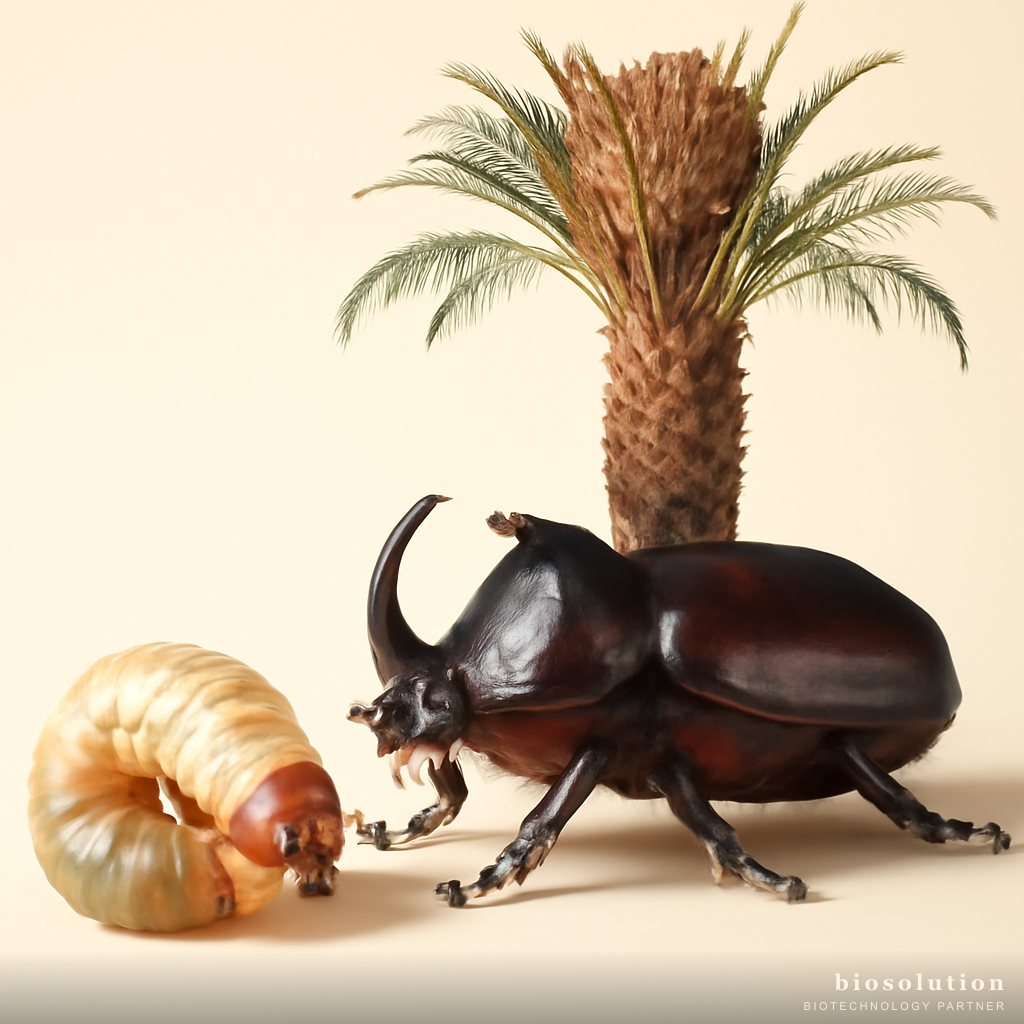
Anti Oryctes Palm Weevil: Effective Biocontrol for Oil Palm Plantations
The palm crown borer beetle, Oryctes rhinoceros, is one of the most damaging pests in Indonesian oil palm plantations. This insect can cause severe damage to young and mature plants, reduce production, and even kill plants. To overcome this, a biocontrol approach using biological agents such as Metarhizium anisopliae offers an environmentally friendly solution proven to be effective. This article thoroughly discusses the life cycle, symptoms of attack, economic threshold, and how the anti oryctes palm weevil based on entomopathogenic fungi can naturally suppress pest populations.
Life Cycle of Oryctes rhinoceros
Understanding the pest's life cycle is the first step to effective control. Oryctes rhinoceros undergoes complete metamorphosis (holometabolous) consisting of four stages: egg, larva, pupa, and imago (adult).
Eggs
Adult females lay eggs in places rich in organic matter, such as piles of empty oil palm bunches, decaying oil palm trunks, or other plantation waste. The eggs are small, yellowish-white, and hatch within 8–12 days.
Larvae
Larvae or grubs are C-shaped, dirty white with a brown head. The larval stage lasts 3–4 months, consisting of three instars. Larvae feed on decaying organic matter, including dead oil palm roots and trunks. At this stage, larvae are highly susceptible to attack by entomopathogenic fungi such as Metarhizium anisopliae.
Pupae
After reaching the final instar, larvae make a cocoon from soil and fibers, then pupate. The pupal stage lasts about 2–3 weeks. At this stage, the pest is inactive and does not feed, but remains susceptible to pathogens.
Imago (Adult)
Adult beetles emerge from pupae and are active at night. Males and females mate, then females search for places to lay eggs. Adult beetles attack the palm crown by boring into the stem, causing characteristic damage. Adult beetles can live up to 4–6 months.
Symptoms of Attack and Damage to Oil Palm Plants
The symptoms of Oryctes rhinoceros attack are very characteristic and easy to recognize. Adult beetles bore into the palm crown, leaving triangular or crescent-shaped holes on unopened fronds. Severe attacks cause fronds to break, growth to be stunted, and can cause death in young plants.
In mature plants, attack reduces leaf surface area, disrupting photosynthesis, leading to decreased FFB (Fresh Fruit Bunch) production. Additionally, the boreholes become entry points for other pathogens such as Ganoderma fungus and bacteria.
Economic Threshold and Monitoring
The economic threshold (ET) is the pest population that must be controlled so that losses do not exceed control costs. For Oryctes rhinoceros, the ET is determined based on the number of adult beetles caught in traps or the percentage of plants attacked. Generally, if >5% of plants are attacked or >1 beetle per trap per week is found, control measures need to be taken.
Routine monitoring using pheromone traps or light traps is highly recommended. Monitoring data helps determine the right time for biocontrol application.
Biocontrol with Metarhizium anisopliae
One of the most effective biological agents for controlling Oryctes rhinoceros is the fungus Metarhizium anisopliae. This fungus is entomopathogenic, meaning it can infect and kill insect pests. Its mechanism begins when fungal spores attach to the cuticle of larvae or adult beetles, then germinate and penetrate the host's body. Inside the body, the fungus multiplies, produces toxins, and eventually kills the host within a few days. After death, the host's body is covered with white mycelium and produces new spores that can infect other pests.
Advantages of Metarhizium anisopliae
- Specific: Only attacks target insects, harmless to humans, animals, and the environment.
- Environmentally friendly: Leaves no harmful residues.
- Can be combined: Can be integrated with other controls such as cultural practices and traps.
- Long-term effective: Fungal populations can persist in the environment if conditions support.
Anti-Palm Weevil Formula: A Practical Solution
Biosolution presents the Anti-Palm Weevil Formula containing pure Metarhizium anisopliae at high concentration. This product is specially formulated to control Oryctes rhinoceros in both larval and adult stages.
Application Method
The product is applied by sprinkling on piles of empty oil palm bunches, trunk waste, or other beetle breeding areas. The recommended dose is 200 grams per cubic meter of waste pile. Application is done every 30 days, preferably in the afternoon to avoid UV light that can damage fungal spores.
Effectiveness
Regular use can suppress beetle populations by 70–80%, protect young palm crowns, and reduce dependence on chemical pesticides. This product can be integrated into an integrated pest management (IPM) program for oil palm plantations.
Integration with Other Plantation Practices
Biocontrol does not stand alone. For optimal results, combine with:
- Field sanitation: Clean up waste piles and dead oil palm trunks that serve as breeding sites.
- Pheromone traps: Install traps to monitor and catch adult beetles.
- Planting cover crops: Reduce pest populations by providing habitat for natural enemies.
Conclusion
The palm crown borer beetle Oryctes rhinoceros is a serious threat to oil palm productivity. By understanding its life cycle, symptoms, and economic threshold, control can be carried out precisely. Biocontrol using Metarhizium anisopliae in the Anti-Palm Weevil Formula from Biosolution offers an effective, environmentally friendly, and sustainable solution. Regular application at the recommended dose can significantly suppress pest populations.
For more information about the product and its use, consult with Biosolution's technical team via WhatsApp or visit the product page Anti-Palm Weevil Formula.
FAQ
How does Metarhizium anisopliae kill Oryctes beetles?
The fungus Metarhizium anisopliae infects larvae or adult beetles through direct contact. Spores attach to the cuticle, germinate, and penetrate the body. Inside the body, the fungus produces toxins that cause death within 3–7 days. Subsequently, the fungus grows out and produces new spores to infect other pests.
Is the Anti-Palm Weevil Formula safe for plants and workers?
Yes, this product is safe because it only attacks target insects. Metarhizium anisopliae is harmless to humans, animals, and plants. However, use personal protective equipment during application to avoid mild irritation from dust.
When is the best time to apply the product?
Application should be done in the afternoon to avoid direct sunlight that can damage fungal spores. Also, ensure no rain is expected so spores are not washed away.
What is the recommended dose per hectare?
Dose is 200 grams per cubic meter of waste pile. If waste is scattered, calculate the total volume of breeding areas. For large areas, consult with a Biosolution technician for the correct dose.
Can this product be used with chemical pesticides?
It is best to avoid mixing with chemical fungicides as they can kill the fungus. If pesticides are necessary, allow a minimum interval of 3 days before or after biocontrol application.