Aphid and Whitefly Control: Biocontrol with Biological Formula
Aphids and whiteflies are major pests in horticultural crops, not only damaging plants directly by sucking cell sap but also acting as vectors for various plant viruses. Chemical control is often ineffective due to resistance and negative impacts on natural enemies. Therefore, aphid and whitefly control through a biocontrol approach is the right solution. Biosolution presents the Anti-Aphid & Whitefly Formula, a biological product based on entomopathogenic fungi that can effectively and environmentally control pest populations.
Why Are Aphids and Whiteflies a Serious Problem?
Aphids (Aphididae) and whiteflies (Aleyrodidae) are soft-bodied insects that attack various horticultural crops such as chili, tomato, cucumber, and leafy vegetables. Both pests have short life cycles and high reproductive capacity, so their populations can explode in a short time. Direct damage occurs as the pests suck phloem sap, causing leaves to yellow, curl, and plant growth to be stunted. More dangerously, whiteflies are the main vectors of geminiviruses (such as yellow leaf curl virus in chili), while aphids transmit mosaic viruses and others. Losses from pest attacks can reach 50-80% if not properly controlled.
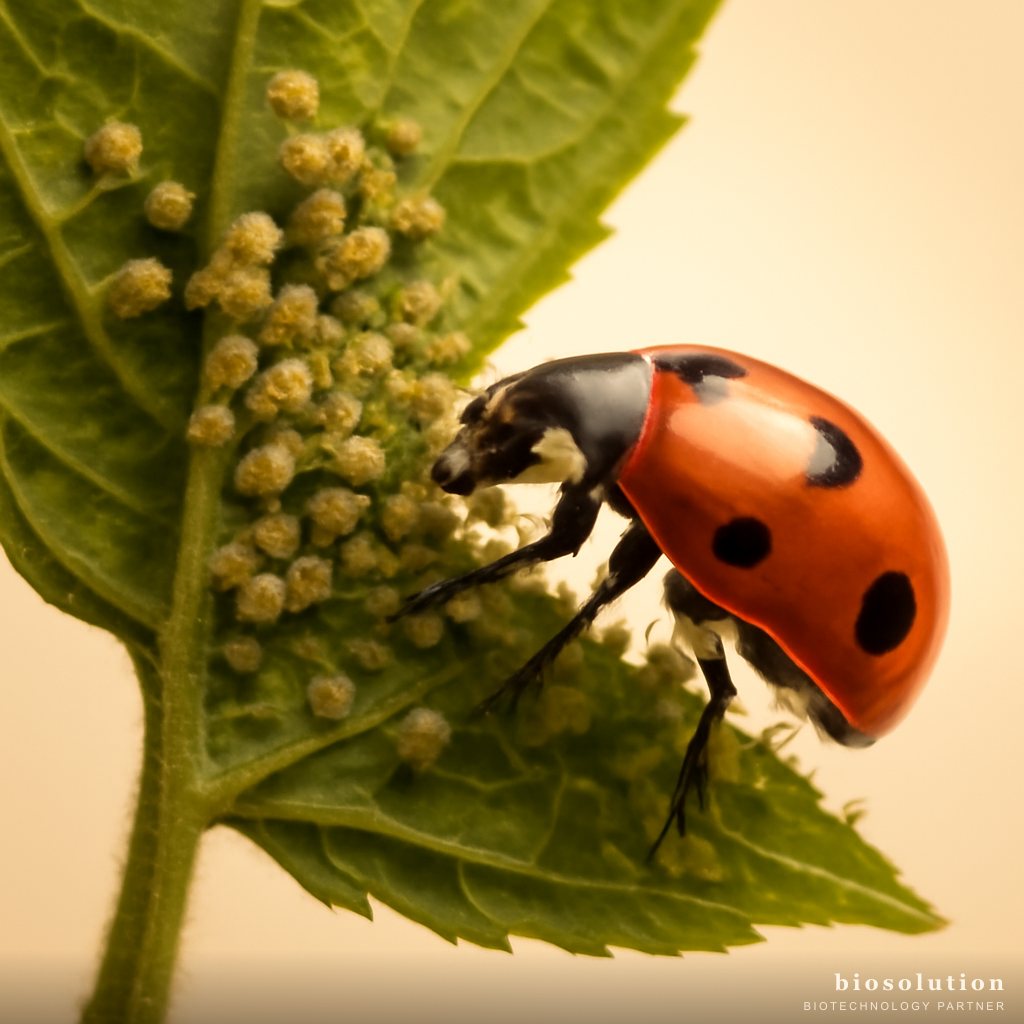
The use of synthetic chemical insecticides is often the first choice for farmers. However, resistance to active ingredients such as imidacloprid, pyrethroids, and organophosphates has been widely reported. Additionally, chemical insecticides kill natural enemies such as predators (Coccinellidae beetles, syrphid larvae) and parasitoids (Aphidius, Encarsia), causing pest populations to actually increase after application. Therefore, biocontrol based on entomopathogenic fungi is an effective and sustainable alternative.
Biocontrol of Aphids and Whiteflies with Entomopathogenic Fungi
Entomopathogenic fungi are microorganisms that naturally infect and kill insect pests. Their mechanism of action involves penetrating the insect cuticle, making them effective against insects already resistant to chemical insecticides. The Anti-Aphid & Whitefly Formula contains two superior fungal strains: Verticillium lecani and Cordyceps spp. Both have high specificity for soft-bodied insects like aphids and whiteflies.
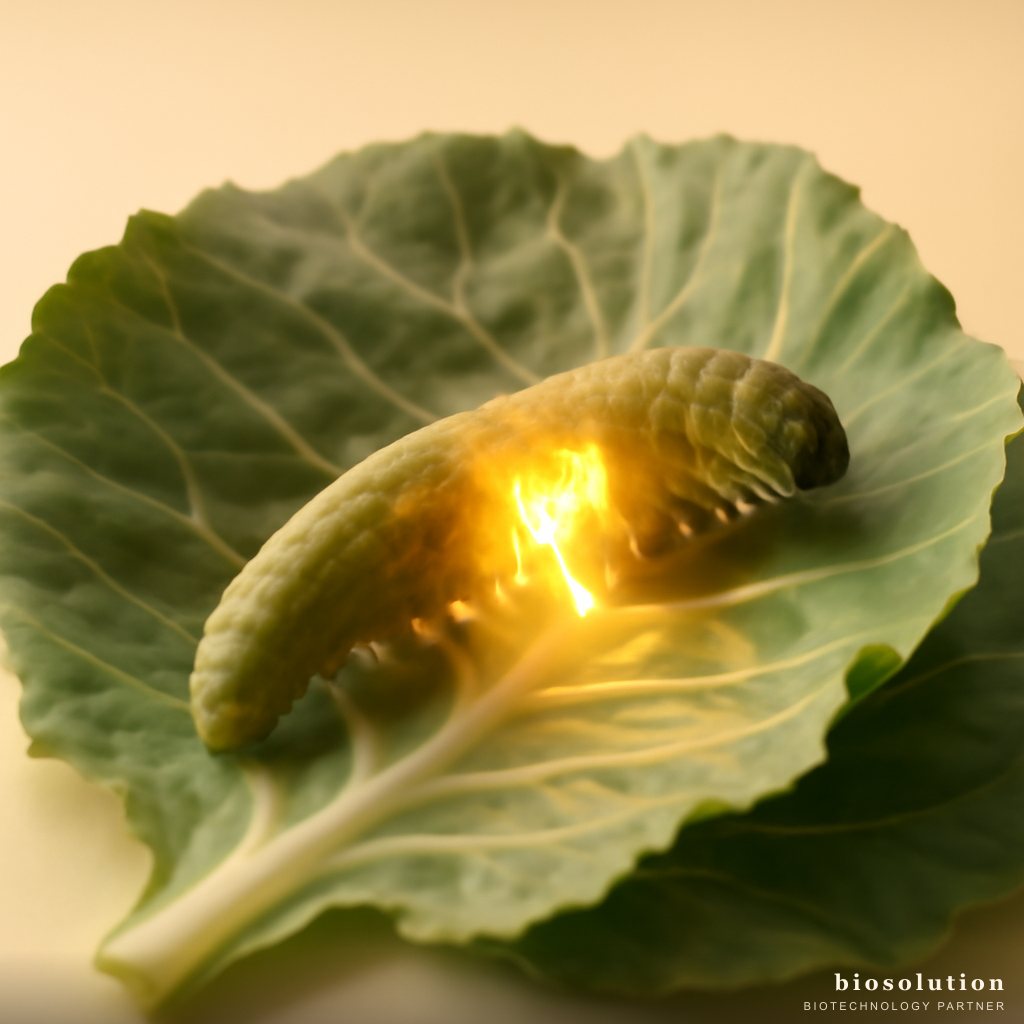
Verticillium lecani (synonym Lecanicillium lecanii) is known as a biological agent effective in controlling aphids and whiteflies. This fungus infects through spores that attach to the cuticle, then germinate and penetrate the insect's body. Once inside, the fungus multiplies in the hemolymph, producing toxins that cause death within 3-7 days. Cordyceps spp. works similarly but has advantages under high humidity conditions. Both fungi can persist in the environment and leave residues that are safe for plants and mammals.
Advantages of the Anti-Aphid & Whitefly Formula
This product is specially formulated for application on horticultural crops. Here are the main advantages:
- Effective against aphids and whiteflies: Both fungal strains work synergistically to infect various pest stages, from nymphs to adults.
- Controls insect-vectored viruses: By suppressing vector populations, the risk of virus transmission such as geminiviruses and mosaic viruses is significantly reduced.
- Reduces damage from whiteflies: Whitefly-infested leaves excrete honeydew, which promotes sooty mold growth. This product reduces honeydew excretion.
- Extends the economic life of plants: Healthy plants can produce longer and more optimally.
- Safe for organic farming: Made from natural ingredients, leaves no harmful residues, and does not disturb natural enemies.
Proper Application for Maximum Results
Application of the Anti-Aphid & Whitefly Formula must be done correctly for the fungi to work optimally. Here are technical guidelines:
- Dosage: 3 ml per liter of water (equivalent to 15 ml per 5-liter tank).
- Method: Spray evenly over all parts of the plant, especially the underside of leaves (under leaf) because whiteflies and aphids often hide on the lower leaf surface.
- Frequency: At high populations, apply every 5 days. If the population is under control, the interval can be extended to 7-10 days.
- Application time: Late afternoon before sunset, when relative humidity (RH) > 70%. High humidity is required for fungal spore germination.
- Combination: Can be combined with other biological agents such as Beauveria bassiana or Metarhizium anisopliae for a broader spectrum. Avoid mixing with chemical fungicides as they can inhibit fungal growth.
Integrated Pest Management (IPM) Strategy for Aphids and Whiteflies
Biocontrol with the Anti-Aphid & Whitefly Formula should be integrated into an Integrated Pest Management (IPM) program. Here are strategic steps:
- Monitoring: Conduct regular weekly observations. Use yellow sticky traps to monitor whitefly populations. Count aphid populations on shoots and young leaves.
- Preventive measures: Use silver plastic mulch to reduce whitefly populations. Plant refugia such as sunflowers or marigolds as food sources for natural enemies.
- Biocontrol application: When populations reach the control threshold (e.g., 5 aphids per leaf for chili), immediately apply the Anti-Aphid & Whitefly Formula.
- Conservation of natural enemies: Avoid using broad-spectrum insecticides. Natural enemies such as ladybugs, syrphid larvae, and parasitoids will help suppress pest populations.
- Rotation of biological agents: Use products with different fungal strains each growing season to prevent resistance.
Conclusion
Aphids and whiteflies are serious threats to horticultural productivity. Biological control with aphid and whitefly control based on entomopathogenic fungi such as Biosolution's Anti-Aphid & Whitefly Formula offers an effective, safe, and sustainable solution. With Verticillium lecani and Cordyceps spp., this product can control pest populations while reducing the risk of virus transmission. For optimal results, application must be done correctly according to dosage and timing, and integrated into an IPM program. Consult your needs with the Biosolution team or see other products.
FAQ
1. Is the Anti-Aphid & Whitefly Formula safe for fruit and vegetable crops?
Yes, this product is safe for all horticultural crops, including fruits and vegetables. It leaves no harmful residues and can be used up to harvest. It is very suitable for organic farming.
2. How long after application do the pests start to die?
Pest death begins to be seen 3-7 days after application, depending on environmental conditions such as temperature and humidity. At RH > 70% and temperatures of 25-30°C, the fungi work faster.
3. Can this product be mixed with chemical pesticides?
It is best not to mix with chemical fungicides as they can inhibit fungal growth. However, it can be combined with botanical insecticides or other biological agents such as Beauveria bassiana.
4. Is this product effective against resistant whiteflies?
Yes, because the mechanism of action of entomopathogenic fungi is different from chemical insecticides, making it effective against pests that are already resistant to certain active ingredients.
5. How should the product be stored?
Store in a cool, dry place, protected from direct sunlight. The ideal storage temperature is 4-10°C to maintain spore viability. Do not freeze.