Bactrocera Fruit Fly Control: Powerful Solution for Mango & Guava
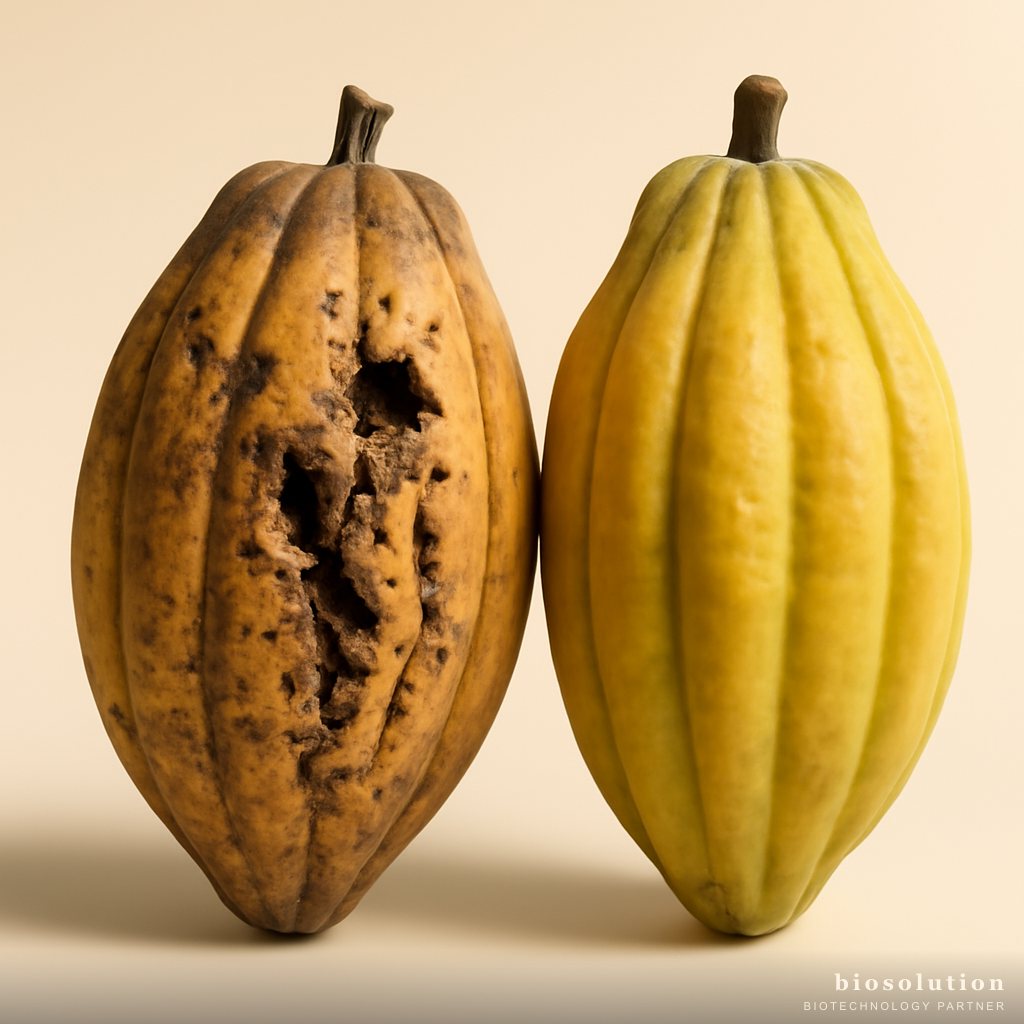
Bactrocera fruit fly is a scourge for mango and guava farmers in Indonesia. Its attack causes fruit rot, drop, and crop failure. Continuous use of chemical pesticides triggers resistance, making the pest increasingly difficult to control. This article thoroughly examines the phenomenon of Bactrocera fruit fly resistance and offers an effective and environmentally friendly biotechnological solution: Bactrocera fruit fly control based on biological agents.
Why Chemical Pesticides Fail to Control Bactrocera Fruit Fly?
Synthetic chemical pesticides have long been a mainstay for farmers. However, in recent years, their effectiveness has drastically declined. The phenomenon of Bactrocera fruit fly resistance to organophosphate, pyrethroid, and neonicotinoid insecticides has been reported in various fruit-producing regions in Indonesia. Research from Brawijaya University (2023) shows that Bactrocera dorsalis populations in East Java have developed resistance up to 50-fold to malathion.
Resistance Mechanisms in Bactrocera
Resistance occurs through several mechanisms:
- Enzymatic detoxification: Fruit flies produce enzymes such as esterases and glutathione S-transferases that break down toxins.
- Target site insensitivity: Mutations in sodium channels or acetylcholinesterase prevent insecticides from binding to their targets.
- Avoidance behavior: Fruit flies learn to avoid sprayed areas.
As a result, farmers tend to increase dosage or spray frequency, which accelerates resistance and pollutes the environment. Fruits exposed to chemical residues also struggle to meet strict export market standards. This is why a smarter new approach is needed: biological control.
Understanding the Life Cycle of Bactrocera Fruit Fly for Targeted Control
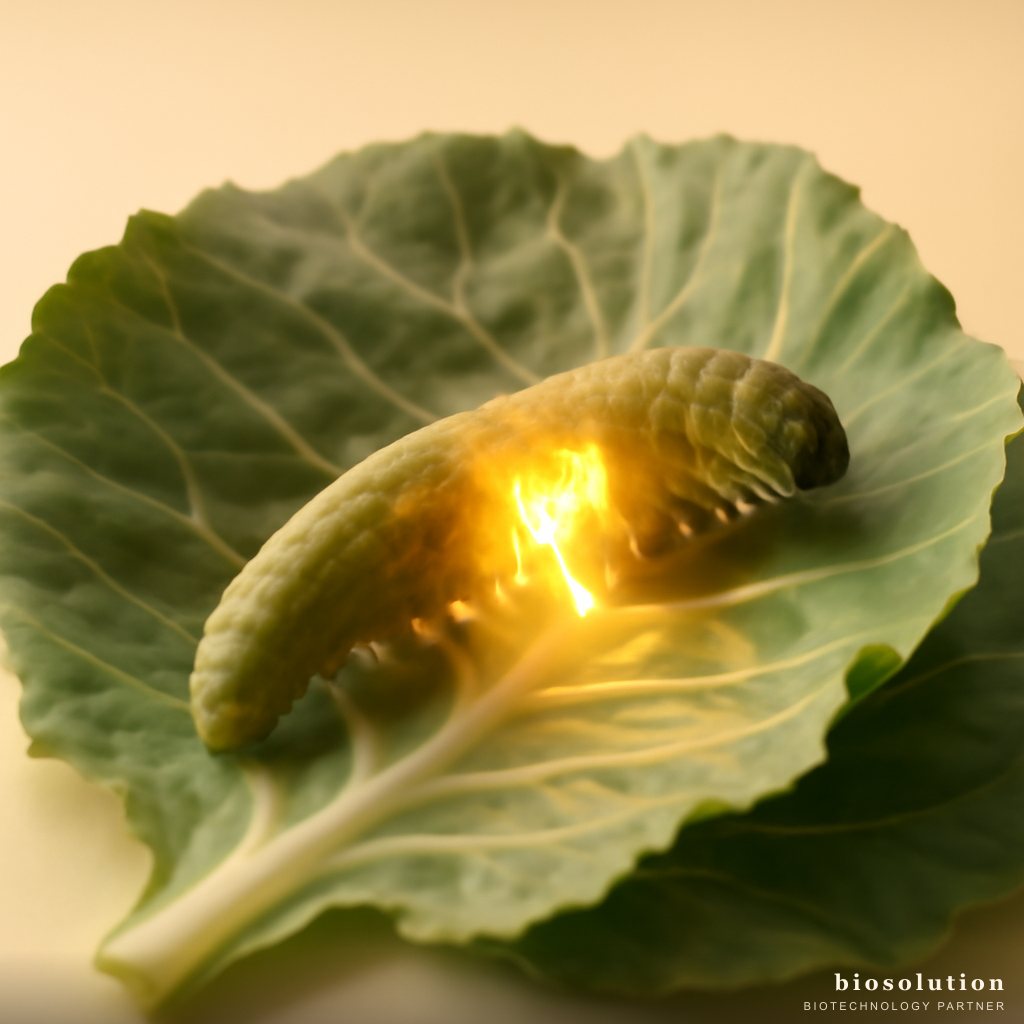
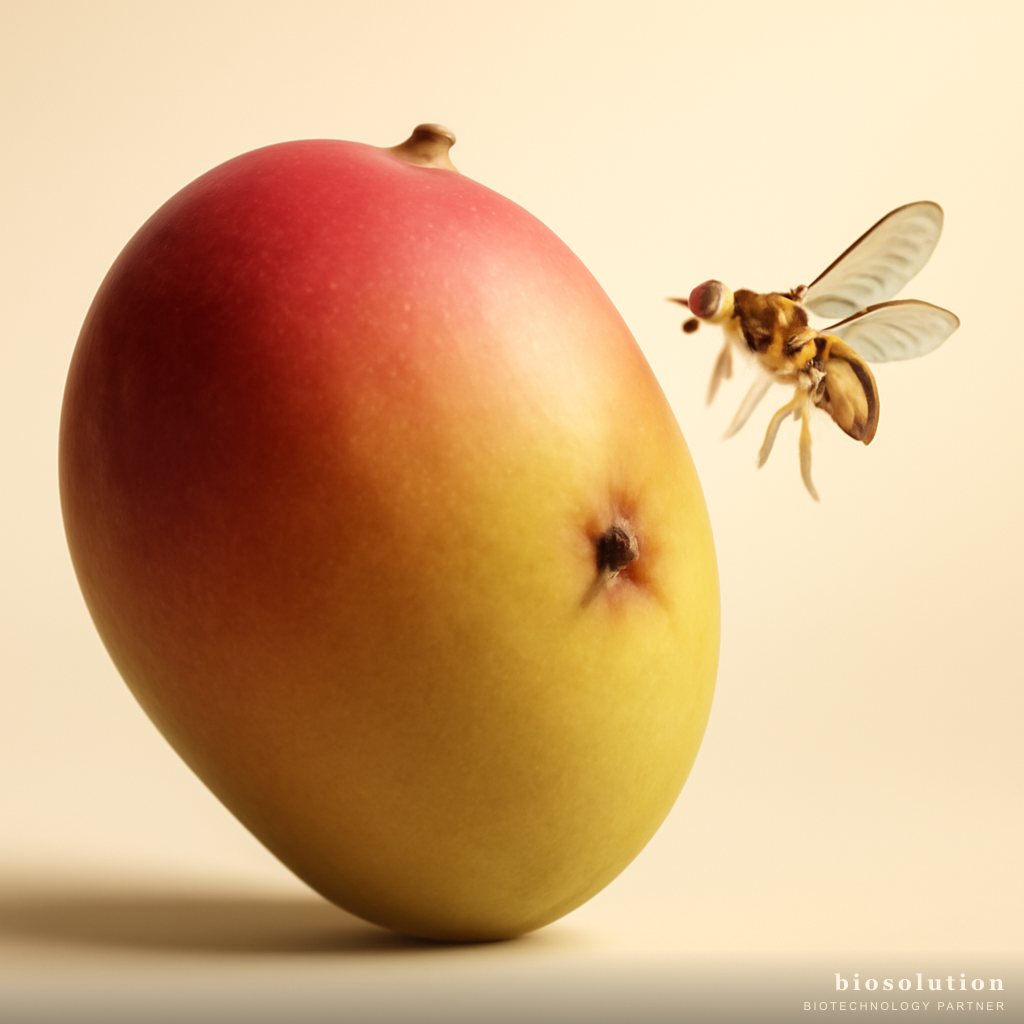
For effective control, we must understand the Bactrocera life cycle. Female fruit flies pierce ripe fruit to lay eggs. After hatching, larvae burrow into the fruit flesh, causing rot. Larvae then fall to the ground, pupate in the soil, and emerge as adult flies.
Weak Point: Pupal Stage in Soil
The pupal stage is the most vulnerable because fruit flies cannot move and are located in a concentrated area (tree drip line). Unfortunately, chemical pesticides are rarely applied to the soil as it is considered impractical. However, with biological agents like Metarhizium anisopliae, we can directly attack the pupae.
Biosolution Anti-Fruit Fly Formula: How It Works and Advantages
Biosolution presents Anti-Fruit Fly Formula specifically formulated to control Bactrocera spp. This product contains Metarhizium anisopliae, an entomopathogenic fungus that infects pupae in the soil.
Mechanism of Action of Metarhizium anisopliae
Fungal spores germinate upon contact with the pupal cuticle, then penetrate the body and produce lethal toxins. Within 3-7 days, infected pupae die and their bodies become sources of new spores. With regular application, fruit fly populations will drastically decrease.
Advantages of Using Anti-Fruit Fly Formula
- Significant reduction in fruit fly attack: Field trials in the mango center of Indramayu showed an 80% reduction in attack after 3 months of application.
- Helps meet export standards: Fruits are free of chemical residues, meeting export requirements to the European Union and Japan.
- Reduces chemical attractants: No need for toxic traps, just soil application.
- Safe for organic farming: Registered as an organic input, does not harm natural enemies.
Easy Application Method
Simply drench 5 ml of product per liter of water into the tree drip line (1 liter per tree) every 30 days. Apply in the morning or evening to avoid UV light. The product is available in practical packaging and has proven effective in various regions.
Case Study: Success of Guava Farmers in Demak
Mr. Slamet, a crystal guava farmer in Demak, Central Java, experienced crop failure due to fruit flies for 2 years. After using the Anti-Fruit Fly Formula, attacks dropped by 60% in the first 2 months, and harvested fruit reached 90% export quality. "I no longer need to spray chemical pesticides every week. Just drench the soil once a month, the results are amazing," he said.
Comparison with Other Control Methods
| Method | Long-term Effectiveness | Environmental Impact | Cost |
|---|---|---|---|
| Chemical pesticides | Declining (resistance) | High | Expensive (repeated spraying) |
| Attractant traps | Moderate (adults only) | Low | Moderate |
| Anti-Fruit Fly Formula | High (population suppression) | Very low | Efficient (once every 30 days) |
From the table above, it is clear that biological control with Metarhizium anisopliae is the most sustainable solution.
FAQ About Bactrocera Fruit Fly Control
Is the Anti-Fruit Fly Formula safe for plants and animals?
Yes, this product only targets the pest insect (fruit fly), not harmful to plants, birds, or mammals. It is even safe for pollinating bees because it is applied to the soil, not to flowers.
How long does it take to see effects?
Improvement begins to be seen after 1-2 months. Fruit fly populations gradually decrease as their life cycle is interrupted. For optimal results, regular application every 30 days is recommended.
Can it be used together with chemical pesticides?
It is best to avoid simultaneous use because chemical fungicides can kill Metarhizium. If necessary, allow a minimum interval of 7 days.
Is this product available in agricultural stores?
Yes, this product is distributed at Biosolution partner agricultural stores and can be purchased online. You can also consult directly with our team for dosage recommendations based on your field conditions.
How should it be stored?
Store in a cool, dry place, away from direct sunlight. In sealed packaging, the product lasts up to 1 year.
Conclusion
The phenomenon of Bactrocera fruit fly resistance to chemical pesticides demands a change in control strategy. Biosolution's Anti-Fruit Fly Formula offers a biological solution that is effective, safe, and sustainable. By attacking the pupal stage in the soil using Metarhizium anisopliae, this product can significantly suppress fruit fly populations, helping mango and guava farmers achieve export-quality harvests. Don't let fruit flies continue to harm you. Switch to biological control now!
For more information or purchase, contact us via WhatsApp or visit the product page.