Bactrocera Fruit Fly Control: Biological Formula for Mango and Guava
Fruit flies Bactrocera spp. are major pests of mango and guava plants. Their attacks cause fruit rot, premature drop, and economic losses of up to 60% if uncontrolled. Continuous use of chemical insecticides triggers resistance and residues that hinder exports. Biosolution presents the Anti-Fruit Fly Formula, a biopesticide based on Metarhizium anisopliae that attacks fly pupae in the soil. This article thoroughly discusses application, dosage, timing, and adjuvant combinations for maximum protection.
Why Are Bactrocera Fruit Flies Difficult to Control?
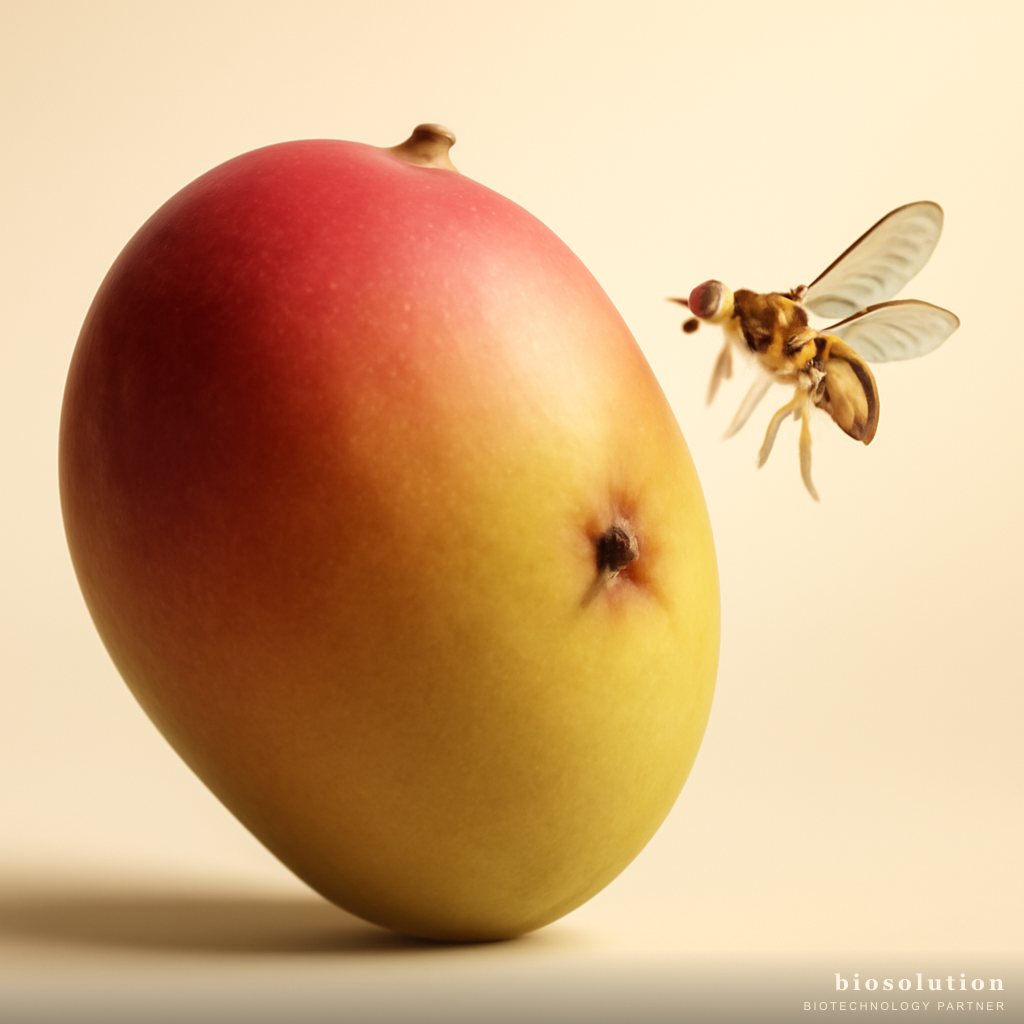
Female fruit flies puncture fruit to lay eggs, and the hatching larvae damage the fruit flesh from within. Their rapid life cycle (3-4 weeks) and long-distance flight ability often cause chemical control to fail. Additionally, larvae are protected inside the fruit, making contact insecticide spraying ineffective. A more strategic approach is to break the life cycle at the pupal stage in the soil. This is where Metarhizium anisopliae plays a role: this entomopathogenic fungus infects pupae, preventing the emergence of new adult flies.
Mechanism of Action of Anti-Fruit Fly Formula
The Anti-Fruit Fly Formula contains Metarhizium anisopliae conidia that remain viable in the formulation. When drenched into the soil around the tree's drip line, the conidia germinate and penetrate the cuticle of fruit fly pupae. The fungus then grows inside the pupa's body, producing toxins and enzymes that are lethal. Infected pupae become hard (mummified) and unable to become adult flies. This process takes 3-7 days depending on soil moisture and temperature. The advantage of this method is that it does not harm non-target insects, is safe for pollinators, and is environmentally friendly.
Comparison with Chemical Methods
Chemical insecticides such as organophosphates only kill adult flies, not breaking the cycle. In contrast, the Anti-Fruit Fly Formula works preventively on the pupal stage. Regular use every 30 days can significantly reduce fruit fly populations within 2-3 cycles. Field studies show a reduction in attack intensity of up to 80% after 3 months of consistent application.
Proper Dosage and Application Method
According to Biosolution technical guidelines, the dosage of Anti-Fruit Fly Formula is 5 ml per liter of water, applied as 1 liter per tree to the soil around the tree's drip line (the area under the canopy). Application frequency is every 30 days during the fruiting season. The best time is morning or late afternoon when soil temperature is not too hot and humidity is high, keeping conidia active.
Application Steps:
- Mix 5 ml of Anti-Fruit Fly Formula into 1 liter of water, stir well.
- Drench the solution evenly onto the soil around the tree's drip line, avoid puddling.
- Apply in the morning (06:00-09:00) or late afternoon (15:00-17:00) to avoid direct UV light.
- Repeat every 30 days, especially from fruit development until harvest.
Additional Tips:
- Ensure the soil is not waterlogged, as Metarhizium requires aeration.
- If the soil is dry, water it first with clean water to create optimal moisture.
- Do not mix with chemical fungicides as they can inhibit fungal growth.
Optimal Application Timing Based on Plant Growth Stage
Fruit flies are active year-round, but peak attacks occur when fruit is ripe. Application should begin at the start of fruit formation (2-3 weeks after flowering). For mango, start when fruit is marble-sized. For guava, apply regularly as the plant fruits year-round.
Application Calendar:
- Mango: 1st application when fruit is marble-sized, 2nd after 30 days, 3rd when fruit turns yellow (10 days before harvest).
- Guava: Apply every 30 days throughout the fruiting season, with a 1-month break if no fruit is present.
Combination with Adjuvants for Maximum Effectiveness
To improve adhesion and penetration of conidia into the soil, non-chemical adjuvants such as molasses or brown sugar can be added at a dose of 1-2 ml per liter of water. Sugar serves as a nutrient source for the fungus and helps conidia adhere to soil particles. Avoid oil-based adjuvants as they can inhibit Metarhizium growth.
Example Combination:
- 5 ml Anti-Fruit Fly Formula + 1 ml molasses + 1 liter water.
- Stir well and apply immediately.
Benefits of Using Anti-Fruit Fly Formula
1. Significantly Reduces Fruit Fly Attacks
With regular application, fruit fly populations drop dramatically. Farmers in East Java reported a reduction in rotten fruit from 30% to less than 5% after 3 months.
2. Helps Meet Export Standards
Fruit free of chemical residues more easily meets export requirements to Japan, the European Union, and the United States. The Anti-Fruit Fly Formula is registered as a safe biopesticide for organic farming.
3. Reduces Dependence on Chemical Attractants
Chemical attractants like methyl eugenol only attract male flies, not breaking the cycle. With pupal control, the need for attractants can be reduced by up to 50%.
4. Safe for Organic Farming
Metarhizium anisopliae is a natural soil microorganism, leaving no harmful residues on fruit. Suitable for sustainable agriculture programs.
Case Study: Application on Gedong Gincu Mango
In the Gedong Gincu mango center, farmers complained about Bactrocera dorsalis attacks causing fruit drop. After adopting the Anti-Fruit Fly Formula at a dose of 5 ml/L every 30 days, attack intensity dropped from 45% to 8% within 2 seasons. Harvested fruit had better quality and passed export sorting. Farmers also saved up to 70% on chemical insecticide costs.
Conclusion
Bactrocera fruit flies on mango and guava can be effectively controlled with Biosolution's Anti-Fruit Fly Formula. Soil drench application around the tree's drip line at a dose of 5 ml/L water every 30 days, starting from early fruit formation, can significantly suppress fruit fly populations. Combination with natural adjuvants like molasses enhances effectiveness. This method is safe, environmentally friendly, and helps fruit meet export standards. For optimal results, consult with Biosolution's expert team via WhatsApp or see the product Anti-Fruit Fly Formula for more information.
FAQ
Is the Anti-Fruit Fly Formula safe for other plants?
Yes, Metarhizium anisopliae is specific to insects and not phytotoxic. It is safe to apply to all fruit crops such as mango, guava, citrus, and starfruit.
How long does the effect of Anti-Fruit Fly Formula last in the soil?
Metarhizium conidia can persist for 2-4 weeks in the soil depending on environmental conditions. Therefore, application is repeated every 30 days to maintain a high fungal population.
Can it be mixed with liquid organic fertilizer?
Yes, as long as the fertilizer does not contain fungicides. Mix the Anti-Fruit Fly Formula with liquid organic fertilizer (e.g., POC) and apply together for efficiency.
Do I need to dispose of fruit affected by flies?
Infected fruit should be removed far from the garden or buried in the soil to prevent cycle recurrence. Healthy fruit remains safe for consumption.
Where can I buy the Anti-Fruit Fly Formula?
The product is available at Biosolution partner agricultural stores or can be ordered directly through the website. For bulk purchases, contact the Biosolution sales team.