Beauveria Bassiana Spray: Correct Dosage and Application Schedule for Biological Pest Control
The use of Beauveria bassiana spray as a biological agent is increasingly popular among farmers transitioning to sustainable agriculture. However, many applicators still make mistakes in determining the correct dosage and application schedule of Beauveria bassiana spray, resulting in suboptimal pest control. This article will review 7 common mistakes when applying this entomopathogen and provide proper dosage and schedule guidance based on Biosolution's Broad Spectrum Biological Insecticide Formula.
1. Ignoring Spore Concentration (CFU) in the Product
The first mistake is not paying attention to the number of viable spores (CFU/ml) in the product. Beauveria bassiana and Metarhizium anisopliae must have a minimum concentration of 10⁶ CFU/ml to be effective. Biosolution products are formulated with this concentration per strain. If the product is expired or stored improperly, spores may die and the sprayed dose becomes ineffective. Always check the production date and store in a cool place (4–10°C) to maintain viability.
2. Dosage Too Low or Too High
Many farmers are afraid to use high doses due to cost concerns, or conversely, use excessive doses leading to waste. The recommended dosage for Biosolution products is 2–3 ml per liter of water (or 3–5 g/L for WP formulation). This dose is equivalent to 10⁶ CFU/ml. If the dose is too low, there are not enough spores to infect pests. If too high, efficacy does not significantly increase but costs rise. Use the correct dosage as per the label.
3. Wrong Spraying Time
Beauveria bassiana requires relative humidity >70% for spores to germinate and penetrate the insect cuticle. Spraying during the day when temperatures are high and RH is low causes spores to die quickly. The best time is in the late afternoon towards dusk, when humidity begins to rise. Biosolution products recommend spraying in the afternoon with RH >70% for optimal results.
4. Irregular Application Schedule
Entomopathogens are not instant-acting chemical insecticides. Spores need 3–7 days to infect and kill pests. A single application is not enough. The recommended schedule is every 7–10 days when pest populations increase. A common mistake is spraying only when pests are already abundant, whereas preventive application is more effective. Conduct regular population monitoring and apply when populations start to rise.
5. Ignoring Spraying Technique
Spraying must thoroughly cover the entire plant canopy, especially the underside of leaves where pests often hide. Beauveria bassiana works through direct contact with the insect cuticle. If the spray is uneven, many pests escape. Use a nozzle that produces fine droplets (200–400 microns) and spray until the plant is wet (spray volume 400–600 L/ha depending on plant size).
6. Ignoring Compatibility with Other Products
Some chemical pesticides, especially fungicides, can kill Beauveria bassiana spores. If mixing is necessary, ensure the product is compatible. Biosolution products can be combined with botanical insecticides or other biological agents, but avoid mixtures with fungicides containing copper or sulfur. Always conduct a small-scale compatibility test before wide application.
7. Not Considering Pest Life Cycle
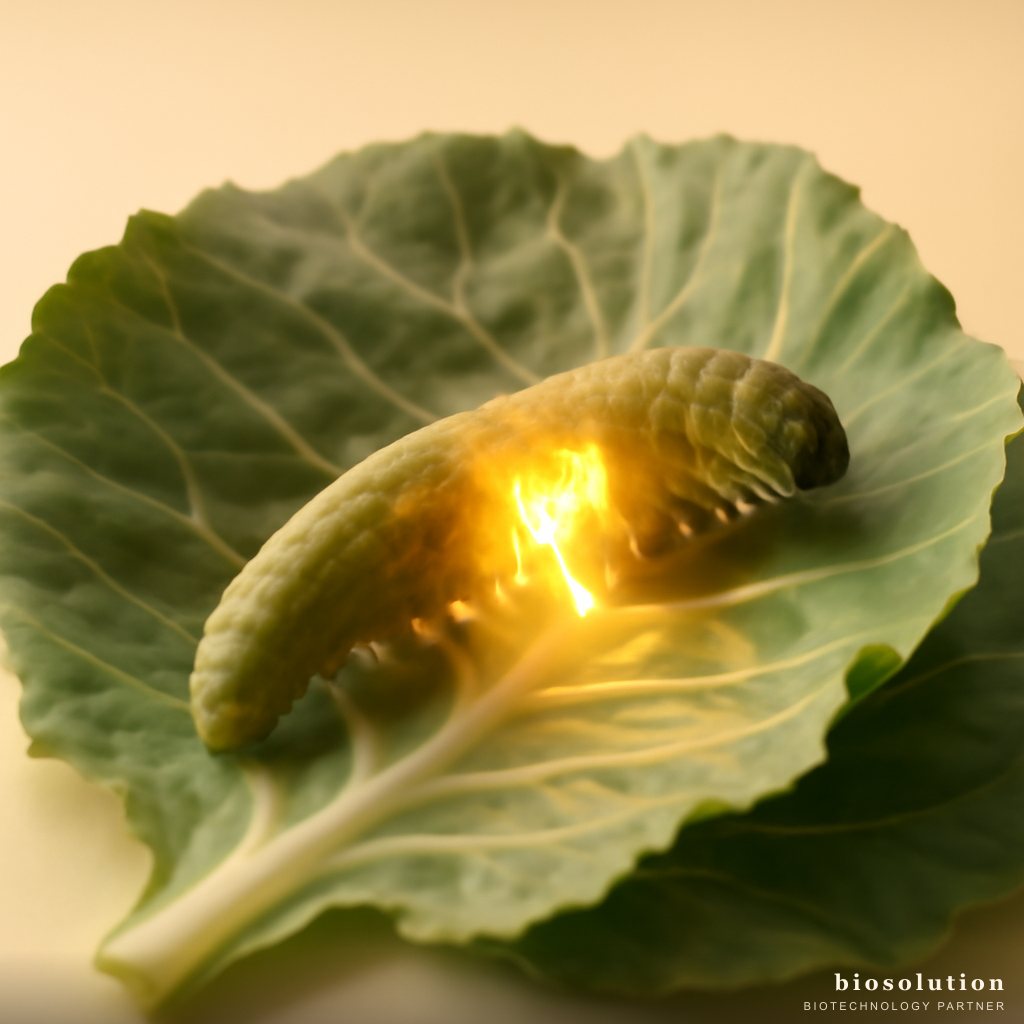
Beauveria bassiana is effective against soft-bodied insects such as caterpillars, aphids, and thrips. However, application must be adjusted to the susceptible pest stage (early instar nymphs or larvae). Adult pests or eggs are more resistant. Biosolution products also contain Metarhizium anisopliae, effective against beetles and soil caterpillars. Identify the target pest and apply during the susceptible stage.
Correct Dosage and Application Schedule Guide
Based on the Broad Spectrum Biological Insecticide Formula, here is a practical guide:
- Dosage: 2–3 ml/L water (or 3–5 g/L for WP). Dissolve in clean water, stir well, and spray immediately (do not store for more than 24 hours).
- Schedule: Every 7–10 days when pest populations begin to increase. If pests are already high, spray twice a week for 2 weeks.
- Time: Afternoon (3:00–5:00 PM) when RH >70% and temperature <30°C.
- Spray volume: 400–600 L/ha for annual crops, 600–800 L/ha for plantation crops.
Mechanism of Action of Entomopathogens
Beauveria bassiana and Metarhizium anisopliae work through several stages:
- Spores attach to the insect cuticle.
- Spores germinate and produce enzymes (protease, chitinase) that penetrate the cuticle.
- Mycelium grows inside the host body, damaging tissues and producing toxins.
- The insect dies within 3–7 days, and mycelium emerges for sporulation on the carcass, spreading new spores.
This process breaks the pest life cycle and provides residual effects for up to 7–10 days.
Conclusion
The success of pest control with Beauveria bassiana spray depends heavily on correct dosage and application schedule. Avoid the 7 common mistakes above to achieve 80–85% efficacy against target pests. Biosolution products are formulated with optimal spore concentration and come with clear application instructions. For further consultation, contact our technical team via WhatsApp. Switch to safe, effective, and environmentally friendly biological control now.
FAQ
1. What is the correct dosage of Beauveria bassiana spray?
The recommended dosage for Biosolution products is 2–3 ml per liter of water (or 3–5 g/L for WP formulation). Ensure the product has a minimum spore concentration of 10⁶ CFU/ml. Stir well and spray immediately after dissolving.
2. When is the best time to spray Beauveria bassiana?
The best time is in the afternoon when relative humidity is >70% and temperature is below 30°C. Avoid spraying during the hot midday sun as UV rays can kill spores.
3. Is Beauveria bassiana safe for humans and animals?
Yes, Beauveria bassiana is selective to insects and not harmful to humans, animals, or plants. Biosolution products have been tested safe and leave no harmful residues on crops.
4. How long does Beauveria bassiana take to kill pests?
The infection process leading to pest death takes 3–7 days depending on pest type and environmental conditions. After death, the pest carcass will be covered with white mycelium and spread new spores.
5. Can Beauveria bassiana be mixed with chemical pesticides?
It is best not to mix with chemical fungicides, especially those containing copper or sulfur, as they can kill spores. Mixing with botanical insecticides or other biological agents is generally safe, but conduct a compatibility test first.