Beauveria bassiana Spray Dosage for Integrated Pest Management
In the era of sustainable agriculture, applicator farmers are required to manage pests without compromising ecosystem health. One increasingly popular solution is the use of biological agents such as Beauveria bassiana. This article will thoroughly discuss effective Beauveria bassiana spray dosage, application schedule, and how to integrate it with natural enemies in the concept of Integrated Pest Management (IPM). We will also introduce Biosolution's Broad-Spectrum Biological Insecticide Formula which combines Beauveria bassiana and Metarhizium anisopliae for optimal results.
Why Beauveria bassiana is Effective for IPM?
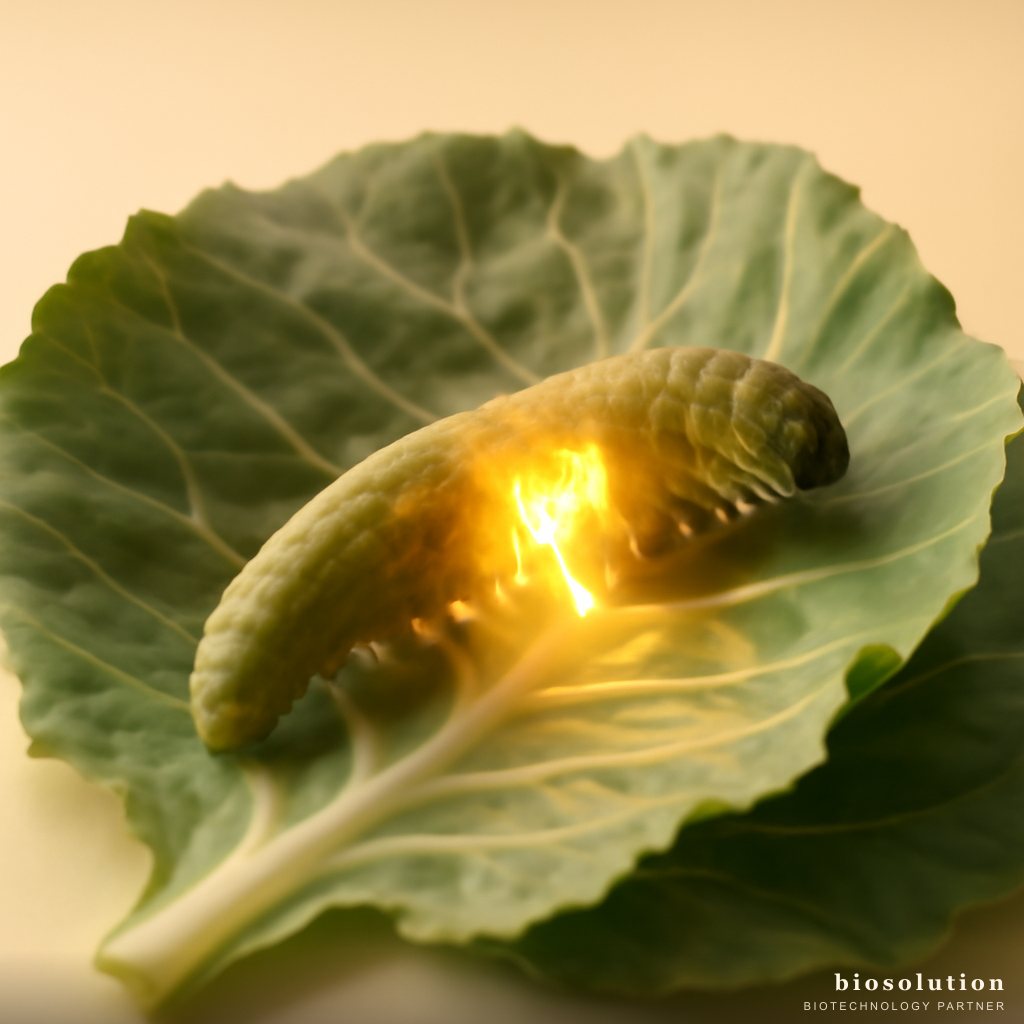
Beauveria bassiana is an entomopathogenic fungus that naturally infects and kills various insect pests. Its mechanism is unique: spores attach to the insect's cuticle, then penetrate using protease and chitinase enzymes. Once inside, mycelium grows within the host's body, causing death within 3–7 days. Not only that, the carcass covered with mycelium will produce new spores, triggering secondary infections in surrounding pest populations. This cycle makes Beauveria bassiana a valuable component of IPM because it leaves no chemical residues and is safe for natural enemies such as predators and parasitoids.
In the context of IPM, Beauveria bassiana can be used together with natural enemies without interfering with each other. For example, Beauveria bassiana spray application does not harm Coccinellidae beetles or parasitoid wasps if applied in the afternoon when they are less active. This distinguishes it from broad-spectrum chemical insecticides that eliminate all insects.
Correct Beauveria bassiana Spray Dosage
The Beauveria bassiana spray dosage depends on the product formulation. For Biosolution's Broad-Spectrum Biological Insecticide Formula, the recommended dosage is 2–3 ml per liter of water (or 3–5 g/L if in wettable powder form). This concentration is equivalent to 10⁶ CFU/ml per strain, ensuring sufficient spore count for optimal infection.
Factors Affecting Dosage
- Pest infestation level: At high populations, use the highest dosage (3 ml/L).
- Pest type: Pests with thick cuticles (beetles) may require higher dosage than soft-bodied pests (aphids).
- Humidity: Beauveria bassiana requires relative humidity >70% for spore germination. Afternoon application when dew begins to form is highly recommended.
- Formulation: Ensure the product contains at least 10⁶ CFU/ml for each strain. Biosolution products meet this standard.
Application Method
Mix the recommended dosage into clean water, stir evenly, then spray onto the entire plant canopy until wet (spray volume about 400–600 L/ha depending on plant density). Use a low-pressure sprayer to avoid damaging spores.
Beauveria bassiana Spray Application Schedule
The Beauveria bassiana spray application schedule needs to be adjusted according to the pest's life cycle and environmental conditions. Here is a general guide:
- Early growing season: Preventive application when plants are 2–3 weeks old to suppress initial pest populations.
- When population increases: Spray every 7–10 days during critical pest growth phases.
- After heavy rain: Rain can wash spores off plant surfaces. If rainfall >10 mm after application, repeat spraying.
- Application time: Afternoon (3:00–5:00 PM) when temperature starts to drop and humidity rises. Avoid application during scorching sun because UV rays can kill spores.
Integration with Natural Enemies
In IPM, Beauveria bassiana can be combined with releases of natural enemies such as Trichogramma spp. (egg parasitoids) or predatory beetles. Since Beauveria bassiana is not toxic to adult natural enemies (unless directly exposed in high concentrations), spray application should be done before releasing natural enemies, with a 1–2 day interval. Alternatively, apply to plant parts that are not natural enemy habitats.
Advantages of the Broad-Spectrum Biological Insecticide Formula
Biosolution's Broad-Spectrum Biological Insecticide Formula contains two superior entomopathogenic strains: Beauveria bassiana and Metarhizium anisopliae. This combination expands the target pest spectrum. Beauveria bassiana is effective against soft-bodied pests such as aphids, caterpillars, and planthoppers, while Metarhizium anisopliae excels in controlling beetles and soil caterpillars.
Key Benefits
- 80–85% efficacy against target pests based on field trials.
- Chemical residue-free, making it safe for consumption and not damaging export markets.
- IPM compatible: Does not kill natural enemies if applied correctly.
- Safe for workers and environment: Does not cause skin irritation or groundwater contamination.
Dual Mode of Action
- Spore attachment to the insect cuticle.
- Enzymatic penetration using chitinase and protease.
- Mycelial growth in the hemolymph, disrupting physiological functions.
- Sporulation on the carcass, producing new spores for further infection.
With two complementary mechanisms, the risk of pest resistance is very low compared to chemical insecticides.
Case Study: Application on Rice and Vegetable Crops
Rice
In rice cultivation, major pests such as brown planthoppers and stem borers can be controlled with Beauveria bassiana spray at 2 ml/L every 7 days when planthopper populations begin to increase. In fields with routine application, planthopper populations dropped by 70–80% within two weeks, with no side effects on predatory spiders.
Vegetables (Chili and Tomato)
Pests such as aphids, thrips, and armyworms on chili and tomato respond well to Beauveria bassiana spray at 3 ml/L. Afternoon application at 7-day intervals suppressed attacks by up to 85%. Farmers reported increased yields because plants were not stressed by chemicals.
FAQ
What is the safe Beauveria bassiana spray dosage for plants?
The safe dosage is 2–3 ml per liter of water (or 3–5 g/L for WP). At this concentration, there is no phytotoxicity to plants. Higher dosages (e.g., 5 ml/L) are still relatively safe but wasteful and do not significantly increase efficacy.
Can Beauveria bassiana be mixed with chemical pesticides?
It is best not to mix directly because chemical fungicides can kill fungal spores. If necessary, use a 3–5 day interval between chemical and biological applications. Beauveria bassiana is compatible with botanical insecticides and other biological agents.
When is the best time to apply Beauveria bassiana spray?
Afternoon (3:00–5:00 PM) when humidity >70% and temperature <30°C. Avoid application during rain or strong wind. Morning application is also possible if the weather is cloudy.
How long does Beauveria bassiana persist in the field?
Spores can survive 3–7 days on leaf surfaces depending on UV exposure. Certain formulations (e.g., oil-based) can extend persistence. Biosolution products are formulated for better stability.
Is Beauveria bassiana safe for humans and animals?
Yes, Beauveria bassiana is classified as Risk Group 1 (not hazardous) by WHO. However, avoid direct contact with eyes and open wounds. Use a mask and gloves during application.
Conclusion
Beauveria bassiana spray at a dosage of 2–3 ml/L and a 7–10 day schedule is a powerful weapon in IPM. Integration with natural enemies further strengthens sustainable pest control. Biosolution's Broad-Spectrum Biological Insecticide Formula, combining Beauveria bassiana and Metarhizium anisopliae, offers high efficacy without chemical residues. For maximum results, consult your specific land needs with the Biosolution expert team via WhatsApp. Get original products and free technical guidance only at Biosolution.