Biocontrol for Aphids and Whiteflies with Integrated Pest Management
Aphids and whiteflies are a nightmare for horticultural farmers. These pests not only suck plant sap, causing wilting, but also act as vectors for deadly viruses such as geminiviruses in chili and tomatoes. Excessive use of chemical insecticides triggers resistance and kills natural enemies. The solution is integrated biocontrol using anti-aphid and whitefly products based on entomopathogenic microbes integrated with natural enemies. This article thoroughly discusses an effective, environmentally friendly, and sustainable Integrated Pest Management (IPM) strategy.
Why Are Aphids and Whiteflies Difficult to Control?
Aphids and whiteflies have a rapid life cycle and high reproductive capacity. A single female whitefly can produce up to 300 eggs in her lifetime. More troublesome, they often hide under leaves, protected from pesticide sprays. Both pests also excrete honeydew, which promotes sooty mold growth, inhibiting photosynthesis. Most dangerously, they transmit viruses persistently or non-persistently. For example, the whitefly (Bemisia tabaci) is the main vector of Tomato yellow leaf curl virus (TYLCV), causing up to 100% losses in tomatoes. Resistance to chemical insecticides is widespread, making biocontrol a rational choice.
Anti-Aphid & Whitefly Formula: Superior Entomopathogenic Microbes
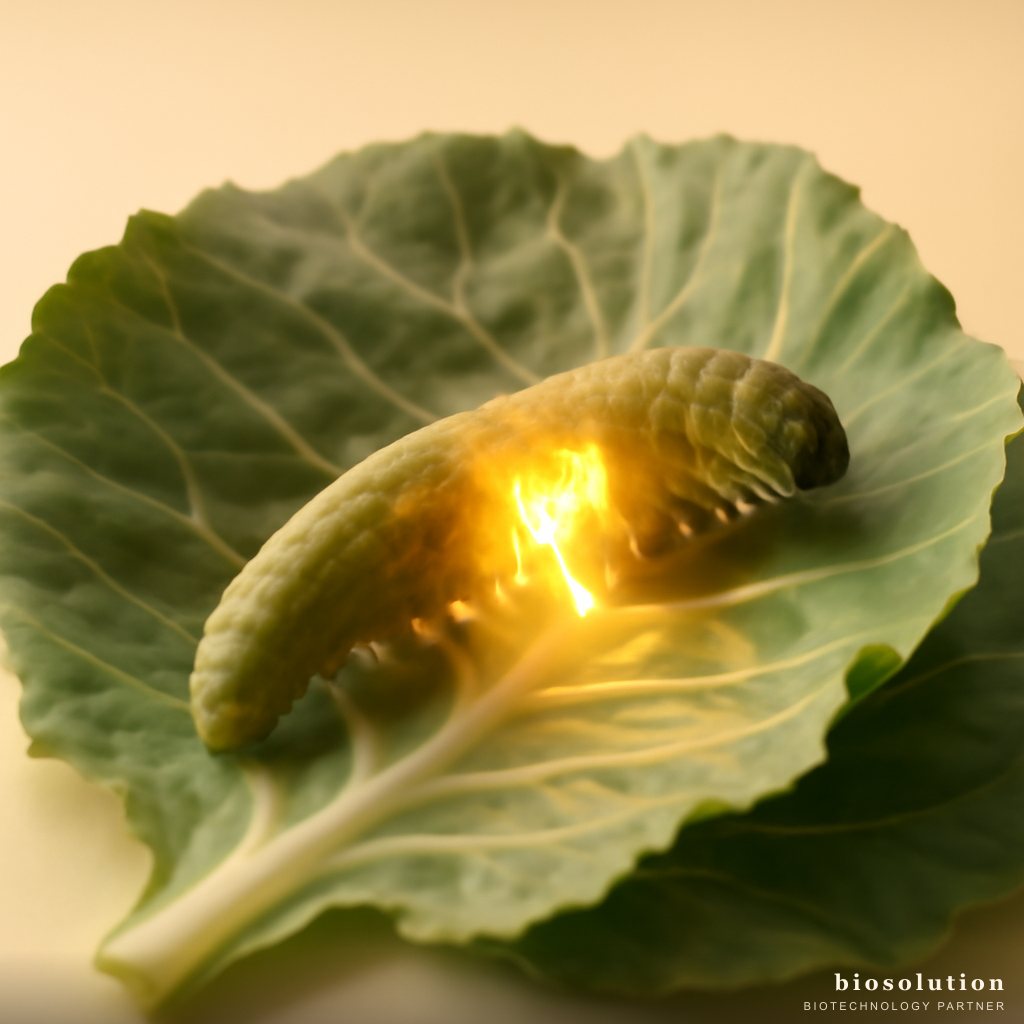
Biosolution presents the Anti-Aphid & Whitefly Formula containing two reliable entomopathogenic microbes: Verticillium lecani and Cordyceps spp. These fungi work synergistically to infect and kill aphids and whiteflies. Verticillium lecani is known to be effective against soft-bodied insects like aphids and whiteflies, while Cordyceps spp. accelerates death through toxin production and mycelial penetration. The mechanism: fungal spores attach to the insect cuticle, germinate, penetrate the body, and infect internal tissues. Within 3-5 days, the insect dies and its body becomes a source of new spores that infect other pests. This product is applied by spraying the underside of leaves (under leaf) at a dose of 3 ml per liter of water, every 5 days when populations are high, preferably in the afternoon with humidity >70% to optimize infection.
Advantages of the Anti-Aphid & Whitefly Formula
- Controls insect-borne viruses: By suppressing vector populations, the spread of viruses like geminiviruses can be significantly reduced.
- Reduces direct damage: Plants lose less sap and honeydew is reduced, optimizing photosynthesis.
- Extends the economic life of plants: Healthy plants produce longer.
- Safe for organic farming: Leaves no harmful residues, compatible with natural enemies.
Integration with Natural Enemies: Key to Successful IPM
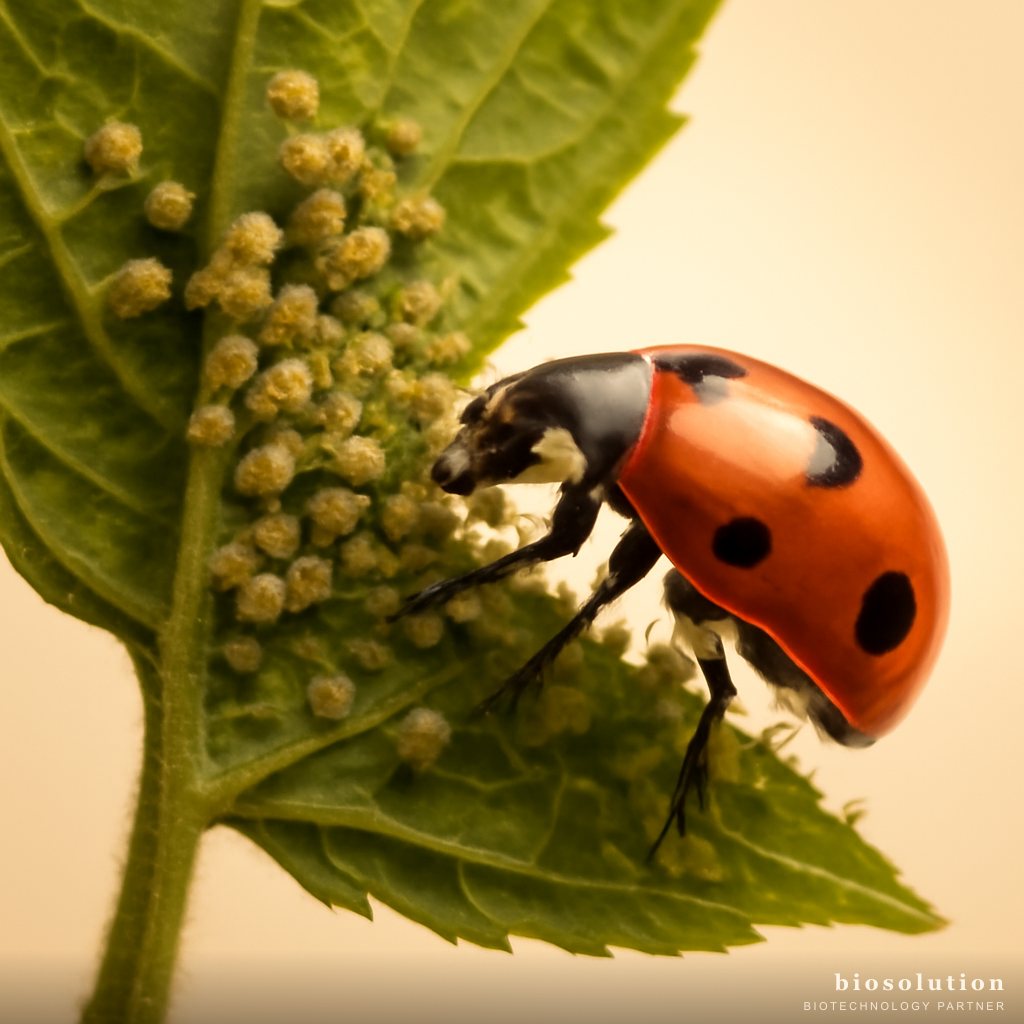
IPM does not rely on a single tool. The Anti-Aphid & Whitefly Formula must be integrated with conservation of natural enemies such as coccinellid beetles (Coccinella spp.), syrphid larvae, and parasitoids Encarsia formosa (for whiteflies) and Aphidius spp. (for aphids). Natural enemies can sustainably control pests at no additional cost. However, chemical pesticide applications can kill them. By using the Anti-Aphid & Whitefly Formula, which is selective against target pests, natural enemy populations are preserved. Some practices supporting integration:
- Planting flowering plants around the field as a source of nectar and pollen for adult natural enemies.
- Avoiding broad-spectrum chemical insecticide applications.
- Augmentative release of natural enemies if pest populations begin to increase.
- Regularly monitoring pest and natural enemy populations.
Field Application Example
In lowland chili cultivation, farmers can spray the Anti-Aphid & Whitefly Formula every 5-7 days during the vegetative to early generative phase. Simultaneously, release Encarsia formosa (1-2 per plant) to control whiteflies. For aphids, release Aphidius colemani (0.5-1 per plant). As a result, pest populations drop drastically without chemical applications. Production costs are lower because expensive insecticides are not needed, and fruit quality improves due to being residue-free.
Proper Application Techniques
The success of biocontrol depends heavily on application methods. Here are technical guidelines:
- Application time: Afternoon (3:00-5:00 PM) when humidity is high (>70%) and temperature is not too hot. Avoid application during rain or strong wind.
- Sprayer: Use a sprayer with a fine nozzle (0.5-1 mm) so droplets cover the underside of leaves. Medium pressure (2-3 bar) to avoid run-off.
- Spray volume: 400-600 liters per hectare for leafy vegetables; 600-800 liters for tall plants like tomatoes or chili.
- Frequency: Every 5 days when populations are high, then every 7-10 days after populations decline. Repeat if heavy rain occurs.
- Combination: Mix with a spreader-sticker (0.1% Tween 80 or non-ionic surfactant) to improve spore adhesion to the insect cuticle.
- Rotation: Use products with different mechanisms if needed, e.g., alternating with Beauveria bassiana to prevent resistance.
Case Study: Field Success
In Cibodas Village, Lembang, West Java, a chili farmer group experienced severe whitefly attacks causing leaf curl and crop failure. After switching to the Anti-Aphid & Whitefly Formula integrated with Encarsia formosa releases, whitefly populations dropped 85% within 2 weeks. Plants recovered and production increased 40% compared to the previous season using chemical insecticides. Control costs decreased 60% because reapplication every 2 days was unnecessary. This success story proves that integrated biocontrol is not only environmentally friendly but also economically beneficial.
Conclusion
Effectively and sustainably controlling aphids and whiteflies requires an IPM approach that integrates biocontrol with natural enemies. Biosolution's Anti-Aphid & Whitefly Formula, containing Verticillium lecani and Cordyceps spp., is a reliable solution safe for the ecosystem and farmers. With proper application techniques and conservation of natural enemies, horticultural farmers can reduce losses from pests and viruses, increase yields, and maintain soil health. It is time to shift to science-based smart farming. For further consultation, contact the Biosolution team via WhatsApp or see the product Anti-Aphid & Whitefly Formula and other biocontrol solutions at Bio Solutions.