Biocontrol of Cocoa Pod Borer: The Right Solution for Export
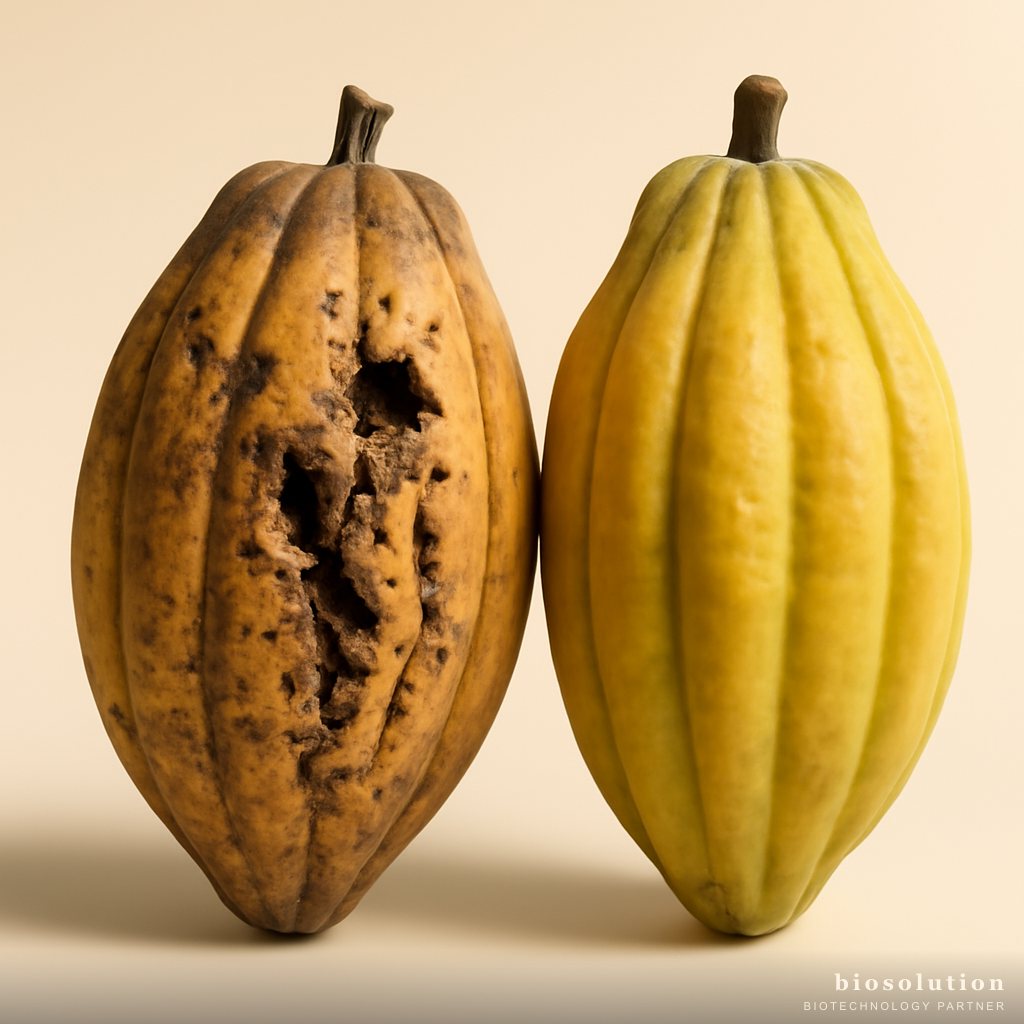
The cocoa pod borer (Conopomorpha cramerella, CPB) is the most damaging pest of cocoa in Indonesia. Its attacks can reduce production by up to 80% and damage bean quality, hindering export targets. Biocontrol of cocoa pod borer with entomopathogenic fungi is now the top choice for modern farmers who want high-quality harvests without chemical residues. This approach not only effectively suppresses pest populations but also supports sustainable cocoa programs, a key requirement for the global market.
Why Is Biocontrol of Cocoa Pod Borer Increasingly Important?
Serious Threat to Cocoa Productivity
Conopomorpha cramerella or CPB attacks cocoa pods from the pinhead stage to maturity. Larvae enter the pod and feed on the pulp and beans, causing beans to shrivel, become lightweight, and develop an unpleasant aroma. Losses due to CPB attacks in Indonesia are estimated at 30-50% per year. Massive use of synthetic insecticides leads to pest resistance, death of natural enemies, and residues on beans that are rejected by export markets.
Global Market Demand for Sustainable Cocoa
Importing countries such as the European Union, the United States, and Japan now require cocoa to be free of pesticide residues and produced sustainably. Certifications like Rainforest Alliance, UTZ, and Fair Trade demand environmentally friendly farming practices. Biocontrol with biological agents is a strategic solution to meet these standards. Farmers who adopt biocontrol have higher bargaining power in the export market.
Mechanism of Biocontrol with Entomopathogenic Fungi
Beauveria bassiana: The Main Weapon Against CPB Larvae
Beauveria bassiana is an entomopathogenic fungus that infects insects through contact. Fungal spores attach to the larval cuticle, germinate, and penetrate the body. Inside the hemolymph, the fungus multiplies and produces toxins (beauvericin) that paralyze and kill the larva within 3-7 days. Mycelium then emerges from the dead insect's body and produces new spores to infect other pests.
Metarhizium anisopliae: An Equally Important Supporter
Metarhizium anisopliae works similarly but is more effective under high humidity conditions. This fungus produces chitinase enzymes that damage the insect cuticle. Combining both fungi in one formula increases the infection spectrum and reduces resistance risk. Biosolution's Cocoa Pod Borer Control Formula contains both strains at optimal concentrations.
Proper Biocontrol Application for Maximum Results
Timing and Method of Application
Application is carried out at the pinhead pod stage (5-10 cm in size) because larvae begin to enter at this stage. Spray a solution of 3 ml per liter of water onto the entire pod surface, especially the tip and skin crevices. Spray every 7 days in the late afternoon (3:00-5:00 PM) when humidity is high and UV light is low. Avoid spraying during rain or intense heat.
Integration with Other Cultivation Practices
Biocontrol does not stand alone. For optimal results, do:
- Pruning the canopy to reduce humidity and facilitate spray penetration.
- Regularly harvesting infested pods and burying them in the soil.
- Using pheromone traps to monitor adult moth populations.
- Planting refugia plants such as sunflowers or cosmos as natural enemy habitats.
Benefits of Biocontrol for Cocoa Farmers
Saving Cocoa Bean Yield
Biological control of CPB keeps pods healthy until harvest. The resulting cocoa beans are normal in weight, not shriveled, and have a distinctive flavor. This increases dry bean yield and market value.
Reducing Dependence on Synthetic Insecticides
With biocontrol, the frequency of chemical pesticide spraying can be reduced by 50-70%. This saves production costs and reduces the risk of poisoning for workers. Additionally, chemical residues on beans are minimized, allowing them to pass export laboratory tests.
Supporting Sustainable Cocoa Programs
Biocontrol aligns with the principles of sustainable agriculture: environmentally friendly, safe for humans, and preserving biodiversity. Farmers who apply biocontrol find it easier to obtain certification and access premium markets.
Case Study: Success of Biocontrol in the Field
In Central Sulawesi, cocoa farmers using Biosolution's Cocoa Pod Borer Control Formula reported a decrease in CPB attacks from 45% to 12% over three growing seasons. They also saved up to IDR 500,000 per hectare per season in pesticide costs. The resulting cocoa beans were uniform in size and had very low slaty bean content, fetching higher prices from exporters.
FAQ about Biocontrol of Cocoa Pod Borer
1. Is biocontrol safe for plants and the environment?
Yes, entomopathogenic fungi such as Beauveria bassiana and Metarhizium anisopliae are specific to insect pests and do not infect plants, animals, or humans. These products also leave no harmful residues on cocoa beans.
2. How long does the effect of biocontrol last?
After application, fungal spores can survive on the pod surface for 5-7 days depending on weather conditions. Therefore, spraying is repeated every 7 days to maintain a high fungal population.
3. Can biocontrol be combined with chemical pesticides?
It is best not to mix directly with synthetic fungicides or insecticides as they can kill the fungus. If necessary, allow at least a 3-day interval between chemical and biological applications. However, for best results, use biocontrol exclusively.
4. How should biocontrol products be stored?
Store in a cool, dry place at 4-10°C (refrigerator). Avoid direct sunlight. Sealed products can last up to 6 months.
5. Is biocontrol effective for all stages of CPB attack?
Biocontrol is most effective for preventing larvae from entering pods. For existing attacks, application still helps because the fungus can infect newly hatched larvae. However, the best control is at the pinhead pod stage.
Conclusion
Biocontrol of cocoa pod borer with entomopathogenic fungi is a smart solution to overcome Conopomorpha cramerella while meeting export standards. Biosolution's Cocoa Pod Borer Control Formula offers a combination of Beauveria bassiana and Metarhizium anisopliae that is proven effective, safe, and environmentally friendly. With proper application, farmers can save bean yield, reduce production costs, and open access to sustainable cocoa markets. For further consultation, contact the Biosolution team via WhatsApp or see product details on the product page.