Biocontrol of Phytophthora Rot in Chili with Anti-Rot Phytophthora Formula
Phytophthora rot in chili and cocoa is a scourge for farmers in Indonesia. This disease, caused by Phytophthora capsici, can cause losses of up to 50% if not controlled properly. However, a biocontrol solution is now available through the Anti-Rot Phytophthora Formula, an innovative product from Biosolution that combines three superior antagonistic microorganisms. With an environmentally friendly approach, this product not only suppresses the pathogen but also improves overall plant health.
Understanding Phytophthora capsici: A Serious Threat to Chili and Cocoa
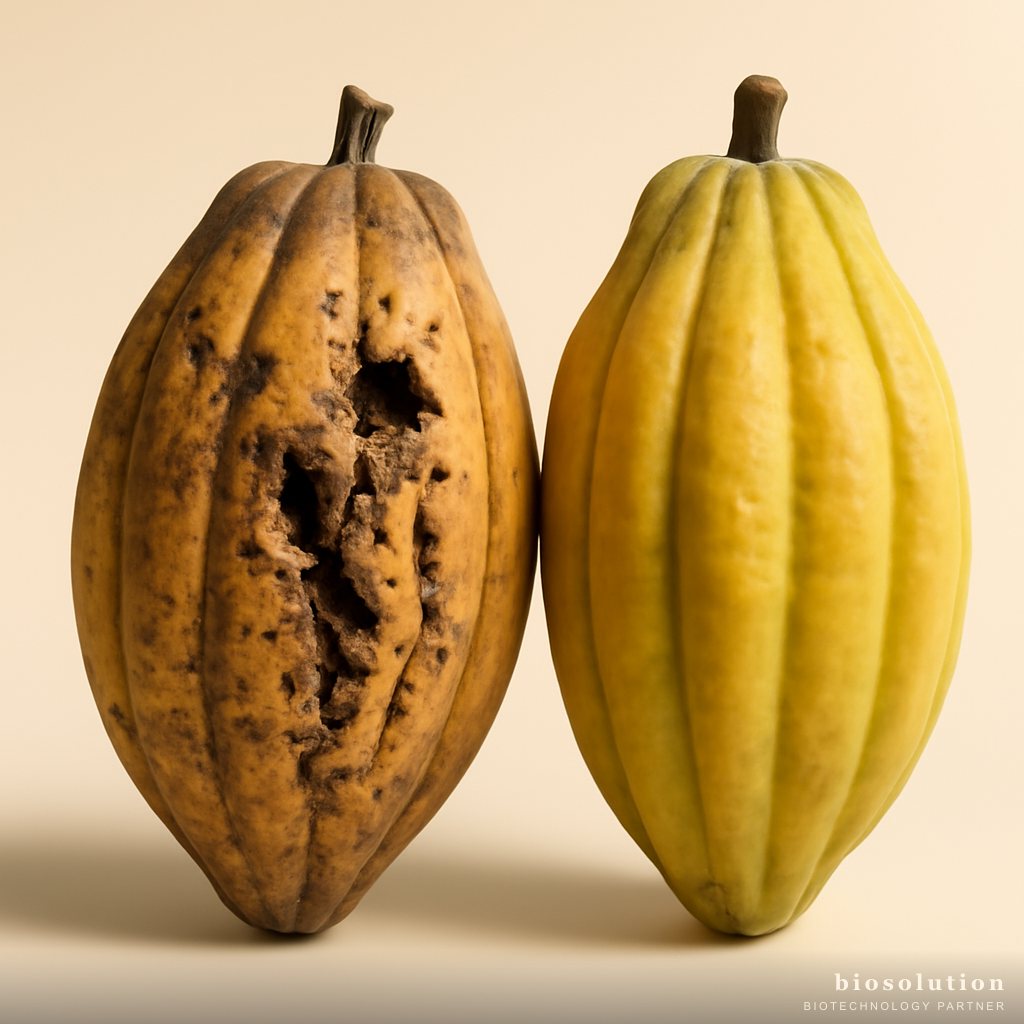
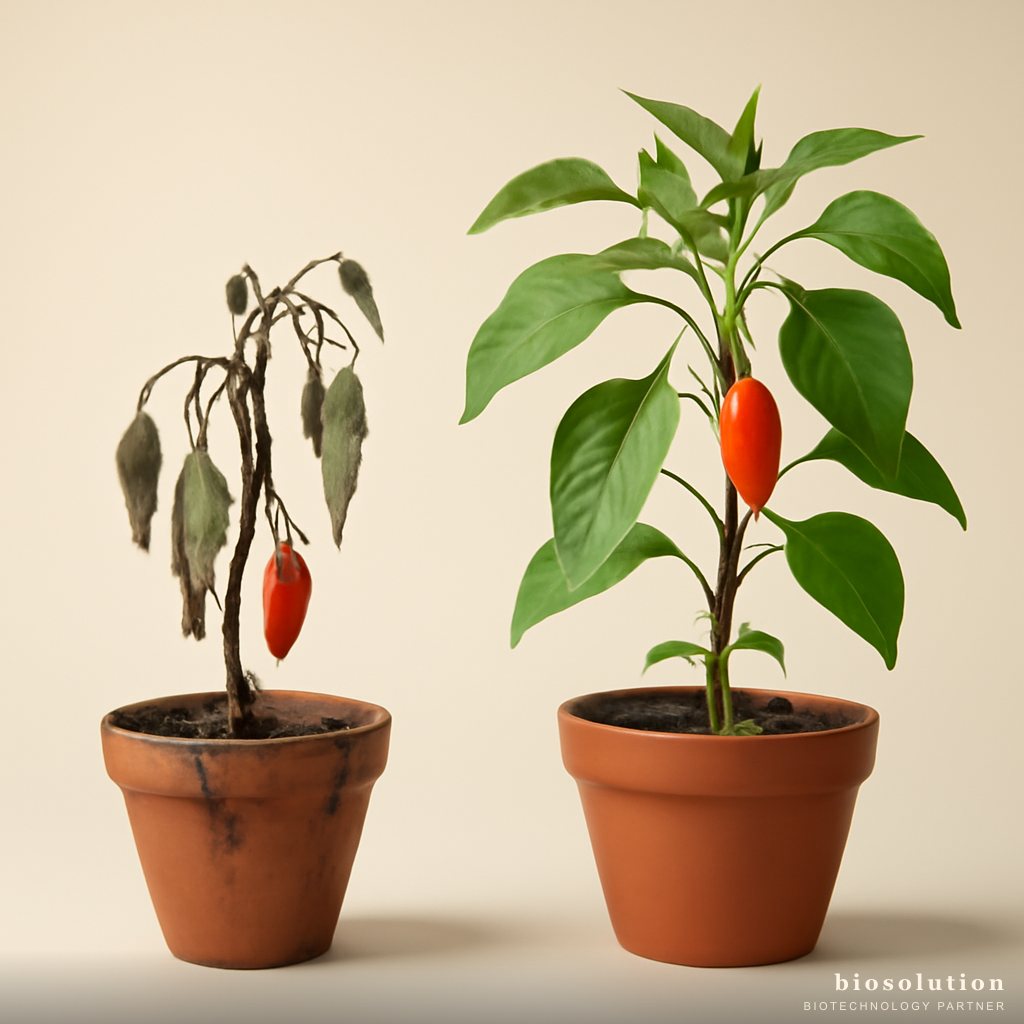
Phytophthora capsici is a pathogenic oomycete that attacks various solanaceous plants such as chili, as well as cocoa plants. This pathogen spreads through zoospores that move actively in water, so attacks often occur during the rainy season or in fields with poor drainage. Initial symptoms include sudden wilting of leaves, followed by rot at the stem base and roots. In chili, fruits can also rot, while in cocoa, the disease causes fruit rot and stem cankers.
Conventional control using synthetic fungicides is often ineffective because the pathogen quickly develops resistance. Therefore, biocontrol is a promising alternative. The Anti-Rot Phytophthora Formula is specifically designed to combat P. capsici through three main mechanisms: competition, antibiosis, and induced plant resistance.
Anti-Rot Phytophthora Formula: Three Superior Microbes in One Product
This product contains three scientifically tested microbial strains: Trichoderma harzianum, Pseudomonas fluorescens, and Bacillus subtilis. They work synergistically to provide maximum protection.
Trichoderma harzianum: Mycoparasite and PGPR
Trichoderma harzianum is known as a mycoparasite that directly infects the hyphae of the pathogen. The chitinase and glucanase enzymes it produces can degrade the cell wall of Phytophthora. In addition, T. harzianum also acts as a Plant Growth-Promoting Rhizobacteria (PGPR) by producing growth hormones such as auxins and gibberellins, making plant roots stronger and more stress-tolerant.
Pseudomonas fluorescens: Antagonist and Inducer of Systemic Resistance
Pseudomonas fluorescens produces antibiotic compounds such as phenazine and pyrrolnitrin that inhibit pathogen growth. More importantly, this bacterium induces Systemic Acquired Resistance (SAR) in plants, enabling them to respond more quickly to pathogen attacks. Research shows that application of P. fluorescens to chili roots can reduce the severity of Phytophthora rot by up to 60%.
Bacillus subtilis: Antibiosis and Protective Biofilm
Bacillus subtilis produces cyclic lipopeptides such as surfactin and iturin that are fungistatic. Additionally, this bacterium forms a biofilm on the root surface, creating a physical barrier that prevents pathogen penetration. The biofilm also helps maintain bacterial colonies in the rhizosphere over the long term.
Biocontrol Mechanism: Synergy of Three Pathways
The three microbes in the Anti-Rot Phytophthora Formula work through three main mechanisms:
- Competition: Antagonistic microbes compete with the pathogen for nutrients and space in the rhizosphere. With rapid colonization, the pathogen lacks resources to develop.
- Antibiosis: Production of antimicrobial compounds by Pseudomonas and Bacillus directly inhibits the growth of Phytophthora.
- Induced Plant Resistance: Trichoderma and Pseudomonas trigger salicylic acid and jasmonate signaling pathways, leading to the production of defense compounds such as phytoalexins and pathogenesis-related proteins (PR-proteins).
This combination makes it difficult for the pathogen to develop resistance, unlike single fungicides.
Proper Application for Optimal Results
The Anti-Rot Phytophthora Formula is applied via root drenching. The recommended dosage is 5 ml per liter of water, applied every 14 days in the morning or evening. This frequency ensures a high microbial population in the rhizosphere. For chili plants, the first application should be made when the plants are 7-14 days after transplanting, then repeated periodically. For cocoa, application is done around the stem base at the beginning of the rainy season.
It is important to avoid simultaneous application with synthetic fungicides, as they can kill the antagonistic microbes. If fungicides must be used, allow a minimum interval of 7 days.
Long-Term Benefits: Increased Productivity and Reduced Costs
Regular use of biocontrol not only suppresses Phytophthora rot but also improves overall plant health. Roots become denser, nutrient uptake is more efficient, and plants are more tolerant to abiotic stress. As a result, chili and cocoa productivity increases, while disease control costs decrease due to reduced use of synthetic fungicides.
Furthermore, biocontrol supports sustainable agriculture by maintaining soil microbial diversity and reducing chemical residues on harvested products. This is important for meeting export standards and market demand for organic products.
Conclusion
Phytophthora rot in chili and cocoa can be effectively controlled with biocontrol using the Anti-Rot Phytophthora Formula. This product, containing Trichoderma harzianum, Pseudomonas fluorescens, and Bacillus subtilis, works through competition, antibiosis, and induced plant resistance. Regular application via root drenching every 14 days can suppress the pathogen, enhance plant growth, and reduce dependence on synthetic fungicides. For more information and free consultation, contact the Biosolution team via WhatsApp.
FAQ
Q: Is the Anti-Rot Phytophthora Formula safe for chili and cocoa plants? A: Very safe. This product contains natural microbes that are not phytotoxic. In fact, these microbes enhance plant growth through PGPR mechanisms. However, avoid simultaneous application with synthetic fungicides.
Q: How long does it take for this product to start working after application? A: The microbes will colonize the rhizosphere immediately after application. The suppressive effect on the pathogen begins to be seen within 3-7 days, depending on environmental conditions. For optimal results, regular application every 14 days is necessary.
Q: Can this product be used for plants other than chili and cocoa? A: Yes, this product is also effective for other solanaceous plants such as tomatoes and eggplants, as well as plantation crops like pepper. However, dosage and application frequency may need adjustment.
Q: How should I store the product after mixing with water? A: The product mixed with water should be used within 24 hours. Store in a shaded place away from direct sunlight. Do not store the solution for more than a day as microbial viability decreases.
Q: Can this product be combined with liquid organic fertilizer? A: Yes, as long as the liquid organic fertilizer does not contain antimicrobial ingredients. It is advisable to conduct a small-scale trial first. Combination with organic fertilizer can actually enhance the effectiveness of biocontrol.