Chicken Manure Deodorizer: Case Study of Odor-Free Farm with Microbes
Pungent odor from chicken manure is a classic problem haunting poultry farmers, especially in densely populated areas. Besides disturbing comfort, excessive ammonia odor also impacts livestock health and the environment. However, modern solutions are now available through the use of decomposing microbes. This article thoroughly examines a case study of a farm in East Java that successfully managed chicken manure deodorization using Biosolution's Organic Waste Decomposer Formula, a biotechnology product relying on Streptomyces sp. and a consortium of Bacillus + Aspergillus.
Why Does Chicken Manure Cause Unpleasant Odor?
Chicken manure contains complex organic compounds such as undigested proteins, carbohydrates, and fats. Under anaerobic conditions (lack of oxygen), putrefactive bacteria break down these compounds, producing ammonia (NH₃), hydrogen sulfide (H₂S), and mercaptans—the main causes of foul odor. High humidity and dense waste piles accelerate this process.
Farms with closed house systems often have limited ventilation, increasing the concentration of hazardous gases. Long-term ammonia exposure can reduce chicken performance, increase the risk of respiratory diseases, and even trigger mortality. Therefore, effective chicken manure management is a priority.
The Role of Microbes in Decomposing Chicken Manure and Odor
Decomposing microbes such as Bacillus and Aspergillus work synergistically to break down complex organic compounds into simple, odorless molecules. Bacillus produces protease, amylase, and lipase enzymes that accelerate decomposition, while Aspergillus excels in degrading cellulose and lignin. Both work optimally under aerobic conditions.
Streptomyces sp. has a dual role: besides producing enzymes, it also produces natural antibiotic compounds that suppress the growth of odor-causing pathogenic bacteria. The combination of these three microbes in Biosolution's Organic Waste Decomposer Formula has been field-tested.
Case Study: "Maju Jaya" Layer Farm in Blitar
Maju Jaya Farm is located in Wonotirto District, Blitar Regency, East Java, with a population of 20,000 laying hens. Before using Biosolution's product, this farm often received complaints from nearby residents due to pungent odors carried by the wind. Waste volume reached 2 tons per day, and accumulation in open areas caused flies to breed.
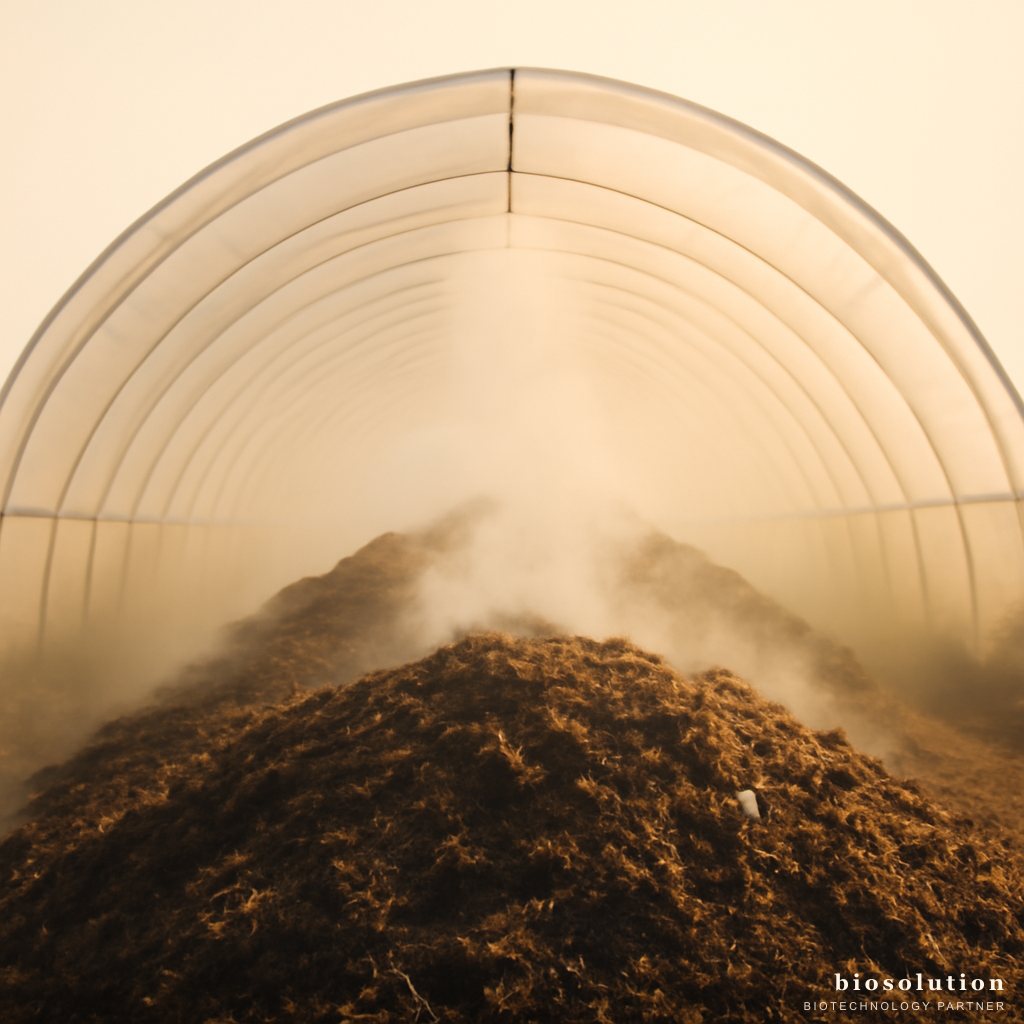
In January 2025, farm management decided to try the Organic Waste Decomposer Formula. Application method: 1 liter of product dissolved in 10 liters of water, then evenly sprinkled onto a 50 cm high waste pile. The process was repeated every 3 days for 2 weeks. Results began to appear on day 5: ammonia odor drastically reduced, pile temperature increased (a sign of microbial activity), and waste texture became more crumbly.
After 14 days, the waste pile no longer emitted foul odor. Waste volume shrank by about 40%, and the resulting material resembled mature compost. Laboratory tests showed a C/N ratio of 18:1, pH 7.2, and freedom from pathogenic bacteria such as E. coli and Salmonella. This compost was then used as organic fertilizer for animal feed crops, reducing operational costs.
Mechanism of Action of the Organic Waste Decomposer Formula
This formula contains three main components:
- Bacillus subtilis and Bacillus licheniformis: Gram-positive bacteria that produce strong extracellular enzymes. They break down proteins into amino acids, fats into glycerol and fatty acids, and carbohydrates into simple sugars. This process reduces volatile odor-causing compounds.
- Aspergillus niger: A mold that degrades cellulose and hemicellulose in chicken feed residues. The cellulase and xylanase enzymes produced convert crude fiber into sugars that can be utilized by other microbes.
- Streptomyces sp.: Actinomycetes that produce chitinase enzymes and antimicrobial compounds. Chitinase degrades chitin from insect exoskeletons (e.g., flies), while antimicrobials suppress the growth of putrefactive bacteria.
All three work in a mutually supportive consortium. Bacillus and Aspergillus provide nutrients for Streptomyces, while Streptomyces maintains microbial population balance. The decomposition process proceeds rapidly within 7-14 days, depending on temperature and humidity.
Proven Benefits: From Odor Elimination to Quality Compost
Using the Organic Waste Decomposer Formula provides multidimensional impacts:
- Significant odor reduction: In the Maju Jaya case study, ammonia odor dropped by 80% within the first 5 days. Nearby residents reported no further disturbance.
- 30-50% waste volume reduction: Microbial decomposition breaks down organic structure, reducing volume. This facilitates handling and reduces required land area.
- Ready-to-use compost in 2 weeks: The resulting compost meets SNI (Indonesian National Standard) quality, with nutrient content of N 1.5%, P₂O₅ 0.8%, and K₂O 1.2%. Suitable for horticultural crops and animal feed.
- Fly control: Streptomyces sp. produces enzymes that damage fly eggs and larvae. Fly populations on the farm drastically decreased within 2 weeks.
- Environmentally friendly: No synthetic chemicals, safe for livestock and workers.
Proper Application Method for Maximum Results
For farmers wishing to apply this product, here is a practical guide:
- Dosage: 1 liter of Organic Waste Decomposer Formula per 1 m³ of waste (equivalent to 1 ton).
- Method: Dilute 1 liter of product in 10-20 liters of clean water (non-chlorinated). Sprinkle evenly over the waste pile, ensuring all parts are covered.
- Frequency: One application per pile is sufficient. However, for continuously accumulating waste, reapply every 3-4 days on new piles.
- Best time: Late afternoon to avoid direct UV light that can kill microbes.
- Pile management: Pile waste 30-50 cm high, not too dense. Turn the pile every 3 days for aeration.
Optimal results are achieved if pile humidity is maintained at around 50-60% (characteristic: when squeezed, a little water drips). If too dry, add water; if too wet, add husk or sawdust.
Comparison with Conventional Methods
| Method | Composting Time | Odor | Final Volume | Cost |
|---|---|---|---|---|
| Natural (without microbes) | 3-6 months | Very pungent | Only 10-20% reduction | Free (large land) |
| Chemical (lime, chlorine) | 1-2 months (partial) | Temporarily gone, returns | 20-30% reduction | Expensive, hazardous |
| Organic Waste Decomposer Formula | 2 weeks | Permanently gone (after application) | 30-50% reduction | Economical, safe |
The data above shows the advantages of using microbes in terms of speed, effectiveness, and safety.
Testimonials from Other Farmers and Achievements
Besides Maju Jaya, several farms in Central Java and Lampung have reported similar results. Mr. Sutrisno, a broiler farmer in Magelang, said: "After using this product, neighbors no longer complain. The compost also sells well to vegetable farmers." Mrs. Rina from Lampung added: "Waste volume halved, making it easier to transport. The compost quality is good; my chili plants thrive."
This product has also been tested by independent laboratories and meets environmental standards set by the Ministry of Environment and Forestry (KLHK). Test details can be seen on the product page.
Conclusion
Managing chicken manure deodorization is no longer difficult by utilizing superior microbes. The Maju Jaya Farm case study proves that Biosolution's Organic Waste Decomposer Formula can eliminate odor, reduce waste volume, and produce quality compost in a short time. This solution not only maintains good relations with nearby residents but also provides added economic value. For farmers wishing to adopt this technology, consult your needs via WhatsApp or see product details at this link.