Decomposing Chicken Manure with Microbes: Monitoring BOD, COD, and Coop Odor
Chicken manure deodorizer is a natural solution sought by poultry farmers to manage coop waste. The pungent odor from accumulated manure not only disrupts comfort but also causes environmental and health problems. With a microbiological approach, we can accelerate the decomposition of chicken manure while reducing odor. This article will discuss how Biosolution's Organic Waste Decomposer Formula works, and the post-application parameters to monitor: BOD, COD, and odor.
Why Does Chicken Manure Cause Odor?
Chicken manure contains complex organic compounds such as proteins, fats, and carbohydrates that are not fully decomposed. Under anaerobic conditions (without oxygen), decomposing bacteria produce ammonia (NH₃), hydrogen sulfide (H₂S), and methane (CH₄) gases, causing a sharp odor. This odor is not only disturbing but also harmful to livestock and worker health.
Role of Microbes in Decomposition
Decomposing microbes, such as those in the Organic Waste Decomposer Formula, work aerobically to break down organic compounds into simpler molecules. This process reduces the production of odorous gases and produces stable compost.
Biosolution Organic Waste Decomposer Formula: Composition and Mechanism
The Biosolution Organic Waste Decomposer Formula contains two main components:
- Streptomyces sp.: This bacterium is known for producing cellulase, protease, and chitinase enzymes that effectively break down hard organic matter. Additionally, Streptomyces produces natural antibiotic compounds that suppress the growth of odor-causing pathogenic bacteria.
- Decomposer consortium (Bacillus + Aspergillus): Bacillus sp. and Aspergillus sp. work synergistically for rapid decomposition. Bacillus produces extracellular enzymes that digest proteins and carbohydrates, while Aspergillus as a fungus can degrade lignin and cellulose that are difficult to break down.
This combination accelerates chicken manure decomposition, reduces waste volume by 30–50%, and significantly suppresses odor.
Application of the Formula on Chicken Manure
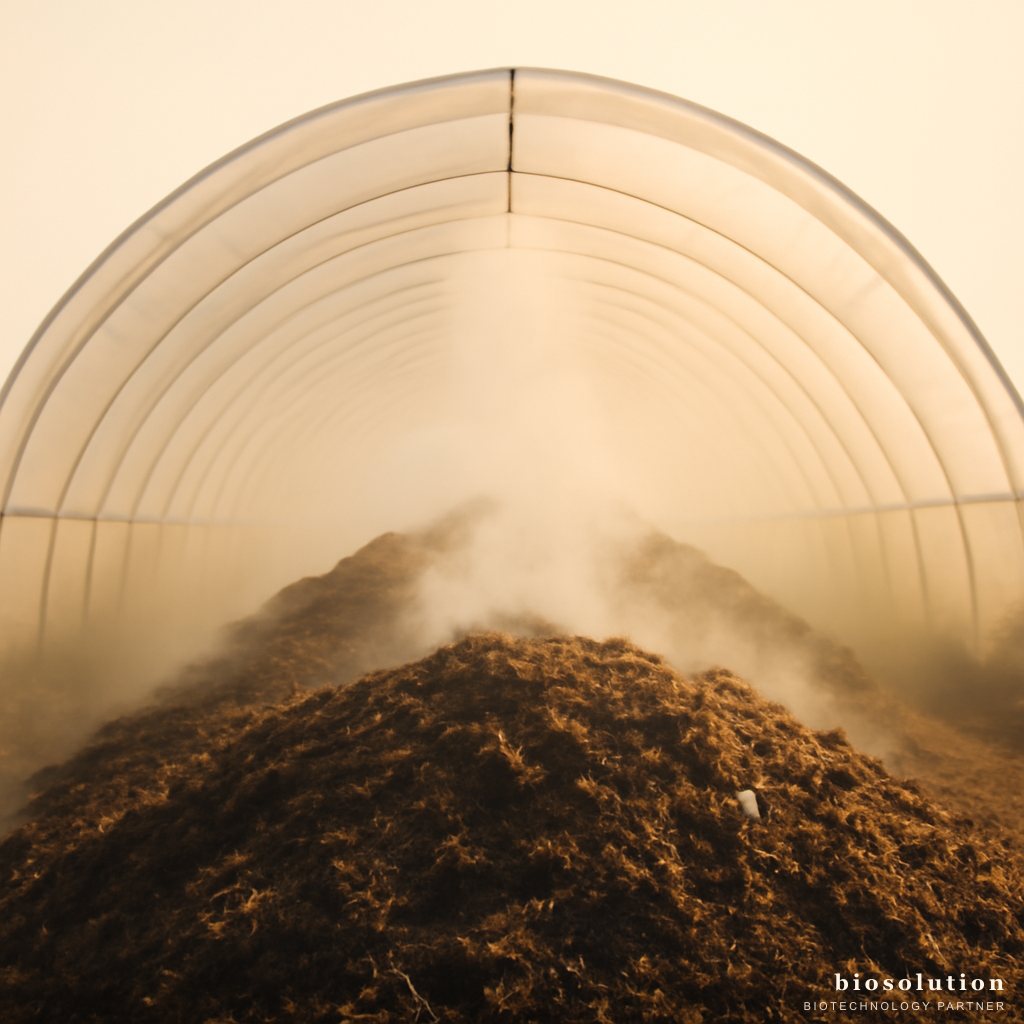
The application method is very easy: spray 1 liter of Organic Waste Decomposer Formula per cubic meter (m³) of waste. The best time is in the afternoon to avoid direct sunlight that can kill microbes. One application per waste pile is sufficient, and let the microbes work for 2–3 weeks.
Tips for Successful Application
- Ensure the waste pile has a moisture content of 40–60%.
- Stir the pile once a week for aeration.
- Avoid adding chemicals such as chlorine that can kill microbes.
Post-Application Monitoring: BOD, COD, and Odor
After application, it is important to monitor waste quality parameters to ensure decomposition effectiveness. The three main parameters are:
BOD (Biochemical Oxygen Demand)
BOD measures the amount of oxygen required by microbes to decompose organic matter in water. The higher the BOD, the more organic pollutants. After applying the Organic Waste Decomposer Formula, the BOD of chicken manure waste decreases drastically because microbes have broken down organic compounds into CO₂ and H₂O. A decrease in BOD indicates that the waste is becoming more stable and environmentally safe.
COD (Chemical Oxygen Demand)
COD measures the total oxygen required to chemically oxidize organic matter. This parameter includes compounds that are difficult to degrade biologically. With Streptomyces and the decomposer consortium, COD also decreases because enzymes can break down complex compounds into simpler ones.
Odor
Odor is a direct indicator of decomposition success. Ammonia and hydrogen sulfide are the main causes of odor. The microbes in the Organic Waste Decomposer Formula convert ammonia into nitrate (nitrification process) and hydrogen sulfide into sulfate, so odor is significantly reduced within 3–7 days after application. Farmers can use their sense of smell or gas detectors to monitor.
Benefits of Using the Organic Waste Decomposer Formula
- Significant odor reduction: The coop is more comfortable for livestock and workers.
- Waste volume reduced by 30–50%: Reduces the frequency of waste transportation.
- Ready-to-use compost: Within 2–3 weeks, chicken manure turns into nutrient-rich organic fertilizer.
- Complies with environmental standards: Treated waste meets government-set BOD and COD quality standards.
Case Study: Layer Chicken Farmer in East Java
A layer chicken farmer with 5,000 chickens produces about 500 kg of manure per day. After using the Organic Waste Decomposer Formula at a dose of 1 L per m³, odor decreased by 80% within 2 weeks. Laboratory test results showed BOD dropped from 2,500 mg/L to 400 mg/L, and COD from 4,000 mg/L to 800 mg/L. Waste volume decreased by 40%, and the resulting compost was sold as organic fertilizer.
Conclusion
Chicken manure deodorizer with microbes is the right solution for poultry farmers who want to manage waste effectively. Biosolution's Organic Waste Decomposer Formula, containing Streptomyces sp. and a Bacillus + Aspergillus consortium, can significantly reduce BOD, COD, and odor. With a simple application of 1 L per m³ of waste, farmers can turn a problem into a blessing: quality compost and a healthy coop environment. For more information, consult your needs with the Biosolution team via WhatsApp or visit the product page Organic Waste Decomposer Formula.