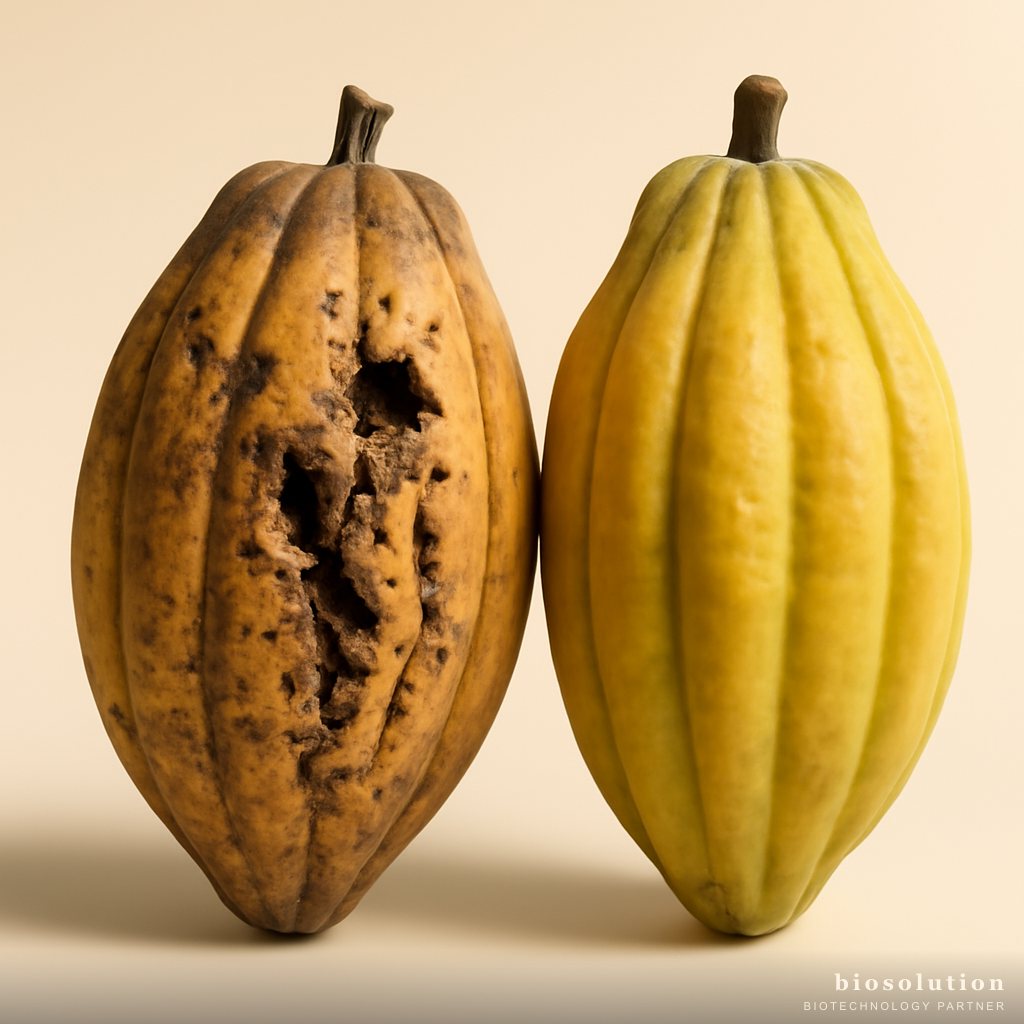
Cocoa Pod Borer Biocontrol: Case Study Suppresses Attack by 80%
The cocoa pod borer (Conopomorpha cramerella) is a major pest threatening cocoa production in Indonesia. Its attacks cause a decline in the quality and quantity of cocoa beans, even leading to crop failure. However, through the proper application of cocoa pod borer biocontrol, a plantation in Central Sulawesi successfully suppressed attacks by up to 80%. This article reviews the strategy, mechanism, and real results of this environmentally friendly approach.
Why Biocontrol is the Main Solution?
Excessive use of synthetic insecticides has led to pest resistance, environmental pollution, and health risks for farmers. Biocontrol offers a sustainable alternative by utilizing natural enemies of pests. In the case of C. cramerella, biological agents such as Beauveria bassiana and Metarhizium anisopliae have proven effective in infecting and killing larvae without leaving harmful residues. Plantations implementing biocontrol are also better prepared for sustainable cocoa certification, which is now an export requirement.
Advantages of Biocontrol Over Chemical Pesticides
- Selective: Only targets the pest, does not disturb beneficial insects.
- Safe: Non-toxic to humans, animals, and the environment.
- Does not cause resistance: Multi-target mechanism makes it difficult for pests to adapt.
- Supports biodiversity: Natural predator populations are maintained.
Mechanism of Action of Anti-Cocoa Pod Borer Formula
Leading biocontrol products for C. cramerella contain two entomopathogenic strains: Beauveria bassiana and Metarhizium anisopliae. They work synergistically:
Beauveria bassiana
This fungus infects larvae through direct contact. Spores germinate on the cuticle surface, then penetrate the larval body and grow in the hemolymph. Within 3-5 days, the larva becomes stiff and dies. Mycelium then emerges and produces new spores to infect other larvae.
Metarhizium anisopliae
This fungus also infects through the cuticle, but is more effective under high humidity conditions. M. anisopliae produces toxins that accelerate larval death. The combination of both fungi increases efficacy to 80-90% in field applications.
Case Study: Cocoa Plantation in Central Sulawesi
A 50-hectare cocoa plantation in Sigi Regency, Central Sulawesi, experienced high-intensity C. cramerella attacks (60% of pods infested). After implementing a biocontrol program, attacks dropped drastically to 12% within one growing season. Here are the details of its implementation:
Application Schedule
- Pinhead fruit stage: Application begins when fruits are 3-5 cm in size (2-3 weeks after pollination).
- Frequency: Every 7 days.
- Time: Afternoon (3:00-5:00 PM) to avoid UV rays that damage spores.
Dosage and Spraying Method
- Dosage: 3 ml of formula per liter of water.
- Spray volume: 200-300 liters per hectare (depending on tree size).
- Target: Entire fruit surface, especially protected areas.
Results and Impact
- Attack reduction: From 60% to 12% (80% suppression).
- Yield increase: Whole cocoa beans increased by 25%.
- Cost savings: Control costs dropped by 40% due to no need to buy synthetic insecticides.
- Worker safety: No cases of pesticide poisoning.
Guide to Effective Biocontrol Application
The success of biocontrol heavily depends on proper application techniques. Here is a step-by-step guide:
1. Sprayer Preparation
Use a knapsack sprayer with a cone nozzle. Ensure the equipment is free from chemical pesticide residues. Rinse with clean water before use.
2. Preparing Spray Solution
- Mix 3 ml of formula with 1 liter of water.
- Stir until homogeneous. Do not let the solution settle.
- Use within 2-3 hours after mixing.
3. Spraying Technique
- Spray evenly over the entire fruit surface, especially the underside and crevices.
- Avoid spraying during rain or strong wind.
- Spray in the afternoon to maximize spore contact with larvae.
4. Monitoring and Evaluation
- Conduct weekly observations to monitor pest populations.
- If attacks are still high, increase frequency to every 5 days.
- Record results for improvement in the next growing season.
Field Challenges and Solutions
Although effective, biocontrol implementation is not without challenges. Here are common obstacles and their solutions:
Challenge 1: Low Humidity
Dry conditions reduce spore viability. Solution: Spray in the afternoon or morning when dew is still present. Add a natural sticker (surfactant) such as vegetable soap at 1 ml/liter.
Challenge 2: High Infestation
If attacks are already severe, biocontrol needs to be combined with other measures. Solution: Perform sanitation by cutting and burning infested fruits before application.
Challenge 3: Farmer Resistance to Change
Farmers are often hesitant to switch from chemical pesticides. Solution: Conduct demonstration plots (demplot) to show real results. Involve farmers in monitoring.
Integration of Biocontrol with Other Cultivation Practices
Biocontrol is not the only key. The success of the plantation in Central Sulawesi was also supported by good cultivation practices:
Tree Pruning
Pruning opens the canopy, improving air circulation and sunlight penetration. This condition is not favored by C. cramerella, which prefers moist and shaded places.
Balanced Fertilization
Healthy plants are more resistant to pest attacks. Use organic and inorganic fertilizers according to recommended doses.
Planting Refugia Plants
Plants such as sunflowers, marigolds, or vetiver grass attract natural enemies of pests (parasitoids, predators). This strengthens biological control.
Conclusion
The application of cocoa pod borer biocontrol with a formula based on Beauveria bassiana and Metarhizium anisopliae has been proven to suppress C. cramerella attacks by up to 80%, as demonstrated by the case study in Central Sulawesi. This success not only saves costs and increases yields but also creates a healthier environment for workers and the ecosystem. For cocoa growers looking to transition to sustainable practices, biocontrol is a strategic step worth considering. For more information on products and technical consultation, contact the Biosolution team via WhatsApp.
FAQ
1. What is cocoa pod borer biocontrol?
Cocoa pod borer biocontrol is a method of controlling the pest Conopomorpha cramerella using biological agents such as entomopathogenic fungi Beauveria bassiana and Metarhizium anisopliae. These agents infect and kill larvae without harming the environment or endangering humans.
2. What is the recommended dosage for the anti-cocoa pod borer formula?
The recommended dosage is 3 ml per liter of water. The solution is sprayed onto the entire fruit surface every 7 days during the pinhead fruit stage (size 3-5 cm), preferably in the afternoon to avoid UV rays.
3. Is biocontrol safe for workers and the environment?
Very safe. Entomopathogenic fungi are specific to target insects and are non-toxic to humans, animals, or plants. Biocontrol also leaves no harmful residues, making it suitable for sustainable cocoa programs.
4. How long does it take to see results?
Results begin to appear 1-2 weeks after the first application, with a significant reduction in larval population. Attack suppression of up to 80% is usually achieved after one growing season (3-4 months) with regular applications.
5. Can biocontrol be combined with chemical pesticides?
It is best not to. Chemical pesticides can kill fungal spores and reduce biocontrol effectiveness. If necessary, allow a minimum 7-day interval between chemical and biocontrol applications, and choose selective pesticides.