Eco-Friendly Biopesticide: Application of Broad-Spectrum Biological Insecticide Formula
Sustainable agriculture demands effective yet environmentally friendly pest control solutions. Eco-friendly biopesticides answer this need, especially with broad-spectrum biological insecticide formulas utilizing entomopathogenic agents such as Beauveria bassiana and Metarhizium anisopliae. This article thoroughly discusses proper application methods, from dosage and spraying time to adjuvant combinations, enabling farmers to maximize efficacy up to 80–85% without leaving chemical residues on harvests. With a science-based and field-practice approach, this biopesticide becomes a mainstay in Integrated Pest Management (IPM) programs.
Why Are Eco-Friendly Biopesticides Increasingly Needed?
Continuous use of synthetic chemical pesticides has caused various problems, such as pest resistance, environmental pollution, and harmful residues on agricultural products. Eco-friendly biopesticides offer a safer and more sustainable alternative. Products like Biosolution's Broad-Spectrum Biological Insecticide Formula contain two superior entomopathogenic fungal strains: Beauveria bassiana and Metarhizium anisopliae, each at a concentration of 10⁶ CFU/ml. These fungi work synergistically to control various insect pests, from caterpillars and beetles to planthoppers.
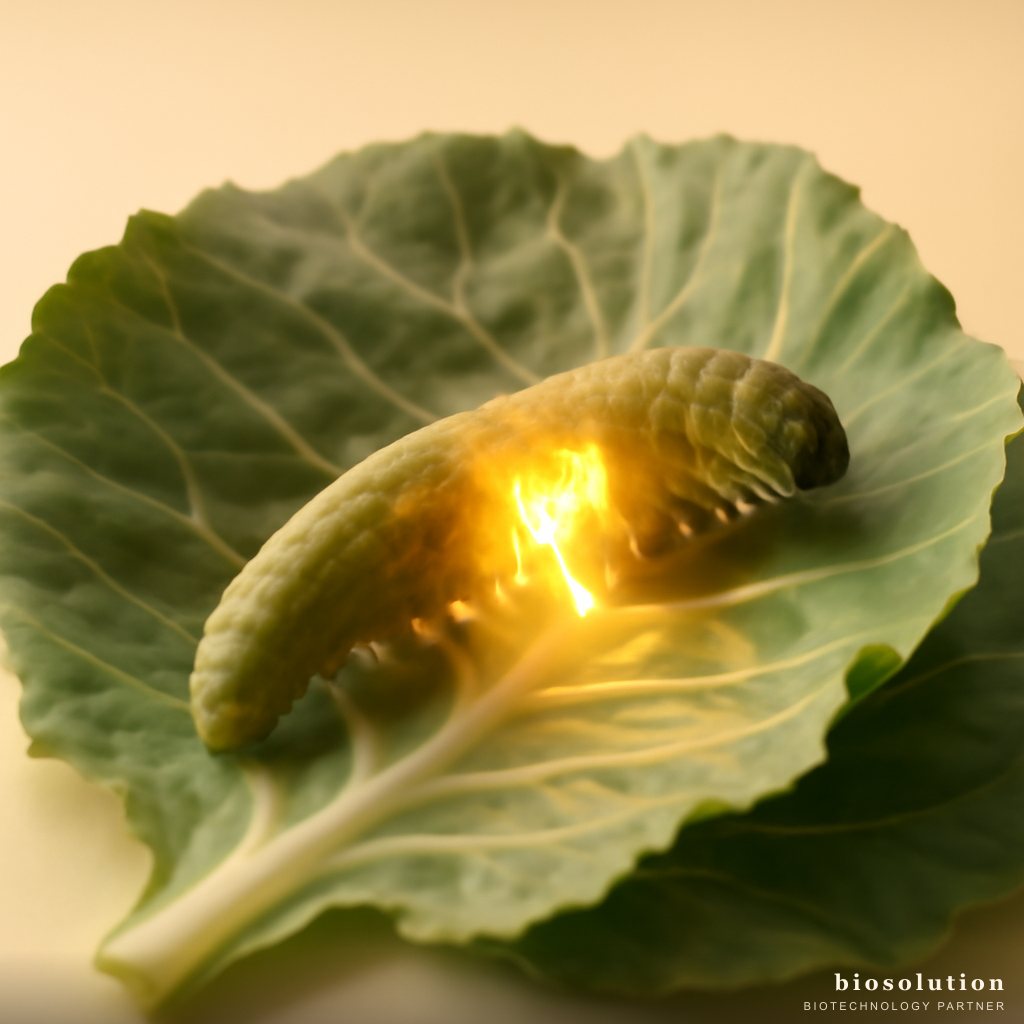
The main advantage of this biopesticide is its specific mechanism of action against target insects. Fungal spores attach to the insect cuticle, then penetrate enzymatically using proteases and chitinases. Once inside, mycelium grows and causes death within a few days. Infected insect carcasses then become sources of new spores, triggering secondary infections in other pest populations. This process naturally breaks the pest life cycle without damaging the ecosystem.
Mechanism of Action of the Biological Insecticide Formula
To understand effective application methods, it is important to know the mechanism of action of both strains in this formula.
Beauveria bassiana: Specialist for Soft-Bodied Insects
Beauveria bassiana is an entomopathogenic fungus highly effective against soft-bodied insects such as caterpillars, aphids, and thrips. Spores germinate on the cuticle surface under high humidity conditions, then penetrate using chitinase enzymes. Once inside, the fungus produces beauvericin toxin that weakens the insect's immune system. Death usually occurs within 3–7 days, depending on temperature and humidity.
Metarhizium anisopliae: Conqueror of Beetles and Cutworms
Metarhizium anisopliae excels at controlling soil-dwelling pests such as beetles (Coleoptera) and cutworms (Agrotis spp.). This fungus produces proteolytic enzymes that degrade thicker cuticles. Additionally, Metarhizium produces destruxin toxins that accelerate death. The combination of both strains in one formula provides a broader control spectrum, making it suitable for various crops.
Application of Eco-Friendly Biopesticide: Dosage, Timing, and Adjuvant Combinations
The success of biopesticide application depends heavily on correct dosage, spraying time, and adjuvant use. Here are technical guidelines based on Biosolution's recommendations.
Proper Dosage
For the Broad-Spectrum Biological Insecticide Formula, the recommended dosage is 2–3 ml per liter of water for liquid formulations, or 3–5 g/L for WP (wettable powder) formulations. Ensure the mixture is stirred until homogeneous before spraying. This dosage is equivalent to 10⁶ CFU/ml per strain, which has been tested to provide 80–85% efficacy against target pests.
Optimal Application Timing
Spraying should be done in the late afternoon when relative humidity (RH) is above 70%. High humidity is crucial for spore germination and cuticle penetration. Avoid spraying during midday heat as UV rays can damage spores. Application frequency is every 7–10 days, especially when pest populations begin to increase. For prevention, applications can be done every 14 days.
Combination with Adjuvants
Adjuvants such as stickers and wetters can enhance biopesticide effectiveness. Stickers help spores adhere longer to leaf surfaces, while wetters ensure even distribution. However, ensure the adjuvant used is compatible with entomopathogenic fungi. Avoid adjuvants that are fungicidal or contain harsh chemicals. Some vegetable oil-based adjuvants or non-ionic surfactants are generally safe.
Integration with Integrated Pest Management (IPM) Programs
Eco-friendly biopesticides are not a standalone solution but part of an IPM strategy. The Broad-Spectrum Biological Insecticide Formula can be combined with other control methods, such as:
- Use of natural enemies (predators and parasitoids)
- Crop rotation
- Field sanitation
- Use of pheromone traps
Because this biopesticide leaves no chemical residues, harvests are safe for consumption and meet export standards. The product is also safe for workers and the environment, supporting sustainable agriculture.
Case Study: Field Effectiveness
A trial on chili plants in East Java showed that application of the Biological Insecticide Formula at a dose of 2 ml/L every 7 days suppressed aphid (Aphis gossypii) populations by up to 82% within two weeks. Meanwhile, on rice plants, Metarhizium anisopliae effectively controlled brown planthopper (Nilaparvata lugens) with 80% efficacy. These results prove that eco-friendly biopesticides can compete with chemical pesticides in effectiveness without negative impacts.
FAQ About Eco-Friendly Biopesticides
Is this biopesticide safe for bees and pollinators?
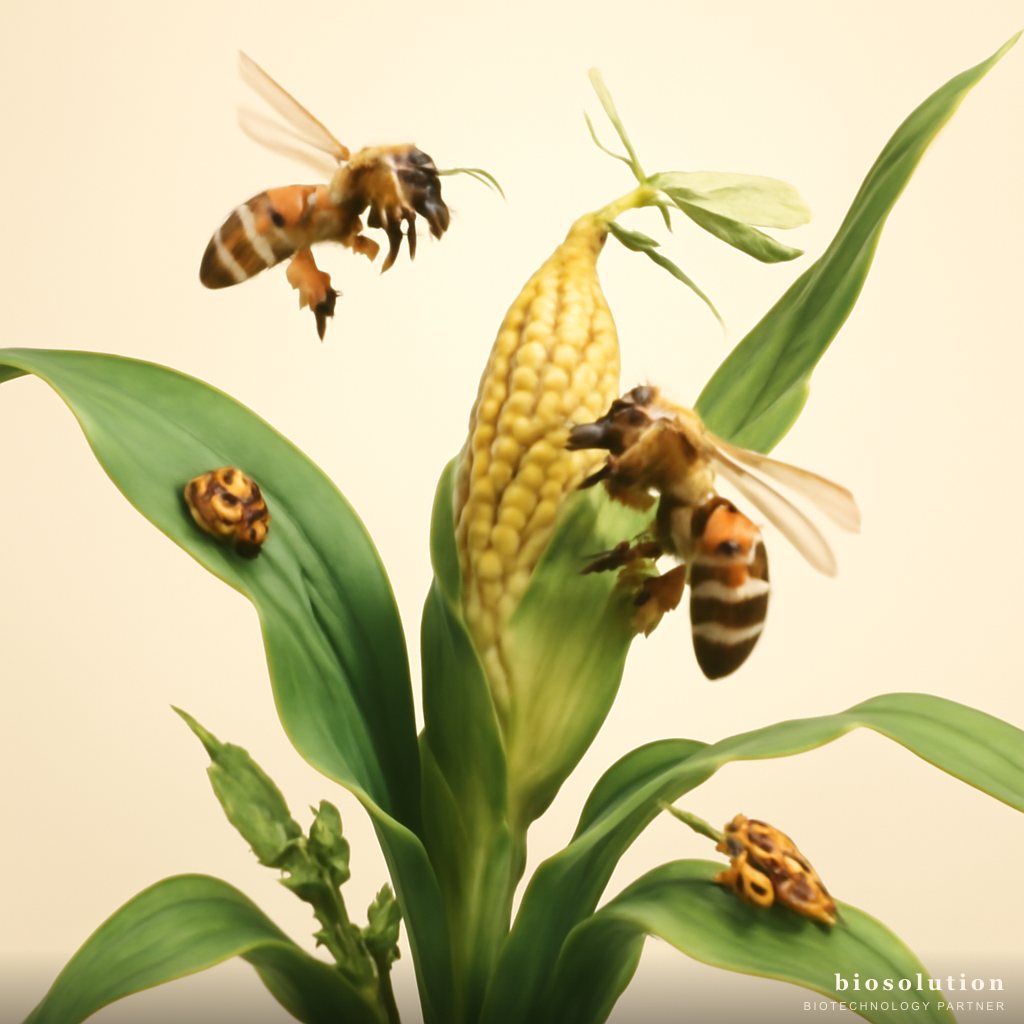
Yes, entomopathogenic fungi like Beauveria bassiana and Metarhizium anisopliae have specific targets on pest insects. However, to avoid risk, application should be done when bees are not active (early morning or late afternoon). This product has also been tested for toxicity to honey bees and shows minimal impact.
How long does the biopesticide last in the field?
Fungal spores can survive 3–7 days on leaf surfaces depending on weather conditions. High humidity and moderate temperatures (20–30°C) extend viability. Therefore, reapplication every 7–10 days is recommended.
Can the biopesticide be mixed with foliar fertilizers?
Generally, biopesticides can be mixed with organic foliar fertilizers, but avoid mixtures with fertilizers containing heavy metals or fungicides. Conduct a compatibility test by mixing a small amount and observing the reaction within 30 minutes.
Conclusion
Eco-friendly biopesticides like Biosolution's Broad-Spectrum Biological Insecticide Formula offer effective and sustainable solutions for pest control. With proper dosage (2–3 ml/L), late afternoon application (RH >70%), and appropriate adjuvant combinations, farmers can achieve 80–85% efficacy without chemical residues. This product is compatible with IPM programs and safe for the ecosystem. For further consultation on eco-friendly biopesticide application, contact the Biosolution team via WhatsApp or see the product Biological Pest Control Formula for optimal results in your fields.