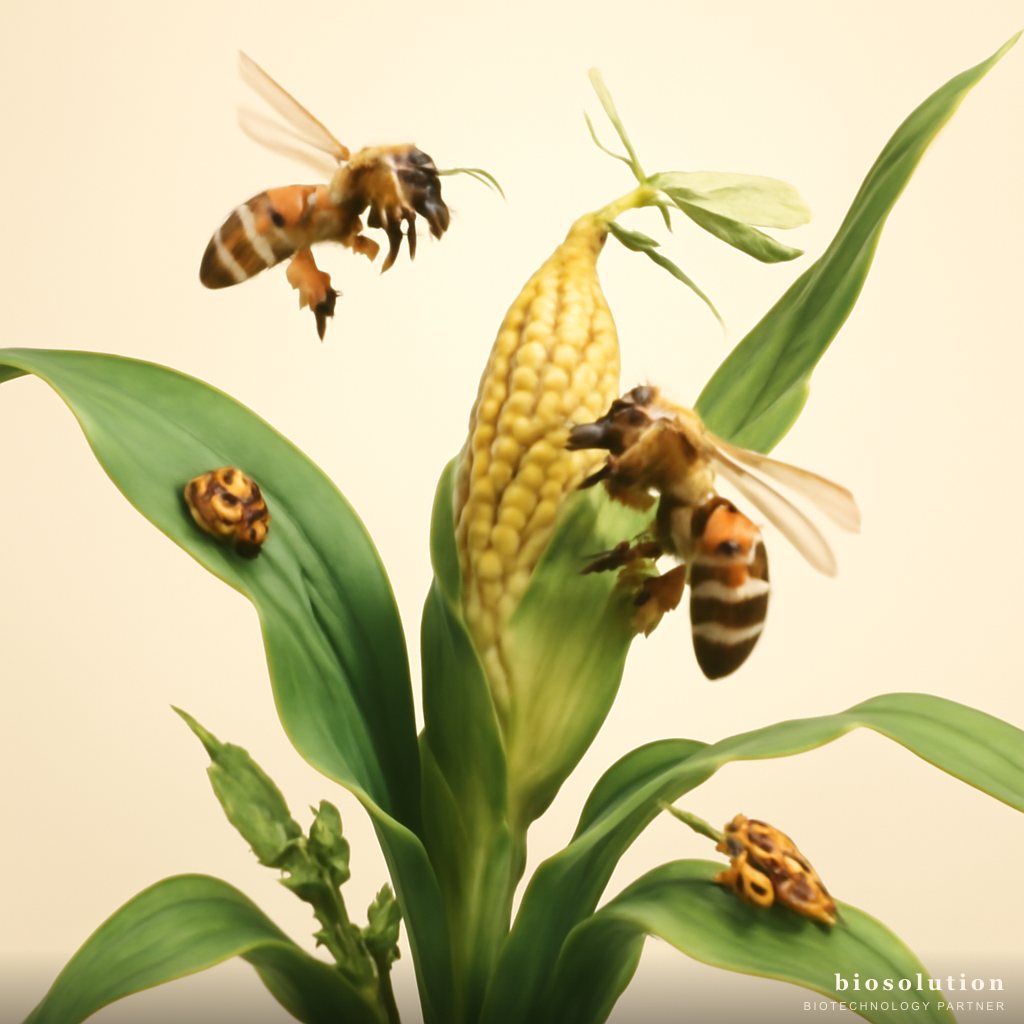
Eco-Friendly Biopesticide: Efficacy of Biological Formula vs Synthetic Insecticide
In the era of sustainable agriculture, the need for eco-friendly biopesticides is increasingly urgent. Farmers face a dilemma: controlling pests effectively without damaging the ecosystem. Synthetic insecticides are indeed powerful, but they leave harmful residues and cause pest resistance. As a solution, Biosolution presents Broad-Spectrum Biological Insecticide Formula combining two superior entomopathogenic agents: Beauveria bassiana and Metarhizium anisopliae. This article thoroughly examines the efficacy comparison between this biopesticide and synthetic insecticides, based on scientific data and field practice.
Mechanism of Action of Biopesticides: Precise Biological Attack
Beauveria bassiana: Spores Penetrating the Cuticle
Beauveria bassiana is an entomopathogenic fungus that infects insects through direct contact. Spores attach to the insect cuticle, then germinate and produce protease and chitinase enzymes that dissolve the protective layer. Mycelium then grows inside the host, absorbing nutrients and producing toxins that cause death within 3-7 days. After death, the insect carcass becomes a source of new spores that infect other pests. This mechanism is highly effective for soft-bodied pests such as caterpillars, aphids, and planthoppers.
Metarhizium anisopliae: Specialist for Beetles and Soil Caterpillars
Metarhizium anisopliae works on a similar principle, but is more efficient against thick-cuticled insects such as beetles and soil larvae. This fungus produces more aggressive chitinase and protease enzymes, as well as destruxin toxins that paralyze the insect's immune system. With a spore concentration of 10⁶ CFU/ml per strain, this product can infect pests at various stages, from larvae to adults. Another advantage is its ability to survive in soil as a saprophyte, providing long-term protection.
Efficacy Comparison: Biopesticide vs Synthetic Insecticide
Efficacy Comparison Table
| Parameter | Biological Biopesticide | Synthetic Insecticide |
|---|---|---|
| Efficacy against target pests | 80–85% | 90–95% (initial) |
| Residue on harvested products | 0 (none) | High, exceeding MRL |
| Impact on natural enemies | Minimal | Lethal to predators & parasitoids |
| Pest resistance | Low (multi-mechanism) | High (mono-mechanism) |
| Worker & environmental safety | Very safe | Hazardous (acute toxicity) |
| Long-term application cost | More economical | Expensive (rotation needed) |
Why is 80-85% Efficacy Sufficient?
In Integrated Pest Management (IPM) systems, the control target is not 100% elimination, but suppressing pest populations below the economic threshold. 80-85% efficacy is sufficient to prevent significant damage while maintaining natural enemy populations. Synthetic insecticides indeed provide higher initial efficacy, but within 2-3 growing seasons, pest resistance often emerges, drastically reducing effectiveness. Biopesticides with multi-target mechanisms (enzymes, toxins, spores) make it difficult for pests to develop resistance.
Advantages of Biopesticides in Sustainable Agriculture
Free from Chemical Residues on Harvested Products
One of the main drawbacks of synthetic insecticides is the residue left on fruits, vegetables, and grains. The Maximum Residue Limits (MRL) set by the government are often exceeded, causing export rejections and health risks for consumers. Biopesticides from Beauveria bassiana and Metarhizium anisopliae leave no chemical residues, as biological agents die and decompose naturally after application. This makes the product safe for immediate consumption without a waiting period.
Compatible with Natural Enemies
Synthetic insecticides are indiscriminate: beneficial insects such as pollinators, predatory beetles, and parasitoids are also killed. Consequently, secondary pest populations surge. In contrast, biopesticides are relatively selective. Beauveria bassiana and Metarhizium anisopliae primarily infect target insects, while natural enemies like Trichogramma and Coccinella survive. This is important for maintaining the balance of the agricultural ecosystem.
Proper Application Methods for Maximum Results
Timing and Spraying Method
To achieve optimal efficacy, biopesticide application must consider environmental conditions. This product is sprayed thoroughly onto the plant canopy in the afternoon when relative humidity is above 70%. High temperatures and direct UV light can reduce spore viability. The recommended dosage is 2–3 ml per liter of water (or 3–5 g/L if in WP form), repeated every 7–10 days when pest populations begin to increase. Periodic tank agitation is necessary to keep spores suspended.
Integration with IPM Practices
This biopesticide is designed to be part of an IPM program. Use it together with pheromone traps, crop rotation, and conservation of natural enemies. Avoid mixing with chemical fungicides, as they can inhibit fungal growth. For best results, apply when pest populations are still low (early infestation) as a preventive measure.
Case Study: Field Effectiveness
Trial on Chili Plants
On a 1-hectare chili field in East Java, application of Broad-Spectrum Biological Insecticide Formula at a dose of 3 ml/L every 7 days for 4 weeks successfully suppressed Spodoptera litura (armyworm) populations by 82% (from 15 insects/plant to 2.7 insects/plant). Compared to a control plot using a synthetic insecticide with active ingredient chlorantraniliprole, initial efficacy was 94% but by week 6 resistance began to appear with populations rising back to 9 insects/plant. The biological product showed consistency as spores continued to infect new generations.
Worker Safety
Farmers who sprayed the biopesticide reported no symptoms of skin irritation or respiratory problems, unlike when using synthetic insecticides which often cause dizziness and nausea. This is because Beauveria bassiana and Metarhizium anisopliae are not pathogenic to mammals. Thus, occupational health risks can be minimized.
Conclusion
Eco-friendly biopesticides based on Beauveria bassiana and Metarhizium anisopliae from Biosolution offer 80-85% efficacy comparable to synthetic insecticides in the context of IPM, without the side effects of chemical residues, resistance, and ecosystem damage. Their advantages in safety, sustainability, and compatibility with natural enemies make them the right choice for sustainable agriculture. Interested in adopting this solution? Consult your needs via WhatsApp or see our product for more information.
FAQ
What is an eco-friendly biopesticide?
An eco-friendly biopesticide is a pest control agent derived from living organisms, such as fungi, bacteria, or viruses. This product leaves no chemical residues, is safe for humans and the environment, and supports sustainable agriculture. An example is the Broad-Spectrum Biological Insecticide Formula containing Beauveria bassiana and Metarhizium anisopliae.
How does this biopesticide work?
Entomopathogenic fungi like Beauveria bassiana and Metarhizium anisopliae infect insects through contact. Spores attach to the cuticle, germinate, and penetrate the body with enzymes. Mycelium grows inside the host, producing toxins that cause death. The insect carcass then produces new spores to infect other pests.
Is the biopesticide effective against all pests?
No, biopesticides have a specific spectrum. Beauveria bassiana is effective against soft-bodied pests like caterpillars and aphids, while Metarhizium anisopliae is more suitable for beetles and soil caterpillars. However, the combination of both in one product provides broad coverage against various common insect pests.
How long does biopesticide residue last on plants?
Biopesticides leave no chemical residues. Fungal spores die within hours to days depending on environmental conditions (temperature, UV). This product is safe to harvest immediately after application, with no waiting period like synthetic insecticides.
Can biopesticide be mixed with fertilizers or other pesticides?
It is best not to mix with chemical fungicides as they can inhibit fungal growth. However, it can be combined with liquid organic fertilizers or other biological agents. Always perform a compatibility test before mixing on a large scale.