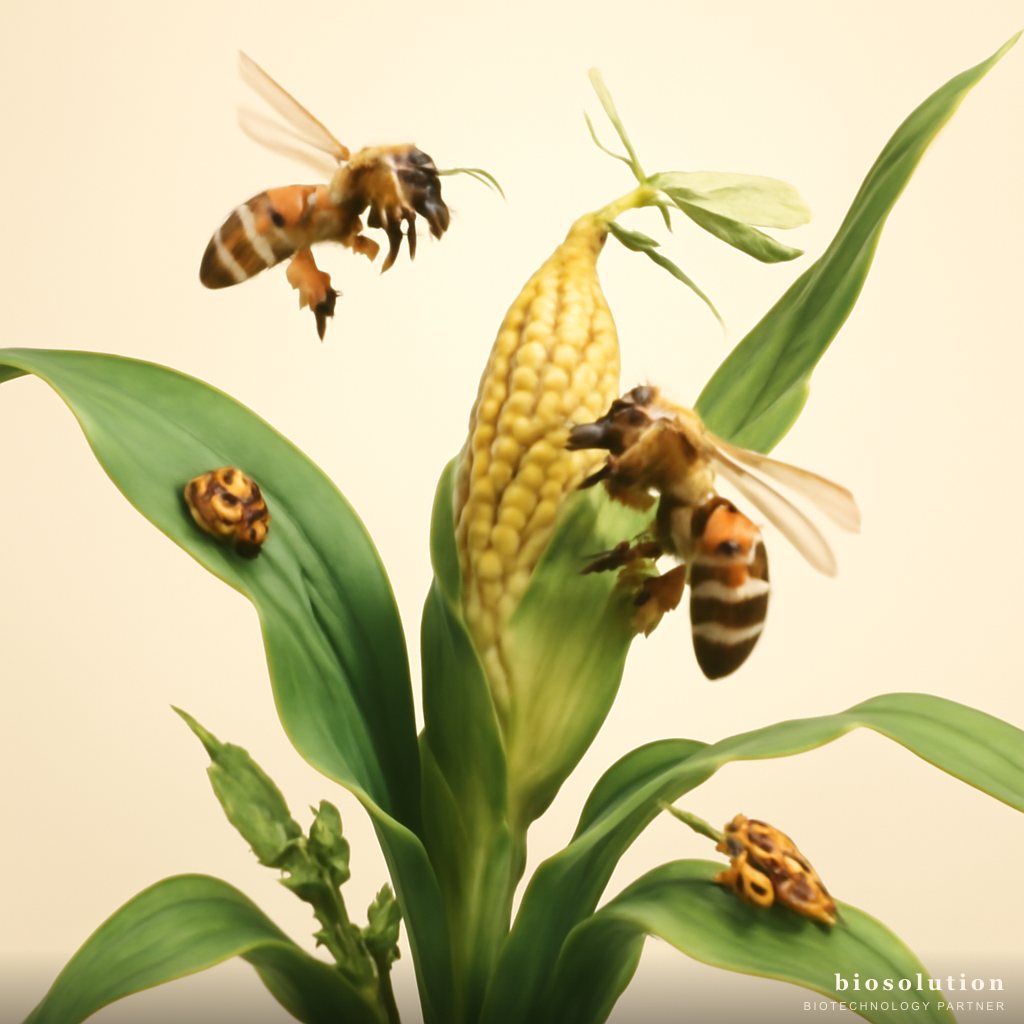
Eco-Friendly Biopesticide: Integration of Biological Formula for Integrated Pest Management
Modern agriculture faces a serious challenge: how to increase productivity without harming the environment? Eco-friendly biopesticides emerge as a strategic solution, replacing synthetic chemical pesticides that leave harmful residues. Biosolution, through its Broad-Spectrum Biological Insecticide Formula, offers an innovative approach by integrating two superior biological agents: Beauveria bassiana and Metarhizium anisopliae. This article will discuss how this formula is integrated with natural enemies within the framework of Integrated Pest Management (IPM) for sustainable agriculture.
Why Eco-Friendly Biopesticides Are Key to Sustainable Agriculture
Chemical pesticides have long been a mainstay for farmers, but their negative impacts are increasingly evident: residues on crops, soil and water contamination, pest resistance, and health risks to farmers. Eco-friendly biopesticides offer a safe and effective alternative. Unlike chemical pesticides that work through contact and systemic toxicity, biopesticides work through biological mechanisms specific to target pests.
Eco-friendly biopesticides have several key advantages:
- High selectivity: Do not kill natural enemies such as predators and parasitoids.
- Rapid degradation: Do not leave harmful residues on plants and the environment.
- Support biodiversity: Beneficial insect populations are maintained.
- Compatible with IPM: Can be combined with other control techniques.
In the context of sustainable agriculture, the use of eco-friendly biopesticides is a concrete step towards a healthier and more sustainable food production system.
Broad-Spectrum Biological Insecticide Formula: Synergy of Two Entomopathogens
Composition and Role of Strains
Biosolution's Broad-Spectrum Biological Insecticide Formula contains two entomopathogenic strains formulated at high concentrations:
- Beauveria bassiana (concentration 10⁶ CFU/ml): Attacks soft-bodied insect pests such as caterpillars, aphids, and planthoppers. Spores attach to the cuticle, then germinate and penetrate the host's body through the activity of protease and chitinase enzymes.
- Metarhizium anisopliae (concentration 10⁶ CFU/ml): Effective against beetles, grubs, and soil pests. Similar mechanism with enzymatic penetration and mycelial growth in the hemolymph.
The combination of these two strains provides a broad control spectrum, covering various important pests in food crops, horticulture, and plantations. With an application dose of 2–3 ml per liter of water (or 3–5 g/L for WP formulation), farmers can effectively control pest populations.
Mechanism of Action of Biopesticides
The infection process begins when spores contact the insect cuticle. In humid conditions (RH >70%), spores germinate and produce germ tubes that penetrate the cuticle mechanically and enzymatically. Once inside the body, mycelium grows rapidly, consuming host nutrients and producing toxins that cause death within 3–7 days. Subsequently, mycelium emerges on the carcass surface and produces new spores ready to infect other healthy insects. This cycle enables sustained control in the field.
Integration with Natural Enemies in Integrated IPM
Integrated Pest Management (IPM) is a pest management strategy that combines various control methods wisely to minimize economic losses and environmental impact. Eco-friendly biopesticides like the Broad-Spectrum Biological Insecticide Formula are important components of IPM because they are compatible with natural enemies.
Synergy with Predators and Parasitoids
Unlike broad-spectrum chemical insecticides that kill non-target insects, biological biopesticides are selective. Beauveria bassiana and Metarhizium anisopliae only infect certain pest insects, while predators like lady beetles (Coccinellidae) and parasitoids like Trichogramma remain safe. This allows natural enemy populations to persist and contribute to naturally suppressing pests.
Rotation with Other Biological Agents
To prevent resistance and enhance effectiveness, farmers can rotate the Broad-Spectrum Biological Insecticide Formula with other biopesticide products that have different mechanisms, such as those containing Bacillus thuringiensis (Bt) or entomopathogenic viruses. This rotation maintains selection pressure on pests and extends the useful life of biopesticides.
Application Practices Supporting IPM
Biopesticide application should be done in the afternoon when humidity is high and temperature is not too hot. Thorough spraying of the plant canopy ensures spores reach the target. Application frequency is every 7–10 days when pest populations begin to increase, not on a fixed schedule. Regular monitoring of pest and natural enemy populations is highly recommended to determine the right application timing.
Advantages and Efficacy Data of the Biological Insecticide Formula
Based on product technical data, the Broad-Spectrum Biological Insecticide Formula has 80–85% efficacy against target pests. Other advantages include:
- Chemical residue-free: Safe for consumption and leaves no toxins on harvested crops.
- Safe for workers and the environment: Does not cause skin irritation or pollution.
- Compatible with IPM programs: Can be integrated with other cultivation practices.
The concentration data of 10⁶ CFU/ml for each strain ensures optimal viability and infectivity. Farmers can rely on this product as an effective solution for controlling common insect pests.
Case Study: Application on Rice and Chili Plants
Rice Plants
Major rice pests such as brown planthopper (Nilaparvata lugens) and stem borer (Scirpophaga incertulas) can be controlled by spraying the Broad-Spectrum Biological Insecticide Formula. Application during vegetative and generative phases at 7–10 day intervals can suppress populations below the economic threshold. Farmers in West Java reported a reduction in chemical pesticide use by up to 50% after adopting this biopesticide.
Chili Plants
On chili, pests such as aphids (Aphis gossypii) and fruit worms (Helicoverpa armigera) are often problematic. With regular spraying using a dose of 2 ml/L water, pest populations decrease significantly. Another advantage is that chili fruits are residue-free, making them safe for fresh consumption. Integration with natural enemies like aphid predators (Menochilus sexmaculatus) further strengthens control.
Usage Instructions and Effectiveness Tips
For optimal results, follow these application guidelines:
- Dosage: Mix 2–3 ml of product per liter of water (or 3–5 g/L for WP). Stir until homogeneous.
- Application time: Afternoon (3:00–5:00 PM) when humidity >70% and temperature <30°C.
- Method: Spray evenly over all plant parts, especially the undersides of leaves where pests often hide.
- Frequency: Repeat every 7–10 days if pest populations are still high. Reduce frequency if populations begin to decline.
- Combination: Use alternately with other biological agents to prevent resistance.
Avoid mixing with chemical fungicides as they can inhibit spore growth. Store the product in a cool, dry place away from direct sunlight.
Conclusion
Eco-friendly biopesticides like Biosolution's Broad-Spectrum Biological Insecticide Formula offer an effective and safe solution for controlling common insect pests. By integrating two superior entomopathogenic strains, Beauveria bassiana and Metarhizium anisopliae, this product achieves 80–85% efficacy without leaving chemical residues. Integration with natural enemies within the integrated IPM framework makes it the right choice for farmers looking to transition to sustainable agriculture. For further consultation on the application of this product, contact the Biosolution team via WhatsApp or visit the product page Biological Pest Control Formula.