Eco-Friendly Biopesticide: Why Chemical Pesticides Fail and How Biological Formulas Overcome Pest Resistance
Amid growing awareness of the negative impacts of chemical pesticides, farmers are shifting to eco-friendly biopesticides as a key solution in sustainable agriculture. Unfortunately, many still doubt because they consider biological products less potent. In fact, the failure of chemical pesticides is proof that conventional approaches are no longer relevant. Pest resistance, environmental pollution, and residue on harvests are real problems that can only be addressed with microbial-based biological pest control technology. This article explores the science behind the advantages of biopesticides and how Biosolution's product, the Broad-Spectrum Biological Insecticide Formula, is the answer to the challenge of resistance.
Why Chemical Pesticides Fail: The Phenomenon of Pest Resistance
Synthetic chemical pesticides have been used massively since the Green Revolution. However, in recent decades, their effectiveness has drastically declined. Pests such as Plutella xylostella (diamondback moth), Spodoptera litura (armyworm), and Nilaparvata lugens (brown planthopper) have been reported resistant to various active ingredients. According to FAO data, more than 600 pest species have developed resistance to one or more insecticides. Resistance mechanisms include genetic mutations at target sites, increased detoxification metabolism, and changes in pest behavior.
As a result, farmers are forced to increase doses or application frequency, which actually accelerates resistance and pollutes the environment. Chemical residues on agricultural products also pose health risks to consumers. Here, eco-friendly biopesticides offer a different approach: instead of killing with poison, biological agents work biologically through infection and competition.
Mechanism of Action of Biological Biopesticides: The Science Behind Effectiveness
Biosolution's eco-friendly biopesticide contains two superior entomopathogenic strains: Beauveria bassiana and Metarhizium anisopliae. Both are fungi that naturally infect insects. The mechanism involves several stages:
- Adhesion and penetration: Spores attach to the insect cuticle, then germinate and penetrate the cuticle using protease and chitinase enzymes.
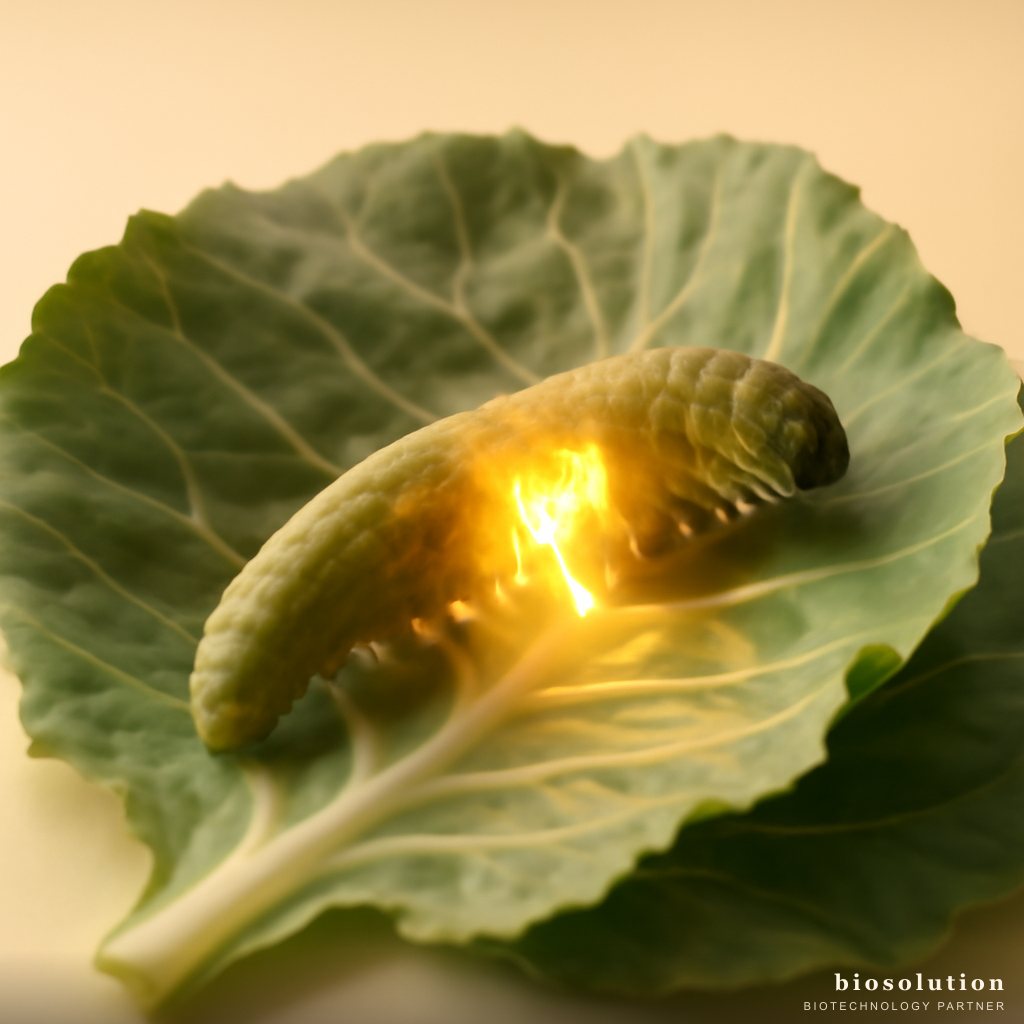
- Colonization inside the body: Mycelium grows in the hemolymph, producing toxins such as beauvericin and destruxin that paralyze the pest's immune and digestive systems.
- Death and sporulation: The pest dies within 3-7 days, then mycelium emerges and forms new spores ready to infect other pests.
Main advantage: target pests do not easily develop resistance due to multi-enzymatic attack and toxins. Each strain has a different target spectrum: B. bassiana is effective against soft-bodied insects (caterpillars, aphids), while M. anisopliae excels on beetles and cutworms. The combination of both in the Biological Insecticide Formula provides 80-85% efficacy against various pests.
Advantages of Eco-Friendly Biopesticides Compared to Chemicals
1. No Multiple Resistance
Due to the complex biological mechanism of action, pests find it difficult to develop resistance to entomopathogenic fungi. Research at IRRI shows that M. anisopliae remains effective after 20 generations of application, while chemical insecticides lose effectiveness after 5-10 generations.
2. Safe for Humans and Ecosystems
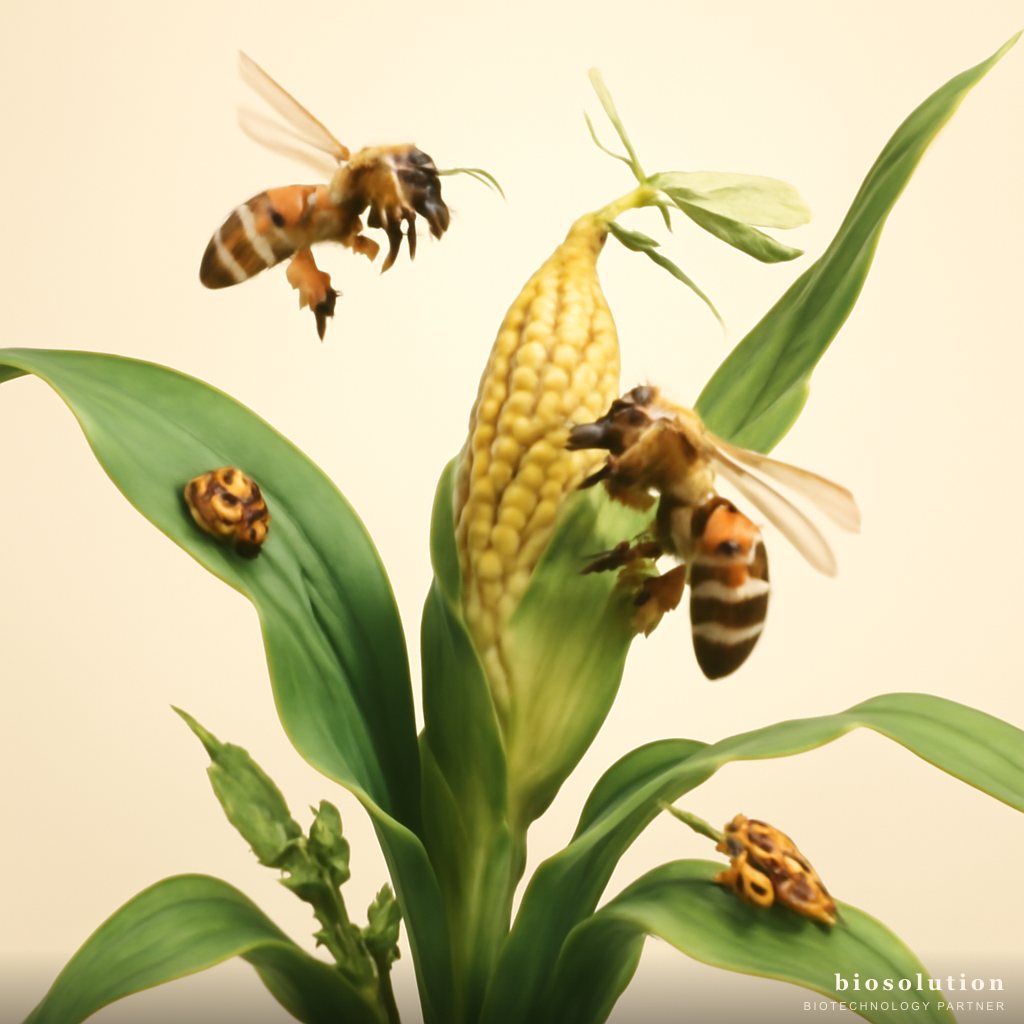
Biopesticides do not leave harmful residues on harvests. Biosolution's product has a concentration of 10⁶ CFU/ml per strain, safe for workers, pollinators, and natural enemies. In fact, biopesticide application supports biodiversity.
3. Supports Sustainable Agriculture
By using eco-friendly biopesticides, farmers can reduce long-term production costs because repeated applications are not needed. This product is compatible with Integrated Pest Management (IPM) programs and suitable for organic certification.
Proper Application for Maximum Results
For optimal biopesticide performance, application must consider environmental conditions. Here is a guide from Biosolution:
- Dosage: 2-3 ml per liter of water (liquid formulation) or 3-5 g/L for WP formulation.
- Time: Late afternoon when humidity >70%, as spores need humidity to germinate.
- Frequency: Every 7-10 days when pest populations begin to increase, not after an outbreak.
- Method: Spray evenly over the entire plant canopy, especially the underside of leaves where pests often hide.
Avoid mixing with chemical fungicides as they can inhibit fungal growth. For best results, use Biosolution's biological product regularly as part of an IPM schedule.
Case Study: Farmers' Success Switching to Biopesticides
In Malang Regency, a group of chili farmers complained about Spodoptera litura attacks resistant to pyrethroid insecticides. After switching to biological biopesticides Beauveria bassiana and Metarhizium anisopliae, pest populations dropped by 80% within two weeks. Production costs decreased by 30% because applications were not needed every 3 days. Harvests increased and were residue-free, leading to higher selling prices. This story proves that eco-friendly biopesticides are not just a trend, but a real solution.
Conclusion
Chemical pesticides have failed to address the challenges of pest resistance and environmental impact. Eco-friendly biopesticides from Biosolution, with a dual formula of Beauveria bassiana and Metarhizium anisopliae, offer high efficacy (80-85%) without residue, safe for ecosystems, and support sustainable agriculture. By applying IPM principles and proper application techniques, farmers can effectively control pests while preserving nature. Want to know more? Contact the Biosolution team via WhatsApp for a free consultation or see our biological pest control product.
FAQ
1. Are eco-friendly biopesticides safe for plants? Yes, Biosolution's biological biopesticides are safe for plants because they only target insect pests. Entomopathogenic fungi are not phytopathogenic. In fact, some strains can stimulate plant growth through hormone production.
2. How long does it take for pests to die after application? Pest death usually occurs 3-7 days after application, depending on species and environmental conditions. Maximum effect is seen on day 5. However, infected pests stop feeding within 24-48 hours, reducing plant damage.
3. Can biopesticides be mixed with chemical pesticides? It is best not to mix with chemical fungicides as they can kill the fungi. However, biopesticides can be used alternately with chemical insecticides in an IPM program. Allow a minimum 3-day interval after chemical application.
4. Are biopesticides effective against all types of pests? This product is formulated for common insect pests such as caterpillars, aphids, planthoppers, and beetles. For specific pests (e.g., mites), consult the Biosolution team for appropriate product recommendations.
5. How should biopesticides be stored properly? Store in a cool, dry place, away from direct sunlight. Ideal storage temperature is 4-15°C. Do not freeze. Liquid products have a shelf life of 6 months, while WP up to 1 year if stored according to instructions.