Eco-Friendly Biopesticides for Sustainable Agriculture: A Guide to Field Pest Population Monitoring
Sustainable agriculture requires effective pest control approaches that do not harm the ecosystem. Eco-friendly biopesticides provide an answer, utilizing antagonistic microorganisms to naturally suppress pest populations. However, the success of biopesticide application heavily depends on accurate pest population monitoring. This article will discuss trap, scout, and economic threshold techniques as a basis for decision-making, and how Biosolution's Broad-Spectrum Biological Insecticide Formula can be a key weapon in an Integrated Pest Management (IPM) strategy.
Why Are Eco-Friendly Biopesticides Important for Sustainable Agriculture?
Modern agriculture faces a major challenge: increasing productivity without compromising soil health, water, and biodiversity. Excessive use of synthetic chemical pesticides has been proven to cause pest resistance, secondary pest outbreaks, and environmental pollution. This is where eco-friendly biopesticides play a crucial role. Biopesticides, derived from living organisms such as fungi, bacteria, or viruses, work specifically against target pests and degrade easily in nature. According to the Indonesian Ministry of Agriculture, the application of biopesticides supports sustainable agriculture programs by reducing chemical residues on crops and maintaining farmer health. Products like Biosolution's Biological Insecticide Formula contain Beauveria bassiana and Metarhizium anisopliae, proven effective in controlling various insect pests with 80-85% efficacy.
Pest Population Monitoring Techniques: Trap, Scout, and Economic Threshold
Pest population monitoring is the first step that must not be overlooked in biopesticide application. Without accurate data, farmers may apply at the wrong time—too early or too late. Here are three main methods:
Traps
Traps are used for early detection of pest presence. Examples include yellow sticky traps for aphids or pheromone traps for moths. Place traps at several points in the field, at least 5-10 per hectare, and check them weekly. Record the number of pests caught to monitor population trends.
Scouting
Scouting involves walking systematically through the field (e.g., diagonal or zigzag pattern) and observing sample plants. Count the number of pests per plant or per plant part (leaves, stems, flowers). For pests like caterpillars or beetles, also note damage symptoms such as holes in leaves or wilting.
Economic Threshold
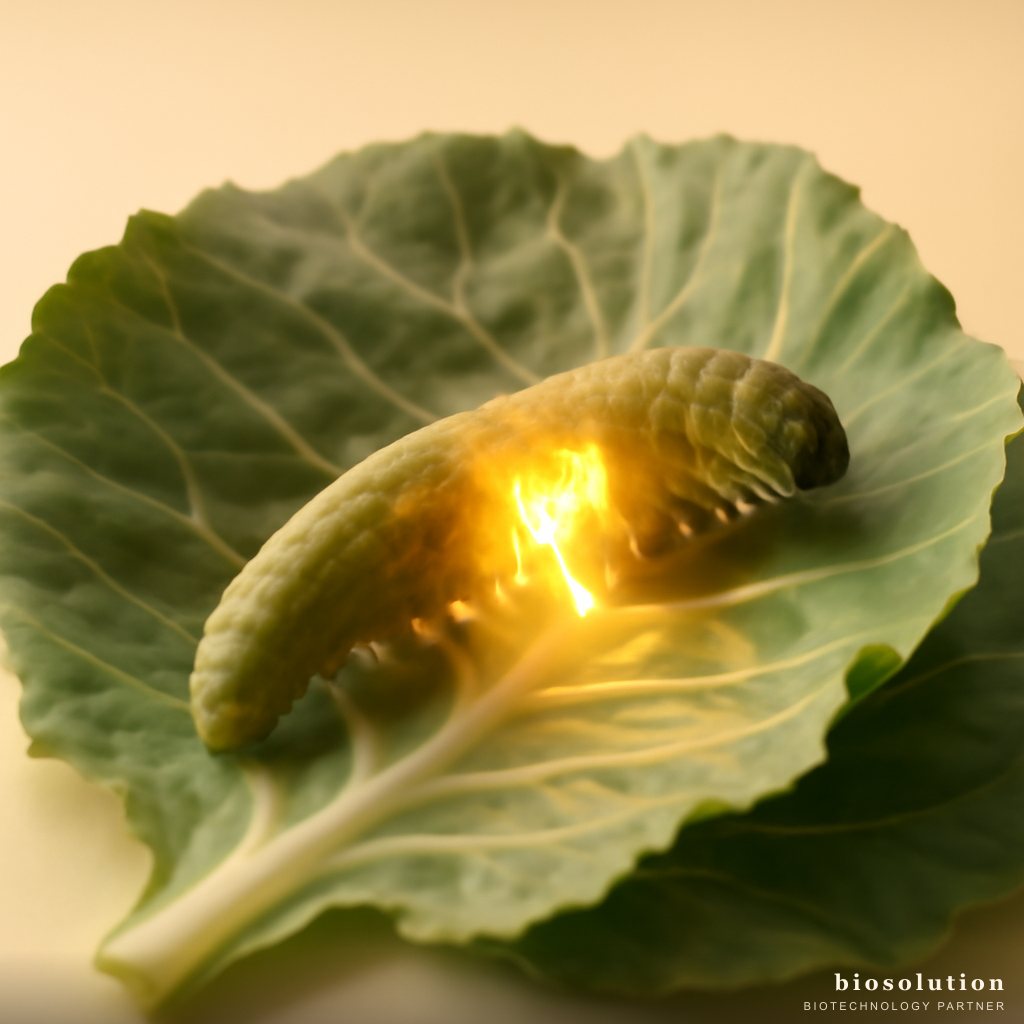
The economic threshold is the pest population density at which control action must be taken to prevent economic loss exceeding control costs. Threshold values differ for each pest and crop. For example, for fall armyworm on corn, the economic threshold is about 2-3 larvae per plant. Once the population reaches the threshold, it is time to apply biopesticide.
Mechanism of Action of Entomopathogenic Fungus-Based Biopesticides
The Biological Insecticide Formula product contains two superior entomopathogenic fungal strains: Beauveria bassiana and Metarhizium anisopliae. Both work by contact, not requiring ingestion by the pest. Here are the infection stages:
- Spore attachment to cuticle: Conidia spores attach to the insect's body surface.
- Enzymatic penetration: The fungus secretes protease and chitinase enzymes to penetrate the cuticle.
- Mycelial growth: Mycelium develops inside the hemolymph (insect blood), absorbing nutrients.
- Pest death: The pest dies within 3-7 days, often hardening like a mummy.
- Sporulation: On the pest carcass, the fungus produces new spores ready to infect other pests (secondary infection).
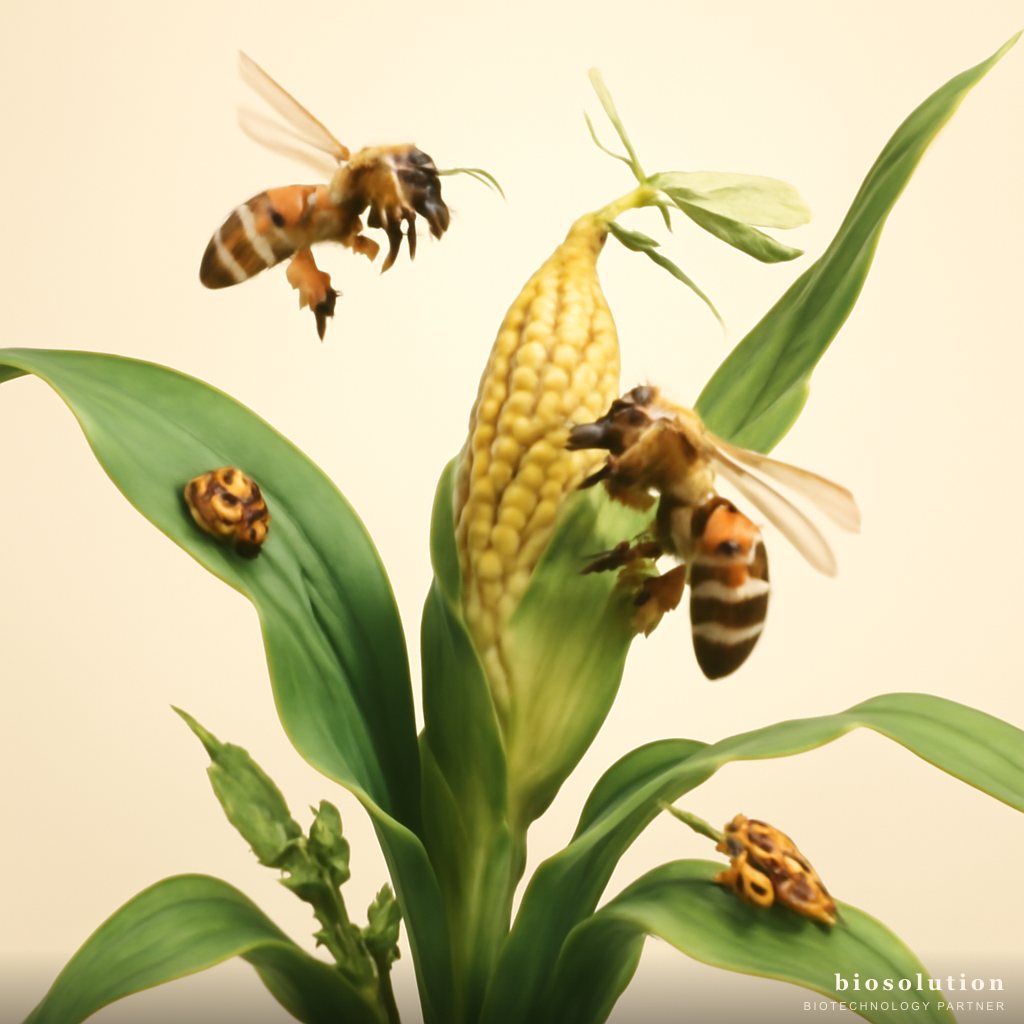
The advantage of this mechanism is that pests are less likely to develop resistance due to the multi-enzyme involvement. Additionally, biopesticides are safe for non-target insects such as pollinating bees and natural enemies.
Effective Field Application Guide for Biopesticides
For optimal biopesticide performance, consider the following:
Application Timing
Spray in the late afternoon (3:00-5:00 PM) when relative humidity is >70% and temperature is not too hot. High humidity helps spores germinate. Avoid application during rain or intense heat.
Dosage and Spraying Method
For liquid products, use a dosage of 2-3 ml per liter of water. Spray evenly over the entire plant canopy, especially the undersides of leaves where pests often hide. Ensure the spray reaches the pest's body surface. Repeat application every 7-10 days if the population remains high.
Compatibility with IPM
Biopesticides are highly compatible with other IPM components, such as the use of natural enemies (predators, parasitoids) and resistant varieties. Avoid mixing with chemical fungicides or broad-spectrum pesticides that can kill the fungi.
Case Study: Effectiveness of Biosolution's Biological Formula in the Field
Field trials on chili peppers in East Java showed that application of Biosolution's Biological Insecticide Formula at a dose of 3 ml/L suppressed aphid (Aphis gossypii) populations by up to 80% within 7 days after application. Farmers using this biopesticide reported healthier harvests without chemical residues. This success was due to regular monitoring using yellow traps and weekly scouting, ensuring application was done precisely when the population reached the economic threshold.
Challenges and Solutions in Biopesticide Adoption
Despite many advantages, biopesticide adoption still faces obstacles: farmer perception that biopesticides work slowly, storage requiring attention (avoid temperatures >40°C), and product availability. The solution is continuous education through demonstration plots and extension services. Biosolution provides products with stable formulations and practical packaging. For best results, farmers are advised to start with small plots and compare with chemical treatments. If pest populations are very high, biopesticides can be combined with botanical insecticides or selective chemical insecticides in rotation.
Conclusion
Eco-friendly biopesticides are an important pillar of sustainable agriculture. With proper monitoring techniques (trap, scout, economic threshold), farmers can apply biopesticides efficiently and effectively. Biosolution's Broad-Spectrum Biological Insecticide Formula, containing Beauveria bassiana and Metarhizium anisopliae, offers a safe, high-efficacy, residue-free pest control solution. For further consultation on IPM strategies for your land, contact the Biosolution team via WhatsApp.
FAQ
What is an eco-friendly biopesticide?
An eco-friendly biopesticide is a pesticide derived from living organisms such as fungi, bacteria, or viruses. Examples include the fungi Beauveria bassiana and Metarhizium anisopliae. Biopesticides degrade easily in nature, leave no harmful residues, and are safe for humans and non-target animals.
How to properly monitor pests?
Pest monitoring is done using three methods: traps for early detection, scouting to count populations, and determining the economic threshold to decide application timing. Place traps at several points, scout weekly, and record population data.
What is the dosage for Biosolution's Biological Insecticide Formula?
For liquid products, the dosage is 2-3 ml per liter of water. Spray evenly over the entire plant in the late afternoon when humidity is high. Repeat every 7-10 days if the pest population remains above the economic threshold.
Are biopesticides safe for bees and natural enemies?
Yes, biopesticides based on entomopathogenic fungi such as Beauveria bassiana and Metarhizium anisopliae are selective and generally safe for non-target insects like honeybees and predators. However, avoid direct spraying on flying bees.
How to store biopesticides to maintain effectiveness?
Store biopesticides in a cool, dry place away from direct sunlight. Ideal storage temperature is 15-25°C. Do not expose the product to temperatures >40°C. Use within 6 months of purchase for optimal results.