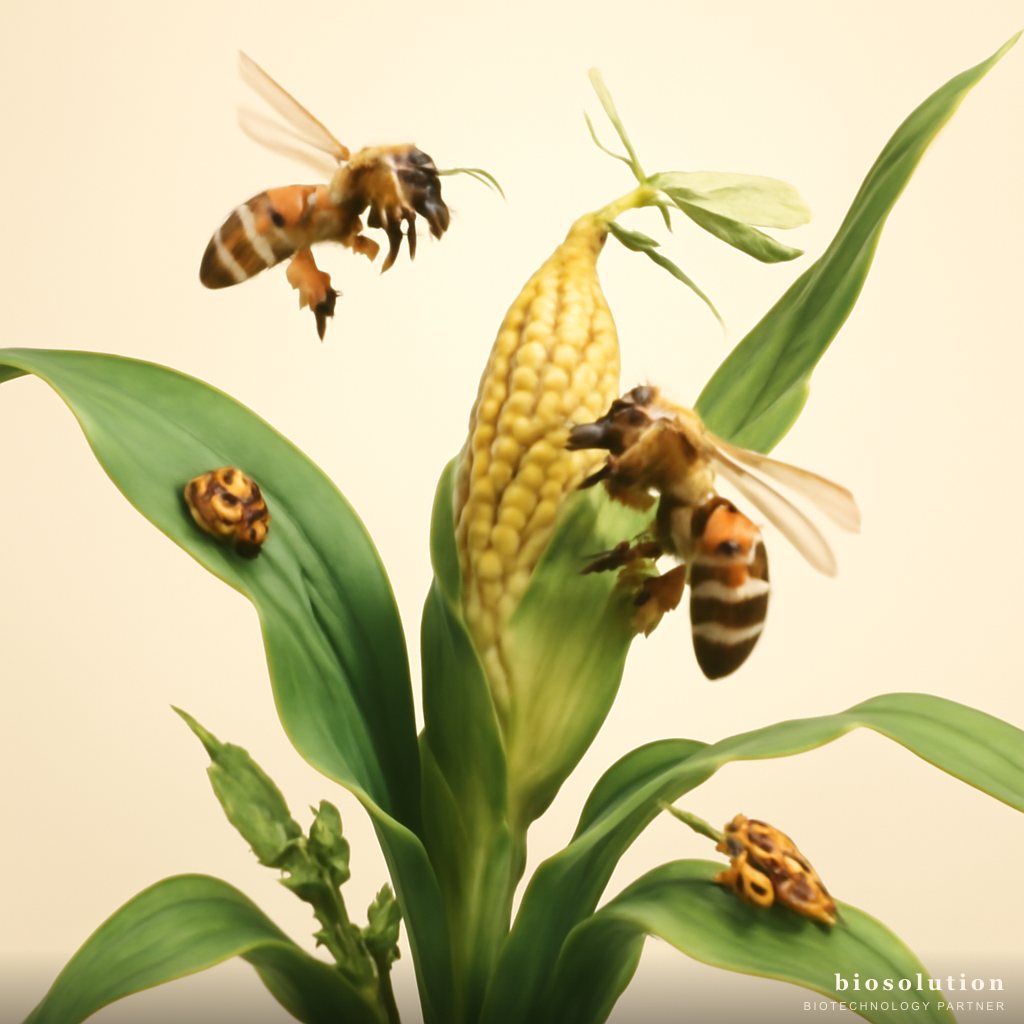
Environmentally Friendly Biopesticide: Biological Solution for Sustainable Agriculture
Environmentally friendly biopesticides are the top choice for modern farmers who want to increase productivity without damaging the ecosystem. With growing awareness of the negative impacts of chemical pesticides, the use of biological agents such as entomopathogenic fungi offers an effective and sustainable solution. This article thoroughly discusses biological control strategies using environmentally friendly biopesticides, specifically Biosolution's Broad-Spectrum Biological Insecticide Formula, designed to naturally control common insect pests.
Why Are Environmentally Friendly Biopesticides Important for Sustainable Agriculture?
Sustainable agriculture aims to meet food needs without compromising natural resources for future generations. The use of synthetic chemical pesticides poses a threat: chemical residues contaminate soil and water, kill natural enemies of pests, and cause pest resistance. This is where environmentally friendly biopesticides play a role. Based on microorganisms such as fungi, bacteria, or viruses, biopesticides work specifically against target pests, are safe for humans and non-target animals, and easily degrade in nature.
According to data from the Ministry of Agriculture, the use of biopesticides in Indonesia continues to increase alongside the Integrated Pest Management (IPM) program. Farmers who switch to biopesticides report a reduction in production costs of up to 30% because they no longer need to repeatedly buy chemical pesticides. Additionally, chemical-free harvests have higher market value, especially for export markets.
Broad-Spectrum Biological Insecticide Formula: Combination of Two Superior Fungi
Biosolution presents a Broad-Spectrum Biological Insecticide Formula that combines two entomopathogenic fungi: Beauveria bassiana and Metarhizium anisopliae. Both have complementary mechanisms of action to control various types of insect pests.
Beauveria bassiana: Specialist for Soft-Bodied Pests
Beauveria bassiana is an entomopathogenic fungus that infects insects through direct contact. Fungal spores attach to the insect's cuticle, then germinate and penetrate the host's body using protease and chitinase enzymes. Inside the body, mycelium grows rapidly, absorbs nutrients, and produces toxins that cause death within 3-7 days. Target pests include planthoppers, caterpillars, thrips, and aphids.
Metarhizium anisopliae: Reliable for Beetles and Soil Caterpillars
Metarhizium anisopliae excels in controlling pests that live in the soil or have harder cuticles, such as beetles, grubs, and cutworms. Its mechanism is similar: spore attachment, enzymatic penetration, and mycelium growth. Its advantage is its ability to persist in the soil for a long time, providing continuous protection.
The combination of these two strains in one formula results in a broad control spectrum. In field trials, efficacy reaches 80-85% against target pests, equivalent to chemical insecticides but without the risk of residues.
Mechanism of Action of Biopesticides: From Spores to Secondary Infection
The infection process of entomopathogenic fungi consists of several interesting stages:
- Spore attachment: Fungal spores sprayed onto plants attach to the insect's cuticle when the insect moves or feeds.
- Germination: Under high humidity conditions (RH > 70%), spores germinate to form germ tubes.
- Penetration: The germ tube penetrates the cuticle with the help of protease, chitinase, and lipase enzymes.
- Colonization inside the body: Mycelium grows in the hemolymph, producing beauvericin (B. bassiana) or destruxin (M. anisopliae) toxins that paralyze the insect's immune system.
- Death: The insect dies within 3-7 days, and mycelium emerges from the body to form new spores.
- Sporulation and secondary infection: Insect carcasses covered in white (B. bassiana) or green (M. anisopliae) mycelium release new spores, infecting other insects nearby. This is the advantage of biopesticides: a domino effect that strengthens control.
Effective Application Methods for Biopesticides
For environmentally friendly biopesticides to work optimally, application must be precise. Here is a practical guide:
- Application time: Late afternoon when humidity is high (RH > 70%) and temperature is not too hot. Avoid spraying during rain or intense sunlight.
- Dosage: 2-3 ml per liter of water for liquid formulations, or 3-5 g/L for wettable powder (WP) formulations. Stir until homogeneous.
- Method: Spray thoroughly on all parts of the plant, especially the underside of leaves where pests often hide. Use a pressurized sprayer for maximum coverage.
- Frequency: Repeat every 7-10 days when pest populations begin to increase. If the population is already high, application can be more frequent (5-7 days).
- Compatibility: This biopesticide is compatible with IPM programs. Avoid mixing with chemical fungicides as they can kill the fungi. However, it can be combined with botanical insecticides or other biological agents.
Advantages of Environmentally Friendly Biopesticides Compared to Chemical Pesticides
| Aspect | Biopesticide | Chemical Pesticide |
|---|---|---|
| Residue | No residue on harvest | Harmful chemical residues |
| Target | Specific to target pests | Kills all insects (including natural enemies) |
| Resistance | Low risk | High resistance |
| Safety | Safe for humans, animals, environment | Toxic to workers and environment |
| Persistence | Requires reapplication | Long-lasting, but damages ecosystem |
Biopesticides also support sustainable agriculture by maintaining biodiversity. Natural enemies of pests such as predators and parasitoids remain alive, making pest control more natural and stable.
Case Study: Success of Biopesticides in the Field
On a chili plantation in East Java, farmers complained about thrips and armyworm attacks resistant to chemical insecticides. After switching to the Broad-Spectrum Biological Insecticide Formula, pest populations dropped drastically within two weeks. Farmers reported healthier plants, undamaged fruit, and a 25% increase in yield. Production costs also decreased because they no longer needed to buy expensive chemical pesticides.
Another example in lowland rice farming: brown planthoppers, which are difficult to control, were successfully suppressed with regular applications of Beauveria bassiana. Farmers reported that planthopper populations dropped by up to 70% without side effects on fish raised in the rice fields.
Conclusion
Environmentally friendly biopesticides are a smart solution for sustainable agriculture. Biosolution's Broad-Spectrum Biological Insecticide Formula, with a combination of Beauveria bassiana and Metarhizium anisopliae, offers 80-85% efficacy, is residue-free, and safe for the ecosystem. With proper application, farmers can effectively control pests while maintaining soil, water, and consumer health. For more information or a free consultation, contact the Biosolution team via WhatsApp or visit our product page.