Fast Composting of Fruit and Vegetable Market Waste with Decomposer: A Smart Solution for Traditional Market Waste Management
Every day, traditional markets produce tons of rotting fruit and vegetable waste, causing unpleasant odors and becoming a source of disease. However, behind this pile of organic waste lies great potential: high-quality compost. The problem is that natural composting takes months and often fails due to a lack of decomposing microbes. This is where the role of a decomposer becomes key. This article will technically and journalistically discuss how to make fast compost from fruit and vegetable market waste with a decomposer based on microbiology, and how the Organic Waste Decomposer Formula from Biosolution can be the right solution for market managers to meet environmental quality standards.
Why Does Fruit and Vegetable Market Waste Require Special Handling?
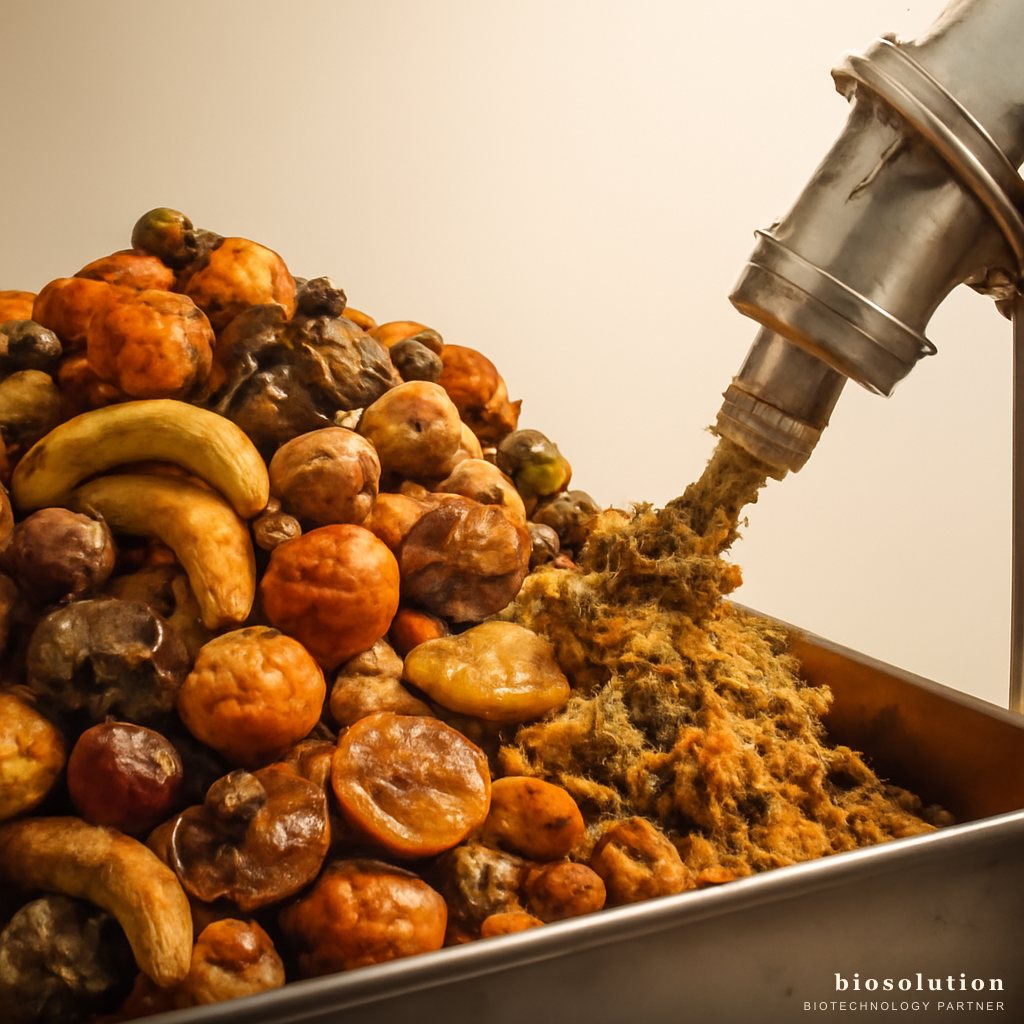
Fruit and vegetable market waste has unique characteristics: high moisture content (80-90%), acidic pH (pH 4-5), and rich in simple sugars. If left untreated, this condition triggers the growth of pathogenic bacteria and flies. Conventional composting often fails due to:
- Excessive moisture causing anaerobic decomposition (foul odor).
- Lack of oxygen because the pile is too dense.
- Insufficient natural microbial population to degrade cellulose and lignin.
By using a decomposer containing a consortium of superior microbes, the decomposition process can be accelerated. Products like Organic Waste Decomposer Formula from Biosolution contain Streptomyces sp. which produces enzymes and natural antibiotics, as well as a consortium of Bacillus and Aspergillus that work synergistically to break down complex compounds.
How Does a Decomposer Accelerate Composting?
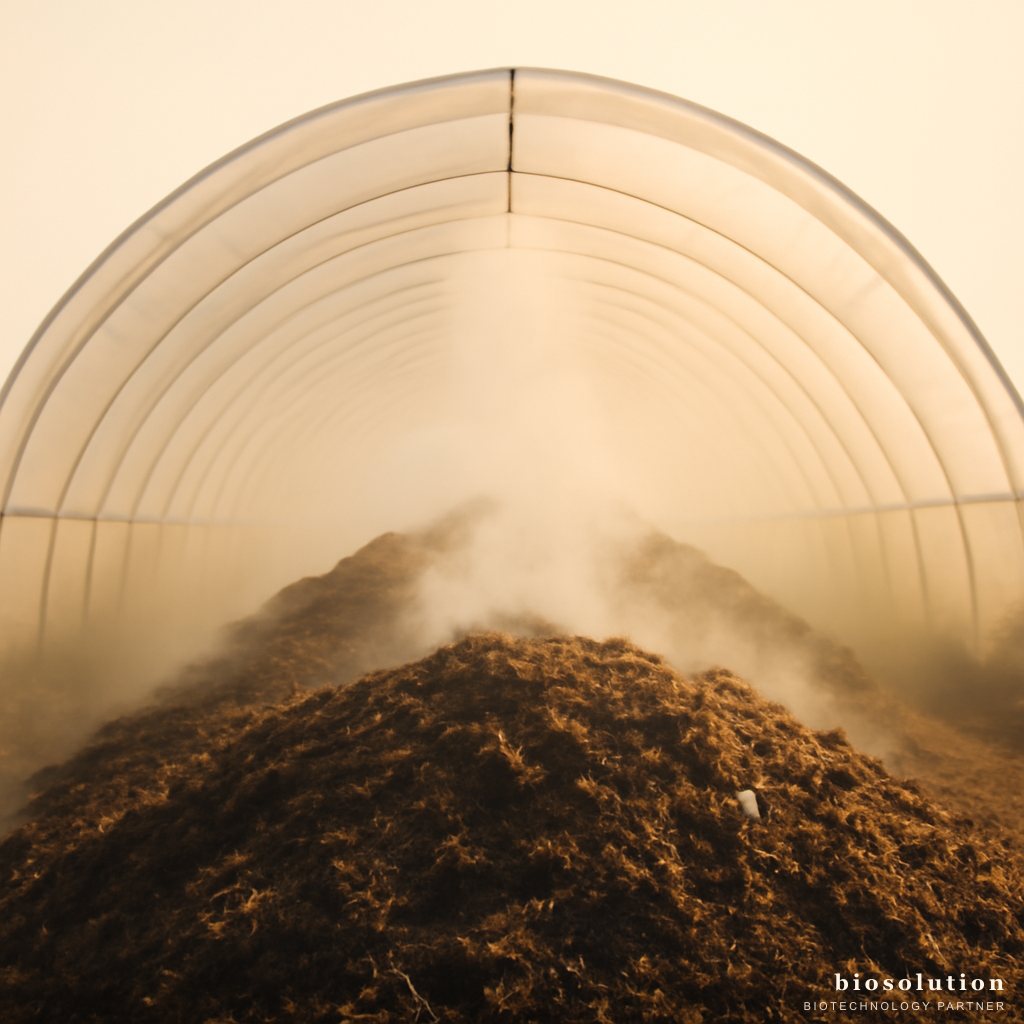
The decomposer works by inoculating decomposing microbes into the waste pile. These microbes produce extracellular enzymes such as cellulase, amylase, and protease that break down long chains of carbohydrates, proteins, and fats into simple molecules. This process generates heat (thermophilic) that kills pathogens and weed seeds.
Stages of Composting with a Decomposer
- Material preparation: Mix fruit/vegetable waste (carbon source) with nitrogen-rich materials (e.g., animal manure or urea) at a C/N ratio of 25-30:1.
- Decomposer application: Dilute 1 liter of Organic Waste Decomposer Formula in 10 liters of water, then sprinkle evenly over every 1 m³ of waste pile. Do this in the afternoon to avoid UV rays that can kill microbes.
- Turning: Turn the pile every 3-5 days to maintain aeration.
- Maturation: After 2-3 weeks, the compost is ready if the temperature is stable, dark brown in color, and smells like earth.
The advantage of using a decomposer is that waste volume is reduced by 30-50% in a short time, thereby reducing the burden on landfills.
Environmental Quality Standards: Standards That Market Managers Must Meet
The government, through Minister of Environment and Forestry Regulation No. P.70/Menlhk/Setjen/Kum.1/8/2016 concerning Emission and Waste Quality Standards for Organic Waste Management Businesses and/or Activities, stipulates important parameters:
- Moisture content: Maximum 50%
- C-organic: Minimum 15%
- Total N: Minimum 0.4%
- C/N ratio: 10-25
- pH: 6.5-7.5
- Heavy metals: Pb < 10 ppm, Cd < 1 ppm, etc.
Compost produced from a process with the right decomposer tends to meet these standards because the thermophilic process evaporates excess water and stabilizes pH. Additionally, Streptomyces sp. in the Biosolution formula produces compounds that bind heavy metals, making it safe for use.
Organic Waste Decomposer Formula: The Right Solution for Traditional Markets
Biosolution presents Organic Waste Decomposer Formula specifically designed for agricultural and livestock waste, including market waste. This product contains two main components:
- Streptomyces sp.: Gram-positive bacteria that produce cellulase, chitinase, and natural antibiotic enzymes. These enzymes break down plant cell walls (cellulose, hemicellulose, lignin) and insect chitin, accelerating decomposition. Its natural antibiotics suppress pathogen growth.
- Consortium of Bacillus + Aspergillus: Bacillus are thermophilic bacteria active at high temperatures, producing protease and amylase enzymes. Aspergillus is a fungus that efficiently degrades lignin and cellulose. The combination ensures fast and complete decomposition.
Application method: Simply sprinkle 1 liter of the diluted product over every 1 m³ of waste, one application per pile. No repetition needed. As a result, odor is significantly reduced within 24 hours, waste volume shrinks, and compost is ready in 2-3 weeks.
Case Study: Market Waste Management in Several Regions
Several traditional markets in West Java have implemented this method. For example, Cibitung Main Market, which produces 5 tons of waste per day. By using a decomposer, they succeeded in reducing waste volume by up to 40% in 2 weeks, and the resulting compost was sold to local farmers. This not only saves waste transportation costs to landfills but also generates additional income.
Data from the Ministry of Agriculture shows that using a decomposer can reduce methane gas emissions from organic waste by up to 60%, supporting Indonesia's NDC targets.
FAQ: Common Questions About Fruit and Vegetable Market Waste Compost
1. Is compost from market waste safe for food crops?
Yes, it is safe. The thermophilic process (temperature 55-65°C) during composting kills pathogens and weed seeds. Ensure the compost is mature (stable temperature, black color, earthy smell). For optimal results, use Organic Waste Decomposer Formula containing Streptomyces sp. which produces natural antibiotics, so the compost is free from harmful microbes.
2. How long does it take to make compost with a decomposer?
With the right decomposer, such as Organic Waste Decomposer Formula, compost can mature in 2-3 weeks. Without a decomposer, the natural process takes 2-3 months. Influencing factors: particle size, moisture, turning frequency, and ambient temperature.
3. How to overcome foul odors during the composting process?
Foul odors indicate anaerobic conditions. Solutions: add dry materials (sawdust, straw) to absorb moisture, turn the pile every 3-5 days, and apply a decomposer containing aerobic bacteria like Bacillus and Aspergillus. Biosolution's product also contains Streptomyces sp. which produces odor-suppressing compounds.
4. Can the decomposer be used for already rotten market waste?
Yes, but fresh waste is better. If the waste is already rotten, add dry materials to reduce moisture, then apply the decomposer. The microbes in Organic Waste Decomposer Formula remain active in the pH range of 4-9, so they can degrade even acidic waste.
5. What dosage of decomposer is needed for one ton of waste?
The recommended dosage is 1 liter of Organic Waste Decomposer Formula per 1 m³ of waste (equivalent to about 500-700 kg of waste). Dilute in 10 liters of water, then sprinkle evenly. For maximum results, apply in the afternoon to avoid direct UV exposure.
Conclusion
Managing fruit and vegetable market waste is no longer a complicated problem. With the right decomposer technology, market managers can turn piles of garbage into quality compost in a short time, while meeting environmental quality standards. Fast composting of fruit and vegetable market waste with a decomposer is a smart solution that is economically and ecologically beneficial. The Organic Waste Decomposer Formula from Biosolution, with its consortium of Streptomyces sp., Bacillus, and Aspergillus, offers an easy and effective way to accelerate the composting process, reduce odors, and produce ready-to-use compost.
For market managers who want to switch to better waste management, do not hesitate to consult with our team via WhatsApp or see product details Organic Waste Decomposer Formula for more information. Let's work together to create clean markets, a healthy environment, and sustainable agriculture.