How to Apply Metarhizium anisopliae for Soil Pests: 80% Effective
Soil pests such as beetles, caterpillars, and larvae are often a nightmare for plantation farmers. Chemical pesticides offer instant results but leave harmful residues and damage the soil ecosystem. The solution? Metarhizium anisopliae, an entomopathogenic fungus that can naturally control soil pests. This article will discuss the correct method of applying Metarhizium anisopliae for soil pests, based on a plantation case study that successfully reduced pest populations by 80%.
Mechanism of Action of Metarhizium anisopliae on Soil Pests
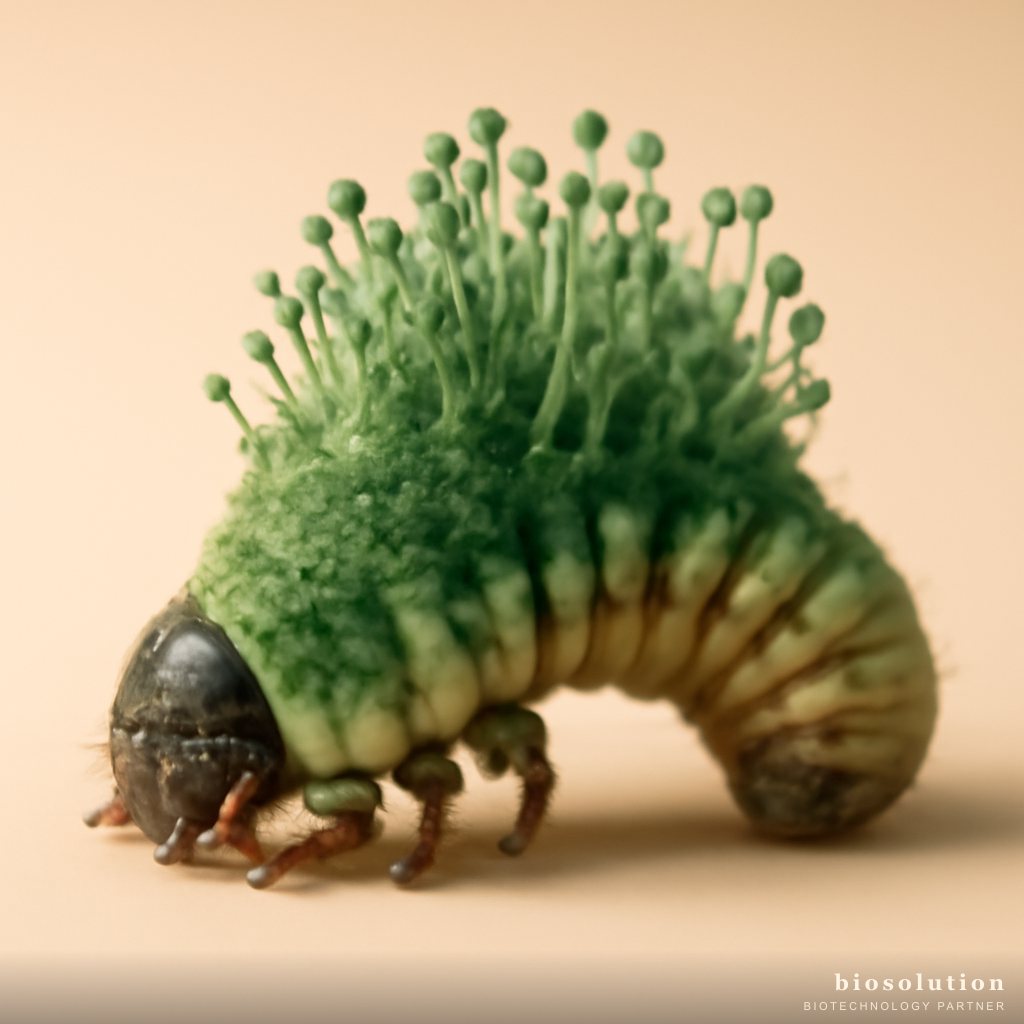
Metarhizium anisopliae is an insect-pathogenic fungus that works by infecting the insect's cuticle. The infection process begins when fungal spores attach to the insect's body surface. In humid conditions, the spores germinate and produce enzymes such as protease and chitinase that penetrate the cuticle. The mycelium then enters the host's body, multiplies, and releases toxins that kill the insect within 3–7 days. After death, the insect carcass is covered with white mycelium and produces new spores ready to infect other pests. This mechanism makes Metarhizium anisopliae highly effective against soil pests that are difficult to reach with chemical pesticides.
Advantages of Metarhizium anisopliae for Soil Pests
- Target-specific: Does not kill natural enemies, safe for bees and earthworms.
- Low resistance: Pests struggle to develop resistance due to multi-enzyme mechanisms.
- Self-spreading: Spores can spread via wind, water, or contact between pests.
- Environmentally friendly: Leaves no harmful residues in soil or plants.
Proper Dosage and Application Timing
To be effective, the application of Metarhizium anisopliae must be done at the right time and dosage. Based on the Broad-Spectrum Biological Insecticide Formula from Biosolution, here are the guidelines:
- Dosage: 2–3 ml per liter of water (or 3–5 g/L if in WP form).
- Method: Spray evenly onto the soil surface around the base of the stem and root zone. Ensure the soil is moist.
- Best time: Late afternoon when humidity >70% and temperature is not too hot (25–30°C). Avoid application during heavy rain.
- Frequency: Repeat every 7–10 days when pest populations begin to increase. For prevention, apply every 2 weeks.
Tips for Successful Application
- Mix with clean water: Do not use water containing chlorine or chemicals that can kill spores.
- Use clean spray equipment: Residues from chemical pesticides can inhibit fungal growth.
- Spray onto moist soil: High humidity helps spores germinate faster.
Case Study: Oil Palm Plantation Successfully Suppresses Pests by 80%
An oil palm plantation in North Sumatra faced severe attacks from rhinoceros beetles (Oryctes rhinoceros) and soil caterpillars. After using the Biological Insecticide Formula containing Metarhizium anisopliae and Beauveria bassiana, they recorded an 80% reduction in soil pest populations within 4 weeks. Here are the steps they implemented:
- Identify affected areas: Focus on areas with symptoms such as yellowing leaves, hollow stems, or wilting plants.
- Initial high-dose application: Spray 3 ml/L of water onto the soil around the base of the stem, repeating every 3 days for 2 weeks.
- Monitoring and rotation: Each week, check for infected pest carcasses. If found, allow spores to spread naturally.
- Follow-up treatment: After the population declines, apply preventively every 2 weeks at a dosage of 2 ml/L.
As a result, not only did pests decrease, but natural entomopathogenic fungi also appeared in the soil, indicating a healthy ecosystem. Farmers also reported increased yields as plants were no longer stressed by pest attacks.
Advantages of Biosolution's Biological Insecticide Formula
The Broad-Spectrum Biological Insecticide Formula from Biosolution is specially formulated to control various soil and canopy pests. With a content of Metarhizium anisopliae and Beauveria bassiana each at 10⁶ CFU/ml, this product offers:
- 80–85% efficacy against target pests such as beetles, caterpillars, and larvae.
- Chemical residue-free, making it safe for consumers and exports.
- Compatible with IPM programs: Can be combined with other biological agents or botanical insecticides.
- Safe for workers and the environment: Does not cause irritation or poisoning.
Dual Mode of Action
The presence of two entomopathogenic strains provides a synergistic effect. Beauveria bassiana attacks soft-bodied insects like caterpillars and grasshoppers, while Metarhizium anisopliae is more effective against beetles and soil insects. This combination ensures broader and longer-lasting pest control.
Comparison with Chemical Pesticides
| Aspect | Metarhizium anisopliae | Chemical Pesticides |
|---|---|---|
| Residue | None | Harmful, long-lasting |
| Resistance | Low | High |
| Ecosystem impact | Positive (supports biodiversity) | Negative (kills natural enemies) |
| Long-term cost | Cheaper (minimal reapplication) | Expensive (frequent applications needed) |
According to data from the FAO, using biological agents like Metarhizium anisopliae can reduce dependence on chemical pesticides by up to 50% without sacrificing crop yields.
Conclusion
The correct method of applying Metarhizium anisopliae for soil pests—from dosage and timing to spraying technique—has been proven to suppress pest populations by up to 80%, as shown in the oil palm plantation case study. By using the Broad-Spectrum Biological Insecticide Formula from Biosolution, farmers can control pests effectively, environmentally friendly, and residue-free. Do not hesitate to consult our expert team via WhatsApp for application recommendations tailored to your land conditions.