How to Apply Metarhizium anisopliae for Soil Pests: 7 Mistakes to Avoid
The use of entomopathogens such as Metarhizium anisopliae is increasingly popular among plantation farmers as an environmentally friendly solution for controlling soil pests. However, the success of application depends heavily on proper technique. Many farmers still make fundamental mistakes that reduce the efficacy of Metarhizium anisopliae. This article thoroughly discusses how to apply Metarhizium anisopliae for soil pests, including 7 common mistakes and how to avoid them, and recommends a broad-spectrum biological insecticide product from Biosolution that has proven effective.
Why Metarhizium anisopliae is Effective for Soil Pests
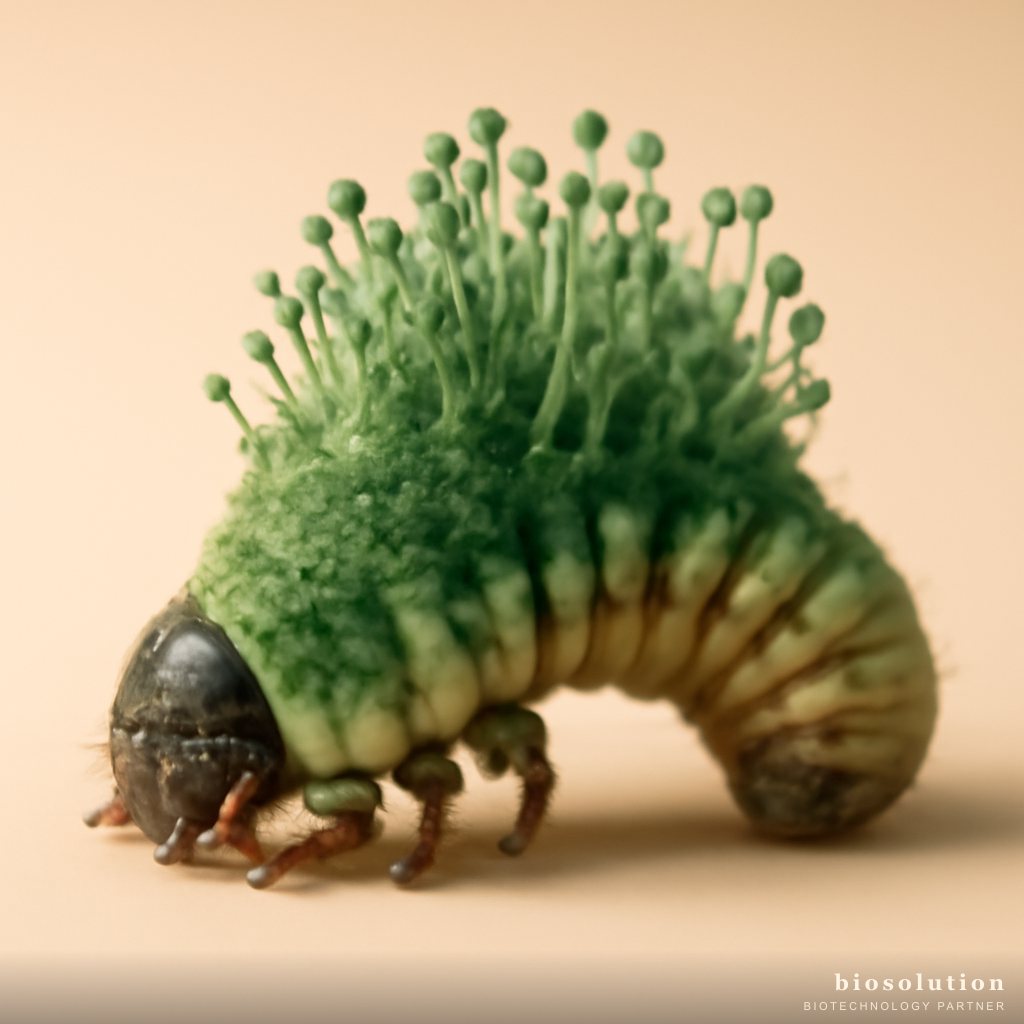
Metarhizium anisopliae is an entomopathogenic fungus that naturally infects various soil insects such as beetles, cutworms, and termites. Its mechanism of action is unique: fungal spores attach to the insect's cuticle, then germinate and penetrate the host's body with the help of protease and chitinase enzymes. Once inside, the mycelium grows rapidly, consumes the insect's nutrients, and eventually kills it within 3–7 days. The infected insect carcass then becomes covered with mycelium and produces new spores ready to infect other insects, creating a secondary infection cycle.
The main advantages of Metarhizium anisopliae over chemical pesticides are:
- Environmentally safe: Leaves no harmful residues in soil or crops.
- Selective: Only targets pest insects, does not harm natural enemies.
- Sustainable: Can persist in soil for several weeks if conditions are favorable.
- Compatible with IPM: Suitable for integration with other biological agents in Integrated Pest Management programs.
However, all these advantages can only be achieved if application is done correctly. Unfortunately, many farmers still make mistakes that prevent the fungus from working optimally.
7 Common Mistakes When Applying Metarhizium anisopliae
1. Wrong Spray Timing
The most common mistake is spraying during the day when temperatures are high and humidity is low. Metarhizium anisopliae requires relative humidity above 70% and optimal temperatures of 25–30°C to germinate. Spraying under direct sunlight causes spores to die quickly due to UV rays and dryness. Solution: Apply in the late afternoon (after 3:00 PM) or early morning when dew is still present. Ensure no rain within 4–6 hours after spraying so spores have time to attach and germinate.
2. Incorrect Dosage
Many farmers use too low a dosage for fear of waste, or too high a dosage hoping for faster results. The recommended dosage for Biosolution products is 2–3 ml per liter of water for liquid formulations, or 3–5 g per liter of water for wettable powder (WP). This dosage is equivalent to 10⁶ CFU/ml per strain, which has been tested to provide 80–85% efficacy against target pests. Reducing the dosage means insufficient spores to infect the existing pest population.
3. Ignoring Soil Moisture
Soil pests live in moist soil. If the soil is too dry, Metarhizium anisopliae spores have difficulty germinating and moving toward the host. Conversely, overly waterlogged soil can cause spores to sink or wash away. Solution: Ideal application is when the soil is moist (after rain subsides or after irrigation). During the dry season, water the soil first before application.
4. Inappropriate Spray Equipment
Using nozzles that are too coarse or high pressure can damage fungal spores. Metarhizium anisopliae spores are sensitive to mechanical friction. Solution: Use spray nozzles with fine holes (0.8–1.2 mm) and low pressure (1–2 bar). Spray evenly onto the soil surface and around the base of plants, not directly onto leaves.
5. Indiscriminate Mixing with Chemical Pesticides
Metarhizium anisopliae is a living organism. Mixing it with chemical fungicides or bactericides can kill spores before they work. Some chemical insecticides are also toxic to the fungus. Solution: Do not mix entomopathogens with chemical pesticides. If chemical use is unavoidable, allow a minimum interval of 3–5 days. Biosolution products are formulated to be compatible with some other biological agents, but avoid mixing with chemical substances.
6. Irregular Application Frequency
Soil pests have long life cycles and their eggs are resilient in the soil. A single application is not enough to break the cycle. Solution: Apply regularly every 7–10 days when pest populations begin to increase. During the growing season, 2–3 preventive applications early on can suppress initial populations.
7. Ignoring Pest Physiological Condition
Metarhizium anisopliae is most effective against actively moving larvae and adult insects. Inactive insects (pupae, eggs) or those under stress (drought, lack of food) have higher resistance. Solution: Apply when the pest population is in an active phase (e.g., after rain, when insects emerge from the soil). Monitor populations regularly.
Correct Application Method for Metarhizium anisopliae
The following are recommended steps for applying Metarhizium anisopliae for soil pests:
- Preparation: Ensure spray equipment is clean and free of chemical pesticide residues. Calibrate the equipment for accurate dosage.
- Mixing: For Biosolution liquid products, shake the bottle first. Mix 2–3 ml of product per liter of water. Stir well.
- Application Time: Late afternoon (3:00–5:00 PM) when temperatures drop and humidity rises. Avoid strong winds.
- Spraying Method: Spray the solution evenly onto the soil surface around the base of plants, especially in the root zone. Adjust spray volume to the area (typically 200–400 liters per hectare for plantation crops).
- After Application: Leave the soil undisturbed for 24 hours to allow spores to germinate. Avoid excessive watering or immediate plowing.
- Monitoring: Evaluate effectiveness after 5–7 days. If pest populations remain high, repeat application at 7–10 day intervals.
Biosolution Products: The Right Solution for Soil Pest Control
Biosolution presents Broad-Spectrum Biological Insecticide Formula containing two superior entomopathogenic strains: Beauveria bassiana and Metarhizium anisopliae. This product is specifically designed to control various soil and canopy pests with 80–85% efficacy. Product advantages:
- Dual action: Beauveria bassiana effectively attacks soft-bodied insects (caterpillars, planthoppers), while Metarhizium anisopliae excels against beetles and cutworms.
- Residue-free: Safe for consumers and the environment, suitable for sustainable agriculture programs.
- Easy to apply: Available in liquid and WP formulations, stable in storage.
For optimal results, follow the application instructions on the packaging. This product is also compatible with other biological agents such as Anti-Palm Weevil Borer Formula for specific pest control.
Conclusion
Metarhizium anisopliae is a powerful weapon in soil pest control when applied correctly. Avoid the 7 common mistakes: wrong spray timing, incorrect dosage, ignoring soil moisture, inappropriate spray equipment, indiscriminate mixing with chemicals, irregular application frequency, and ignoring pest condition. By following the correct application method, you can maximize efficacy up to 85% and reduce dependence on chemical pesticides.
Biosolution products are ready to help you. For further consultation on how to apply Metarhizium anisopliae according to your field conditions, contact us via WhatsApp. Also get complete product information on the biological insecticide product page.
FAQ
1. Is Metarhizium anisopliae safe for plants and humans? Yes, Metarhizium anisopliae is specific to insects and does not harm plants, animals, or humans. Biosolution products have passed safety tests and leave no harmful residues on crops.
2. How long does Metarhizium anisopliae persist in soil? Metarhizium anisopliae spores can survive in soil for 2–4 weeks depending on environmental conditions. High humidity and temperatures of 25–30°C prolong viability. UV light and dryness can shorten spore lifespan.
3. Can Metarhizium anisopliae be mixed with organic fertilizers? Generally, mixing with liquid organic fertilizers (POC) is allowed as long as the mixture pH is neutral (6–7) and it does not contain antimicrobial substances. However, avoid mixing with chemical fertilizers that are strongly acidic or alkaline. Test on a small scale first.
4. How should I store Biosolution products containing Metarhizium anisopliae? Store the product in a cool, dry place away from direct sunlight. Ideal storage temperature is 4–10°C. Do not freeze. Products in tightly sealed packaging can last up to 6 months.
5. Is Metarhizium anisopliae effective against all types of soil pests? Metarhizium anisopliae is effective against various soil pests such as beetles (Coleoptera), cutworms (Lepidoptera), termites (Isoptera), and grasshoppers (Orthoptera). However, efficacy may vary depending on species and pest stage. For specific pests, consult an expert.