Industrial Wastewater Bioremediation: A More Cost-Effective Alternative to Chemicals
Food and textile industries generate wastewater with high organic loads. Many industrial WWTPs rely on chemical coagulants and chlorine to reduce BOD/COD. However, chemical costs keep rising, and their residues create additional environmental problems. Industrial wastewater bioremediation offers a microbiology-based solution that is not only effective but also more cost-effective. By utilizing a consortium of decomposer bacteria and the mold Aspergillus niger, pollutant degradation occurs naturally and sustainably.
Chemical Treatment Costs: Expensive and Creates New Problems
Chemical wastewater treatment uses coagulants such as PAC (Poly Aluminium Chloride), flocculants, and chlorine disinfectants. The cost of purchasing these chemicals can reach tens of millions of rupiah per month for a medium-scale WWTP. Add to that the cost of managing chemical sludge classified as hazardous waste (B3), requiring special handling and high disposal costs. Moreover, incorrect dosages can increase wastewater toxicity, potentially leading to environmental fines if quality standards are not met. Data from the Ministry of Environment and Forestry shows that violations of wastewater quality standards remain high, with administrative and criminal sanctions.
Bioremediation: How It Works and Key Microbial Components
Bioremediation is the process of breaking down organic pollutants by microorganisms. In Biosolution's Industrial Wastewater Bioremediation Formula, a consortium of decomposer bacteria metabolizes complex organic compounds such as proteins, fats, and carbohydrates into simple compounds (CO₂ and H₂O). Additionally, the mold Aspergillus niger produces extracellular enzymes like amylase, protease, and lipase that accelerate pollutant hydrolysis. This combination makes the degradation process faster and more efficient. The mechanism involves biological oxidation that significantly reduces BOD/COD. Studies from the journal Bioresource Technology show that bacterial consortia can reduce COD by up to 90% within 48 hours under optimal conditions.
Cost Comparison: Chemicals vs. Bioremediation
For a WWTP with a flow rate of 100 m³/day, here are the estimated monthly costs:
| Component | Chemical Treatment | Bioremediation |
|---|---|---|
| Chemicals (PAC, chlorine) | IDR 15-25 million | IDR 0 |
| Microbes (dose 200 ml/m³) | IDR 0 | IDR 6-10 million |
| B3 sludge management | IDR 5-10 million | IDR 0 (non-B3 sludge) |
| Total per month | IDR 20-35 million | IDR 6-10 million |
With bioremediation, savings reach 40-70%. The sludge produced is non-hazardous and can be used as organic fertilizer, reducing disposal costs. ROI is typically achieved within 3-6 months.
Case Studies: Textile and Food Industries
A textile manufacturer in Bandung switched from chemical coagulants to bioremediation using Biosolution's product. Within 2 weeks, BOD dropped from 800 mg/L to 120 mg/L, and COD from 1500 mg/L to 200 mg/L, meeting quality standards. Treatment costs decreased by 60%. Meanwhile, a food factory in Sidoarjo reported reduced odors and fats, and increased WWTP efficiency without additional chemicals.
Advantages of Bioremediation for Industrial WWTPs
Beyond cost savings, bioremediation offers other advantages:
- Environmentally friendly: leaves no hazardous chemical residues.
- Minimal sludge: lower sludge volume and safe.
- Simple operation: direct dosing into the WWTP pond.
- Adaptive: microbes can adjust to varying waste loads.
- Enhances the company's green reputation.
How to Apply the Industrial Wastewater Bioremediation Formula
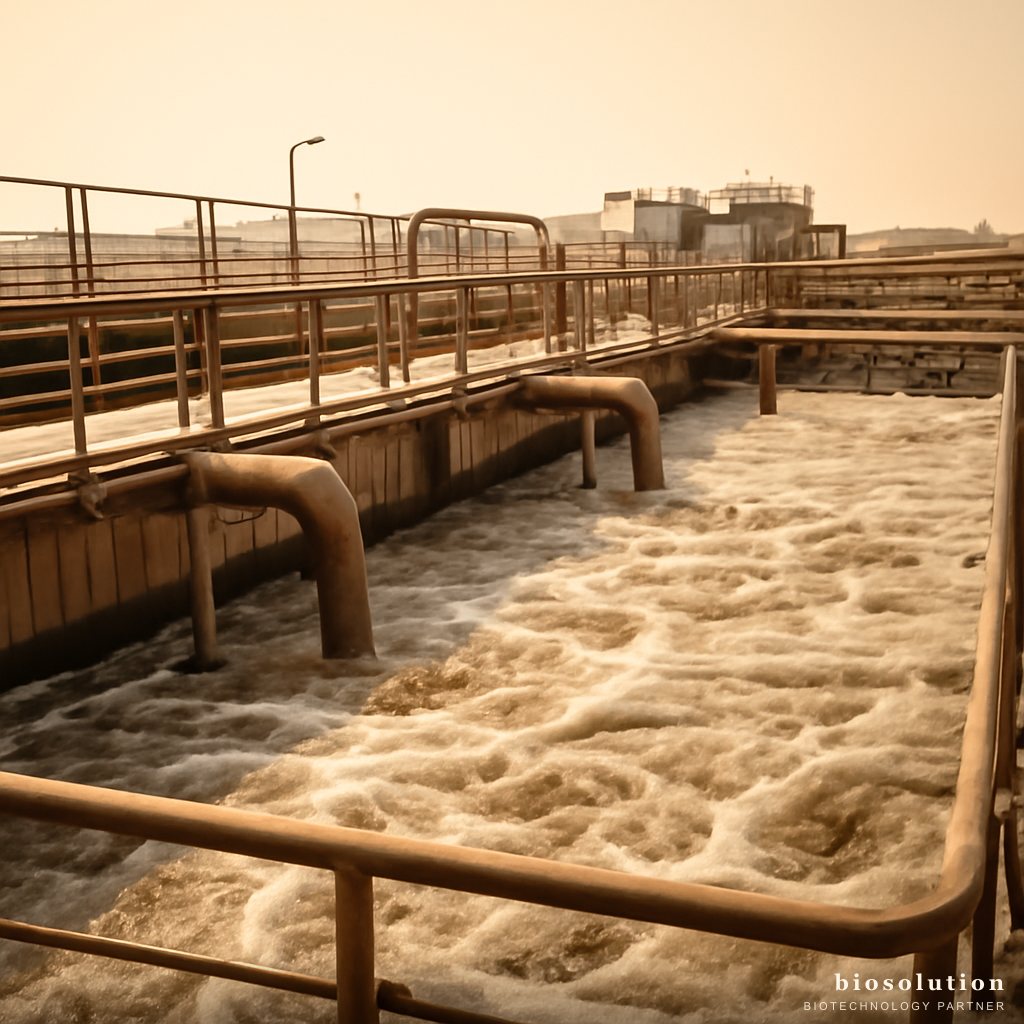
This product is applied by direct dosing into the WWTP pond. Initial dose: 100-500 ml per m³ of wastewater, depending on pollution level. Subsequent weekly maintenance with a maintenance dose. No special equipment needed, just a dosing container and adequate aeration. For optimal results, ensure pH 6-8 and temperature 25-35°C. Read more about this product.
Conclusion
Switching from chemical treatment to industrial wastewater bioremediation is not only an environmentally friendly step but also a smart business decision. With lower costs, compliance with quality standards, and easier sludge management, bioremediation is a superior solution for industrial WWTPs. For further consultation, contact the Biosolution team via WhatsApp.
FAQ
Q: How long does it take to see results from bioremediation? A: Generally, BOD/COD reduction is noticeable within 3-7 days after the first application. For optimal and stable results, 2-4 weeks are needed depending on waste load and WWTP conditions.
Q: Can bioremediation be applied to all types of industrial wastewater? A: Bioremediation is most effective for organic waste from industries such as food, beverage, textile, paper, and pharmaceuticals. For wastewater containing heavy metals or highly toxic compounds, pretreatment or expert consultation is required.
Q: How should bioremediation products be stored? A: Store in a cool, dry place away from direct sunlight. Ideal storage temperature: 4-30°C. Do not freeze. The product remains stable for 6 months if stored properly.
Q: Does bioremediation produce odors? A: No. In fact, bioremediation effectively eliminates unpleasant odors from waste because microbes break down odor-causing compounds like H₂S and ammonia.
Q: Is aeration necessary? A: For maximum results, aeration is recommended as many decomposer bacteria are aerobic. Aeration also helps maintain dissolved oxygen and prevents anaerobic conditions that produce odors.