Industrial Wastewater Bioremediation: Monitor BOD, COD, and Odor Post-Application
Industrial wastewater bioremediation is a key solution for factories aiming to meet environmental quality standards while reducing chemical treatment costs. This process relies on decomposer microorganisms to reduce pollutant parameters such as BOD (Biochemical Oxygen Demand), COD (Chemical Oxygen Demand), and unpleasant odors. However, the effectiveness of bioremediation does not stop at initial application; post-application monitoring is crucial to ensure the WWTP system operates optimally. This article thoroughly discusses how to monitor these three key parameters after using Industrial Wastewater Bioremediation Formula from Biosolution.
Why is Monitoring BOD, COD, and Odor Important?
BOD and COD parameters are primary indicators of wastewater quality. BOD measures the amount of oxygen required by microorganisms to decompose organic matter, while COD measures the total oxygen needed to chemically oxidize all organic and inorganic compounds. Food and textile industrial wastewater typically has high BOD and COD due to starch, protein, fat, and dye content. If untreated, direct discharge into water bodies causes eutrophication and aquatic biota death.
Additionally, pungent odors from wastewater cause public complaints and risk sanctions from environmental agencies. These odors originate from volatile compounds such as ammonia, hydrogen sulfide, and mercaptans produced by anaerobic decomposition. With bioremediation using a consortium of aerobic bacteria and Aspergillus niger, odor-causing compounds can be oxidized into odorless products. Routine monitoring ensures the degradation process proceeds as targeted.
Key Parameters Post-Bioremediation Application
1. BOD (Biochemical Oxygen Demand)
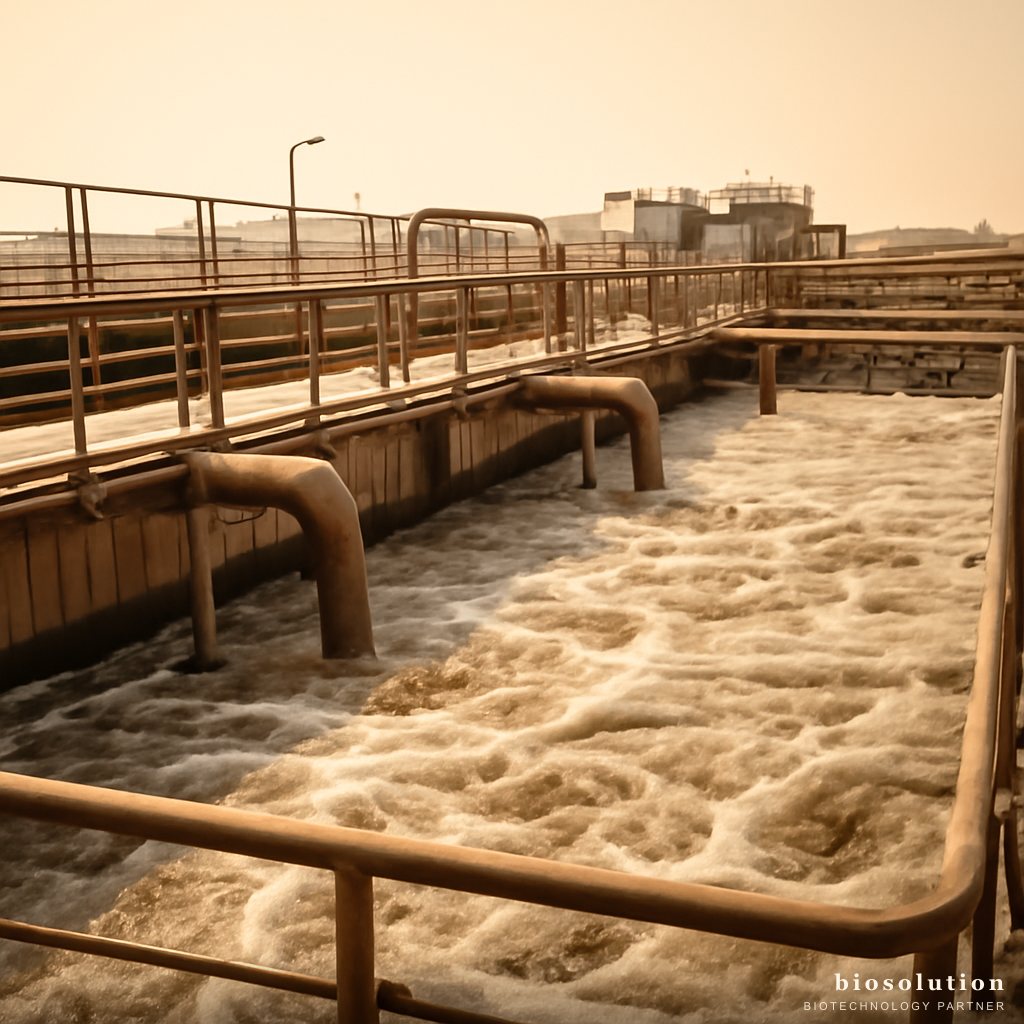
After applying Industrial Wastewater Bioremediation Formula, BOD typically drops drastically within 24-48 hours as decomposer bacteria begin consuming organic matter. To monitor, perform BOD5 measurements at the WWTP inlet and outlet daily during the first week, then weekly after stabilization. Target BOD reduction of at least 80% from initial value. If reduction is not significant, check water temperature (ideally 25-35°C) and pH (6.5-8.5). Another factor is lack of dissolved oxygen (DO), which can be addressed by increasing aeration.
2. COD (Chemical Oxygen Demand)
COD reflects total organic matter including hard-to-degrade compounds. COD reduction usually follows a similar pattern to BOD, but may be slower because complex compounds like lignin and textile dyes require specific enzymes. Aspergillus niger in the formula produces cellulase, amylase, and protease enzymes that break down these polymers. COD monitoring is done using closed reflux or spectrophotometry methods. Ideally, the BOD/COD ratio after treatment approaches 0.1-0.3, indicating the wastewater is biologically stable.
3. Odor Intensity
Odor can be measured subjectively using a hedonic scale (0-5) or with portable devices like H2S detectors. Post-application, ammonia and rotten odors usually decrease within 1-2 days. If odor persists, there may be dead zones in the WWTP pond or insufficient bacterial dosage. Conduct visual inspection and ensure even bacterial distribution. Adding aeration also helps oxidize volatile compounds.
Effective Monitoring Methods
Monitoring is not only laboratory-based but can also be done in the field with simple tools. For BOD and COD, use commercial kits that provide quick results (e.g., Lovibond or Hach). For odor, conduct organoleptic tests by trained personnel. Record all data in a daily logbook and compare with applicable quality standards (e.g., Minister of Environment Regulation No.5/2014 for textile industry). If parameter spikes occur, immediately evaluate dosage and operational conditions.
Case Study: Food and Textile Industries
In the food industry (e.g., fish processing), initial BOD can reach 3000 mg/L. After applying the bioremediation formula at a dose of 200 ml/m³, BOD dropped to 400 mg/L within 48 hours. Meanwhile, in the textile industry, initial COD of 1500 mg/L decreased to 250 mg/L after 72 hours with added aeration. Ammonia odor also disappeared completely. Routine monitoring ensures consistent results.
Advantages of Biosolution's Industrial Wastewater Bioremediation Formula
This formula contains a consortium of decomposer bacteria that work synergistically with Aspergillus niger. Bacteria break down simple organic compounds, while fungi produce enzymes for complex polymers. Advantages: low dosage (100-500 ml per m³ initial), easy application (direct dosing into pond), and weekly maintenance. Results: wastewater meets quality standards, chemical treatment costs reduced, and environmental fine risk lowered. Fast ROI due to increased operational efficiency.
Conclusion
Monitoring BOD, COD, and odor parameters post-industrial wastewater bioremediation application is a mandatory step to ensure treatment effectiveness. By using Industrial Wastewater Bioremediation Formula from Biosolution, you can achieve significant pollutant reduction and meet regulations. Perform routine measurements, record data, and adjust dosage if necessary. For further consultation, contact the Biosolution technical team via WhatsApp.
FAQ
How long does it take to see BOD/COD reduction after application?
Significant reduction is usually seen within the first 24-48 hours. BOD can drop up to 80% in 48 hours, while COD takes slightly longer, about 48-72 hours, depending on wastewater complexity. Factors such as temperature, pH, and aeration affect degradation speed.
Can bioremediation completely eliminate odors?
Yes, with proper dosage and conditions, ammonia and H2S odors can be eliminated within 1-2 days. However, if there are odor sources from anaerobic areas (e.g., bottom sludge), periodic sludge removal is necessary. Routine odor monitoring helps early detection.
How to determine the correct formula dosage?
Initial dosage depends on WWTP volume and pollutant load. General recommendation is 100-500 ml per m³ for WWTP with BOD 1000-3000 mg/L. For higher BOD wastewater, dosage can be increased. Consult with the Biosolution team for precise calculation.
Is this formula safe for existing WWTP microorganisms?
Very safe. The formula consists of non-pathogenic bacteria and fungi compatible with WWTP microflora. It actually enriches microbial diversity and improves treatment efficiency. No need to stop WWTP operation during application.
How often is maintenance required?
After initial dosage, maintenance is done weekly with a maintenance dose of about 50-100 ml per m³. Frequency can be adjusted if wastewater load fluctuates. Parameter monitoring helps determine the optimal schedule.