Industrial Wastewater Bioremediation: Solution for Food & Textile
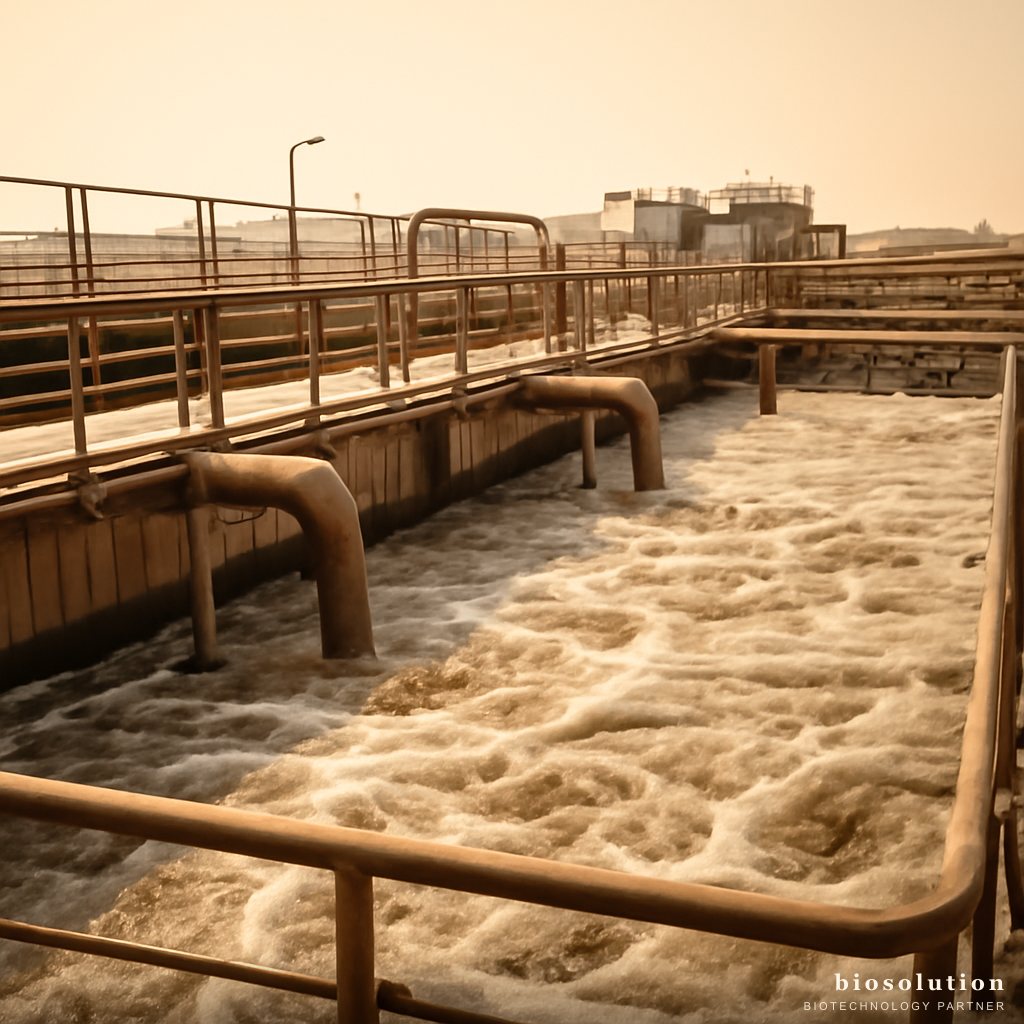
The food and textile industries generate wastewater with high organic and chemical loads. Without proper management, this waste pollutes the environment and incurs fines. Industrial wastewater bioremediation offers a natural approach using microorganisms to break down pollutants. Biosolution presents the Industrial Wastewater Bioremediation Formula specifically designed to effectively reduce BOD and COD. This article discusses wastewater management strategies with proven efficient and environmentally friendly bioremediation technology.
Why Industrial Wastewater Bioremediation is the Top Choice
Bioremediation is the process of utilizing microorganisms to degrade organic contaminants in wastewater. This method is increasingly favored because it is more economical and sustainable compared to chemical treatment. In food and textile industrial wastewater, complex organic compounds such as starch, fats, proteins, dyes, and surfactants can be broken down by certain bacteria and fungi.
The main advantages of bioremediation include:
- Environmentally friendly: Does not produce hazardous chemical sludge.
- Low operational costs: Microbes work independently with minimal additional energy.
- Effective for various pollutants: BOD, COD, TSS, and color.
Industries that have implemented bioremediation report BOD reductions of up to 80-95% within 2-4 weeks. This helps companies comply with the Ministry of Environment and Forestry quality standards, avoiding administrative sanctions and fines.
Composition of the Industrial Wastewater Bioremediation Formula
The Industrial Wastewater Bioremediation Formula from Biosolution contains two main components that work synergistically:
Consortium of Decomposer Bacteria
This consortium consists of various species of aerobic and anaerobic bacteria capable of degrading complex organic compounds. Bacteria such as Lactobacillus spp., Bacillus spp., and Pseudomonas spp. play a role in breaking down proteins, fats, and carbohydrates into simple compounds. This process significantly reduces BOD and COD.
Aspergillus niger
Aspergillus niger is a fungus that produces extracellular enzymes such as amylase, protease, lipase, and cellulase. These enzymes hydrolyze organic polymers into monomers that are easily digested by bacteria. Additionally, A. niger helps reduce color and odor in textile waste.
The combination of bacteria and fungi creates a synergistic effect that accelerates pollutant degradation. The recommended initial dosage is 100-500 ml per m³ of WWTP volume, with weekly application for maintenance.
How to Apply the Bioremediation Formula in Industrial WWTP
The application of the bioremediation formula is very simple and does not require modification of existing WWTP equipment. Here are the application steps:
- Preparation: Ensure the WWTP pond has sufficient aeration to maintain dissolved oxygen levels above 2 mg/L.
- Initial Dose: Pour the formula directly into the aeration pond or biological treatment pond at a dose of 100-500 ml per m³ of wastewater. For high organic load wastewater, use a higher dose.
- Maintenance Application: After 1 week, reapply at half the initial dose every week to maintain microbial population.
- Monitoring: Regularly measure BOD, COD, TSS, and pH. Parameter reduction is usually observed within 7-14 days.
It is important to maintain wastewater temperature between 25-35°C and pH 6-8 for optimal microbial activity. Avoid excessive use of disinfectants or chlorine as they can kill microbes.
Benefits of Bioremediation for Food and Textile Industries
The food industry generates organic-rich waste such as raw material residues, oils, and fats. Meanwhile, the textile industry contains dyes, surfactants, and heavy metals. Implementing bioremediation provides tangible benefits:
- Meet quality standards: Wastewater treated with this formula generally meets government-set BOD/COD standards.
- Reduce environmental fines: Compliance with regulations helps companies avoid fines of up to hundreds of millions of rupiah.
- Reduce chemical usage: Bioremediation reduces the need for coagulants, flocculants, and chlorine, lowering treatment costs by 30-50%.
- Fast ROI: Small initial investment, operational cost savings are immediately felt within 1-2 months.
Several studies show that the use of bacterial consortium and Aspergillus niger can reduce textile wastewater COD by up to 90% in 5 days. For food waste, BOD reduction reaches 85% in 3 days.
Factors for Successful Wastewater Bioremediation
For optimal bioremediation, several factors need attention:
- Oxygen availability: Aerobic microbes require oxygen for respiration. Ensure adequate aeration, especially at the beginning of the process.
- Nutrients: Nitrogen and phosphorus levels must be balanced. Food waste is usually nutrient-rich, while textile waste may require supplementation.
- Retention time: Provide sufficient residence time (24-72 hours) for microbes to work optimally.
- Regular monitoring: Measure parameters periodically to adjust dosage and conditions.
If there are fluctuations in waste load, adjust the formula dosage. Consult with Biosolution technicians for specific recommendations based on your waste characteristics.
Conclusion
Bioremediation of industrial wastewater from food and textile industries using Biosolution's Industrial Wastewater Bioremediation Formula is an effective and economical solution. Using a consortium of decomposer bacteria and Aspergillus niger, this formula significantly reduces BOD/COD, meets quality standards, and lowers treatment costs. Application is easy, simply by dosing directly into the WWTP pond. For optimal results, perform regular monitoring and adjust dosage as needed. Industrial wastewater bioremediation not only meets regulations but also supports environmental sustainability. Contact the Biosolution team for a free consultation and get the right product recommendation.
View the Industrial Wastewater Bioremediation Formula product or consult via WhatsApp.