Industrial Wastewater BOD/COD Reduced to Quality Standards: Bioremediation Solution for Industrial WWTP
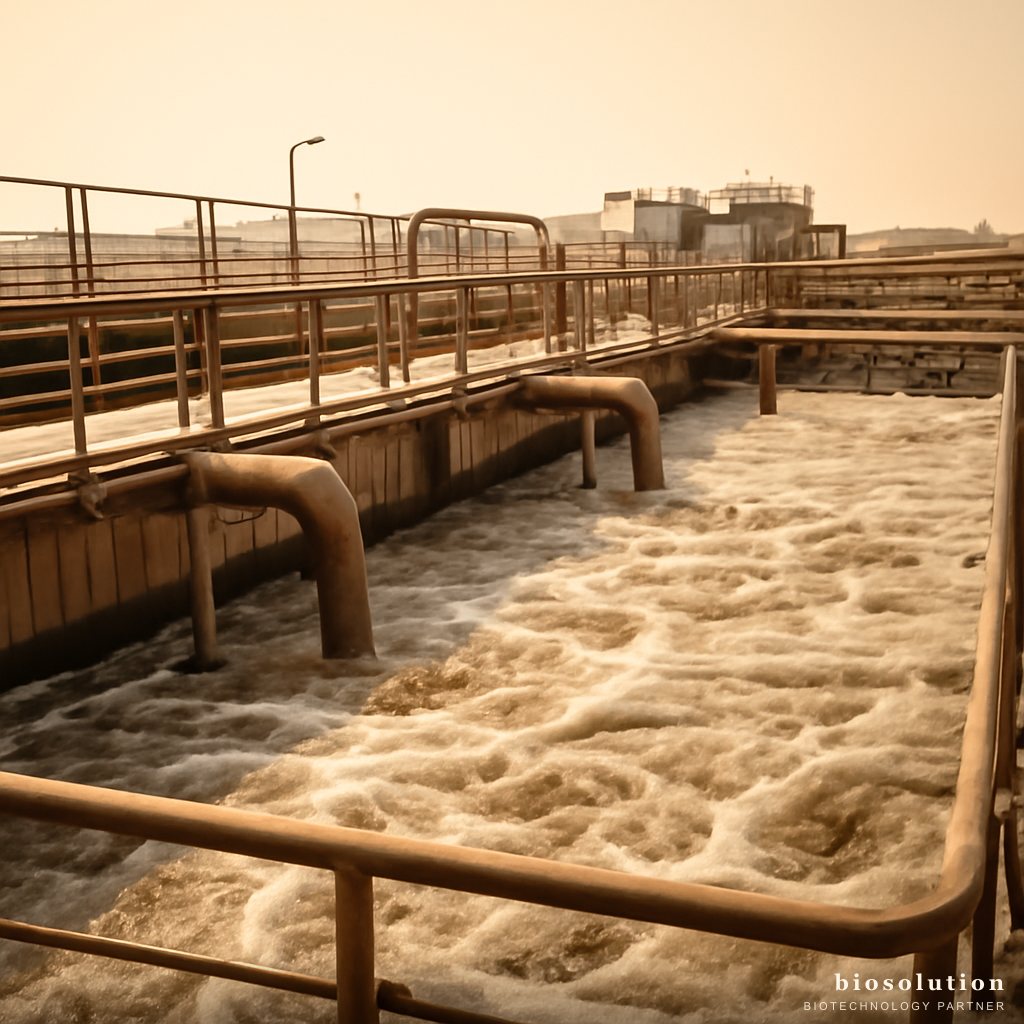
Every industry generating liquid waste faces the challenge of meeting environmental quality standards. BOD (Biochemical Oxygen Demand) and COD (Chemical Oxygen Demand) are key parameters that must be reduced before discharge into water bodies. However, fluctuating waste loads, limited WWTP capacity, and high operational costs often make these targets difficult to achieve. This is where Liquid Waste Bioremediation Formula plays a role as an effective and economical microbiology-based solution. By utilizing a consortium of decomposer bacteria and Aspergillus niger fungus, this formula can significantly reduce BOD/COD, ensuring your wastewater meets government-set quality standards.
Why Must Wastewater BOD/COD Be Reduced to Meet Quality Standards?
Environmental Impact and Regulations
BOD and COD reflect the amount of oxygen required to decompose organic matter in water. The higher the values, the greater the pollution potential. The Ministry of Environment and Forestry (LHK) regulation sets wastewater quality standards for various industrial sectors, e.g., maximum BOD of 30-50 mg/L and COD of 100-150 mg/L depending on industry type. Exceeding these thresholds can result in administrative sanctions, fines, or even license revocation.
Cost Efficiency and Sustainability
Relying on chemical coagulants or oxidizers to reduce BOD/COD is often expensive and produces chemical sludge that is difficult to treat. In contrast, bioremediation uses natural microorganisms that consume organic pollutants as food. This process is more environmentally friendly, produces less biological sludge, and has lower operational costs in the long run. By consistently reducing BOD/COD, industries avoid fines and build a positive reputation.
Composition of Liquid Waste Bioremediation Formula: Consortium of Decomposer Bacteria and Aspergillus niger
Consortium of Decomposer Bacteria
This formula contains a mixture of aerobic and facultative anaerobic bacteria specifically selected to degrade complex organic compounds such as fats, proteins, carbohydrates, and hydrocarbons. These bacteria work synergistically: some break down large molecules into simpler ones, while others oxidize intermediate compounds into CO2 and H2O. Degradation speed increases due to the synergistic effect between species.
Aspergillus niger: Extracellular Enzyme Producer
The fungus Aspergillus niger is added for its ability to produce extracellular enzymes such as amylase, protease, lipase, and cellulase. These enzymes break down starch, protein, fat, and fiber, which often cause high COD. With enzymes, the hydrolysis of organic pollutants becomes faster, allowing decomposer bacteria to work more efficiently. This combination makes the Liquid Waste Bioremediation Formula superior in handling high organic load wastewater.
How to Apply Liquid Waste Bioremediation Formula: Correct Dosage and Frequency
Dosage per WWTP Volume
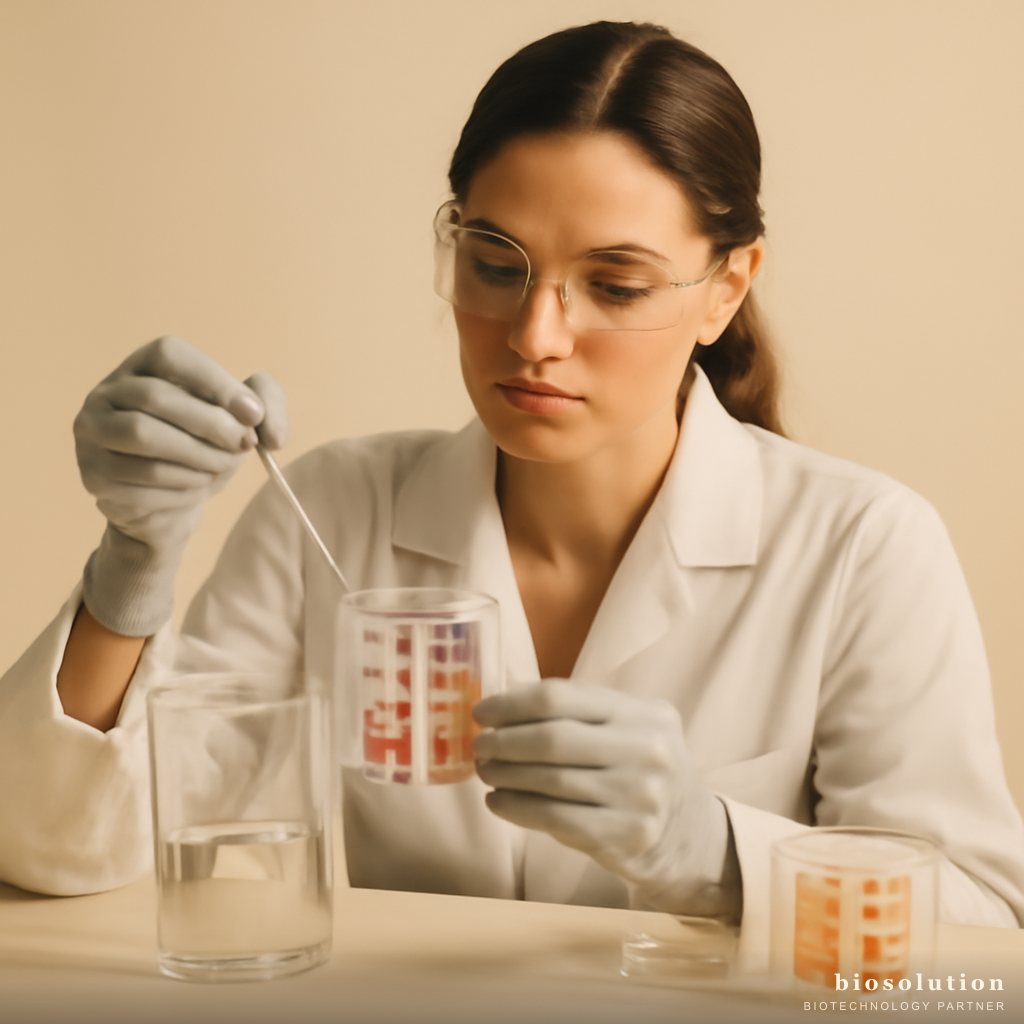
The recommended initial dosage is 100–500 ml of Liquid Waste Bioremediation Formula per cubic meter (m³) of wastewater. For a WWTP with a volume of 100 m³, the initial dosage is about 10–50 liters. Dosage should be adjusted based on pollution level: the higher the initial BOD/COD, the larger the dosage needed. It is advisable to conduct a small-scale trial (jar test) to determine the optimal dosage.
Application Frequency
After the initial dose, maintenance application is done weekly at half the initial dose, i.e., 50–250 ml per m³. This frequency keeps the microbial population active and stable, especially during fluctuating waste loads. If there is a spike in organic load (e.g., during peak production), the dosage can be temporarily increased.
Application Method
Simply dose the formula directly into the aeration or equalization tank of the WWTP. Ensure the aeration system is running well to provide oxygen for aerobic bacteria. Do not mix with disinfectants or chlorine as they can kill microbes. The application schedule should be consistent, e.g., every Monday morning, so operators can easily remember.
Working Mechanism of Bioremediation Formula in Reducing BOD/COD
Hydrolysis Stage by Enzymes
Aspergillus niger releases extracellular enzymes that cut long chains of organic polymers into monomers. For example, amylase breaks down starch into glucose, protease breaks down protein into amino acids, and lipase breaks down fat into glycerol and fatty acids. These hydrolysis products are more easily consumed by bacteria.
Oxidation Stage by Bacteria
Decomposer bacteria then consume these monomers through aerobic metabolism, producing CO2, water, and energy. This process reduces BOD because the oxygen required for oxidation decreases as organic matter is reduced. COD also decreases because the originally chemically oxidizable organic compounds have been converted into more stable forms.
Biological Floc Formation
Microbes also produce extracellular polysaccharides that aid floc formation. These flocs settle suspended particles, thus reducing TSS (Total Suspended Solids). The resulting biological sludge is easier to treat than chemical sludge.
Advantages of Liquid Waste Bioremediation Formula Over Conventional Methods
Environmentally Friendly
Does not add harmful chemicals to the environment. The microbes used are natural, safe, non-pathogenic strains isolated from nature.
Lower Operational Costs
Small dosage (100-500 ml/m³) and weekly frequency make treatment costs more economical compared to continuous purchase of chemical coagulants or oxidizers. Additionally, reduced chemical sludge volume saves disposal costs.
Fast and Stable Results
Within 1-2 weeks after initial application, BOD/COD usually drops drastically. With routine maintenance, effluent quality remains stable even with fluctuating waste loads.
Case Study: BOD/COD Reduction in a Textile Industry
As an illustration, a textile factory in West Java has a WWTP with a volume of 200 m³. Initial BOD was 450 mg/L and COD 800 mg/L, while quality standards require BOD 50 mg/L and COD 150 mg/L. After applying Liquid Waste Bioremediation Formula at an initial dose of 300 ml/m³ (total 60 liters), within 10 days BOD dropped to 75 mg/L and COD to 180 mg/L. With weekly maintenance of 150 ml/m³, on day 21 BOD reached 45 mg/L and COD 140 mg/L, meeting quality standards. The factory also reported a 40% reduction in coagulant use.
FAQ
How long does it take to see BOD/COD reduction after applying the Bioremediation Formula?
Usually within 3-7 days after initial application, significant BOD/COD reduction is observed. However, optimal results are achieved after 2-3 weeks with routine maintenance. Factors such as temperature, pH, and oxygen availability also affect microbial activity speed.
Is the Liquid Waste Bioremediation Formula safe for the environment?
Yes, very safe. The microorganisms used are natural, non-pathogenic strains, containing no pathogenic or genetically engineered bacteria. This product has been tested and does not cause negative effects on aquatic ecosystems.
How should the Bioremediation Formula be stored?
Store in a cool place (15-25°C), away from direct sunlight. Do not freeze. Ensure the container is tightly sealed to maintain microbial viability. Shelf life is up to 12 months if stored as directed.
Can this product be used for all types of industrial wastewater?
This formula is designed for organic wastewater such as from food/beverage, textile, paper, livestock, and hospital industries. For wastewater with high heavy metal or toxic compound content, consult with Biosolution's technical team first for dosage adjustment or special formulation.
What is the correct dosage for my WWTP?
The initial dosage is generally 100-500 ml per m³ of wastewater. We recommend conducting a small-scale trial to determine the optimal dosage. Biosolution's technical team is ready to help calculate the dosage based on your initial BOD/COD data and WWTP volume. Contact us via WhatsApp for a free consultation.
Conclusion
Reducing wastewater BOD/COD to meet quality standards is no longer difficult with bioremediation technology. Biosolution's Liquid Waste Bioremediation Formula, containing a consortium of decomposer bacteria and Aspergillus niger, offers an effective, economical, and environmentally friendly solution. With an initial dosage of 100-500 ml per m³ and weekly maintenance, you can achieve effluent quality that meets regulations, reduce fines, and save WWTP operational costs. Don't let waste problems hinder your factory's productivity. For more information and dosage consultation, contact our team now. BOD/COD reduction to quality standards is no longer a dream, but a reality you can achieve with the right steps.