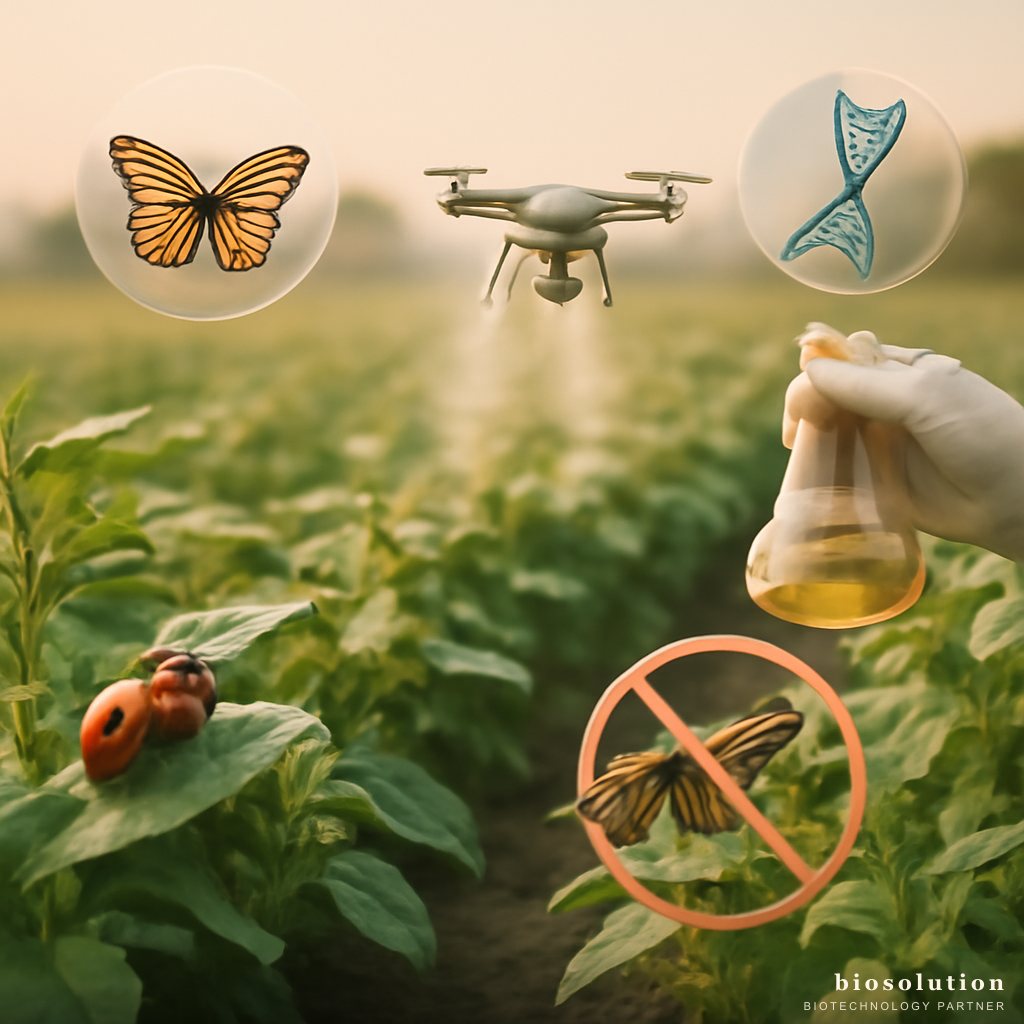
Integrated Biocontrol IPM: Environmentally Friendly Pest Management Strategy for Sustainable Plantations
In the era of modern agriculture, integrated biocontrol IPM (Integrated Pest Management) has become a non-negotiable approach. Farmers and plantation practitioners are required to produce high-quality products free from chemical residues, especially to meet export requirements. The use of biological agents such as Beauveria bassiana and Metarhizium anisopliae in broad-spectrum biological insecticide formulas offers effective solutions aligned with IPM principles. This article will discuss in depth the implementation strategy of integrated biocontrol IPM, the mechanism of action of biological agents, and how this program supports plantation sustainability and export smoothness.
Why Integrated Biocontrol IPM is Key to Plantation Success?
Conventional pest control with synthetic chemical pesticides has proven to cause various problems: pest resistance, resurgence, residues on products, and environmental damage. This is where integrated biocontrol IPM plays a role. The IPM concept emphasizes the use of a combination of compatible control methods, prioritizing biological agents. According to the Food and Agriculture Organization (FAO), IPM is a pest management system that uses all appropriate techniques in a compatible manner to suppress pest populations below economic thresholds, minimizing risks to human health and the environment. Microbial biocontrol, such as entomopathogenic fungi, becomes the backbone of this strategy due to its specificity to target pests, safety for natural enemies, and lack of residues.
Advantages of Biocontrol in IPM
- Specific target: Biological agents only attack certain pest insects, not disturbing beneficial insects.
- Environmentally friendly: Does not contaminate soil, water, and air.
- Supports exports: Products free from chemical residues meet strict destination country standards.
- Sustainable: Biological agent populations can survive and spread naturally in the field.
Mechanism of Action of Biological Agents: Beauveria bassiana and Metarhizium anisopliae
One of Biosolution's flagship products for integrated biocontrol IPM is the Broad-Spectrum Biological Insecticide Formula containing two strains of entomopathogenic fungi: Beauveria bassiana and Metarhizium anisopliae. Each has a unique mechanism of action that complements the other.
Beauveria bassiana
This fungus attacks soft-bodied insects such as caterpillars, aphids, and planthoppers. Beauveria spores attach to the insect cuticle, then germinate and penetrate the host body with the help of protease and chitinase enzymes. Once inside, mycelium grows and spreads throughout the body, causing death within 3–7 days. On the insect carcass, the fungus sporulates and produces new spores ready to infect other insects. The efficacy of Beauveria bassiana against target pests reaches 80–85% under high humidity conditions.
Metarhizium anisopliae
This fungus is effective in controlling beetles, cutworms, and Coleoptera order. Its mechanism is similar to Beauveria, but Metarhizium is more tolerant of high temperatures and low humidity. Spores attach, germinate, and produce appressoria that penetrate the cuticle. Once inside, the fungus produces toxins that paralyze the insect's immune system, accelerating death. Metarhizium can also infect insects in the soil, making it a mainstay for hard-to-reach pests.
Synergy of Both Strains
The combination of both fungi in one formula provides a broader control spectrum. Beauveria excels on leaf pests, while Metarhizium is effective for soil pests. At a dosage of 2–3 ml per liter of water (or 3–5 g/L for WP formulation), application is done every 7–10 days when pest populations begin to increase, especially in the afternoon when relative humidity is >70%. This product is compatible with IPM programs and leaves no residues on harvested products.
Integrated IPM Strategy Using Microbial Biocontrol in Plantations
The implementation of integrated biocontrol IPM cannot be done partially. It requires a holistic strategy involving monitoring, decision-making based on economic thresholds, and combination with other control techniques. Here are the implementation steps in plantations:
1. Pest Population Monitoring
The first step is to conduct regular observations of pest and natural enemy populations. Use light traps, pheromone traps, or visual observation. Record the number of pests per sample plant. If the population has reached the economic threshold (e.g., 5% of plants attacked for armyworm), control measures need to be taken.
2. Use of Biological Agents as Mainstay
Once the economic threshold is exceeded, apply the Broad-Spectrum Biological Insecticide Formula. Ensure even spraying to all parts of the plant, especially the underside of leaves where pests often hide. Use sufficient spray volume (400–600 L/ha for plantation crops). Repeat application every 7–10 days while pest populations remain high. This product is safe for workers and the environment, so it can be applied without excessive personal protective equipment.
3. Integration with Other Techniques
- Cultural practices: Land sanitation, pruning, and spacing to reduce humidity that supports pest development.
- Physical control: Installation of light traps or sticky traps to catch adult insects.
- Conservation of natural enemies: Avoid using chemical pesticides that kill predators and parasitoids. Plant refugia plants around the field as alternative food sources.
4. Evaluation and Documentation
Record application results, pest population development, and plant damage levels. This data is useful for improving strategies in the next growing season. Documentation is also important for export product certification that requires a track record of pesticide use.
Application of Integrated Biocontrol IPM to Support Export Programs
One of the main obstacles to exporting agricultural products is the strict Maximum Residue Limit (MRL) for pesticides. Destination countries such as the European Union, Japan, and the United States apply zero tolerance for some pesticides. By adopting integrated biocontrol IPM, farmers can produce products that meet these standards.
Benefits for Exports
- Free from chemical residues: Biological agents leave no harmful residues, thus passing MRL tests.
- Organic certification: Use of biocontrol facilitates obtaining organic certification, increasing selling value.
- Global competitiveness: Environmentally friendly products are increasingly in demand by foreign consumers.
Biosolution provides tested formulas compatible with various plantation crops such as coffee, cocoa, tea, oil palm, and pepper. Farmers who have implemented integrated biocontrol IPM report reduced production costs due to decreased use of chemical pesticides, as well as improved harvest quality.
Case Study: IPM Success in Coffee Plantation
A coffee plantation in East Java implemented integrated biocontrol IPM using the Broad-Spectrum Biological Insecticide Formula. The main pest controlled was the coffee berry borer (Hypothenemus hampei). With regular application every 10 days, the attack rate decreased from 25% to below 5% within three months. Additionally, the population of predatory ants was maintained, aiding natural control. Coffee harvest increased by 15% and passed residue tests for export to Europe.
Conclusion
Integrated biocontrol IPM is an effective, environmentally friendly strategy that supports plantation sustainability and export market access. By utilizing biological agents such as Beauveria bassiana and Metarhizium anisopliae in broad-spectrum biological insecticide formulas, farmers can control pests efficiently without leaving chemical residues. Consistent IPM implementation requires monitoring, timely decision-making, and integration with other control techniques. Biosolution products are tested and ready to help you achieve sustainable agriculture. For further consultation, contact our technical team via WhatsApp.
FAQ
1. What is integrated biocontrol IPM? Integrated biocontrol IPM is a pest control approach that prioritizes the use of biological agents (microbes, predators, parasitoids) as the main component in an Integrated Pest Management system. Its goal is to suppress pest populations below economic thresholds in a manner safe for the environment and human health.
2. How to apply the Broad-Spectrum Biological Insecticide Formula? Application is done by spraying a solution of 2–3 ml per liter of water (or 3–5 g/L for WP) onto the entire plant canopy. The best time is in the afternoon when humidity is >70%. Repeat every 7–10 days when pest populations increase. Ensure even spray coverage, especially on the underside of leaves.
3. Is this product safe for natural enemies like bees? Yes, biological agents are selective and do not harm pollinators like bees if applied at the recommended dosage. However, avoid spraying during flowering to reduce direct contact risk.
4. What is the shelf life of the product? Stored in a cool place (temperature 4–10°C), the product can last up to 6 months. At room temperature (25–30°C), shelf life is about 3 months. Avoid direct sunlight exposure.
5. Is integrated biocontrol IPM suitable for all types of plants? Yes, IPM principles are universal. The Broad-Spectrum Biological Insecticide Formula is effective for various plantation crops such as coffee, cocoa, oil palm, tea, and vegetables. Consult our technicians for dosage and application schedule adjustments.