Integrated Biocontrol IPM: Powerful Strategy to Suppress Pests by Up to 80%
Integrated pest management (IPM) is now an absolute necessity for modern plantations. One proven effective approach is integrated biocontrol IPM, which combines biological agents with cultivation practices to naturally suppress pest populations. This article reviews a case study of an oil palm plantation in Sumatra that successfully reduced pest attacks by up to 80% in one growing season, using a broad-spectrum biological insecticide formula from Biosolution.
Why Integrated Biocontrol IPM Is Increasingly Popular?
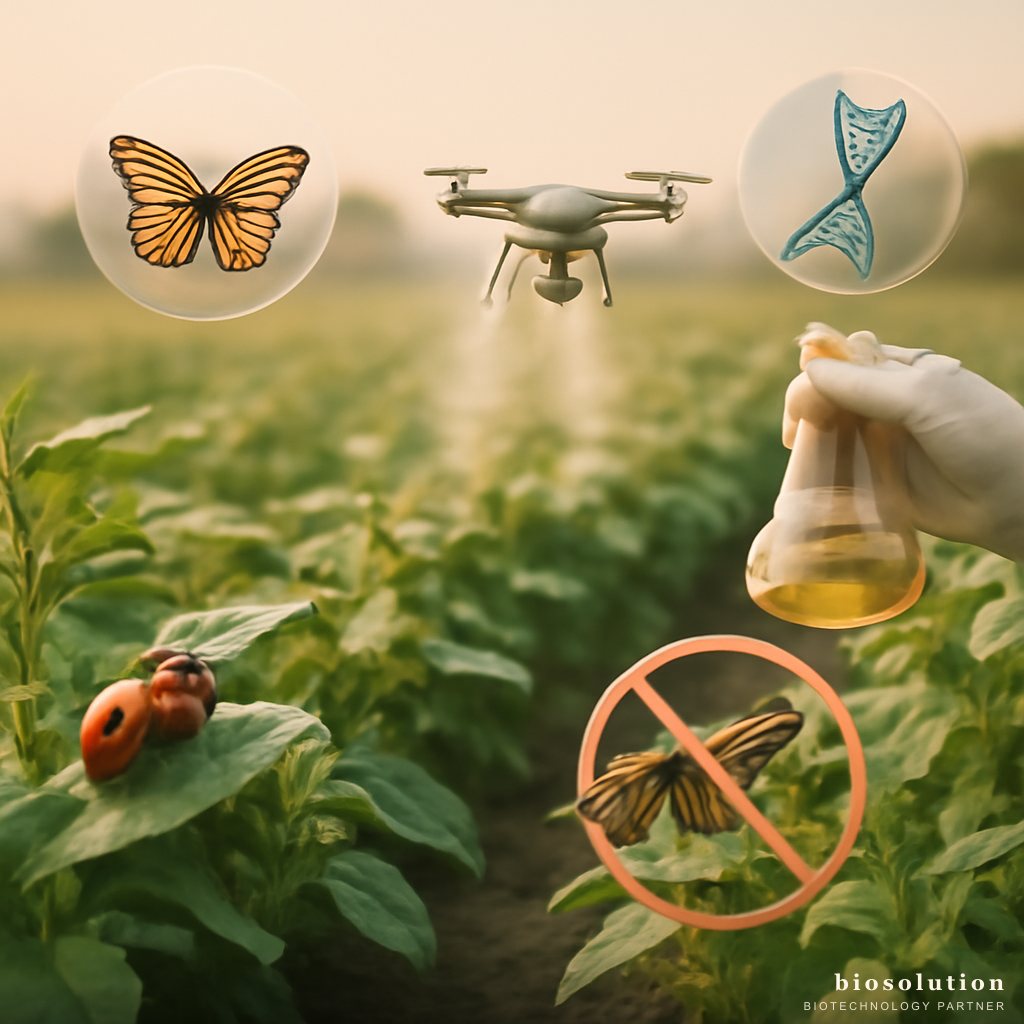
Farmers and agricultural extension workers (PPL) face challenges of pest resistance, chemical residues, and ecosystem damage. Integrated biocontrol IPM offers a sustainable solution by utilizing natural enemies of pests. Unlike chemical pesticides that kill all insects, biocontrol is selective and safe for pollinators, natural predators, and humans.
Main Advantages of Biocontrol:
- Environmentally friendly: Leaves no harmful residues on harvests.
- Long-term effective: Pests find it difficult to develop resistance to biological agents.
- Compatible with IPM: Can be combined with traps, refugia plants, and habitat management.
Case Study: Oil Palm Plantation in Sumatra
A 200-hectare oil palm plantation in Riau experienced an outbreak of Setothosea asigna (nettle caterpillar) and Oryctes rhinoceros (rhinoceros beetle). Previously, farmers relied on synthetic chemical insecticides, but their effectiveness declined drastically. In 2024, they switched to an integrated biocontrol IPM program with support from local PPL.
Implementation Steps:
- Pest and natural enemy identification – Field surveys showed low predator populations due to chemical residues.
- Cessation of chemical pesticides – A 2-week moratorium was enforced before biological agent application.
- Application of biological insecticide formula – Containing Beauveria bassiana and Metarhizium anisopliae at a dose of 3 ml/L water, sprayed onto the canopy every 10 days.
- Combination with pheromone traps – To monitor adult pest populations.
- Planting refugia plants – Sembung rambat and sunflowers along block edges to provide food for natural enemies.
Results:
After 3 months, the attack rate of Setothosea asigna dropped from 45% to 8%, and the rhinoceros beetle population decreased by 80%. Fresh fruit bunch (FFB) production increased by 12% due to healthier plants. Pest control costs were reduced by 40% compared to chemical use.
Role of Biological Insecticide Formula in IPM
The Broad-Spectrum Biological Insecticide Formula from Biosolution contains two superior entomopathogenic strains:
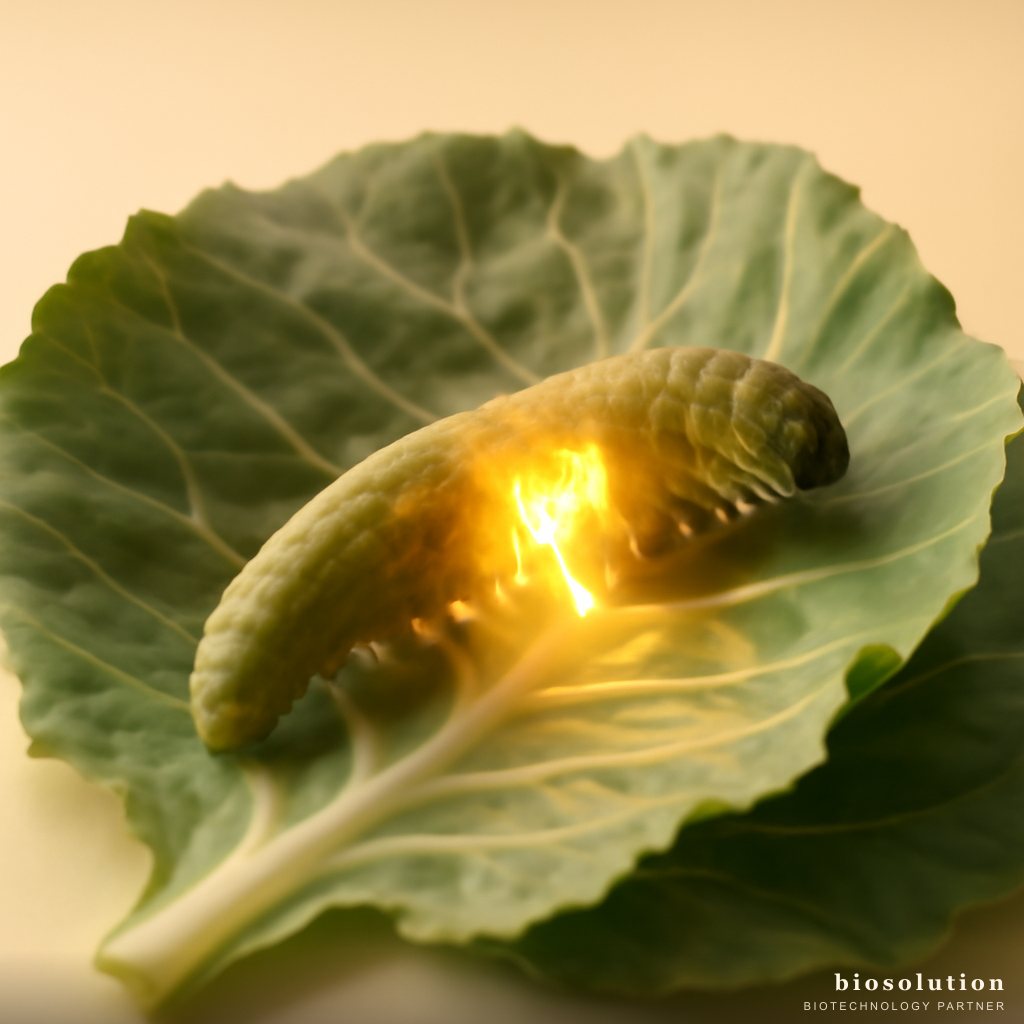
- Beauveria bassiana: Attacks soft-bodied insects such as caterpillars, aphids, and planthoppers.
- Metarhizium anisopliae: Effective against beetles, grubs, and soil pests.
Both are formulated with a minimum concentration of 10⁶ CFU/ml per strain, ensuring 80–85% efficacy against target pests.
Dual Mode of Action:
- Direct contact: Spores attach to the insect cuticle, germinate, and penetrate the body using protease and chitinase enzymes.
- Systemic infection: Mycelium grows inside the body, damaging tissues and producing toxins. Insects die within 3–7 days, and their bodies become sources of new spores that infect other pests.
This process creates a continuous infection cycle in the field, keeping pest populations suppressed without overly frequent reapplication.
Optimal Application Guide for Plantations
For maximum results, application of biological formula must be timely and methodical. Here are technical recommendations:
- Time: Late afternoon (3:00–5:00 PM) when humidity >70% and temperature <30°C.
- Dose: 2–3 ml per liter of water (or 3–5 g/L if WP formulation).
- Frequency: Every 7–10 days when pest populations begin to increase.
- Method: Spray evenly over all leaf and stem surfaces, especially the underside of leaves where pests hide.
Tips for Integration with Other IPM Components:
- Light traps: Install UV light traps to monitor nocturnal pests.
- Refugia plants: Plant sunflowers or cosmos along bunds to attract predators.
- Rotation of biological agents: Alternate with the Anti-Armyworm Formula for Rice & Corn if specific attacks occur.
Advantages of Biocontrol Over Chemical Pesticides
| Aspect | Biocontrol (Biological) | Chemical Pesticides |
|---|---|---|
| Residue | None | Harmful, persistent |
| Resistance | Pests rarely develop resistance | Resistance develops quickly |
| Ecological impact | Selective, safe for natural enemies | Kills non-target organisms |
| Worker safety | Safe | Poisoning risk |
| Long-term cost | Cheaper | Expensive due to repeated applications |
Challenges and Solutions in the Field
Despite its effectiveness, implementing integrated biocontrol IPM still faces several obstacles:
- Limited farmer knowledge: Many farmers do not understand application and monitoring methods. Solution: Regular training by PPL.
- Environmental conditions: Low humidity hinders infection. Solution: Apply in the afternoon or during the rainy season.
- Instant expectations: Farmers want quick results like chemicals. Solution: Educate that biocontrol takes 3–7 days, but its effects last longer.
Conclusion
Integrated biocontrol IPM with biological insecticide formulas based on Beauveria bassiana and Metarhizium anisopliae has proven capable of suppressing pests by up to 80% without chemical residues. The case study of an oil palm plantation in Sumatra shows reduced costs and increased production. For optimal results, combine with other IPM components such as traps and refugia plants. Consult your plantation's specific needs with the Biosolution expert team via WhatsApp now!
FAQ
Is biocontrol safe for plants and humans?
Yes, biocontrol uses microbes that specifically attack pest insects. Beauveria bassiana and Metarhizium anisopliae are not harmful to humans, animals, or plants. This product also leaves no residue on harvests, making it safe for consumption.
How long does it take to see results?
After application, spores need 3–7 days to infect and kill pests. Maximum effects are usually seen after 2–3 applications (10–14 days). However, because spores can spread from pest carcasses, the control effect lasts longer than chemical pesticides.
Can biocontrol be mixed with chemical pesticides?
It is best not to mix directly because chemical pesticides can kill spores. If chemicals must be used, allow a minimum interval of 5–7 days between applications. Ideally, an IPM program prioritizes biocontrol and only uses chemicals as a last resort.
How should biological formulas be stored to remain effective?
Store in a cool, dry place, protected from direct sunlight. Ideal storage temperature is 4–10°C (refrigerator) to maintain spore viability. Do not freeze. Use within 6 months of purchase.
Is biocontrol effective against all types of pests?
Not all. This formula is effective against soft-bodied insect pests (caterpillars, aphids, planthoppers) and some beetles. For other pests like rats or snails, different approaches are needed. Consult with PPL or the Biosolution team for proper pest identification.